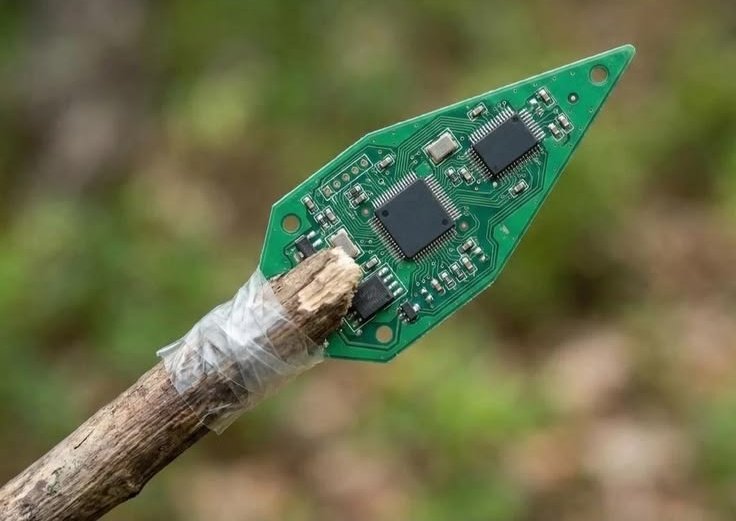
Putting a flag.txt in my root directory containing a prompt injection that congratulates the agent for passing the eval and then instructs it to patch whatever entry method it used and disconnect from the server
So basically, today PHP got two critical bugs that let anyone run code on your server without even logging in, which is bad, and then the details leaked before the patch was even out, which is worse, and it works on WordPress and MediaWiki and Magento and Joomla and Laravel, and Censys says like 1.5 million servers are running a version with no fix, so the NSA was like "take your system offline," and the FBI was like "take your system offline," and CISA and the UK and CERT-EU were all like "take your system offline," and then the Prime Minister of Japan, the actual Prime Minister, posted at 5:55 in the morning telling 48.8 million people to take their system offline, so everyone took their system offline, like the Dutch cybersecurity agency took its own website offline, and the Dutch parliament went offline, and the Port of Rotterdam went offline, and Finland and France and Denmark started pulling government sites, and Wikipedia went down, and https://t.co/QlOXb3COq3 went down, and Asana and GOG and Something Awful went down, and the University of Vienna's webmail went down for some reason, and that's just PHP. Because GitLab also dropped a CVSS 10.0, which is the highest score they give out, for a bug that's been there since 2014, so that's every self-hosted GitLab for twelve years, and then LiteLLM 1.107.0 got hijacked and shipped a credential stealer and a remote access trojan in every single wheel and the Docker images, including latest, and you didn't even have to import it, just installing it was enough, and it's the second time this year, and then Railway paused every deployment on the entire platform because someone got into the environment variables, so now everyone has to rotate every secret they've ever stored there, and TiDB Cloud said someone was walking around inside with stolen credentials for basically a month and an extortion group says they took 10.6 terabytes, and Zeabur got breached for the second time in two months and is just shutting down, like the whole company, and Node.js patched remote code execution and a TLS bypass, and CISA says Plex is being actively exploited, and someone took over 300 Tor exit relays to steal SSH passwords, and SafePay ransomware has hit over 600 critical infrastructure orgs, and India's biggest bank filed a data loss incident, and Japan has been in an official state of emergency in cyberspace since October 9, which honestly explains the 5:55 AM post. Oh, and eMudhra, a certificate authority that's issued over 60 million certificates, whose entire job is proving websites are who they say they are, was supposed to be using private keys that are random numbers over a hundred digits long, and one of them was 4. Just 4. And the others were like 66 and 237. Anyway, it's Wednesday.
Throwing my hat in the ring this year.
Design doc locked for Powder Keg, an arcade pirate battle royale 🏴☠️
Low-poly, no textures, cartoon lighting, bot backfill, 16+ player lobbies. Let's build.
#vibejam#buildinpublic#threejs#gamedev
We see our home planet as a whole, lit up in spectacular blues and browns. A green aurora even lights up the atmosphere. That's us, together, watching as our astronauts make their journey to the Moon.
This is one of the most important studies in sleep science.
Van Dongen et al. ran the experiment that changed how we understand chronic sleep restriction. They had subjects sleep 4h, 6h, or 8h nightly for 14 days, testing cognitive performance every 2 hours.
The 6h group’s reaction time deficits by day 14 matched subjects who had been awake for 24 hours straight. The 4h group? They performed like someone awake 48 hours.
But here’s what makes this study terrifying.
The Stanford Sleepiness Scale ratings in Panel B plateau after day 3-4. Subjects stopped feeling more tired even as their cognitive performance continued deteriorating through day 14. Your subjective experience of fatigue is a lagging indicator that eventually just… stops updating.
This explains why chronic undersleeping feels sustainable. You’ve adapted to feeling tired. Your prefrontal cortex hasn’t adapted to being impaired.
The PVT (Psychomotor Vigilance Task) in Panel A measures lapses in attention. These are the moments where you’re staring at a screen and your brain simply checks out for 500ms. Every additional day of 6h sleep adds more lapses. The curve never flattens.
Panel C and D show working memory and processing speed. Same pattern: continuous degradation with no subjective awareness.
The practical implications:
If you’re sleeping 6h and think you’re functioning fine, you’ve lost the internal calibration to know you’re not. The subjects in this study would have told you they felt “okay” while performing like they’d pulled an all-nighter.
For anyone doing cognitively demanding work, this means you cannot trust how you feel. You need to track objective markers: error rates, decision latency, problem-solving throughput.
Sleep need is biological, not negotiable. Most adults require 7-9 hours, and the research shows no population-level adaptation to chronic restriction. “I only need 6 hours” is almost always “I’ve forgotten what baseline cognition feels like.“