GOD's Grace and Mercy has brought me through.... MAKE PATWA(JAMAICAN) STANDARDIZED.... Child of God, Jamaican, Andrewz Girl.... Gooner... in that order.....
At just 17 years old, Kylian Mbappé made his debut for France, beginning an international career that would soon make him one of football’s biggest stars.
The legend was already being written before most people realized it.
Bondy, a suburb of Paris, was an unlikely place for one of football’s greatest talents to emerge. Kylian Mbappé grew up with extraordinary ability and a fearless style that quickly set him apart. He didn’t wait for the world to notice him—he exploded onto the scene with blistering pace and unforgettable performances.
At just 18, he was starring for Monaco in the Champions League, leaving defenders behind with ease. Soon came his breakthrough with France, and at 19 he became only the second teenager ever to score in a World Cup final, joining Pelé in the history books.
His success continued at PSG, where league titles, goals, and record-breaking performances became the norm. Then came the move to Real Madrid, football’s biggest stage, where he continued to prove why he belongs among the game’s elite.
Mbappé’s greatness isn’t defined only by his speed, finishing, or trophy collection. It’s his ability to deliver when the stakes are highest. Time and again, when his team needed a moment of brilliance, he was already there.
Some players rise to big occasions. For Kylian Mbappé, the biggest occasions seem to rise to him. His legacy is already secure, and his story is still being written.
Lukewarm take: we need to stop using mental health/therapy buzzwords in day to day life. Not everyone you dislike is a narcissist. Being sad doesn’t mean you’re depressed. There’s a resounding difference between being nervous and having anxiety. You’re not ADHD because you don’t like to sit still. You’re not autistic because you’re quirky. OCD doesn’t mean you’re organized. And for the love of all that is holy, not every situation that made you uncomfortable is “trauma”.
i truly wanna be a WIFE BUT i wanna be a genuinely happy wife. A submissive wife. A loving wife. A peaceful wife. A secure wife. A comfortable and safe wife to a honorable, ambitious, hardworking, LOYAL, loving, romantic, funny, spontaneous God fearing husband
One thing about me.. I’m gonna evolve. I don’t care what mindset I had a week ago.. everyday I wake up wanting better, thinking wiser & moving closer to the woman I pray I become
This is free advice from an expensive psychologist. If you’re an anxious person, do everything for fun. Go to a job interview for fun. Submit documents for fun. Start a blog for fun. Anxiety feeds on importance. Don’t make everything a matter of life and death.
The idea that Arsenal became a cultural phenomenon because it signed Black players is too simplistic.
Like much of London, Arsenal positioned itself as a club that extended belonging towards the margins. Not racial margins alone, but the margins of football's imagination.
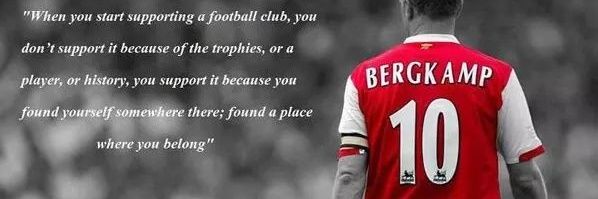
Kanu arrived after heart surgery that could have ended his career. Bergkamp arrived carrying the weight of a disappointing spell at Inter. Henry arrived as a talented but unsettled player still searching for his place. Kolo Touré was potential before proof. Arteta arrived as a midfielder many thought was entering decline, only to be entrusted with the captaincy. Wenger himself was a foreign manager challenging the assumptions of English football.
The pattern was not diversity for its own sake. It was recognition before validation.
Arsenal repeatedly seemed willing to see people not simply as they were, but as they could become. It trusted before consensus arrived. It built a reputation for offering a second chance, a fresh start, or a path to fulfilment where others saw limitation, uncertainty, or decline.
That is why former players, injured players, and out-of-contract players so often found their way back to Arsenal. The club developed a reputation for treating people as more than their immediate utility.
Representation matters. But recognition creates loyalty.
People did not just see players who looked like them. They saw an institution that appeared willing to enlarge its definition of who belonged.