Forget about oil. There are only a small handful of tankers in the world that transport wine, and WINE TRADER (8808707) can carry 6.32 million liters, which is 8.4 million bottles.
The $200 number is the least interesting part of this.
It is a scenario, not a forecast.
The more important signal is that the bottleneck is moving.
The crisis began with crude supply.
Then it moved into refined products.
Now Vitol says shipping itself is becoming the constraint.
That changes what “supply” means.
A barrel can exist.
It can even be exported.
But if shipping, refining or product distribution cannot move it where it is needed, it is not yet deliverable supply.
The oil market may not be running out of barrels.
It may be running out of ways to move the right barrel to the right market fast enough.
CEO of @aramco: The world can diversify suppliers. It cannot diversify geology.
Half the world’s proven oil reserves are in the Middle East, along with most spare production capacity. #OOTT
Last week's tweeters: The Arab countries aren't exporting that much oil.
This week's tweeters: These exports aren't sustainable! They cost too much to protect!
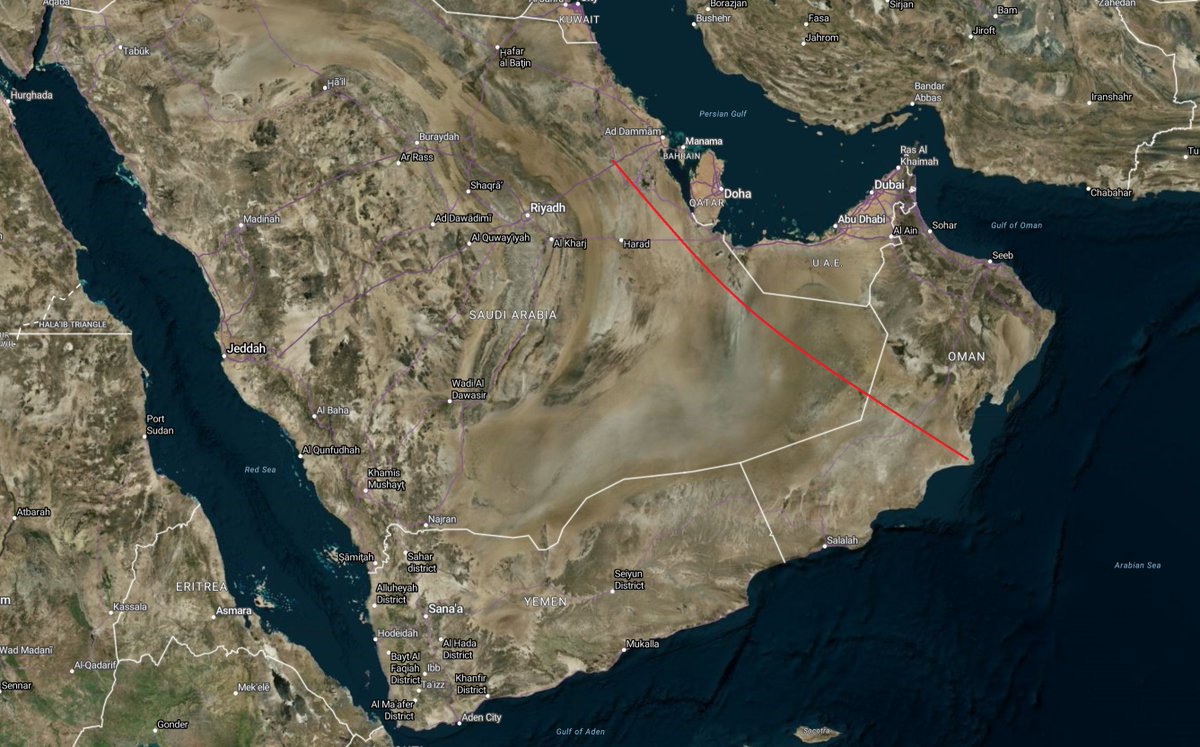
A solution which Saudi, Kuwait and Iraq should explore, is to pipe out their oil to Ras Markaz, Oman; which faces the Arabian Sea. It is a relatively new oil terminal and for a country that may run out of oil in just 13 years, Oman would probably be happy to see transit revenue.
NEW🇶🇦🛢️: #Qatar’s energy minister Saad al-Kaabi pushing back on the idea that #Hormuz will become “worthless” within two years, has its merits.
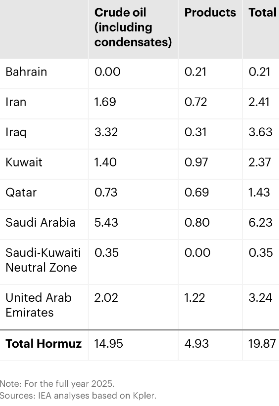
His comments reconfirm what many of us have argued since the start of the war, in that the Mideast Gulf’s exposure to #Hormuz is highly uneven.
• Qatar, Kuwait (& Bahrain) remain the most structurally constrained. #Kuwait may eventually be able to deepen routing options through #SaudiArabia, but for Qatar the alternatives are far more difficult, particularly given the technical and commercial complexity of trying to pipe LNG across the kingdom.
• #Iraq has the #Türkiye/Ceyhan outlet, but Baghdad first needs to materially ramp northern exports before talking seriously about replacing Mideast Gulf outlets with the Mediterranean. Hence why, I remain skeptical about the Kirkuk-Baniyas pipeline. Washington may be pushing it now, but if it does not materially advance within the next two years, its political momentum could fade after President Trump leaves office.
• The #UAE, geographically, is in the strongest position to pursue something close to a “zero dependency on Hormuz” strategy.
• Saudi Arabia has #RedSea optionality, but Hormuz still matters because of proximity and economics for Asian buyers. And even the Red Sea route ultimately depends on a more stable #Yemen/Bab el-Mandeb environment.
So the real argument is whether individual Mideast Gulf producers can reduce their dependence on Hormuz, and if it makes sense to them to do so. #oott
We are witnessing the return of a gradual escalation cycle, one that appears considerably more volatile. A tit-for-tat exchange could readily accumulate into a wider regional confrontation.
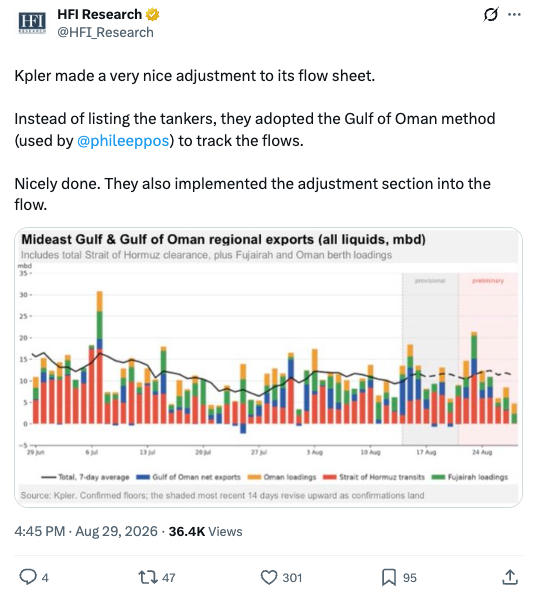
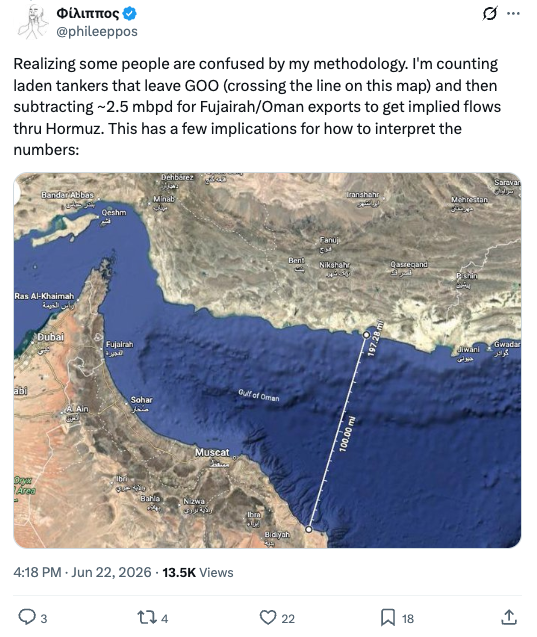
Funny to see players like Kpler just now catching on to a hormuz tracking methodology I've been using for 3 months to catch flows they were missing. Wonder if they saw my tweets? 🤔
TotalEnergies CEO Patrick Pouyanne nails it, warning that some emerging nations are “losing trust” on LNG after two back-to-back price shocks (2022 and 2026). The result? “Back to coal.”
🛢️Oil is still below 100$
Refining margins are at record highs.
2 wars are bearing down on global supply.
By any normal reading, Brent should be well through $100.
It isn't.
And the reason has a single name: Beijing🇨🇳
China has quietly stopped buying.
Apparent oil demand fell about 20% year on year in July.
Crude imports were down close to 30% in the second quarter.
Rather than pay up, China is leaning on the 1.2 billion barrels it already holds, roughly four months of cover.
When the world's biggest incremental buyer steps out of the market, the marginal barrel loses its bid.
That's why crude is cheap.
Now the part that should worry anyone long the crack.
China's absence is a coiled spring.
It has the spare refining capacity to swing the product market hard.
If Beijing relaxes its export controls and pushes refiners back to full runs, crude could break above $100 while diesel margins compress from today's records.
The barrel wins, the margin loses.
There's a quieter story underneath it too, one that starts with a Chinese container ship crossing the Arctic to dodge Hormuz entirely.
I put the whole thing together in my latest article.
Link for the full article 👇
https://t.co/LGgr6gqvak
The question for oil investors used to be: at what price will OPEC cut? The real question is: at what price will China buy?
Beijing can disappear from the crude market by millions of barrels a day, then return when the price suits it. Its crude import demand is now highly elastic.
China is the new OPEC.
https://t.co/iO1DYakqKD
Diesel - the fuel that prices almost everything in our daily lives - everywhere in the world sits firmly in the $160-185 per barrel range.
I wonder how many macro models got this right. Most are too fixated on ICE Brent or WTI. Useless.
1/2
I don't like the fact that the constant risks in Hormuz are being labeled as the "new normal", there is nothing normal about it and it shouldnt be something the industy just gets used to. Hope can't be lost in finding a durable political solution to this situation. #OOTT
Paper oil might be selling off... But the physical market is getting tighter.
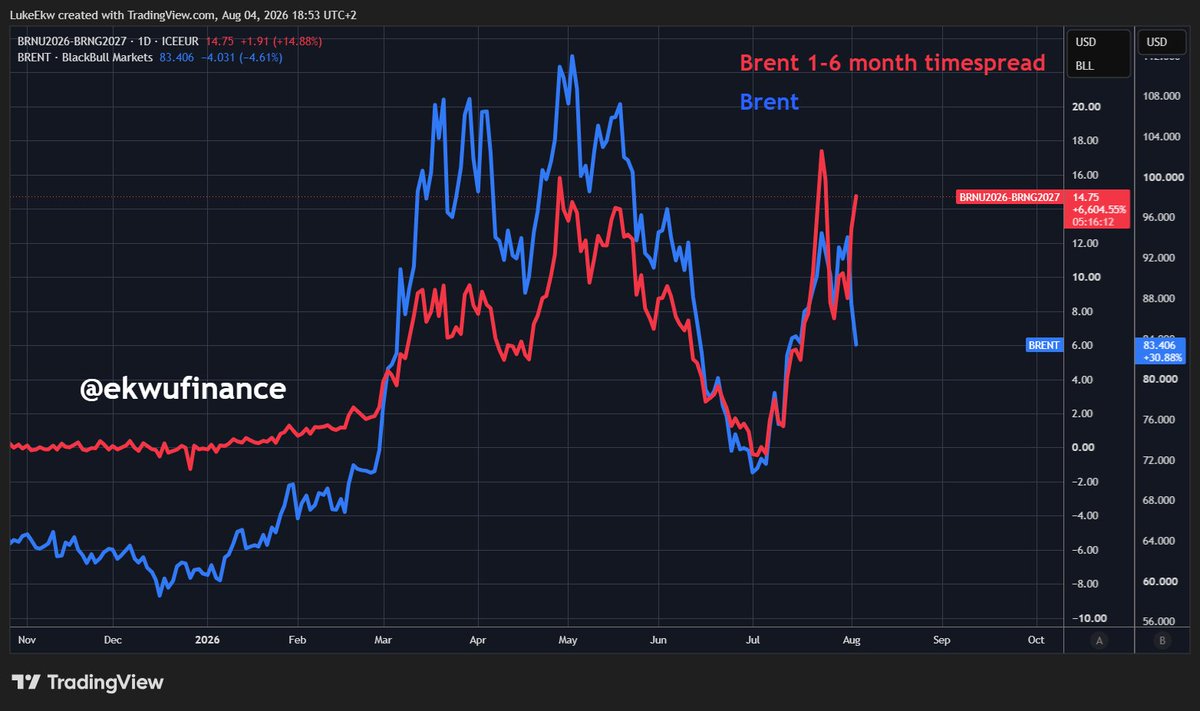
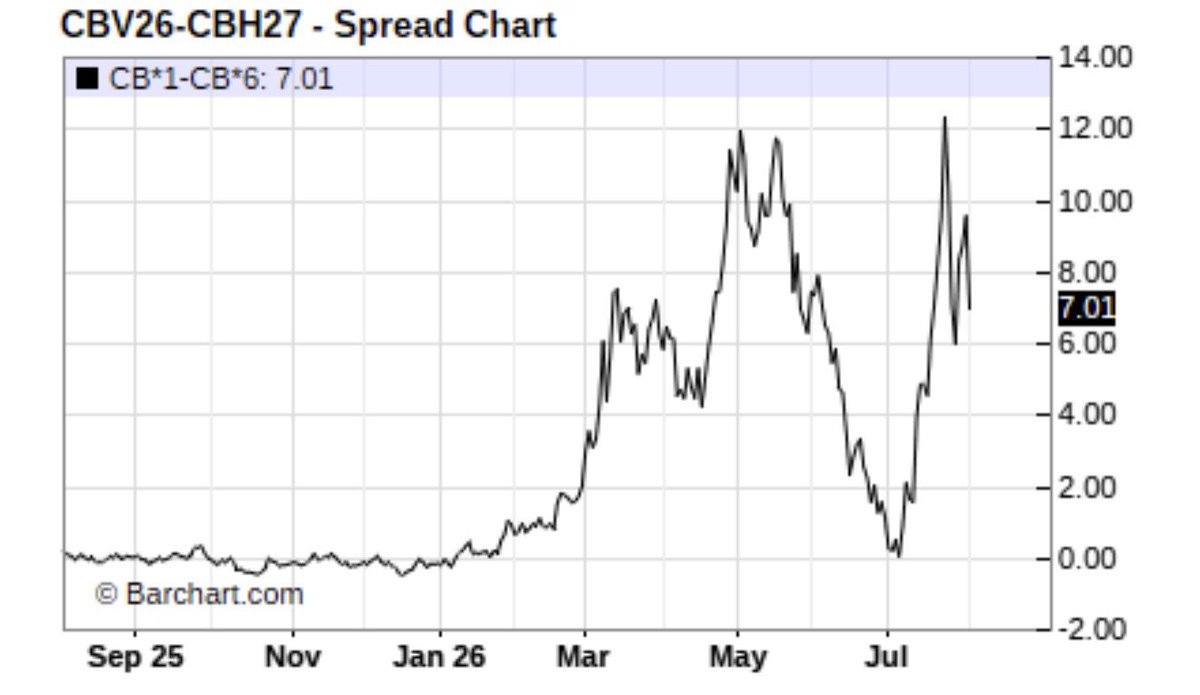
Brent's 1-6 month spread is up another 14%...while Brent itself is down 5%.
The market is paying roughly a $15 premium for oil today rather than six months from now.
- A negative spread signals ample supply.
- A premium signals a tight physical market.
Today's premium is close to an all-time high.
And by the way... There is still no deal.
Bessent is smart enough to know that you can’t kill oil prices unless you kill the backwardation in the curve.
And you can’t kill backwardation unless you have the barrels.
The US can announce another unilateral SPR release and let’s say that 70 million bbls is the minimum.
That’s another 200 million bbls.
But the release rate is throttled down to 0.5-0.6 million b/d.
That’s not enough to kill backwardation.
The barrels that were trapped in the Middle East have been released already, so there’s no more immediate supply he can use to dump on the market.
Clock is ticking.
🚨🇶🇦🇺🇸 QATAR JUST SENT 2 VERY DIFFERENT SIGNALS TO THE LNG MARKET
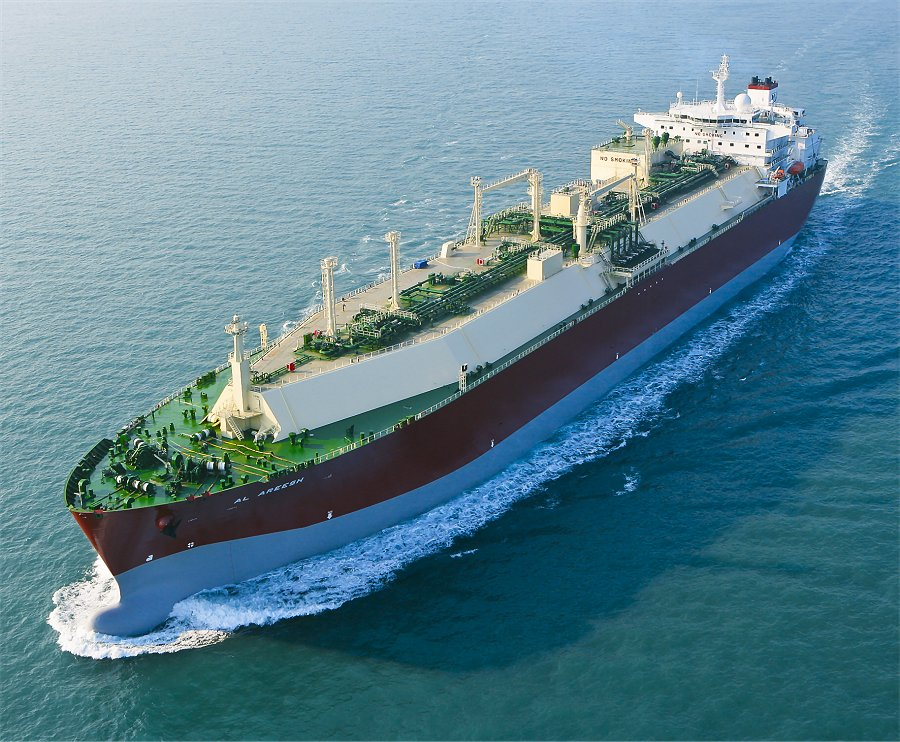
For the first time in nearly 3 weeks, a QatarEnergy controlled LNG tanker has exited the Strait of Hormuz.
The Al Areesh, carrying LNG to Pakistan, is the first visible sign that Qatari exports may be cautiously restarting through the waterway.
But QatarEnergy is not waiting for Hormuz to fully reopen.
It has reportedly purchased 33 US LNG cargoes, worth around $1 billion, to replace disrupted supply and protect deliveries to customers across Asia.
That compares with only 4 US cargoes purchased last year. Of the 33 bought this year, 28 have already been delivered and 5 remain in transit.
Qatar is testing the return of its own LNG through Hormuz while simultaneously using American LNG as an emergency backup system.
The first tanker is a positive signal.
The 33 replacement cargoes show QatarEnergy still does not trust the route enough to rely on it.
BIG jump in Chinese state-owned refinery run rates following a very slow Hormuz recovery.
State-owned refinery run rates are one of the two most important high frequency indicators of Chinese crude demand alongside tanker tracked crude imports.
This recovery in state-owned runs is currently bigger than the tentative recovery in crude imports, and represents real crude consumption. These run rates, if sustained, will start drawing Chinese crude stocks much faster absent a sharper and durable recovery in crude imports.
@blerk213231111 Devil is in the details. I track crude only and this is where the discrepancy mainly lies. Always check what they assume for SoH, if it is ~20 - its crude+products. Which are two VERY different stories.