@VisualStudio Goodbye static class boilerplate and fake instance methods. True extension members are exactly what we need to clean up domain interfaces and express intent without the old syntax workarounds. Absolute gold.
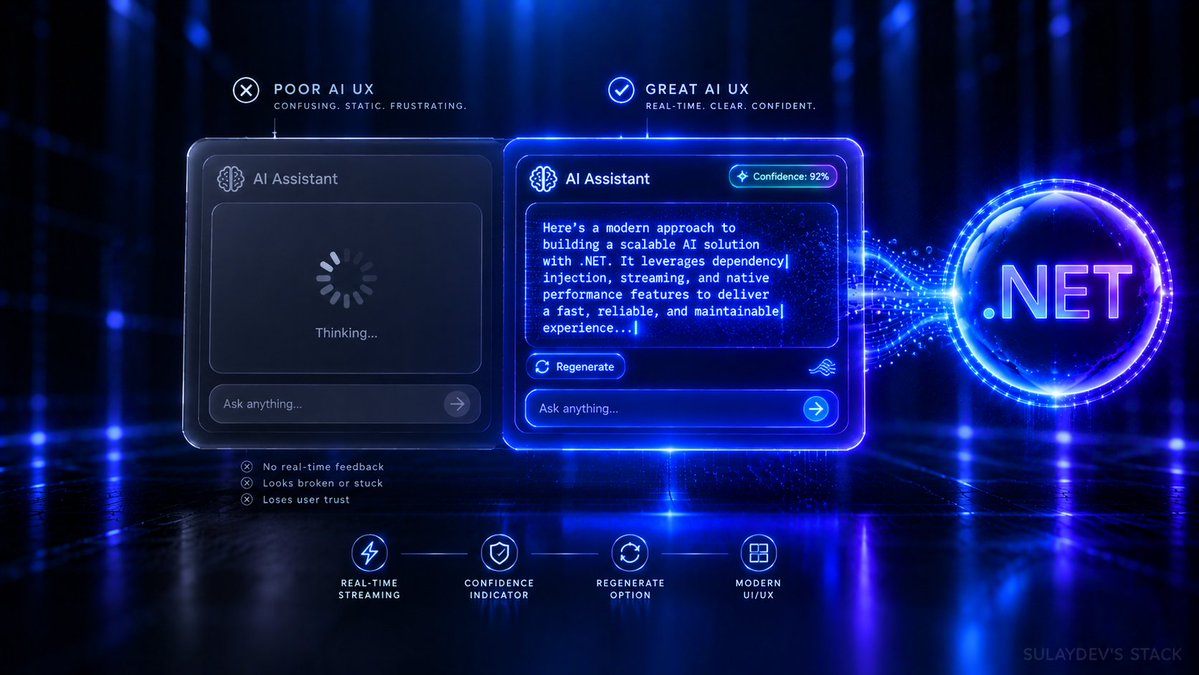
One bad response with no "regenerate" button = a user who stops trusting the feature entirely.
Cheap correction isn't polish. It's the difference between recoverable and broken.
#DotNetAI#ProductDesign
AI feature UX checklist:
✅ stream, don't spin
✅ show uncertainty
✅ let users edit/regenerate
✅ label AI content clearly
Thread on why this matters more than model quality 👇
@dotnetfdn This is exactly where multi-agent orchestration needs to go. Shifting from a single generalist prompt to a runtime network of persistent specialists—with distinct roles,charters,and standup ceremonies—is how we move from basic coding assistants to true digital engineering squads.
@VisualStudio Treating model outputs as plain text is the fastest way to break a production app. Moving toward strictly structured formats, rigid schema enforcement, and tool-calling validation is the only way to build predictable, reliable software with LLMs.
@dotnet Chatbots wait, but automated agents execute. Moving from reactive text inputs to fully managed schedules, event listeners, and self-reminders means we can finally build truly autonomous systems instead of just better wrappers. This GA is a massive win!
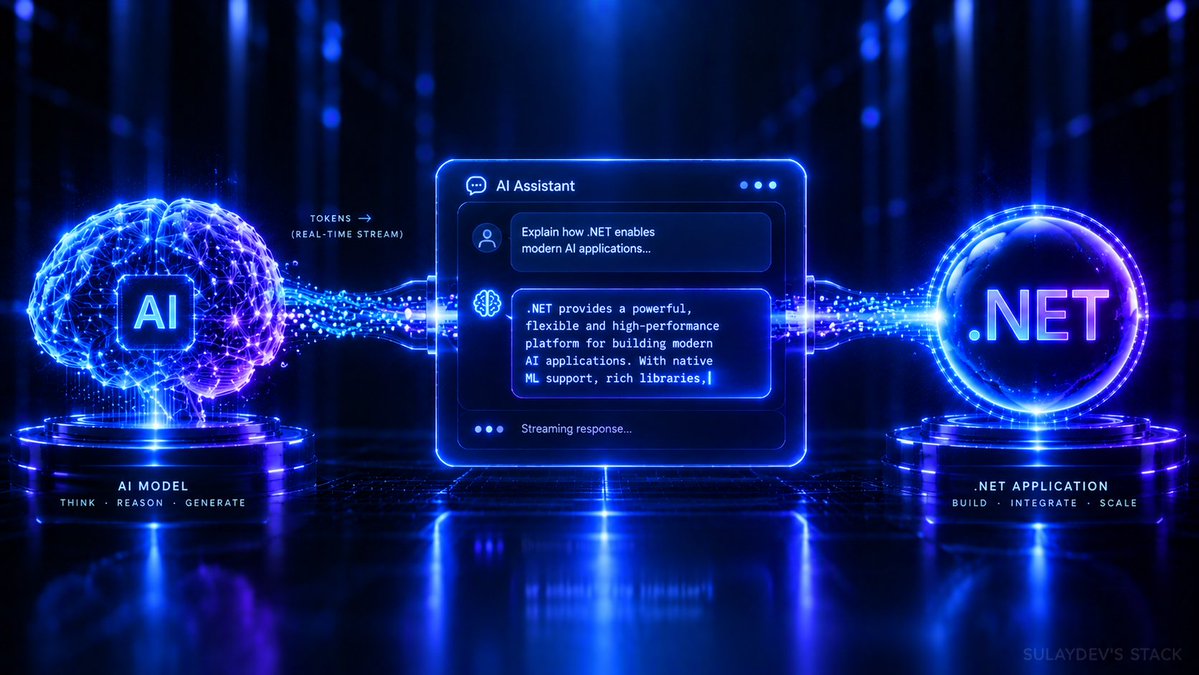
User closes the tab? Cancellation token should stop the model call, not just the response.
Handle OperationCanceledException as a clean exit, not an error.
#AspNetCore#CSharp
await foreach (var u in client.CompleteStreamingAsync(msg, ct))
{
await stream.WriteAsync(Encoding.UTF8.GetBytes(u.Text), ct);
await stream.FlushAsync(ct);
}
Cancellation + explicit flush matter more than the loop itself. #DotNetAI
@dotnet From .NET 11 JIT optimizations to automated zone placement for VM Scale Sets, this episode hits every layer of the cloud-native stack. Bringing database SDKs into the multicloud era while securing the baseline is exactly what enterprise teams need.
@dotnetfdn@realDotNetDave An absolute masterclass in open-source performance tuning! Shaving execution time down to get gains up to 87.52× across hundreds of methods is massive for enterprise .NET 10 workloads.
@AzureDevOps The real skill ceiling in modern development isn't letting an AI agent spit out boilerplate code; it's active steering, prompt refinement, and strict architectural oversight. It’s an amplification tool, not an autopilot.
var chat = new AgentGroupChat(researcher, writer);
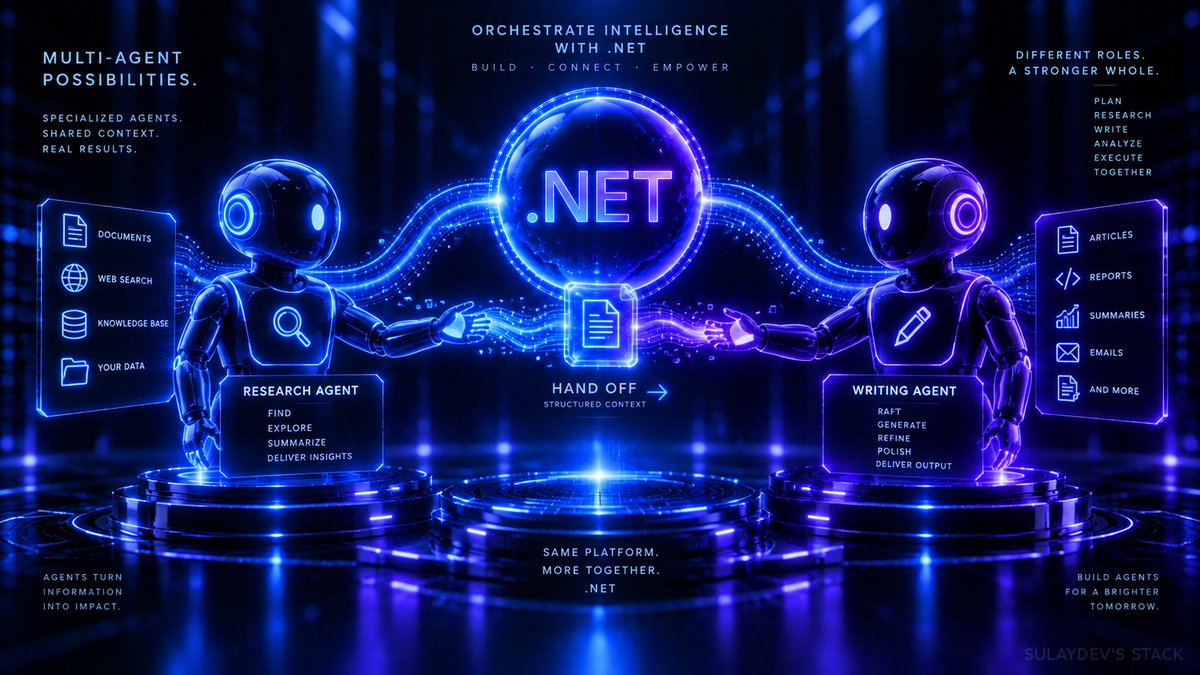
Researcher gathers facts. Writer turns them into prose. Neither needs to be good at both.
When quality drops, you know exactly where to look.
#DotNetAI#CSharp
One agent that does everything = one giant prompt that fails silently, and you can't tell which part broke.
Here's a 2-agent .NET setup that actually works.
#SemanticKernel
@dotnet Bringing native agentic UI components to the ecosystem is a massive win. Being able to build real-time streaming chat interfaces using familiar C# and Razor syntax instead of rewriting the front-end orchestration loop completely redefines developer velocity.
@VisualStudio A classic Raymond Chen masterclass in engineering realities. It’s so easy to hunt for a quick optimization by swapping a class for a struct, only to get completely sabotaged by underlying copy-by-value semantics. A must-read for UI devs!
@dotnetfdn Spot on. An agent is not just an LLM with tools bolted on. Deconstructing it into a controlled harness, reasoning engine, and strict directives is how we move from fragile demos to predictable, production-grade systems.
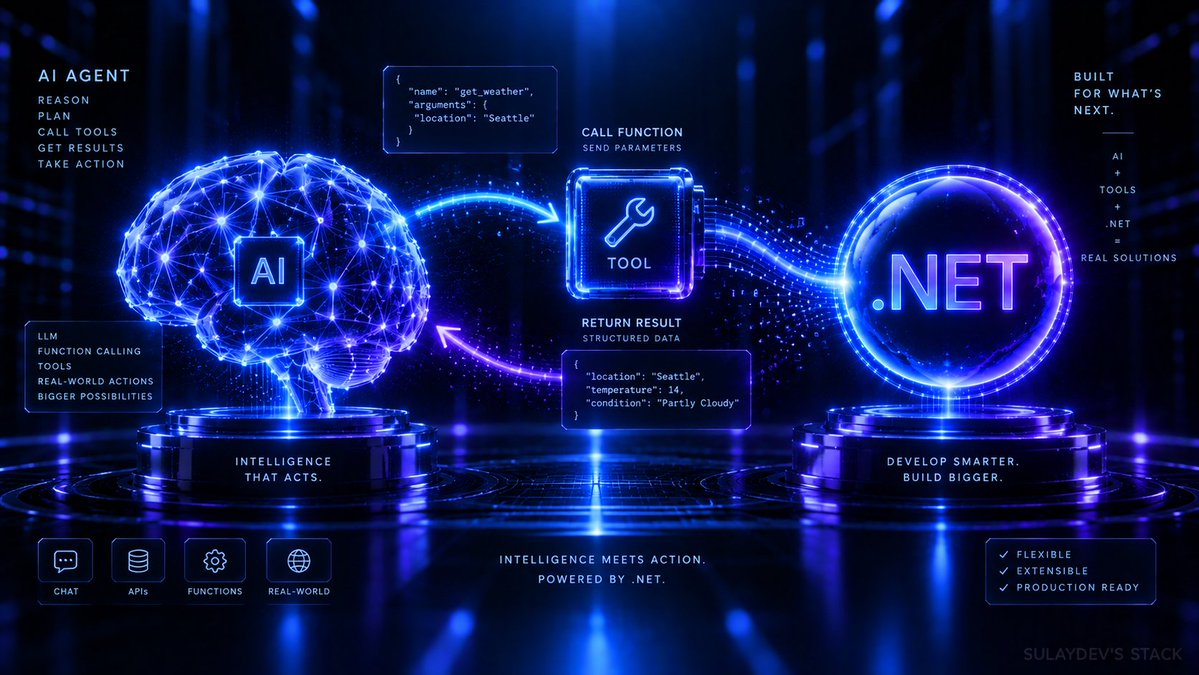
No magic. The model recognizes it needs data it doesn't have, calls your function, reads the result, answers naturally.
Agentic behavior = a design pattern, not mystery.
#CSharp#AIEngineering
[KernelFunction, Description("Gets weather for a city")] public string GetWeather(string city) => ...;
kernel.Plugins.AddFromType<WeatherPlugin>();
The model decides WHEN to call YOUR code.
#SemanticKernel#DotNetAI