A defining moment for Africa’s energy future!
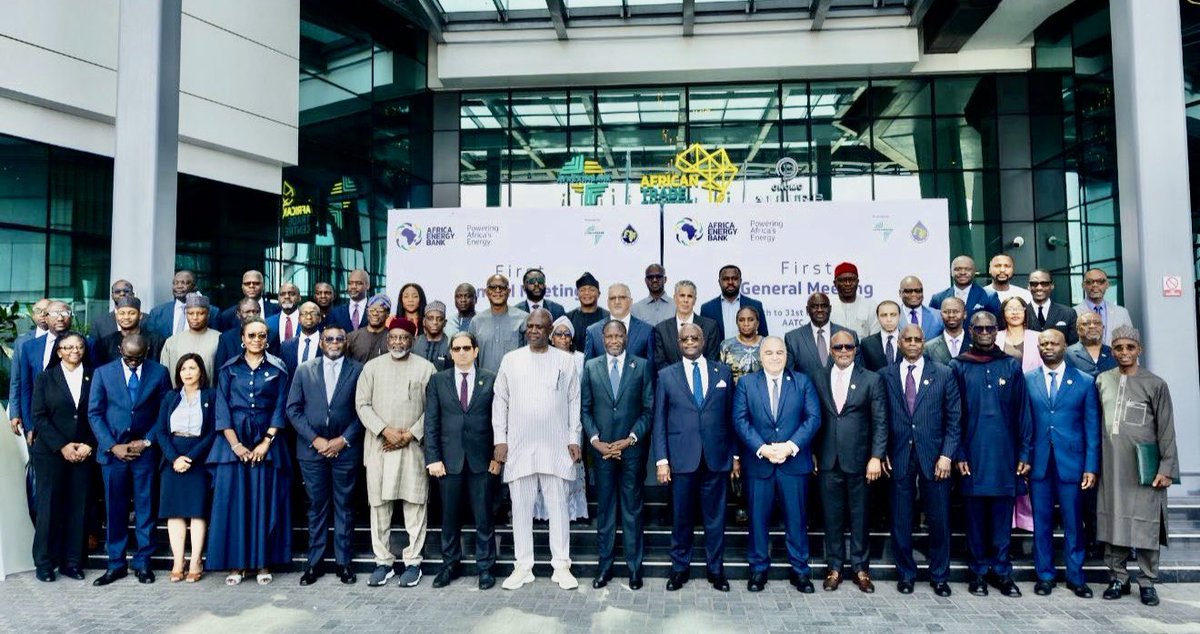
The US$5bn Africa Energy Bank held its inaugural AGM today in Abuja. Shareholders approved key institutional resolutions, including its leadership, initial equity subscriptions, Charter and Headquarters Agreement.
Official operational commencement: 4 January 2027.
With a mandate spanning oil, gas, energy infrastructure, trading and renewables, AEB aims to address Africa’s energy financing gap and unlock investment, industrialisation and sustainable development.
For Nigeria, hosting the Bank is a strategic achievement. For RHG Advisory, it marks an important milestone in our contribution to the initiative, supporting APPO and Nigeria’s successful headquarters bid.
Congratulations to Nigeria, APPO, Afreximbank, AEB and all participating partners.
Africa must finance and build its own energy future.
#AfricaEnergyBank #Nigeria #APPO #EnergyFinance #RHGAdvisory
On 15 June, in defiance of the directive of @NGCourtofAppeal, Peter Lifu issued judgment de-registering @ADCNig.
Why or how then would he sit subsequently to decide the leadership of a party that he’d already ordered de-registered?
2 weeks earlier, on 1 June, in a four-page letter to Chief Judge John Tsoho, National Secretary of the #ADC, Rauf Aregbesola, protested the reassignment of the case saying, among other things: “we have serious concerns regarding the reassignment of politically sensitive matters involving opposition parties to a recurring group of judges of the Abuja Division, particularly, Hon. Justice Peter Lifu….”
The letter named two other judges among this list. It also accused the Chief Judge of “administrative interference” with the proceedings and of undermining full compliance with the decision of the @SupremeCourtNg.
The Chief Judge took little notice.
https://t.co/8Q35pfD7ek
1961: Nigeria was the first African nation to break diplomatic relations with France, and the day was 5 January 1961.
That was not a quiet diplomatic quarrel. That was Nigeria standing up in front of the whole world and saying, enough is enough.
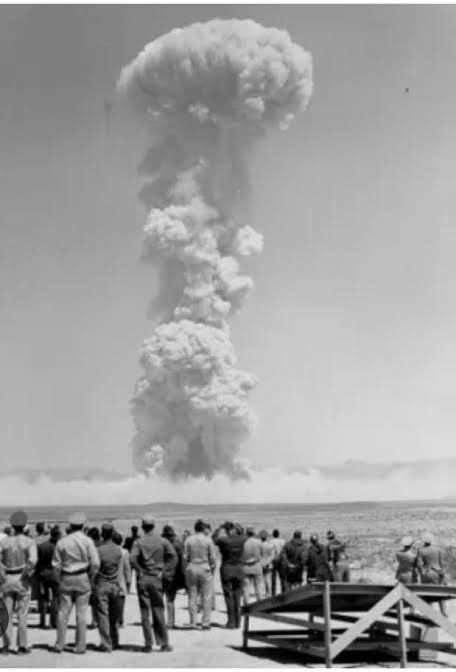
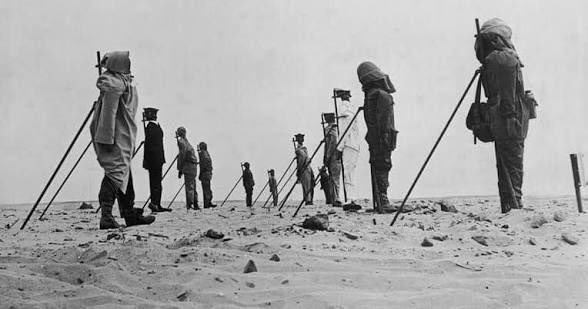
France had gone into the Sahara Desert and exploded an atomic bomb, the third one, on 27 December 1960. They called it Gerboise Rouge.
Nigeria had warned them before the test. African leaders had warned them. The people had warned them. The fear was simple and real.
The harmattan wind could carry radioactive fallout south, into Nigeria and into other African countries, and poison the air, the water, the soil, and the bodies of innocent people who had never asked for any bomb.
France tested anyway.
Prime Minister Sir Abubakar Tafawa Balewa did not hide behind a statement.
On the evening of Dec. 28th 1960, The French Ambassador, Raymond Offroy, was summoned to the Foreign Ministry and told of the Nigerian Government's “concern” over France's explosion of an atomic bomb in the Sahara, then January 5th, 1961, Prime Minister Tafawa Balewa summoned the French ambassador in Lagos, Raymond Offroy, and told him face to face that Nigeria was cutting diplomatic relations with France.
He personally handed him the letter. In that letter, Balewa spoke of the greatest resentment at the unalloyed intransigence of the French Government and the utter disregard with which that Government had treated the feelings of Nigerians on the question of atomic tests in the Sahara Desert.
Then came the part the French would never forget. The ambassador and his embassy staff were given only forty eight hours to leave Nigeria. Forty eight hours. And to make the message even sharper, Nigeria barred French planes and vessels from using Nigerian airports and ports, cancelled French transit rights through Nigeria, banned French ships from its coastal waters, and froze French assets in the country.
Think about that. This was 1961. Nigeria had only become independent on 1 October 1960. Barely three months into independence, a young African country looked one of the most powerful nations on earth in the eye and said, if you will not respect African lives, you will not enjoy African friendship.
That is why this story still matters. It was not only about a bomb in the desert. It was about dignity. It was about a new nation refusing to be treated as if its people did not matter. It was Nigeria saying that African lives are not expendable, and that no friendship is worth the silence that allows your neighbour to be poisoned.
Nigeria paid a price for that courage. Relations with France stayed broken until 1965. But history remembers who spoke first, and who acted first.
On 5 January 1961, Nigeria spoke, and Nigeria acted.
Let us never forget that this country once had the courage to stand alone for Africa.
If this history moved you, drop a comment and share it, so the next generation will know what Nigeria once stood for.
Now You Know
Atedo Peterside, founder of Stanbic IBTC Bank, has criticised President Bola Tinubu’s economic reforms, arguing that the policies have disproportionately benefited wealthy Nigerians while worsening the financial conditions of millions of low-income households.
The Nationality and now ethnicity question is a big diversion.. it’s about Scam, scamming or gaming the system and victims - that should be freshened with journalists digging deeper.
There was no denial or strong pushback. Just that it’s racist to cultivate sympathy.
Someone knows something and soon will say something.
Stay turned.
"Never will anybody from any part of the world in any way affect or undermine our dignity as a people. We will not accept that, our President will not accept that, our Government will not accept that and your Mission will not accept that"- @Realffk
At a meeting with leaders of the Nigerian community in South Africa, Johannesburg, October 26th 2026.l
🇬🇧 🇧🇸 King Charles III acknowledges 'injustices of the past' in the Bahamas
King Charles III says "we should acknowledge" the suffering caused by Britain's colonial past amid mounting calls for a formal apology and reparations over the transatlantic slave trade, as he begins a Caribbean tour in the Bahamas.