Excited to share our preprint on bacterial chromosome organization. Using Hi-C data-driven simulation modeling of B. subtilis, we reveal that *cooperation* between the SMC and ParAB proteins drives faithful segregation of the replicating genome (Ori segregation).
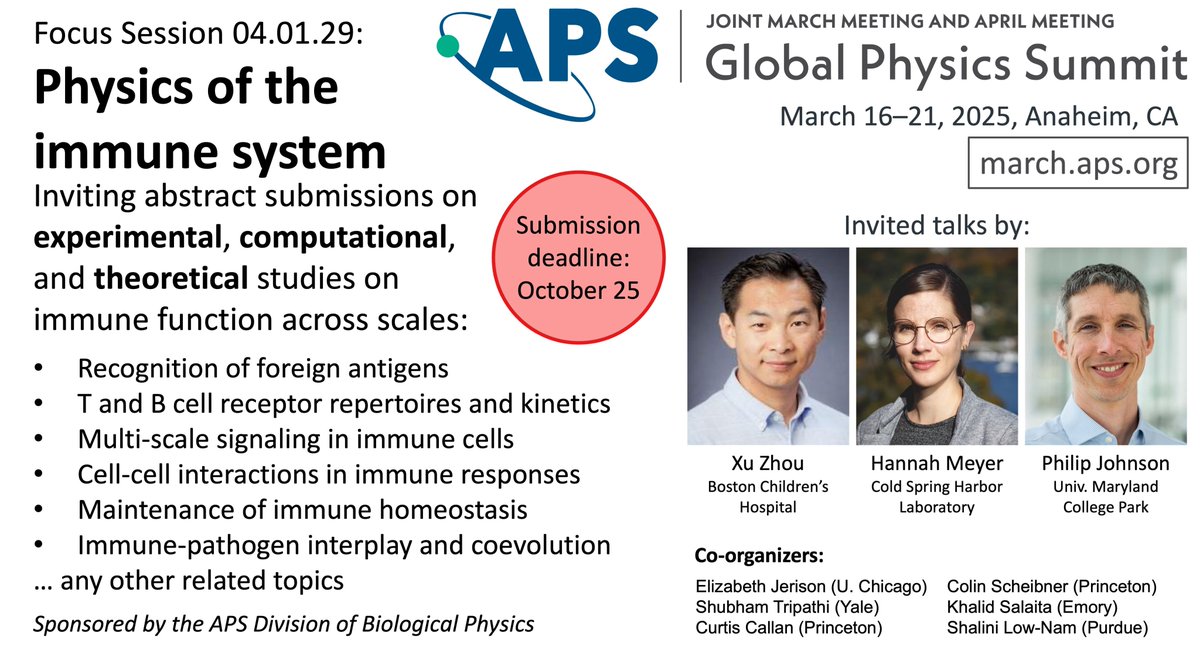
We will once again have a @ApsDbio focus session on Physics of the Immune System at the upcoming @APSphysics March Meeting #APSSummit25. Submit your abstracts on experimental, computational, theoretical approaches to understand immune dynamics. Great invited speakers lineup!
This is going to be a great session covering aspects of single-molecule DNA, transcription regulation, as well as DNA mechanics at long length scales. Consider submitting your abstracts to this session. Deadline soon Oct 25!
If you have qualified Physics or Mathematics JRF, apply for PhD at IIT Bombay (google IIT Bombay PhD admission). Apply to Biosciences and Bioengineering Department @BsbeIitb and @KCDH_IITB. We are recruiting Physics and Mathematics students for PhD. Last date October 21.
Learn how #MolecularMotors may impact #chromosome dynamics!
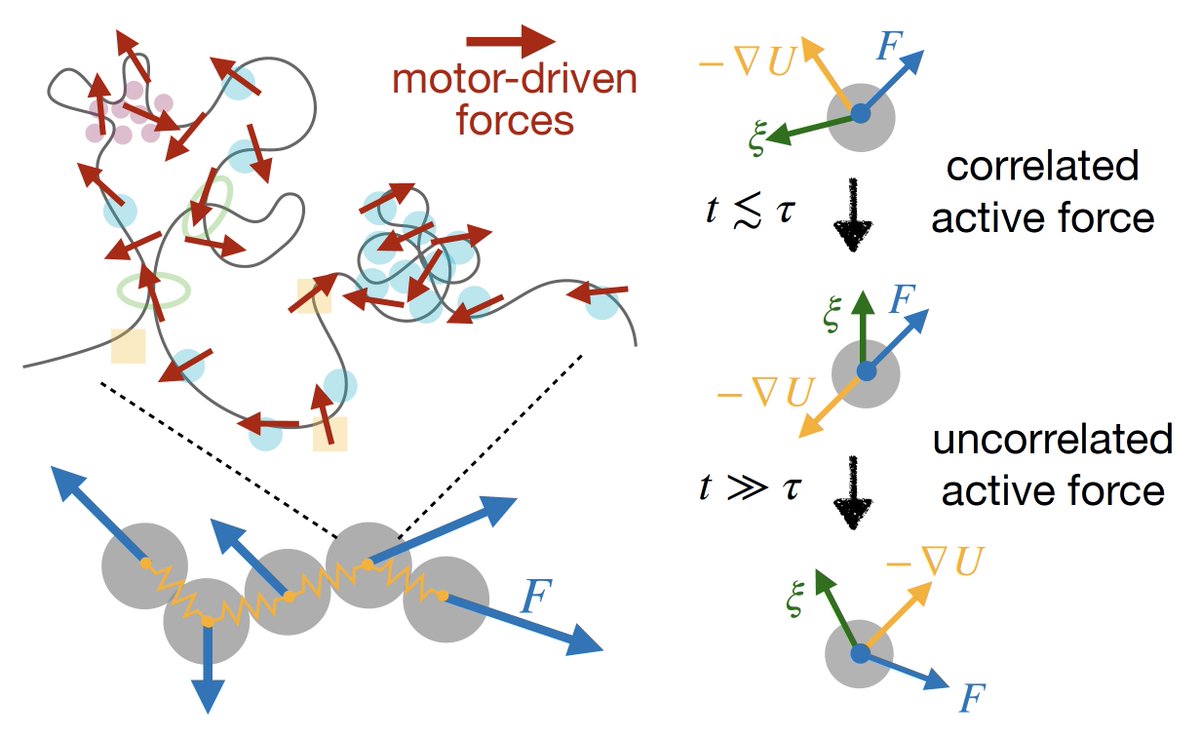
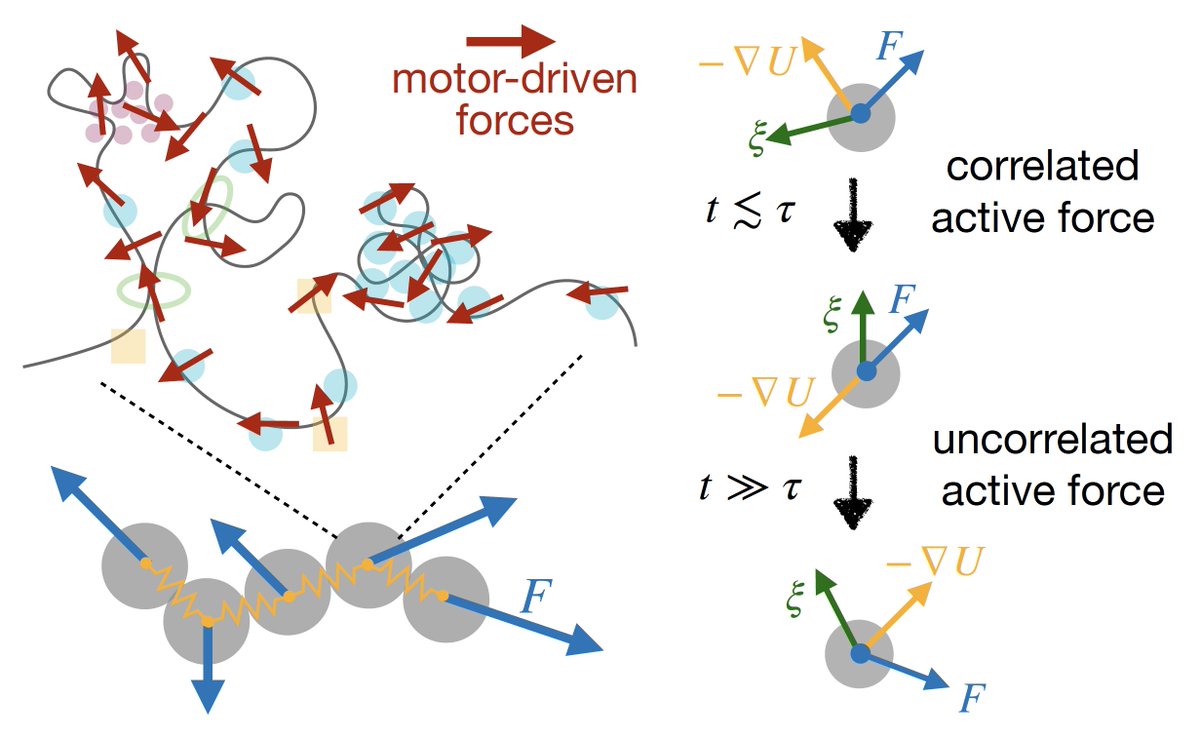
Adding an #active part to polymer models helps explain the enhanced mobility seen in real #chromosomes.
📝 https://t.co/cx8TmUh1xf
@CellfOrganized@TismaMilos Thanks for the comment. So we did do that. ParB depletion has a stronger phenotype than ParA depletion. While ParA depletion shows a larger inter-Ori distance (better segregation) than ParB depletion, none of them are quite as efficient as WT.
first, how does this ParAB mechanism ensure the two replicated Ori go to the opposite poles, instead of both of them moving towards the same one? second, why do SMC mutants show Ori segregation defects?
We propose this cooperation between effective polar puling of Ori, and intra-compaction-mediated inter-Ori repulsion is a general bacterial strategy for segregating the partly replicated chromosomes in fast-growth conditions and is also the likely driver of plasmid segregation.
The ParA/B proteins are usually credited for chromosome segregation. ParB-bound Ori proximal DNA (parS) can track pole-enriched ParA gradient and drive the Ori towards the poles, facilitating Ori segregation. But two questions puzzled us:
Excited to share our preprint on bacterial chromosome organization. Using Hi-C data-driven simulation modeling of B. subtilis, we reveal that *cooperation* between the SMC and ParAB proteins drives faithful segregation of the replicating genome (Ori segregation).
Check out our work on how motor-driven persistent or correlated noise enhances chromatin mobility, captures super diffusive trends, and drives *dynamic* phase segregation. Structures alone may not differentiate between active/passive mechanisms, we need to examine the dynamics.
How #chromosomes move and organize is still an open challenge.
New work shows that adding temporally persistent noise into an polymer model can reproduce real chromosome behaviors, including enhanced #mobility and compaction.
Read the paper: https://t.co/cx8TmUh1xf
Adding motor activity to passive compartments (self-adhesion-based equilibrium phase separation), expands the compartments and pushes the active loci to the periphery, suggesting a possible role of motorized transcription mechanics in driving active loci to the periphery.