^solving gnarly problems at the nexus of tech, finance & policy ^0-to-1 operator ^angel investor ^adventuring the skies in a cessna ^always making good trouble
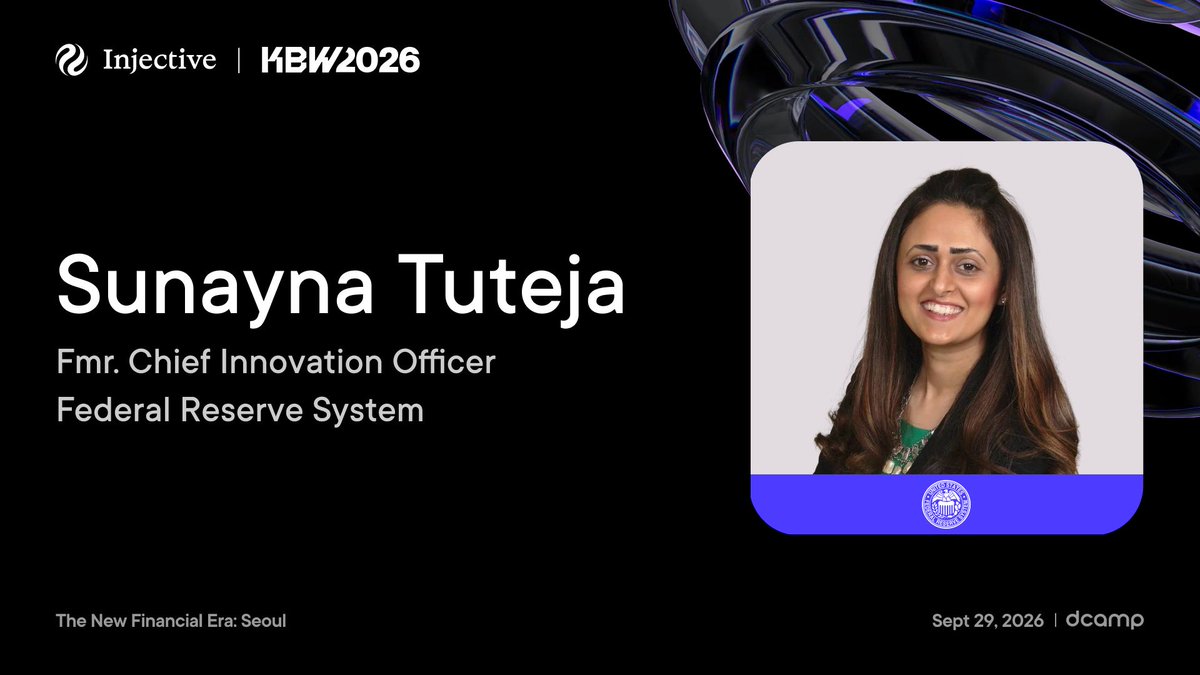
Sunayna Tuteja (@Sunayna), former Chief Innovation Officer of the Federal Reserve, is speaking at Injective’s KBW event.
From the @federalreserve, she brings a unique perspective on regulated digital assets and tokenization.
Please join us in welcoming @Sunayna to the GeoEconomics Center as a senior fellow! Sunayna joins the Center after serving as the Federal Reserve System's first chief innovation officer. We're excited to have her expertise at the Center, shaping our future of money work!
Who owns the agentic economy?
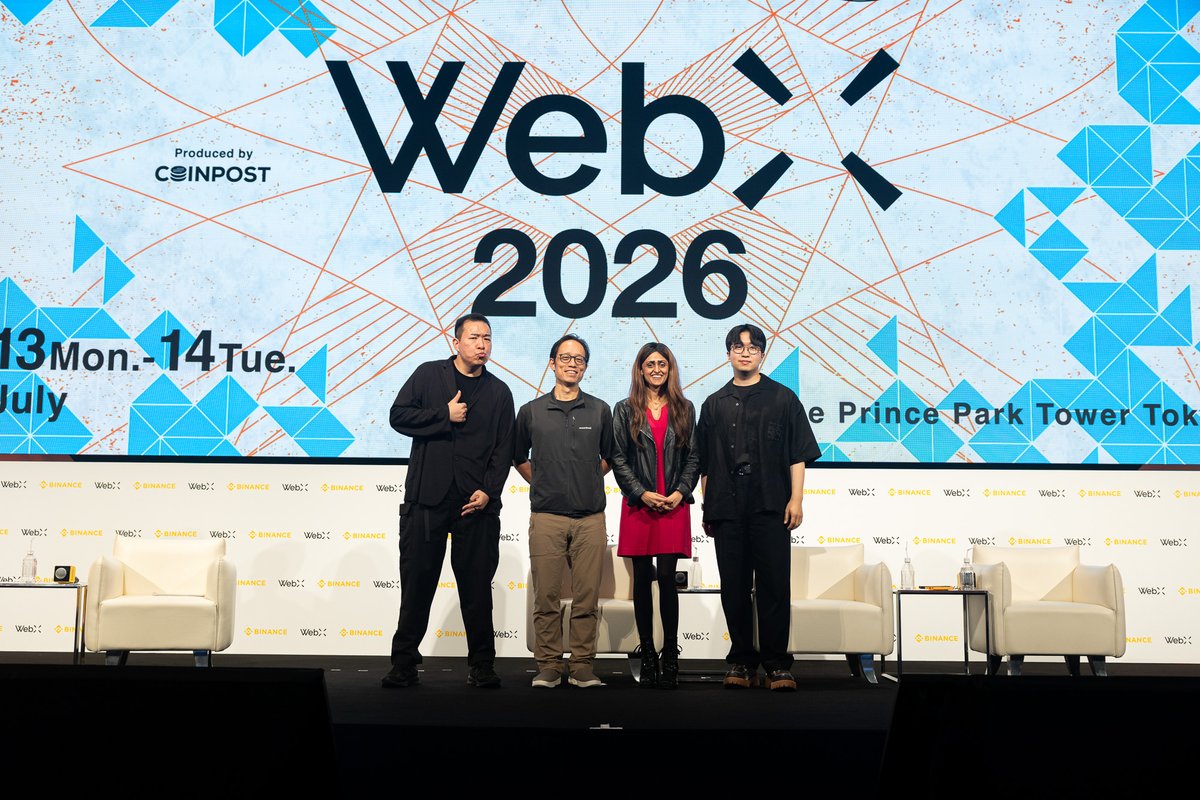
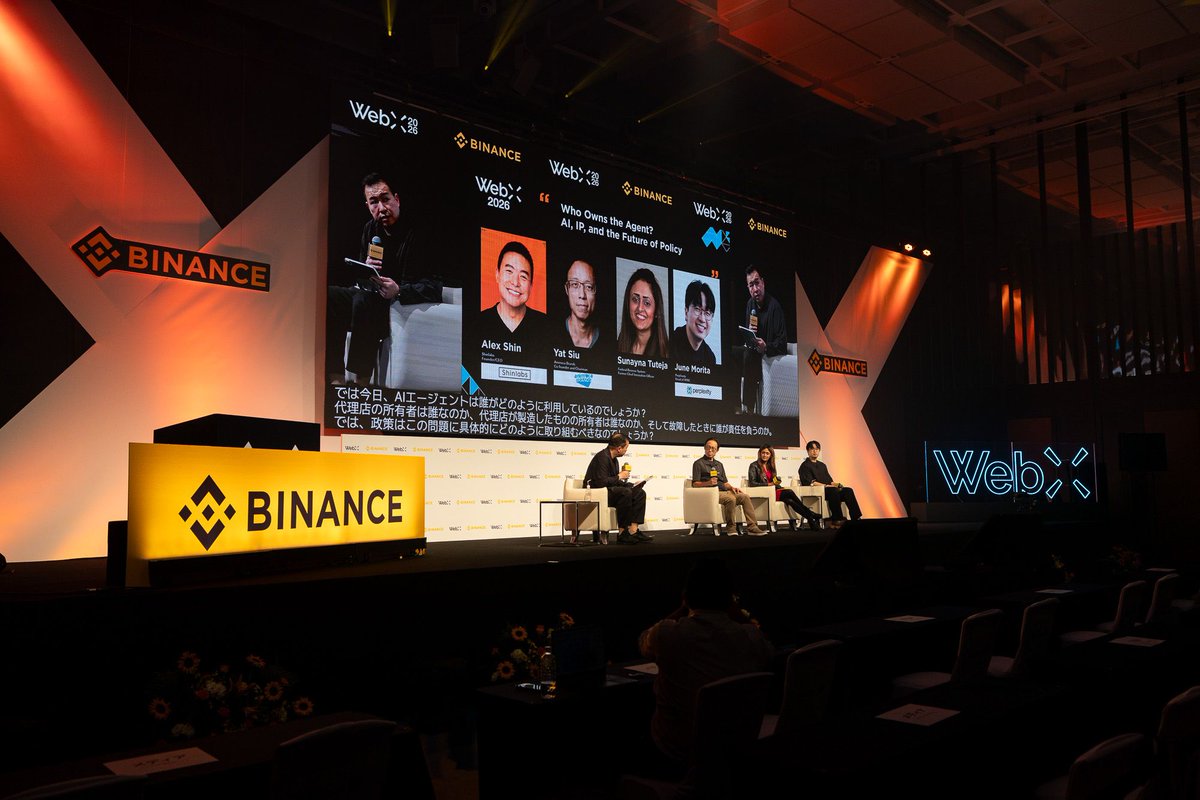
Our executive chairman and co-founder @ysiu joined @WebX_Asia alongside former Federal Reserve Chief Innovation Officer @Sunayna and @perplexity_ai's APAC head June Morita to tackle AI governance, IP, and the policy stakes around autonomous agents.
Without on-chain identity and verifiable property rights, that autonomy defaults to whoever controls the platform. Web3 rails are the only infrastructure that lets creators, users, and developers hold real ownership over agents and the data that powers them.
Watch the full panel: https://t.co/1uIagrt0f4
we treat regulation like an on/off switch, when it’s actually a throttle.
there's a common misconception that regulation is anathema to innovation - that they're competing or colliding forces.
having now spent time on both sides - building and policymaking - color me unconvinced.
done right, they're complementary. maybe compounding.
the right regulation, at the right time and in the right measure, can be a powerful tailwind for innovation. get the setting wrong and it quickly becomes a headwind.
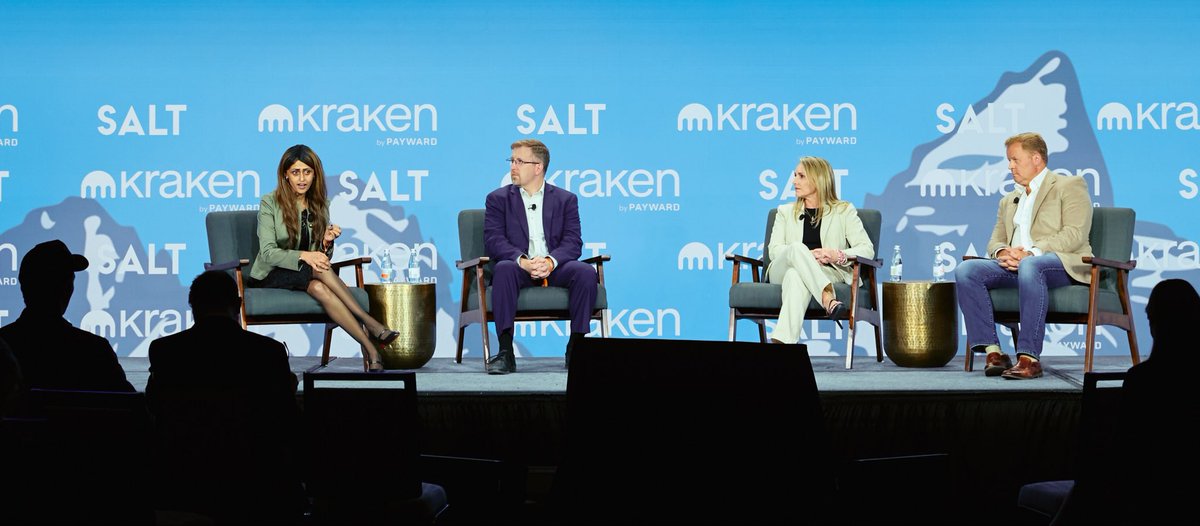
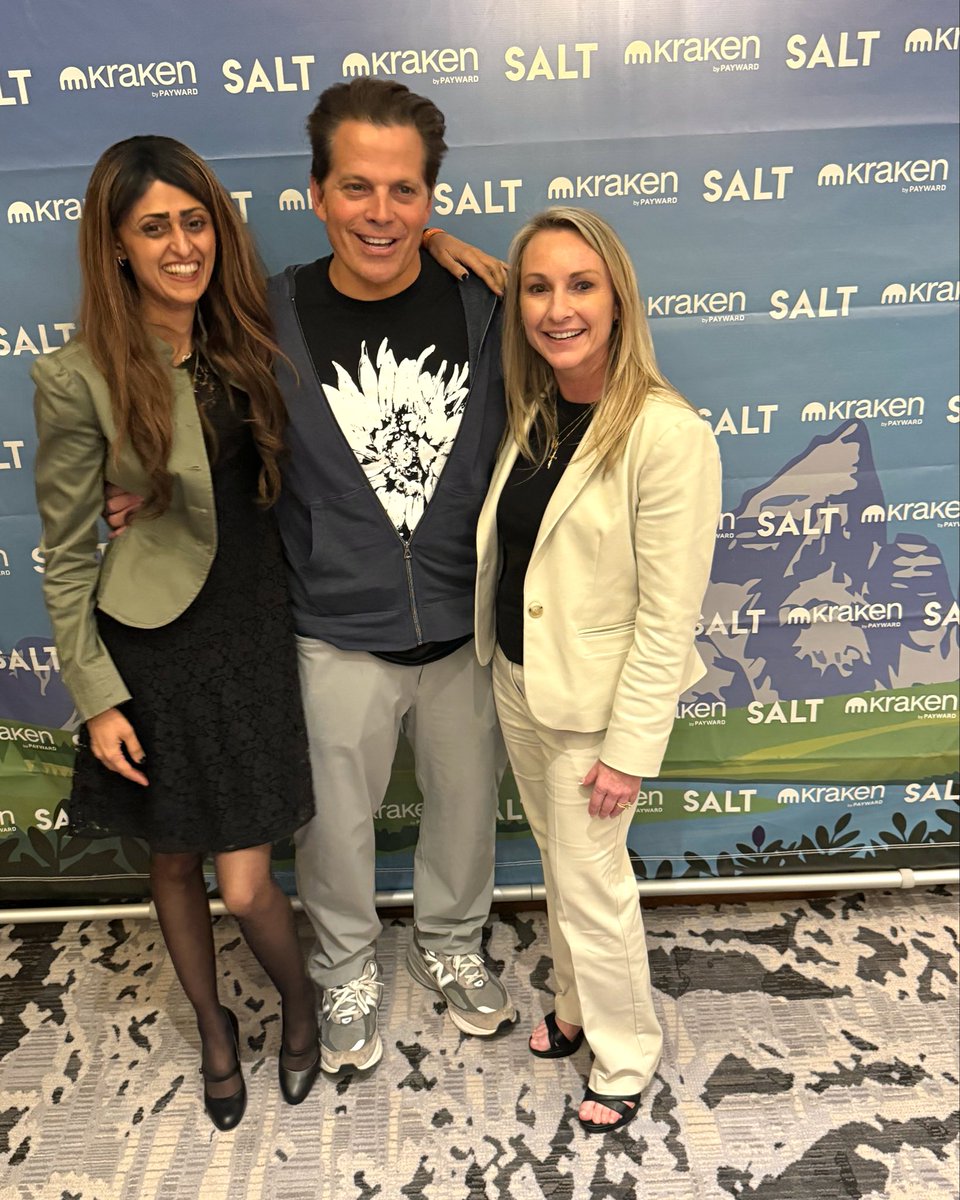
that was the premise for our engaging (ofc 🌶️) panel at the @SALTConference Wyoming Blockchain Symposium w/ @aaron_hedlund@CEA47, @teresagoody@BellementisPLLC and @BrianQuintenz@Kalshi - 3 leaders who can speak to this not as opinionators, but as doers who don't admire the problem, they jump into action.
we got tangible about "unlocking growth through policy innovation" with timely use cases spanning stablecoins, prediction markets, AI & agentic commerce and what it means to build frontier tech when the rulebook is still being written.
a question I always ask before a panel: what do we want people to think, feel, do differently when they leave the room? for this one, five landed:
→ build side by side.
engineers + policymakers at the same table, bringing their unique skills and experiences, solving for the art of the possible. good policy should be anchored in how the tech actually works - hands on keys, not assumptions or perceptions.
→ learn by doing + embrace perpetual beta.
with frontier tech, policy can't be designed for perfection or finality. tech keeps moving. risks keep evolving. no more "one and done" - it's a continuum. only way to learn is for both the public & private sector to ship the work that maximizes desired outcomes whilst minimizing risk, test results against reality & adapt with a bias for action.
→ reuse before you reinvent.
as the saying goes, there is nothing new under the sun. start with the principles, protocols & protections already in place, determine what's portable, then exercise proportionality to the new tech and actual risk.
→ regulate the risk, not the label.
start with the gnarly problem we're actually trying to solve or the risk/harm we're trying to prevent - not who's building it or what tech sits underneath it. new tech or a new class of builders shouldn't automatically mean novel treatment.
→ optimize for optionality.
effective policy manages today's risks without closing tomorrow's opportunities. preserve room to learn, adapt, build as the tech evolves and adjust the throttle as reality gives us better info, facts & data points.
which do you think is hardest to actually operationalize? as practitioners, where do you see the biggest delta between principle and practice?
speaking of making good trouble, massive thanks + congrats to @Scaramucci, John Darsie and team for another successful gathering 🔥
When AI acts on your behalf, who holds the rights to what it does?
At @WebX_Asia, our co-founder and executive chairman @ysiu joined June Morita of @perplexity_ai and @Sunayna of the Federal Reserve System to examine where artificial intelligence, digital property right, and governance intersect, and what needs to happen before digital infrastructure is set.
You trained the agent, you deployed it, you benefited from it. But do you own it?
She built TD Ameritrade's digital assets practice. Led digital transformation across TD Bank in Canada and the US. Then became the first Chief Innovation Officer in Federal Reserve System history.
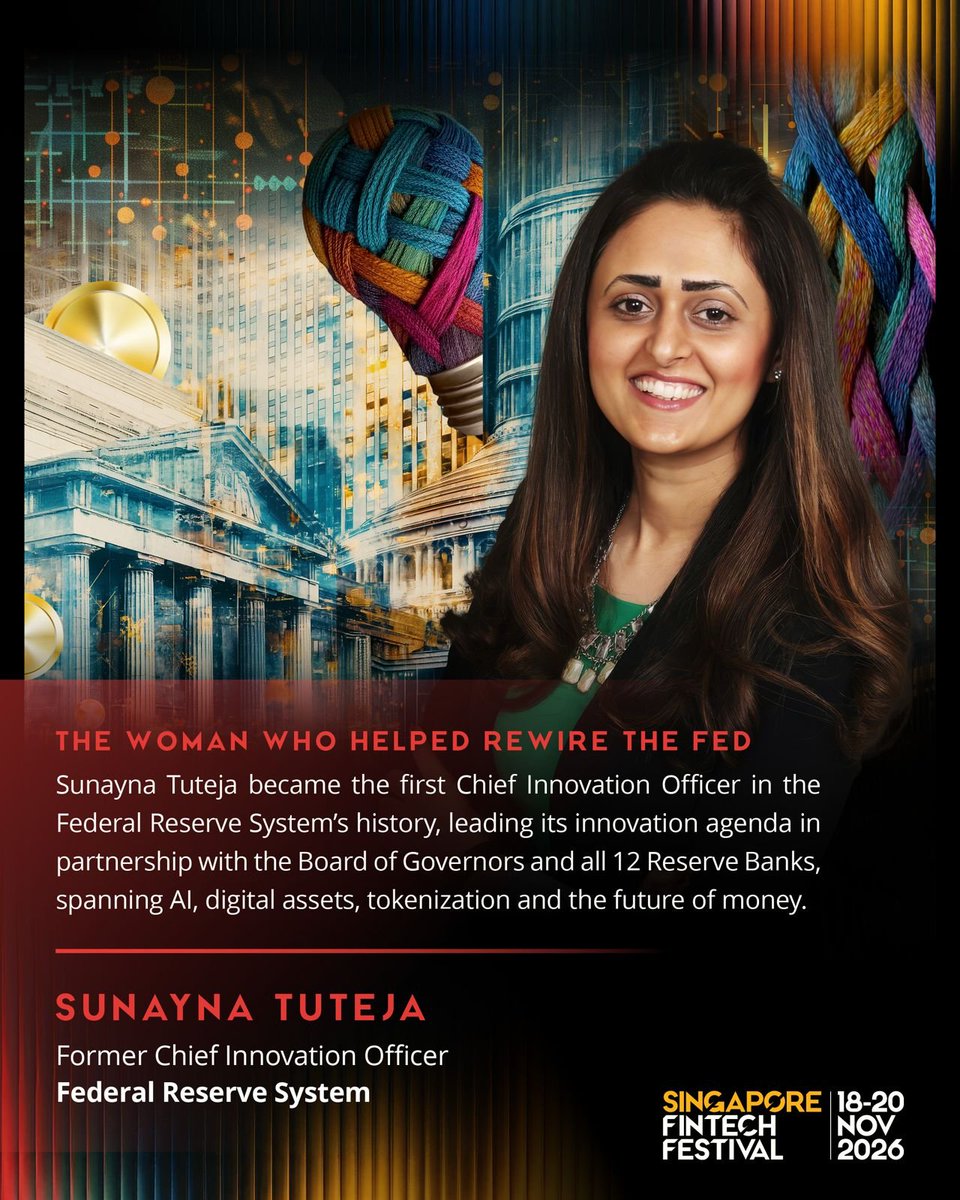
Meet Sunayna Tuteja (@Sunayna), former Chief Innovation Officer of the Federal Reserve System, joining #SFF2026.
At #SFF2026, she'll unpack what it takes to bring AI, digital assets and tokenisation into institutions built on caution, right as the industry grapples with a harder question: how fast can trust move before it breaks?
🔗 Catch Sunayna live, 18 to 20 November, Singapore Expo. Early Bird extended, ends 14 Aug 2359 SGT - lock in your seat before it's gone: https://t.co/MN7oJk6Svj
#SingaporeFinTechFestival #SGFinTechFest
The Federal Reserve may be further ahead on AI than many realize.
Former Fed Chief Innovation Officer @sunayna says that this year, every employee at the @federalreserve had AI in their performance goals.
🚨NEW: @Sunayna went from publicly criticizing the @federalreserve for being anti-crypto to becoming its first-ever Chief Innovation Officer.
During her five years at the monetary behemoth, she recruited engineers from crypto and fintech, championed AI adoption from analysts to governors, helped end the Fed’s CBDC work, and developed a framework that could give digital asset firms broader access to the Fed’s payment system.
Links below.
Who will shape the future of AI agents? 🤖
Yat Siu, Sunayna Tuteja, and Shun Morita explored how AI, IP, regulation, and innovation will evolve together.
One key takeaway: the future of AI depends not only on better technology, but also on the rules and incentives we build around it.
#WebX2026
a penny for your thoughts… or perhaps… a USD stablecoin? ;)
my first @pointzeroforum. impressive 👏 kudos to Jael Tan & Maha El Dimachki for curating sessions that turned valuable talking into invaluable doing.
one of my highlights is advancing a roundtable discussion on the derivative impacts of stablecoins scaling in emerging markets was a mind-expander - even for me, who has obsessed over stables for years.
we interrogated several aspects, applying the lens of host jurisdictions to understand the implications where stables have become everyday money, but where many of the key decisions around - reserves, redemption, and resolution (minting my 3Rs) are made elsewhere.
more to come. wdyt? welcome your perspectives.
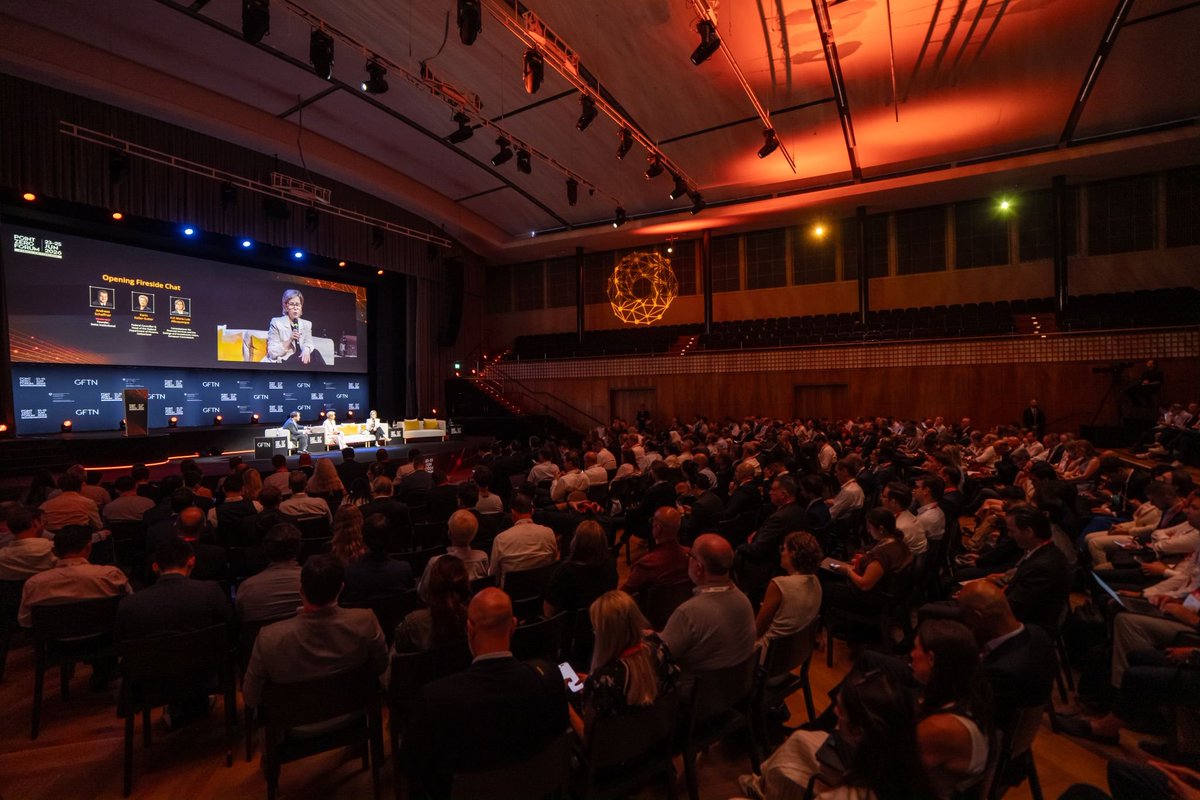
Over a week ago, we wrapped up the fifth edition of Point Zero Forum. A new venue in the heart of Zurich, three full days of content for the first time, and a programme built around the questions institutions are actually working through. Over 1,500 attendees from 72 countries filled the Forum Stage, the roundtable rooms, and the corridors in between.
Four themes emerged from those conversations:
🔸 A multipolar financial order is taking shape. Europe defines the regulatory standards, Asia accelerates deployment, and the United States anchors global liquidity.
🔸 Financial infrastructure is entering production. Stablecoins, tokenisation, AI, and quantum are moving beyond experimentation into scalable infrastructure.
🔸 Switzerland is positioning itself as a trusted bridge, connecting payments, securities, and compliance infrastructure.
🔸 Trust is becoming a system design challenge, as policymakers work to preserve monetary sovereignty and embed accountability into autonomous systems.
To everyone who made the journey to Zurich, our speakers, sponsors, partners, and attendees, thank you for making the fifth edition what it was. These conversations continue at Singapore FinTech Festival (@sgfintechfest) and the Insights2040 Annual Meetings this November.
🔗 Register interest 2027: https://t.co/MJIgUkWO4a
🔗 Singapore FinTech Festival: https://t.co/CShad9OEQC
🔗 Insights2040 Annual Meetings: https://t.co/mJbPNZ8ILz
“Innovation. Central banking. Isn’t that an oxymoron?”
That was the thought bubble in my head five years ago when I was approached about becoming the first Chief Innovation Officer of the Federal Reserve System.
Having spent much of my career at the nexus of finance, tech, and crypto - often making good trouble on the other side of the policy folks - I was skeptical.
But my curiosity superseded my skepticism. So I said yes!
What followed was a master class in central banking. And I can disabuse any notion that innovation in central banking is an oxymoron. In fact, I would submit that in a world where the volume, variety, and velocity of technologies - AI, stablecoins, tokenization, quantum, and more - keep throttling up, innovation is an imperative for institutions, public and private alike, to meet the moment.
A few lessons from five years of hands-on-keys building:
• gnarly problems over shiny objects. Chasing the tech leaves you with a boneyard of zombie projects. The real unlock comes from obsessing over process friction and customer irritants and shipping outcomes that actually move the business or the mission forward.
• the bold and the boring. The glitzy moments are powered by unglamorous discipline - the rhythms, the rigor, the reps. The real work is the scaffolding behind the wins on the board. And often, making the call when the risk of inaction outweighs the risk of action.
• get in the arena. Innovation is a team sport - make that a full-contact sport. No spectators. The best outcomes happen when business, technologists, operators, and your BFFs in legal, security, and risk get in it together - alongside strong public-private partnership.
I leapt in not knowing exactly what I was getting into except that I wanted to serve my country, take on a steep learning curve, and make a meaningful dent. Check.
Super grateful to the many colleagues and partners who were part of the journey and helped build a durable culture of innovation.
Now, on to the next adventure - perpetual beta!
🤯🤯 If you told me 9 months ago that the ***Fed*** would host a conference focused on "innovation" I wouldn't have believed it. What say you @nic_carter 👀
Many thanks to Fed Gov. Chris Waller and the Fed's innovation guru, Sunayna Tuteja, for this important initiative.
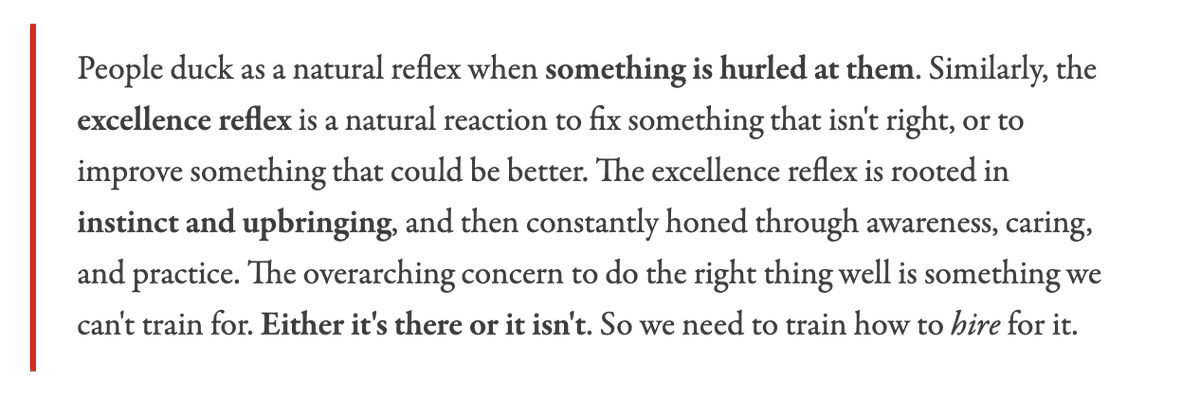
I frequently quote this bit from @dhmeyer.
The best people I've been lucky to work with have the excellence reflex. If you don't see it in anyone with you work with, you're on the wrong team.
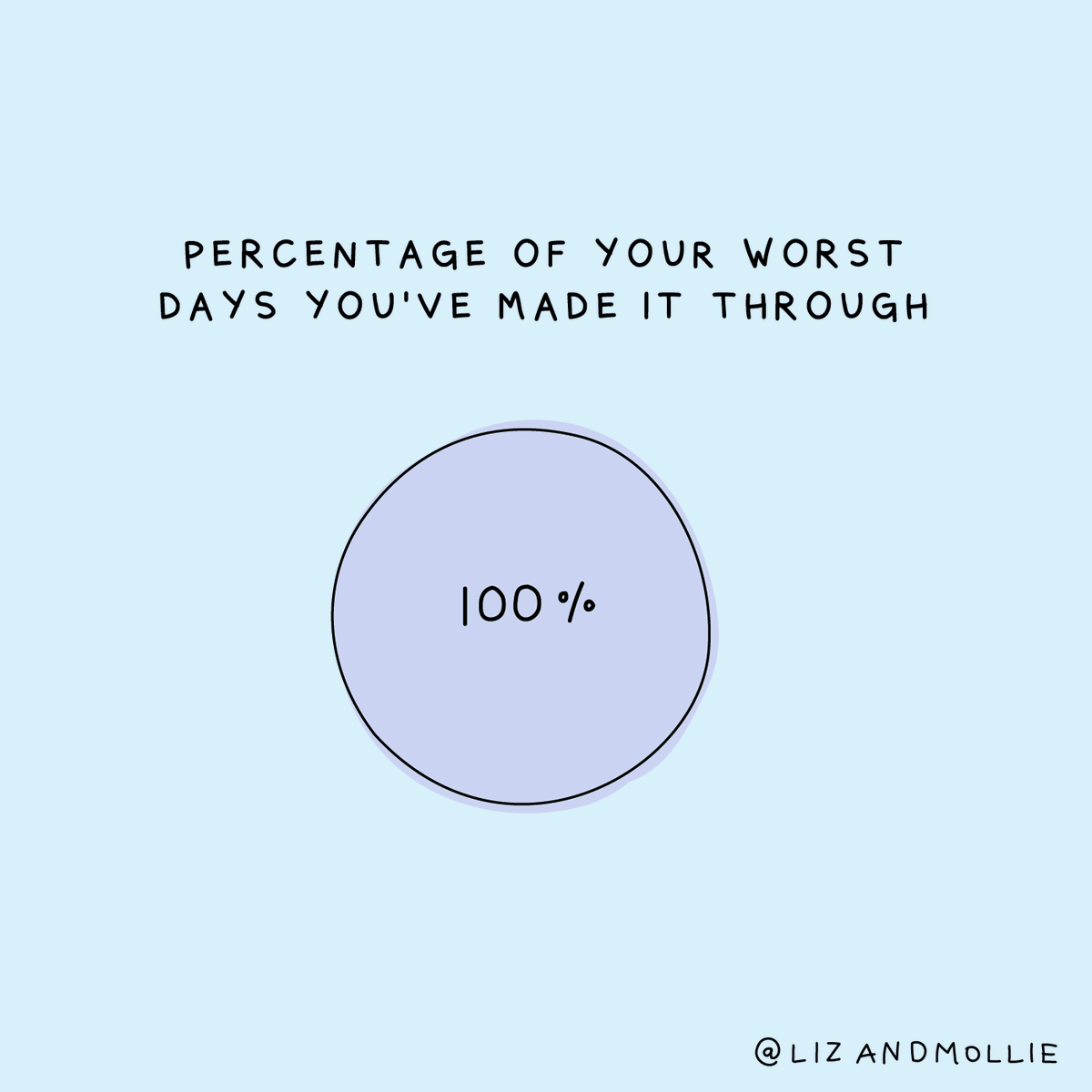
Resilience is not resistance to suffering. It's the capacity to bend without breaking.
Strength doesn't come from ignoring pain. It stems from knowing that your past self has hurt and your future self will heal.
Fortitude is the presence of resolve, not the absence of hardship.
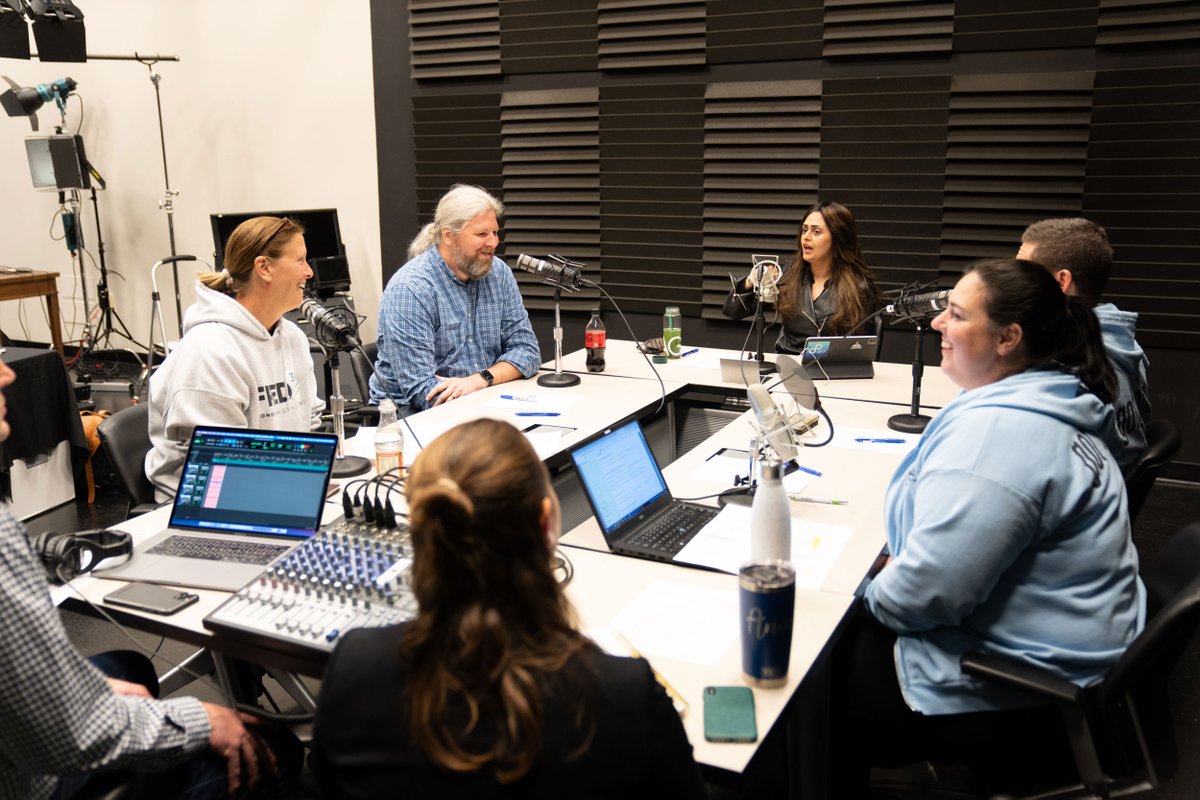
In the latest Central Banker e-newsletter: Leaders of the FRED team discuss how innovation motivates their work in a Timely Topics podcast, and a Regional Economist article looks at the effects of stopping emergency unemployment benefits on job growth https://t.co/n2PdpzRlKZ
🚀gearing up for quality time at #consensus2022, listening & learning from builders in fintech & crypto
🔥delighted to connect crypto<>fed communities, facilitate meaningful convos, explore opps to collab w/ industry & academia
🙏🏽grateful to lead session on demystifying the Fed