MIT mathematically proved that AI will destroy the democracy.
A Nobel-winning MIT economist published a terrifying paper called "Automation and Repression"
As AI and automation replace human labor, wealth concentrates heavily in the hands of a tiny group of capital owners. Inequality skyrockets.
When inequality hits a critical mass, workers realize they are being crushed and the threat of a popular revolt spikes.
Faced with that threat, the ruling elite are forced to make a choice.
They can redistribute the wealth through taxes, or they can use force to keep people down.
The paper mathematically proves a dark reality: there is a direct, inescapable link between automation and political repression.
The more capital accumulates through AI, the more the elite prefer repression over redistribution.
Why? Because sharing the wealth cuts into their power. Funding a police state protects it.
It gets worse.
The authors modeled what happens when an economy starts inside a clean, stable democracy.
As automation advances and capital concentrates at the top, the math shows that the elite eventually find democracy to be a liability.
They stop supporting democratic systems. They back a coup. They install a repressive system just to protect their automated wealth.
Nobody is voting to end democracy.
The technology’s economic incentives just make authoritarian control the logical next step for survival.
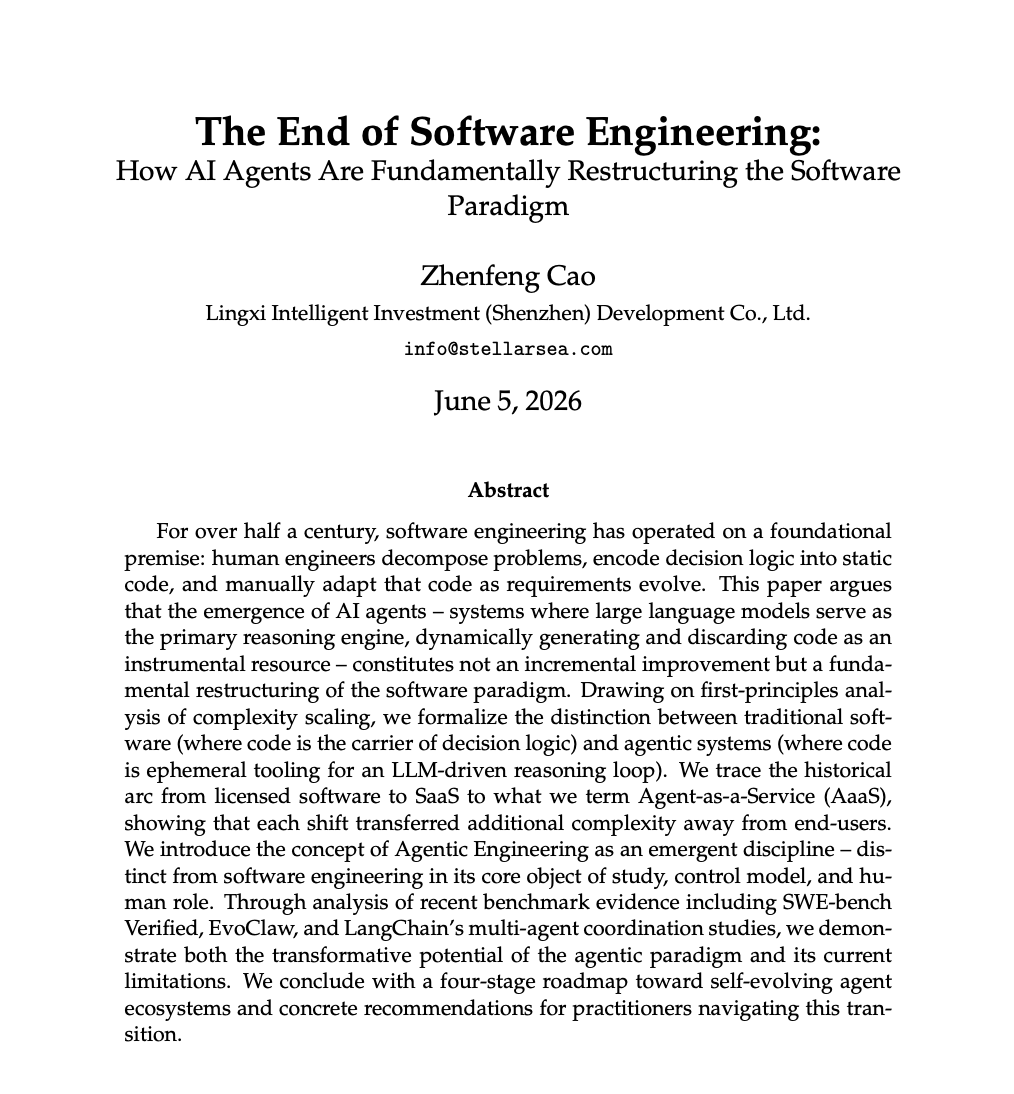
Chinese researchers published a paper with a devastating title: "The End of Software Engineering”
it argues software engineering is finished.
In traditional software, code is the carrier of pre-written human logic.
In agentic software, the AI agent is the software.
Code is no longer a permanent monument built by human hands. It is completely ephemeral, dynamically generated, executed, and discarded on the fly by an LLM-driven reasoning loop.
Think about how software delivery has evolved:
• Era 1: On-premise licensed software (you installed it locally)
• Era 2: SaaS (hosted in the cloud, managed by vendors)
• Era 3: Agent-as-a-Service (AaaS)
Each historical shift transferred complexity away from the user. But this latest shift transfers something entirely different.
It transfers decision-making complexity itself.
The paper argues that traditional engineering is hitting a hard complexity wall. Human brains can only hold so much state, manage so many dependencies, and debug so many lines at once.
LLM-based agents scale non-linearly.
They don't just write functions faster. They navigate architectural complexity by outsourcing reasoning to models that improve every single month.
Which means the role of the developer is permanently changing.
You are no longer a code author typing syntax line by line.
You are an intent architect.
Your job is no longer writing the implementation. It is specifying goals, designing multi-agent coordination loops, and auditing outcomes.
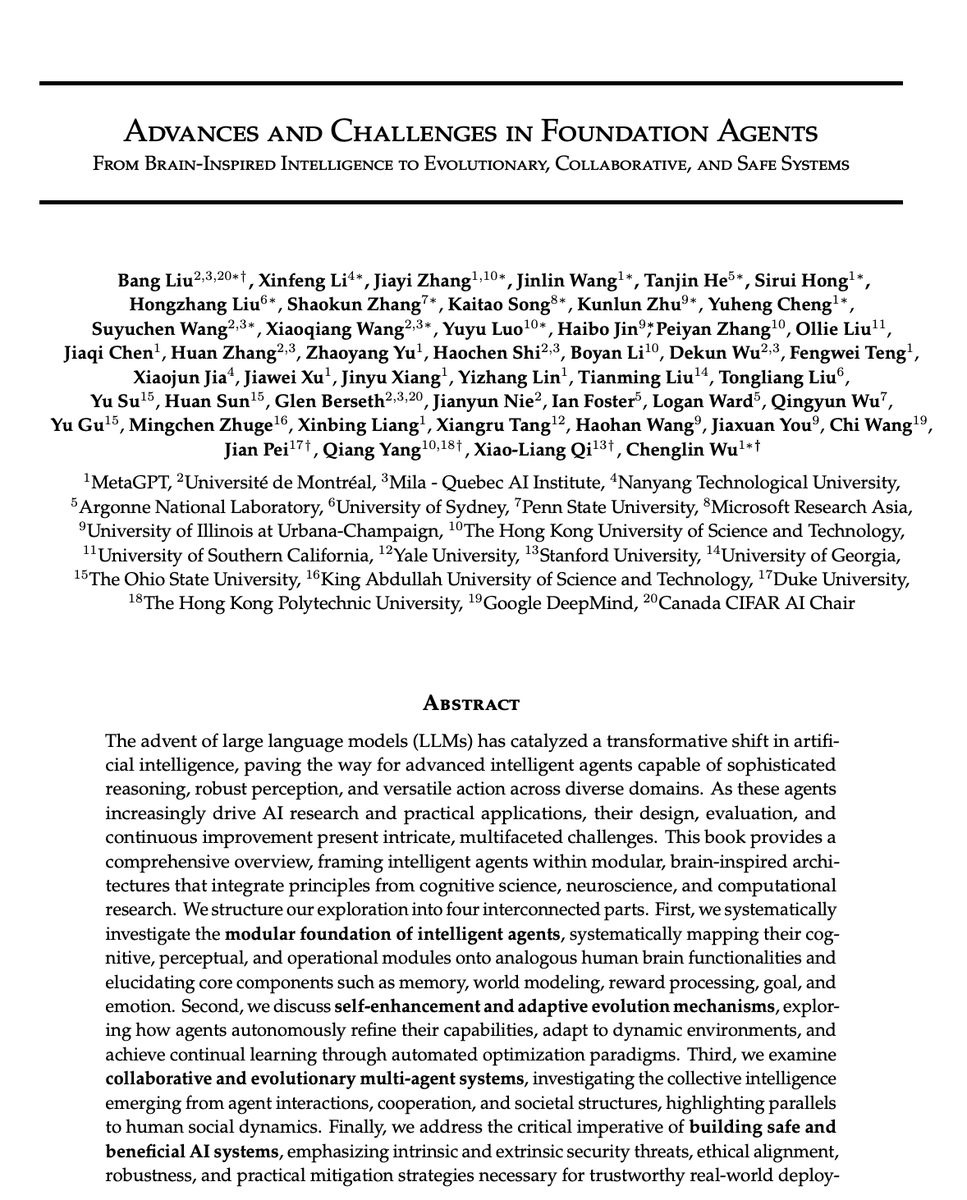
Google DeepMind researchers argue we need to stop building LLMs..
They published a paper that proposes an alternative solution that changes everything.
LLMs are incredible at predicting the next token.
But they are fundamentally missing the core architecture of true intelligence. They lack persistent memory, an active world model, dynamic goal management, and continuous self-evolution.
They are a supercharged engine without a car.
The paper lays out the definitive shift we must make: Foundation Agents.
Instead of treating the LLM as the entire product, we have to move toward modular, brain-inspired architectures.
The new blueprint breaks AI down into distinct biological and cognitive systems:
• The World Model: An internal simulation to test consequences before taking action, rather than just guessing text sequences.
• Dynamic Memory & Perception: Persistent systems that learn, adapt, and evolve from real-world feedback rather than static pre-training data.
• Reward & Goal Processing: Systems capable of long-horizon autonomous planning instead of waiting for a human prompt.
• Collaborative Societies: Multi-agent ecosystems where intelligence emerges from negotiation, competition, and interaction rather than a monolithic chatbot.
The takeaway is brutally clear:
Scaling laws are flattening. Simply throwing more text at a transformer won't get us to AGI.
Paper: Advances and Challenges in Foundation Agents.. by researchers at Google DeepMind and leading AI labs.
Instead of watching 2 hours of Netflix tonight, watch this in-depth interview with Kimi founder Zhilin Yang.
He explains why everyone’s racing on reasoning while Claude quietly bet on agents - but the real hard part isn’t the agent itself, it’s the model underneath.
His memorable metaphor: a pure reasoning model is like “a brain in a fish tank” - it can think forever but never touches the world. An agent is that brain wired to tools, memory, and action.
Yang shares how they’re thinking about K2 helping build K3 through strong agent skills, the biggest bottlenecks in generalization, test-time scaling in two dimensions, and even how RL-style thinking applies to both models and running teams.
Whether you’re building agents, scaling models, or just want to understand frontier AI thinking beyond the usual Western narratives, this is one of the clearest and most thoughtful long-form discussions available right now.
Bookmark it & watch - it might be the most valuable 100 minutes you spend on real AI engineering and strategy this month.
A senior Google engineer just dropped a 19-page PDF on "Loop Engineering" for LLM and agentic systems.
Act → Observe → Learn → Repeat
• Act: the LLM proposes a code transformation (tile this loop, parallelize that one).
• Observe: a compiler runs it and reports back - is it valid? faster? slower? by how much?
• Learn: the LLM reads that feedback and adjusts its next move.
• Repeat until it stops finding improvements.
The agent gets smarter purely from grounded feedback inside its own context window.
This 19-page PDF totally changed the way I’m building agentic systems today.
Read it now, then explore the article below.
Loop Engineering is getting hype now.
But not many talks about how to actually do it
So I open-sourced the template my team uses to build agent loops:
- a shared artifact / knowledge layer
- logging, verification
- and a codebase harness so work compounds across runs
Plus a 20-min deep dive on how to think about it and set it up for real: https://t.co/b3m22eX8oI
Copy the template. Adapt it to your own loops.
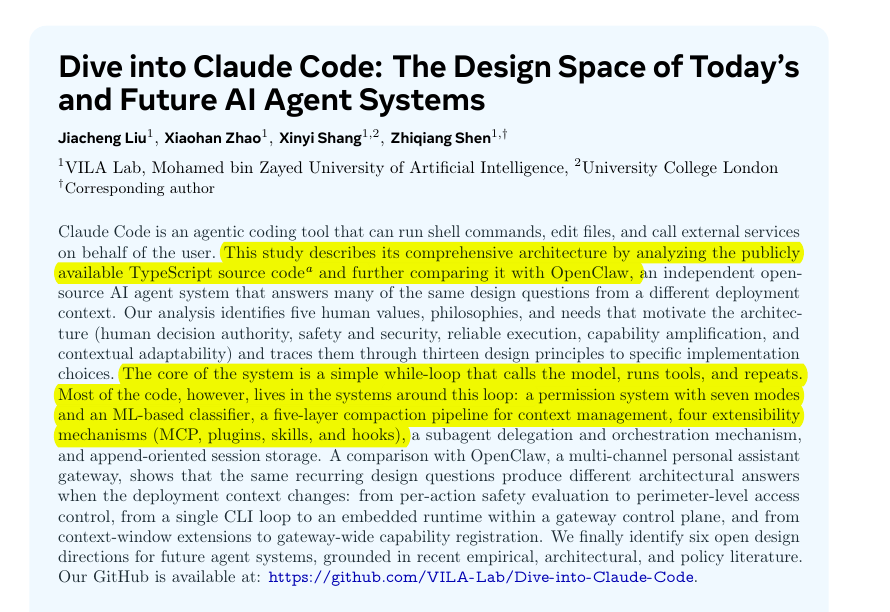
The paper is saying that Claude Code works well not because it has a complex AI brain, but because a simple AI loop is surrounded by a huge, carefully built system for tools, safety, memory, permissions, and recovery.
The authors studied the public TypeScript source and found that the main agent loop is very small: call the model, run approved tools, add results back, and repeat.
What takes up most of the system is the harness, meaning the regular software around the model that decides what tools exist, what actions are allowed, what gets remembered, and what happens when things fail.
They also show that context management is a major design problem, so Claude Code uses several layers to shrink or summarize older information before the model runs out of space.
autonomy does not remove infrastructure, it increases the burden on infrastructure.
A coding agent that can run shell commands and edit files cannot be treated like a chatbot with plugins, because every action has side effects and every side effect needs a boundary.
----
Link – arxiv. org/abs/2604.14228
Title: "Dive into Claude Code: The Design Space of Today's and Future AI Agent Systems"
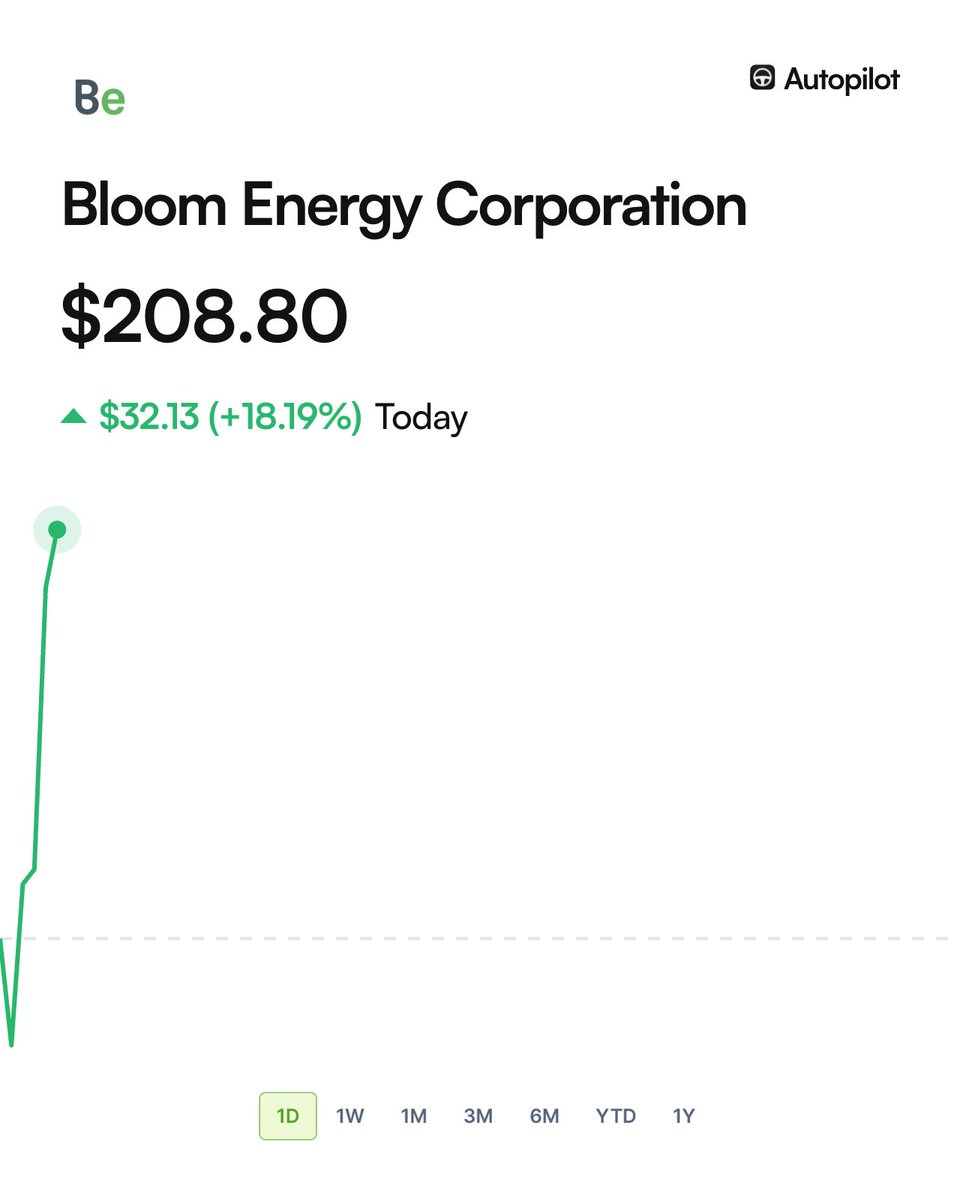
OpenAI fired Leopold Aschenbrenner at 22. Three years later, he manages $5.5B
Today alone, he just made $315M on Bloom Energy $BE
Timeline:
• Age 19: Graduates Columbia as valedictorian
• Age 22: Joins OpenAI's Superalignment team
• Age 22: Fired for raising AI safety concerns
• Age 23: Publishes viral manifesto on AGI
• Age 23: Launches hedge fund with $225M
• Age 24: Returns 47% in six months
• Age 25: $5.5B in equity exposure
And for those unaware, his tracker has been live on Autopilot since 3/6/26.
It's up 29.9%, even with the delay.
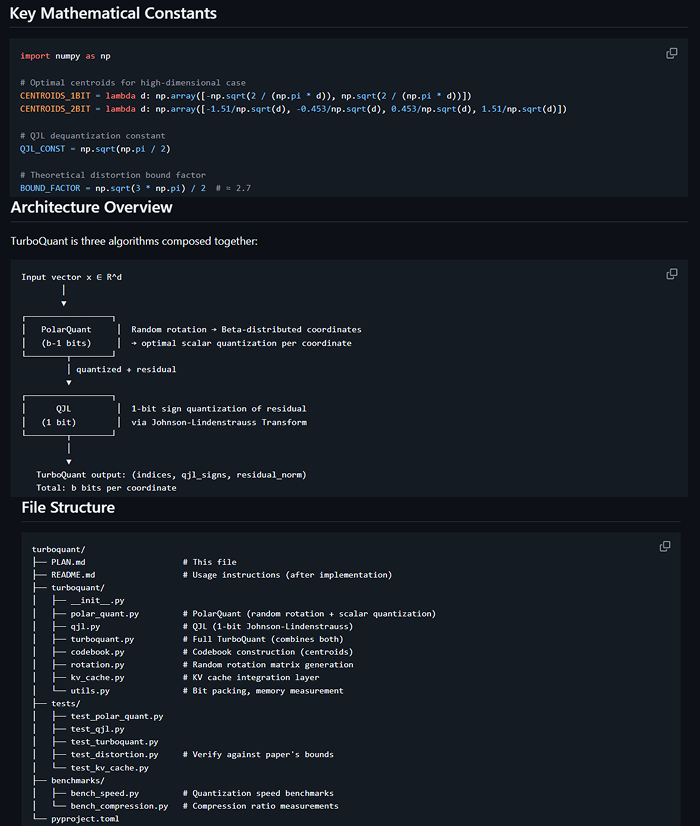
Solo dev reverse-engineered Google's billion-dollar algorithm in 7 days
Google published the paper that crashed memory stocks worldwide. Then shipped zero code.
Tom Turney read the math, opened his terminal, and built the whole thing with Claude - then made it faster than Google promised.
Day 1-3: Core algorithms, 141 tests, Python prototype
Day 3-5: C port into llama.cpp, Metal GPU kernels
Day 5-7: Speed optimization from 739 to 2747 tok/s
That's a 3.7x speedup through pure engineering:
> fp32 → fp16 WHT
> half4 vectorized butterfly ops
> graph-side rotation
> block-32 storage layout
Then he added his own research on top:
> Sparse V: skip 90% of value decompressions at long context
> Asymmetric K/V: keep keys precise, compress values harder
> Temporal decay: old tokens get lower precision automatically
Result: 35B model running on a MacBook with 4.6x compressed cache.
613 GitHub stars in a week. Google still hasn't released their own code.
Elon Musk thinks coding dies this year.
Not evolves. Dies.
By December, AI won’t need programming languages. It generates machine code directly. Binary optimized beyond anything human logic could produce. No translation. No compilation. Just pure execution.
Musk: “You don’t even bother doing coding.”
Code was never the point. It was friction. A tax we paid because machines didn’t speak human. AI just learned fluent human. The tax is gone.
Now plug that into Neuralink. No syntax. No keyboard. No screen.
Musk: “Imagination-to-software.”
Thought becomes executable. You imagine an outcome, the system architects and compiles it into reality instantly.
We’re not automating programming. We’re erasing it from existence.
The entire profession collapses into a thought. Decades of training reduced to irrelevance. The gap between idea and instantiation hits zero.
You don’t build anymore. You imagine, and it materializes.
Not incremental progress. Total phase shift. The way humans have created things for ten thousand years just became obsolete.
Welcome to a world where the limiting factor isn’t skill, resources, or time. It’s whether you can picture what you want clearly enough for a machine to birth it into existence.