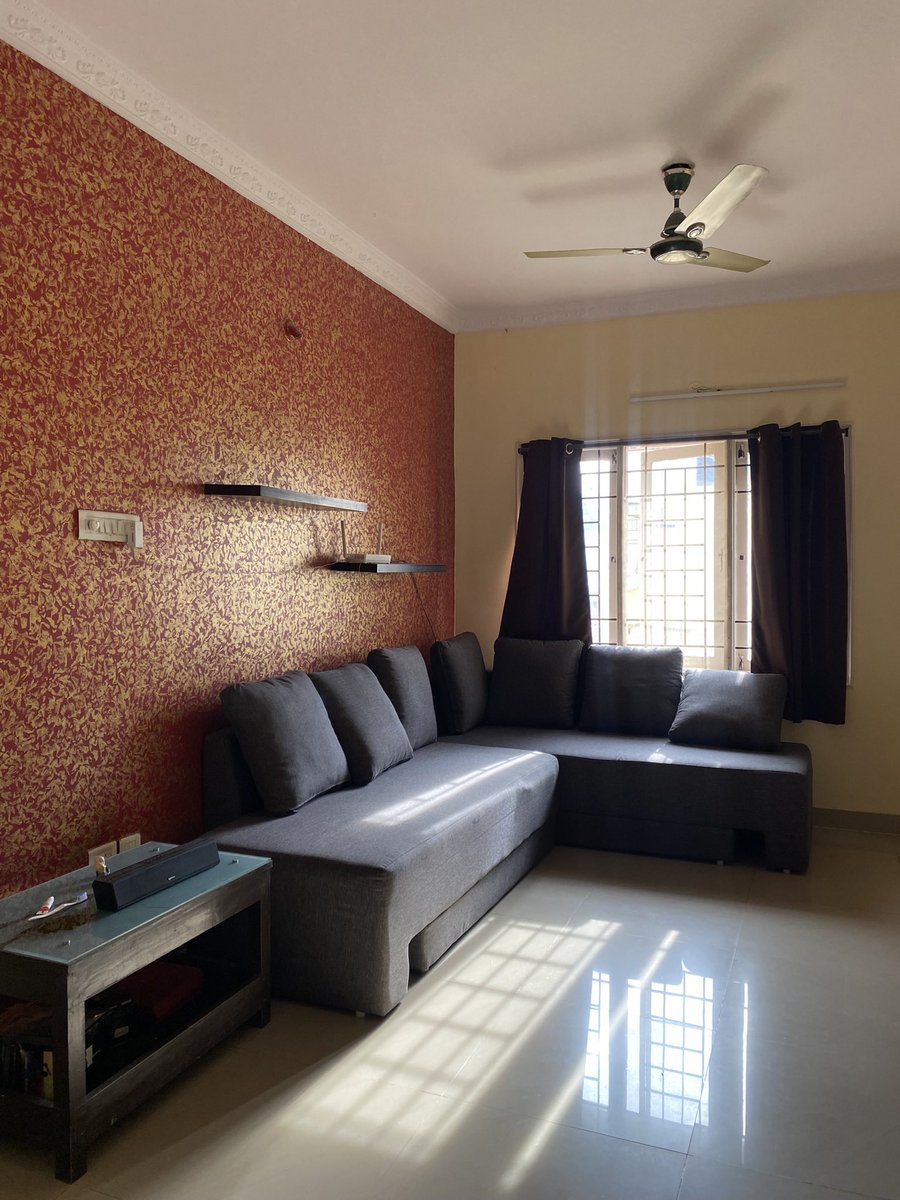
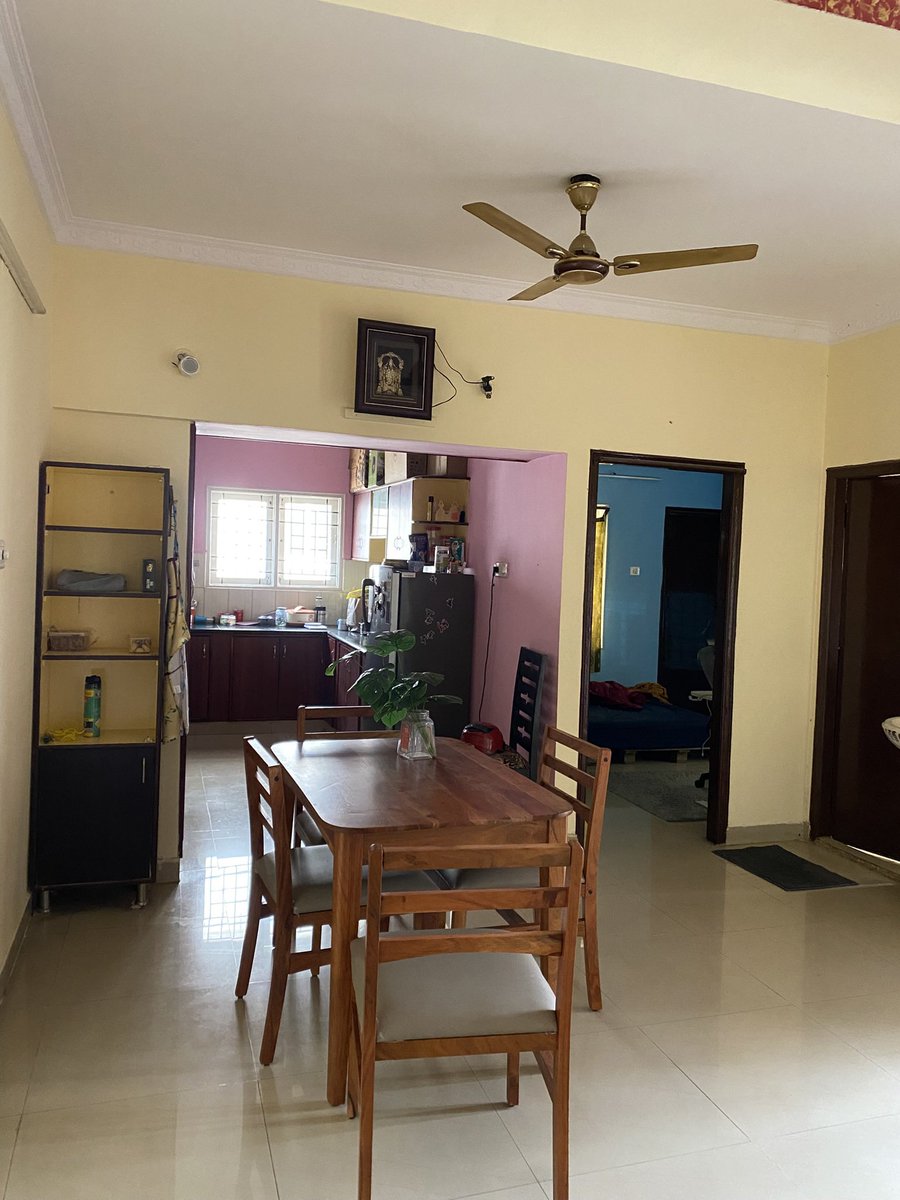
LOOKING FOR A FLATMATE !
Move in October 1st week
1 room in a 2bhk in Marathahalli,
2mins walk from a bus stop
Rent - 14k+ maintenance(2-2.5k)
1200 sq ft
3 balconies
Fully functional kitchen
Basic furniture is rented
Gated apartment
Negligible EB
@fmrbangalore@BangaloreRoomi
LOOKING FOR A FLATMATE !
Move in October 1st week
1 room in a 2bhk in Marathahalli,
2mins walk from a bus stop
Rent - 14k+ maintenance(2-2.5k)
1200 sq ft
3 balconies
Fully functional kitchen
Basic furniture is rented
Gated apartment
Negligible EB
@fmrbangalore@BangaloreRoomi
You have to be absolute anti indian to even think about removing such visionary party and cabinet and to bring dumb low iq people like Rahul gandhi, Malikaarjun Khagre type in power who only talk about dalit pichda pvt sector reservation and spread hate on Indian industries.
First in my bloodline to see a govt who spend money on crucial sector till now 22 billion dollars+ spend on semiconductor!
We are planning to make semi from 128 nm to advance 3 nm in just 8 yr it will be ntg less then miracle 🎀
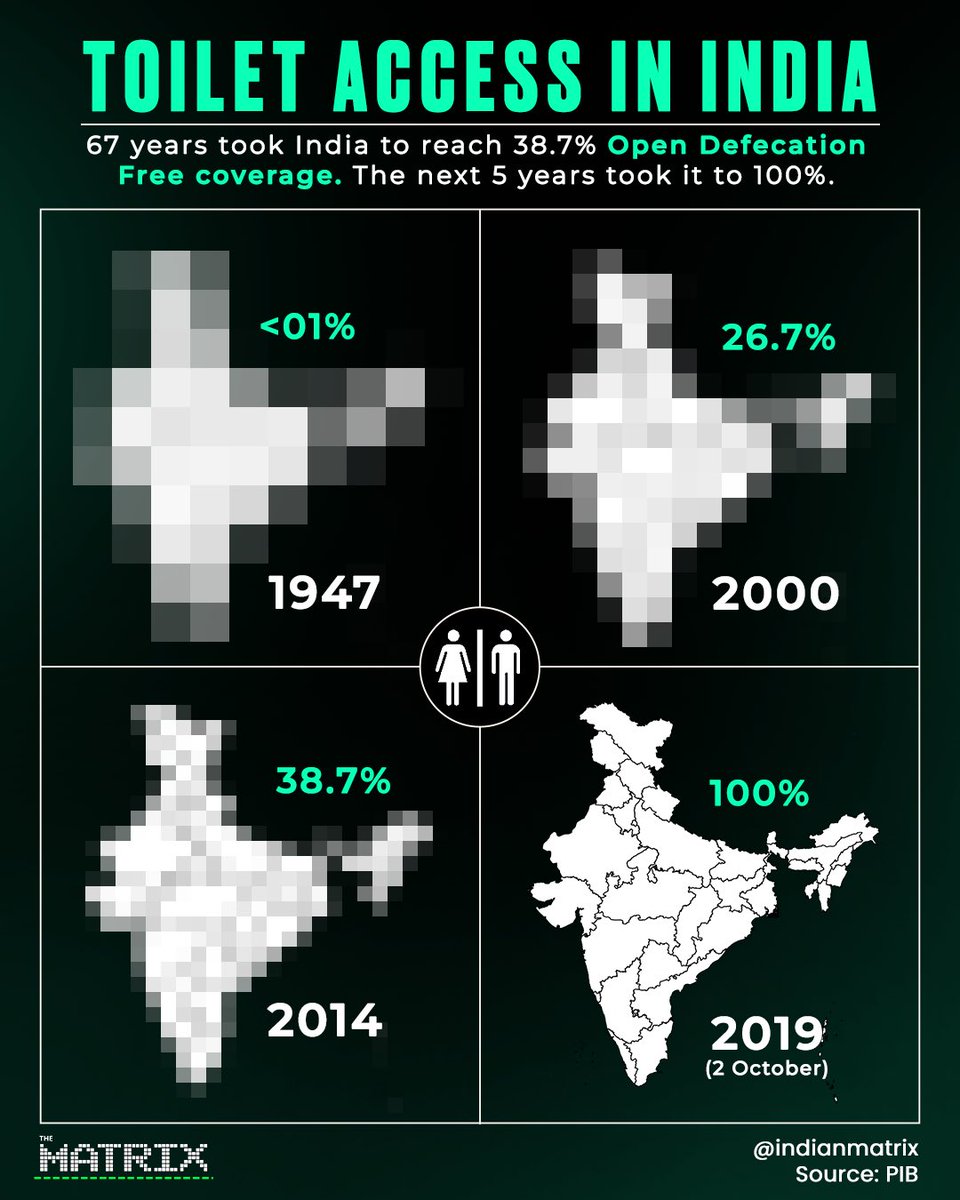
From less than 1% Open Defecation Free coverage in 1947 to 38.7% in 2014, India’s sanitation journey took decades.
The next five years saw a rapid acceleration, with India reaching 100% ODF coverage in 2019 under the Swachh Bharat Mission.
The pixelation reflects the percentage: higher coverage means greater image clarity, while lower coverage appears more pixelated.
67 years to reach 38.7%. Then 5 years to reach 100%.
India’s steel story is getting harder to ignore.
From 68.3 MT in 2010 → 164.9 MT in 2025, a 2.4× increase in 15 years.
India is now the world’s #2 steel producer, behind only China.
In 2025, India produced more steel than the US, Japan, Russia & South Korea individually.
And it’s still growing, 10.4% higher than 2024.
From 68 MT to 165 MT.
India is building at scale 🔥
15 Economic Indicators.
From where PM Manmohan Singh left India in 2014 to where India stands today under PM Modi in 2026.
• Higher growth
• Lower inflation
• Smaller subsidies
• Stronger external position
• Higher capital expenditure
• A greater share of global GDP
• Lower non-performing assets
India’s economy is built over decades.
But some decades change its trajectory more than others.