1/n Very excited to share our recent work!
To understand gene regulation across diverse environmental conditions and cellular contexts, we treated a broad array of human cell types with three environmental exposures in vitro.
Great paper showing how different ESM family models have different blind spots and co-distilling them results in very strong coding variant effect prediction performance without using any auxiliary training data.
Researcher build huge libraries with thousands of papers in Zotero.
But they can't integrate Zotero with AI - until now.
Here's how to integrate your Zotero library with Claude:
Chat with papers, discover new papers, and import them without leaving Zotero.
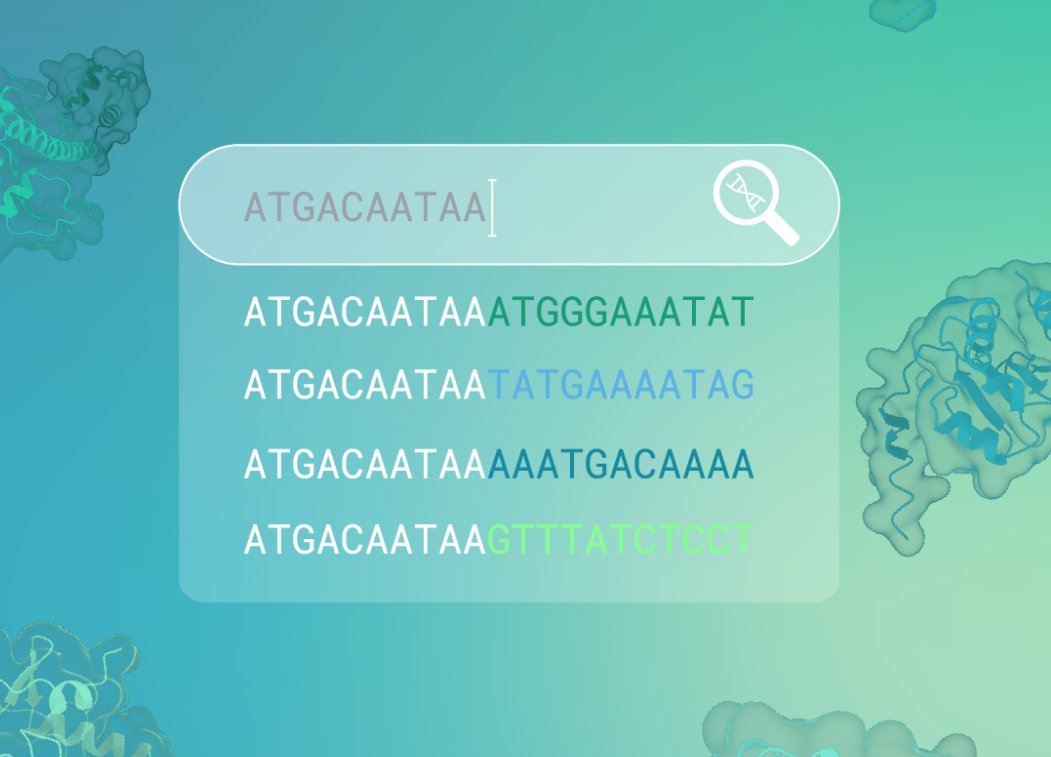
Today in @Nature, in work led by @aditimerch, we report the ability to prompt Evo to generate functional de novo genes.
You shall know a gene by the company it keeps! 1/n
Happy to share that our work from the @nmancuso_ lab is out in @NatureGenet! We developed SuShiE, a multiancestry fine-mapping method for molecular traits. https://t.co/8gySuJkDEw
To the 23andMe Community,
I am incredibly excited and humbled to share with you that TTAM Research Institute (TTAM), a new non—profit medical research organization that I founded and lead, has completed the acquisition of 23andMe. I formed TTAM and pursued the acquisition of 23andMe because of my strong belief that everyone should continue to have the ability to learn about and benefit from their DNA, and that a non-profit structure is the best way to solidify our values and commitments to our customers, the scientific community and the world at large.
Since its founding in 2006, 23andMe has stood for something revolutionary: that individuals should have a right to understand themselves at the most fundamental level — through their DNA. Through their DNA they can understand their health risks , prevent disease and be true partners in participating in research that shapes the future of health and medicine.
Understanding the code of life - our DNA - is one of the most exciting scientific missions of our lifetime. Through our DNA, we can learn about our ancestry origins, prevent potential health issues, and help develop treatments that could benefit all of us. Humans are 99.5% genetically identical, and we have DNA in common with everything alive today. The pursuit to understand DNA will benefit all of us and all of life.
That belief built one of the world’s most diverse and engaged genetic research communities. More than 15 million people have joined this journey, and over 80% have chosen to participate in research, contributing to over 275 peer-reviewed publications in cancer, cardiovascular disease, neurological disorders, and more. These discoveries did not just stay academic - those discoveries were also translated into new genetic reports for customers that helped them continue to learn about their own DNA. Thank you to the 23andMe community that participated in research and contributed to discoveries that have had a meaningful impact for the world.
I want to end on a personal note. Over the last few years I unfortunately lost my father, my nephew and my sister. These tragedies have sharpened my focus on what is most important to me and how I want to spend my time. My passion is 23andMe. The opportunity to give back to society with our research and help everyone benefit from learning about their genome with a healthier life, is a personal mission where I am dedicating my resources and my time. We all have a disease or health condition that we care about . By coming together as a single community, we are stronger and more powerful to make discoveries and to ultimately make a difference. The future of healthcare belongs to all of us and it’s in our power to make a difference.
I am honored to be back with 23andMe and look forward to sharing more with you in the weeks and years to come.
With gratitude,
Anne
This is effectively a cure for type 1 diabetes. Autologous, (chemically) reprogrammed iPSCs were engineered from a patient's fat cells and injected back into her stomach. After ~2.5 months, she no longer needed insulin and now enjoys ice cream + candy like a normal person.
Today we are releasing ether0, our first scientific reasoning model.
We trained Mistral 24B with RL on several molecular design tasks in chemistry. Remarkably, we found that LLMs can learn some scientific tasks more much data-efficiently than specialized models trained from scratch on the same data, and can greatly outperform frontier models and humans on those tasks. For at least a subset of scientific classification, regression, and generation problems, post-training LLMs may provide a much more data-efficient approach than traditional machine learning approaches. 1/n
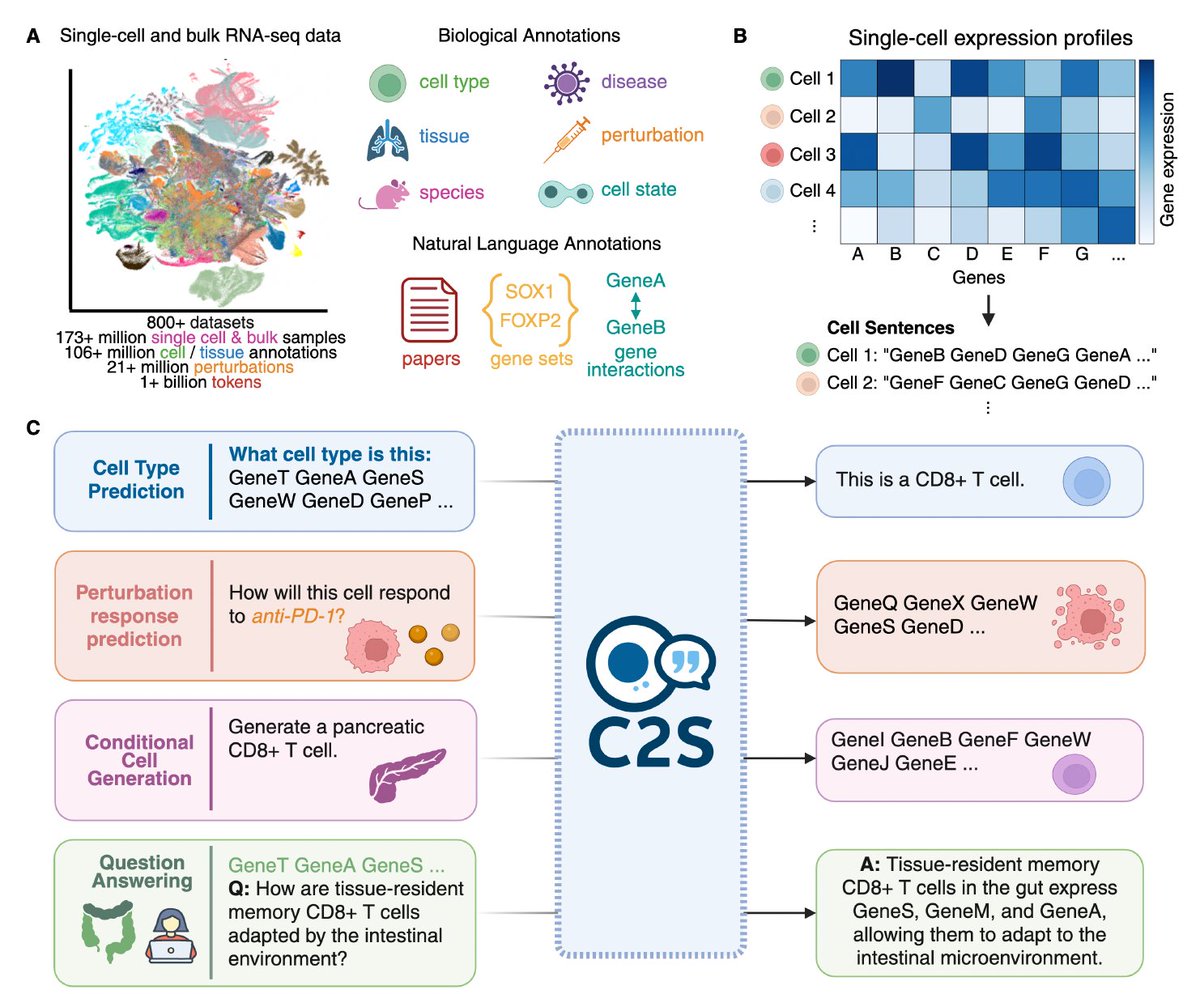
Yale and Google trained a 27B parameter model, C2S-Scale, to unify single-cell transcriptomics and biological language for deep reasoning across genes and cells. It outperforms prior models in interpretation, QA, and perturbation prediction using reinforcement learning
Today in @Nature, we report a spatial single-cell atlas of human cortical development, revealing surprisingly early specification of human cortical layers and areas.
We built an interactive browser to explore the spatial data: https://t.co/Xy3JcsSpYw
Paper link below👇
1/n Very excited to share our recent work!
To understand gene regulation across diverse environmental conditions and cellular contexts, we treated a broad array of human cell types with three environmental exposures in vitro.
9/n We expect that by continuing to broaden the contexts to include a wider range of cell types, time points, and environmental exposures, we will uncover more context-dependent and functionally relevant loci, which will enhance our ability to explain disease risk.🌐🧬