A tool used by the government for substance-use surveillance has consistently reported low rates of opioid use disorder (OUD). But the survey excluded a large group of Americans with OUD: people who take opioids as prescribed. Read the full Perspective: https://t.co/NdJOZBqGQ7
Thanks to SCOTUS, the Purdue bankruptcy plan is gone. Good riddance! It was a lousy deal & not just because of releases for the Sacklers and co-conspirators. There were other elements that were even more onerous.
1/ Endo, the company that made Opana (oxymorphone), was just ordered to Pay $1.5 billion in criminal fines and forfeiture. The company also pled guilty to falsely promoting Opana ER as abuse deterrent. But that was the least of their bad actions.
While the #Purdue bankruptcy settlement is under review by the #SupremeCourt, there are other cases involving the company that have resolved. Our new collection, the NY v. Purdue Litigation Documents, is one of them. Check out the docs here: https://t.co/4LvFwTH1SB
Just a superb video from @NEJM on treatment of opioid use disorder. Lifesaving information appropriate for a general audience. Everyone should watch this. https://t.co/m4Kgmj0AQf
New #opioiddocuments research guide reveals the ways #Insys used specialty pharmacies for Rxs of #Subsys, incl providing direct shipment 2 bypass a highly regulated distribution system that includes monitoring to ensure compliance with federal laws.
#OIDA
https://t.co/dZjQx73efm
https://t.co/ELbcrZfy7Y
This also illustrates just how out of touch the U.S. media is when the current issue of Time Magazine lists the no. 1 'best' company for future 'leaders' as the NYC-based consulting firm, McKinsey & Co. These so-called 'consultants' of McKinsey, who knew next to nothing about medicine and opioid painkillers, were responsible for advising Purdue Pharma and the Sacklers how to "turbocharge" prescriptions and sales of OxyContin to a gullible medical community. This resulted in harming the American public by increasing the opioid-related addiction & death rate and exacerbating the opioid epidemic. Advising how to sell without understanding what they were selling resulted in widespread tragedy. Where is the accountability beyond financial penalties for such a disastrous outcome? This company should be required to train future employees about the importance of public responsibility, learning everything about the product they are consulting about, and how not to make these same kinds of grave mistakes.
💊 The OPAL Trial: Opioids for Acute Low Back Pain and Neck Pain
Published in @TheLancet
Despite the risks, opioids are regularly prescribed for lower back and neck pain. Moreover, evidence supporting its effectiveness is limited and inconclusive.
Are opioids necessary? This multi-centred, triple-blinded RCT conducted in 157 centers across Australia 🇦🇺 aimed to find out!
🏗️METHODS
347 patients with acute low back and/or neck pain were randomized to receive either:
1⃣ Guideline-recommended care + opioids (up to 20mg oxycodone daily) (n=174)
2⃣ Guideline-recommended care + placebo (n=173)
The primary outcome of interest was pain intensity at 6 weeks.
Secondary outcomes of interest included physical function, quality of life, global perceived effect, ongoing pain, and the risk of misuse.
Follow-up was conducted up to 52 weeks post-randomization.
🔎RESULTS
Pain Scores
At 6 and 12 weeks, no significant differences were observed between the opioid and placebo groups.
At 52 weeks, there was a small significant difference in favour of placebo (p=0.041).
Physical Function
No differences in physical function were observed in people with neck pain.
However, for people with back pain, a significant benefit in favour of placebo was observed at 6 weeks (p=0.011).
Quality of Life
No differences in physical quality of life were observed between the opioid and placebo groups.
However, mental quality of life scores were significantly in favour of the placebo group at 6 and 12 weeks!
Global Perceived Effect
No differences in global perceived effect scores were observed up to 12 weeks of follow-up.
Additional Outcomes
The opioid group showed a higher incidence of ongoing pain and a higher risk of misuse!
✅INTERPRETATION
Opioids did not provide any benefit in pain scores, with placebo, and led to slightly worse pain at 1 year, worse mental quality of life, a higher rate of ongoing pain, and a higher risk of misuse!
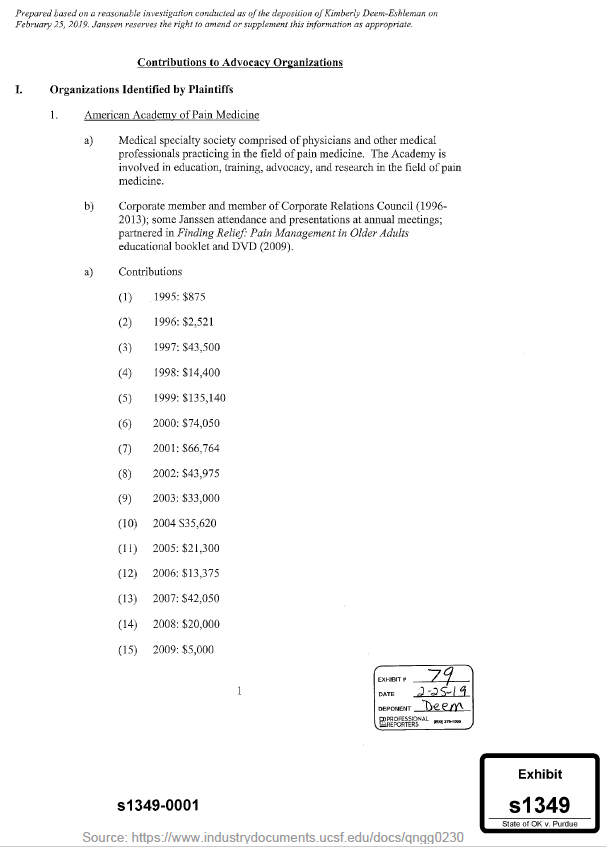
Janssen’s contributions to various advocacy organizations are documented in this exhibit found in the Oklahoma #Opioid Litigation Documents. See the rest of the document here: https://t.co/P0PcVoLG2u
https://t.co/iZ6iBmPYkw
This was a wake-up call about their patients' fatal opioid overdoses from LA County medical examiners to opioid prescribers. Providing 'guidance' on pain management from medical examiners is a separate issue in itself, but also helped reduce opioid over-prescribing. This all could have been avoided with many lives saved if opioid over-prescribers had been more cautious, informed and selective before initiating an opioid painkiller for chronic pain, considering non-opioid alternatives, continuing opioids too long for acute pain, or considering the presence of opioid addiction in some of these unfortunate patients.
https://t.co/1zxLqfQqPd
The failure to adequately educate young people about the dangers of taking non-prescribed pills (extending from OxyContin starting over 25 years ago to counterfeit pills laced with fentanyl at present) has resulted in this rising unacceptable death rate. In addition to a dedicated comprehensive educational program involving multiple stakeholders including government agencies to reduce DEMAND, as well as much greater access to naloxone, the federal government needs to reduce SUPPLY by drastically altering its failed border policies and mounting a major assault against the drug cartels.
Do you struggle with pain? Are you a doctor who treats patients with pain? Please attend and participate in my interview with Dr. @DavidJuurlink on “What Doctors and Patients Get Wrong about Pain Management.” There will be an opportunity to ask questions.
https://t.co/bruD5SPY8W
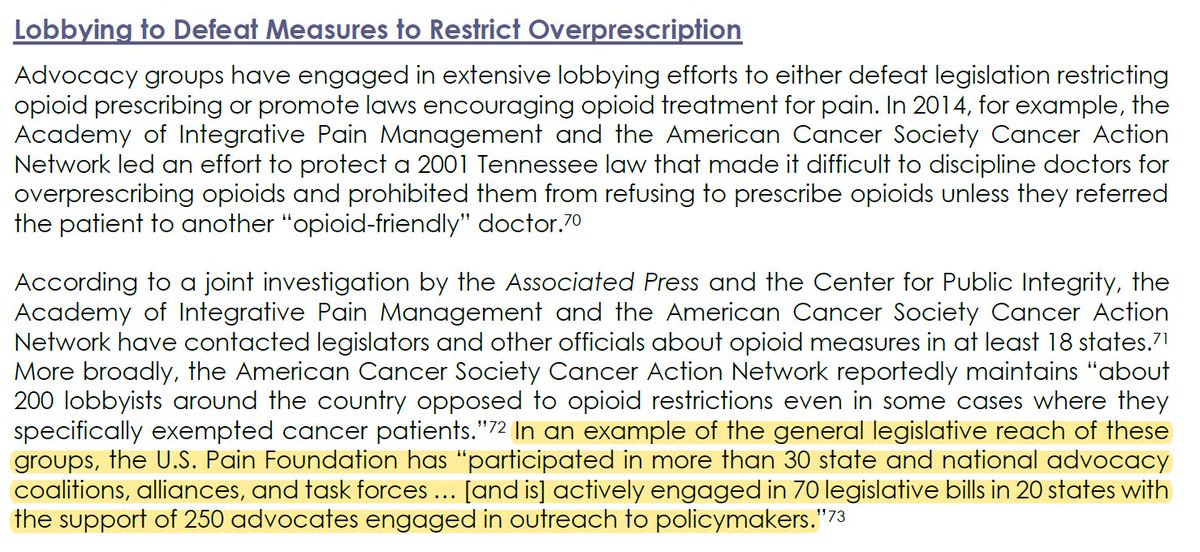
I see the National Director of the U.S. Pain Foundation has joined the rally.
I'll just leave the U.S. Senate's @HSGAC report here:
https://t.co/QSGvMSrPy8
I think @BrandeisU should be proud to have on faculty someone like @andrewkolodny, a person who for more than a decade has "fought the good fight" despite unrelenting personal attacks.
Andrew, thank you. And please keep it up.
/ end
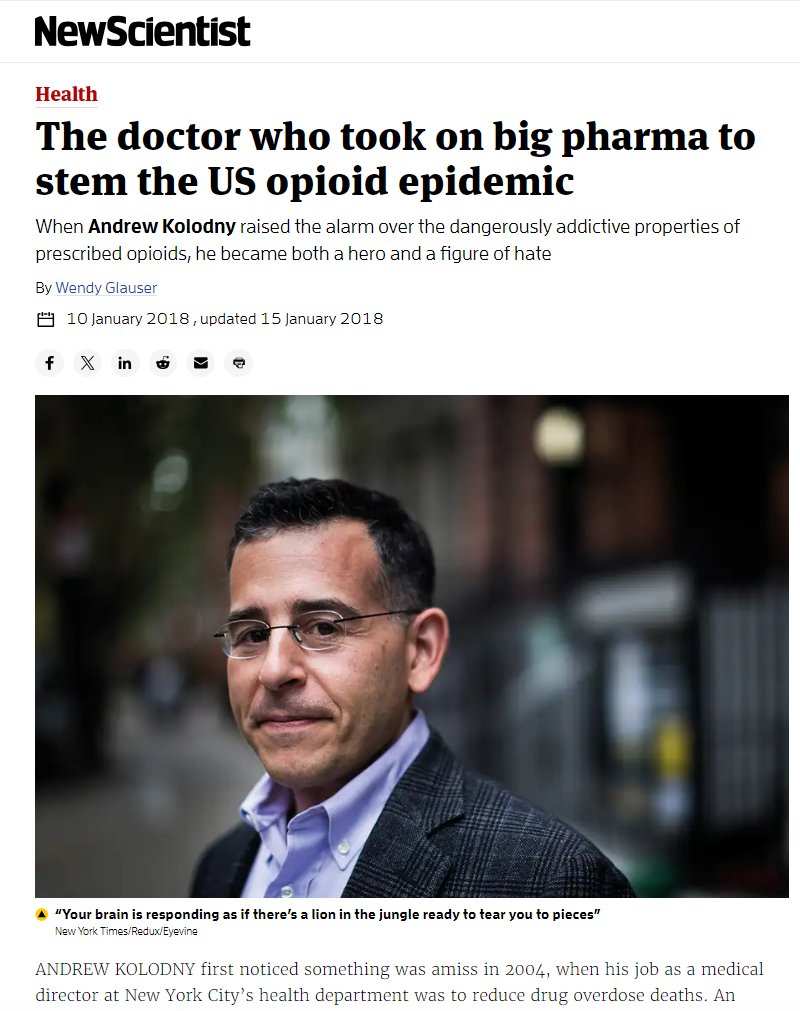
Because of his advocacy, Andrew has been in the crosshairs of the “Pain Lobby” for a long time.
Here's a story on that from 2018 by @WendyGlauser https://t.co/ekD7ePRmMj
/7
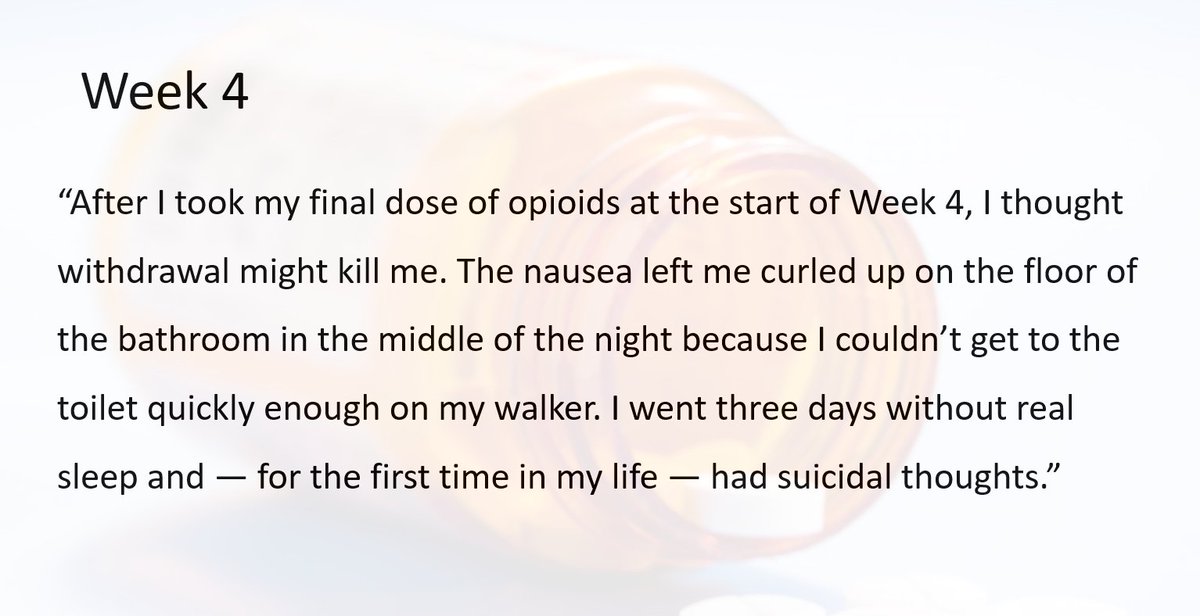
"Trapped on opioids? Really?"
Yes, really. We have to stop creating legions of people who are just a few missed doses away from the misery of opioid withdrawal.
Consider @TNREthx's experience tapering after just two months of opioids.
https://t.co/BXLablUT1A
/6
Now this won't magically "solve the opioid crisis." People already addicted need different interventions.
The goal of stewardship is to harm fewer people with the drugs.
- putting fewer excess tablets into circulation
- leaving fewer chronic pain patients trapped on opioids
/5