Open surgery is a challenging frontier for AI. A computer vision model trained on diverse YouTube surgical content and deployed on prospectively recorded surgical videos showed promise in differentiating btwn operators of variable training and experience. https://t.co/EZLCQCC7xA
Congrats to @bratogram and @Jayson_Marwaha. SILab project was highlighted by @JAMANetworkOpen. Team wanted to understand how opioid prescribing after surgery was related to downstream family risk of chronic opioid use and misuse. Refills were a major risk factor.
This cohort study found each additional opioid refill for a patient was associated with a 19% increase in hazard of opioid misuse in household members -- opioid exposure after surgery is a household risk. @BIDMCSurgery@HarvardDBMI@Aetna@MarkBicket https://t.co/jUrRgQv4Z4
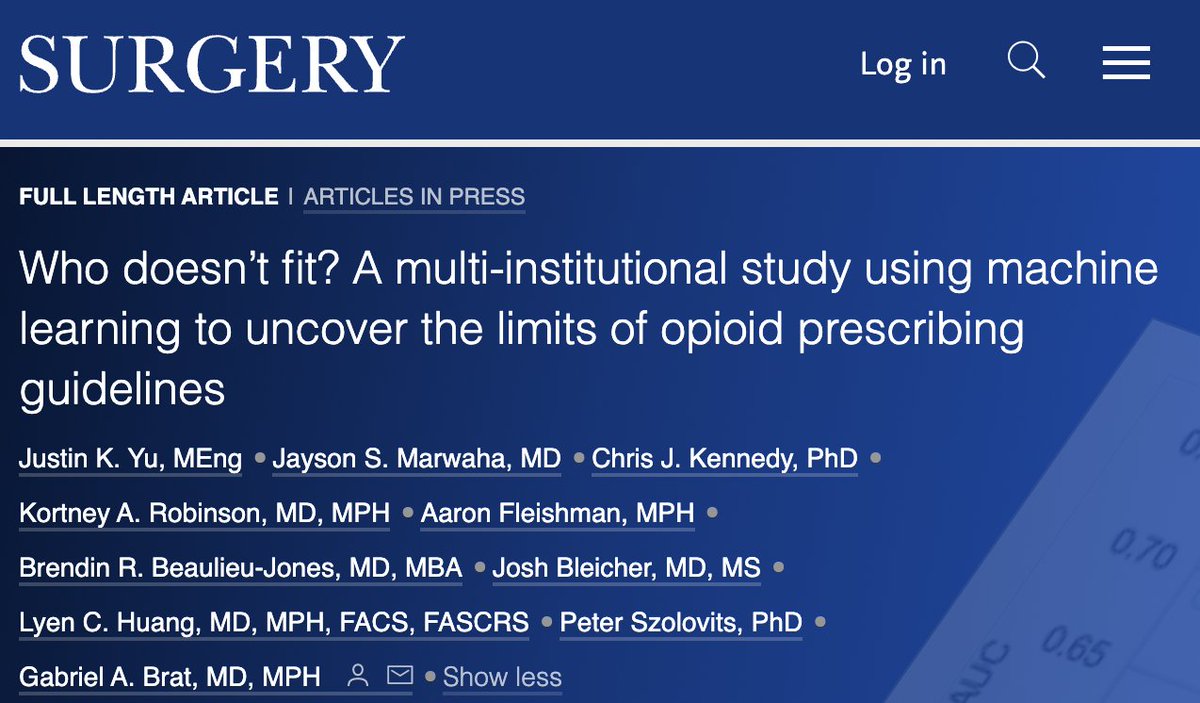
New in @SurgJournal:
Machine learning is uniquely suited to personalize opioid prescribing & guide safer opioid prescription sizes for surgical patients. Excited to see our work with @MIT_CSAIL out on building ML-based opioid prescribing tools: (1/3)
Tools may be agnostic, but we have to acknowledge the world as it is today:
US market share
Epic: 32.9%
Cerner: 24.4%
Meditech: 16.7%
Reading @beckershr EHR vendors ranked by percentage of hospital market share https://t.co/vKbWs6Yzeq
Inspired work by @Jayson_Marwaha, fellow in the lab. New modalities will soon generate data that expand our understanding of the surgical journey. The intervention to improve that journey will be surgical informatics.
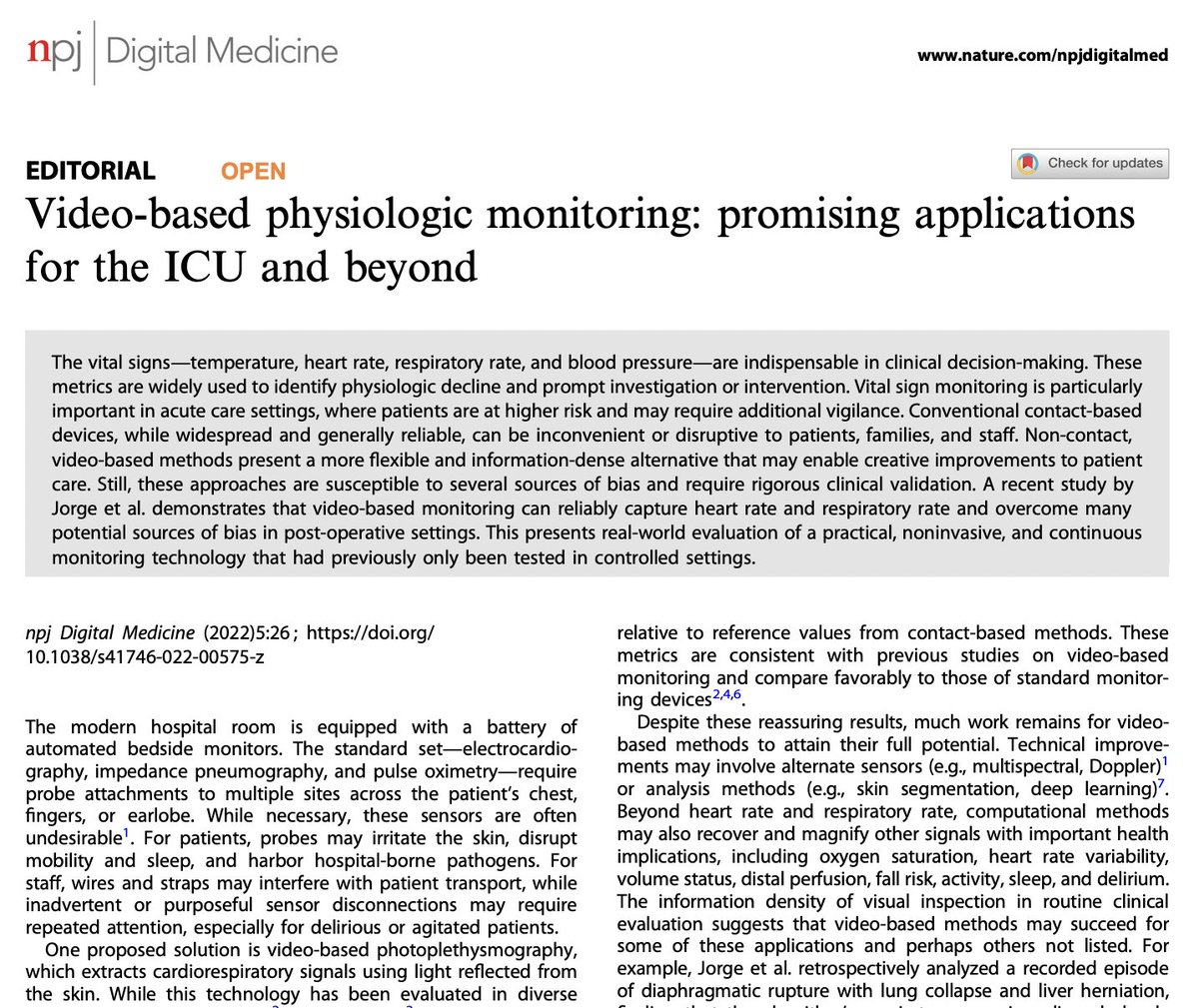
Video data can be used to reliably & practically capture vitals and other physiologic info in the hospital.
Contactless tech like this may soon enable ambient patient monitoring in the home & many other settings too - for pt care, trials, & more. Our new piece in @npjDigitalMed:
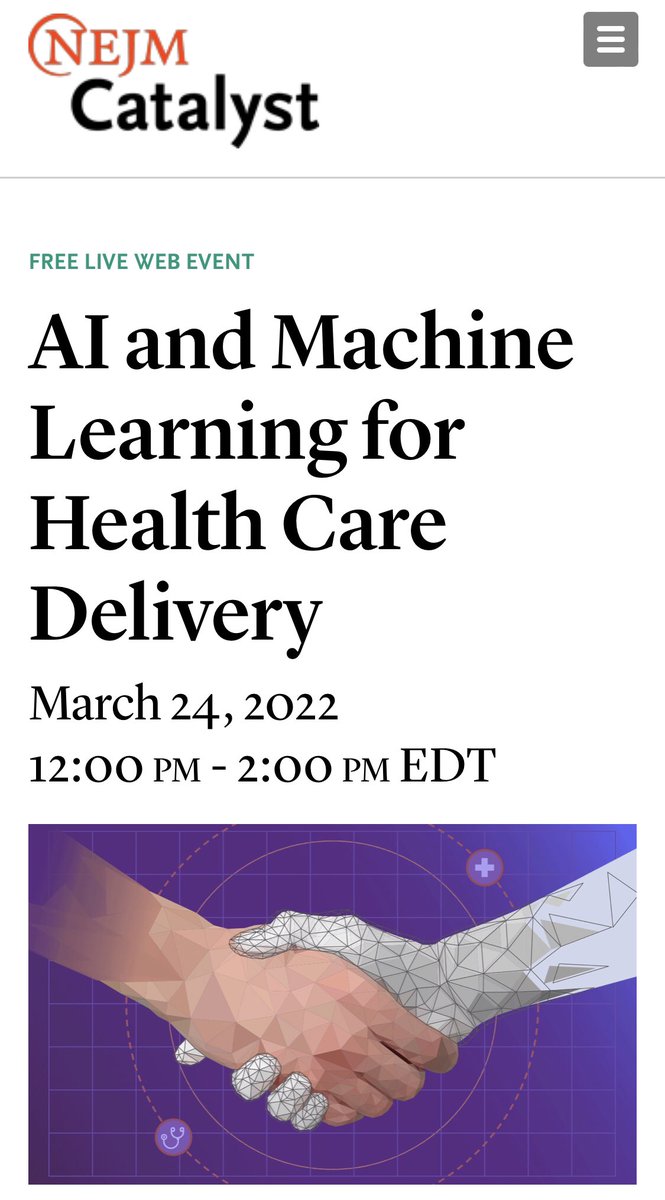
📆Implementing AI models into patient care presents challenges to deliver optimal care. Dr. Gabriel Brat, Director of the Surgical Informatics Lab, discussed at @nejmcatalyst free event about “AI for Enhancing Public Health.” Link: https://t.co/Fp8IwcZ46K #medtwitter#AI
1st paper of Stanford/BIDMC collaborative to deploy CV to 1) evaluate surgical skill and intraoperative surgical signatures, 2) understand the role of intraoperative behaviors to perioperative outcomes. 7/7
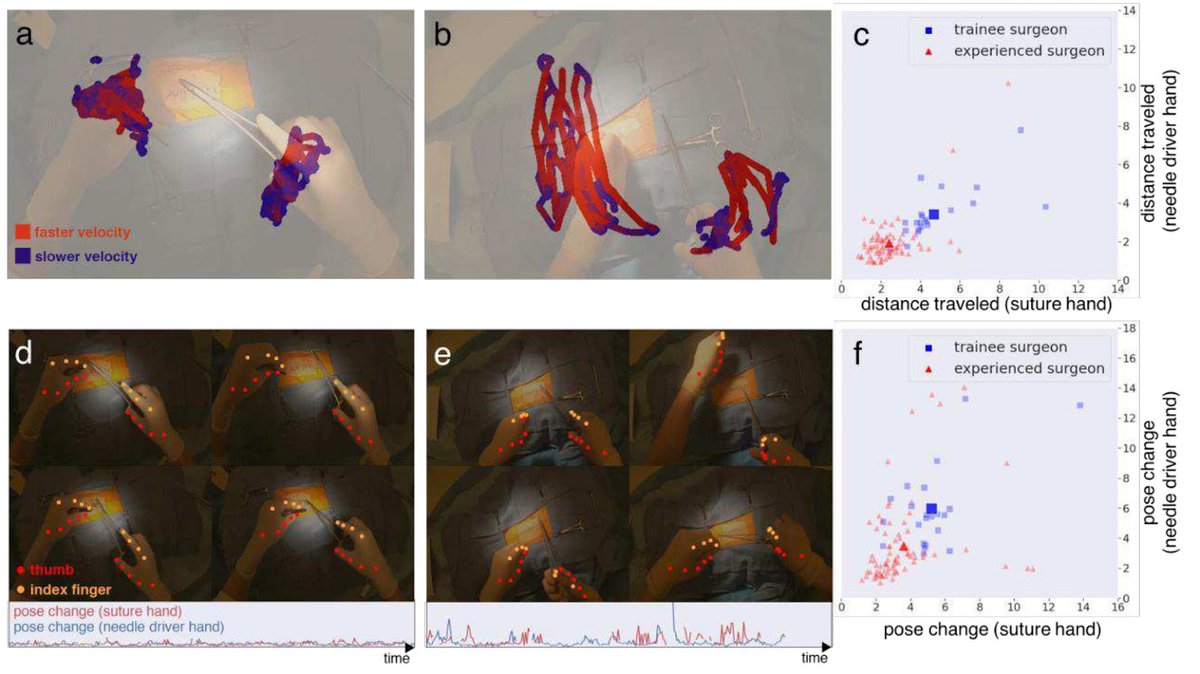
New preprint out on computer vision for open surgery: our Stanford/BIDMC collaborative with Serena Yeung lab has developed & validated a model that identifies intraoperative behaviors from open videos associated with surgeon skill level. @BIDMCSurgery@HarvardDBMI#surgicalAI 1/n
Our AI model was able to extract hand kinematics (velocity, pose change, etc.) to differentiate trainees from experienced surgeons. @BIDMCSurgery#ComputerVision#surgicalAI 6/n
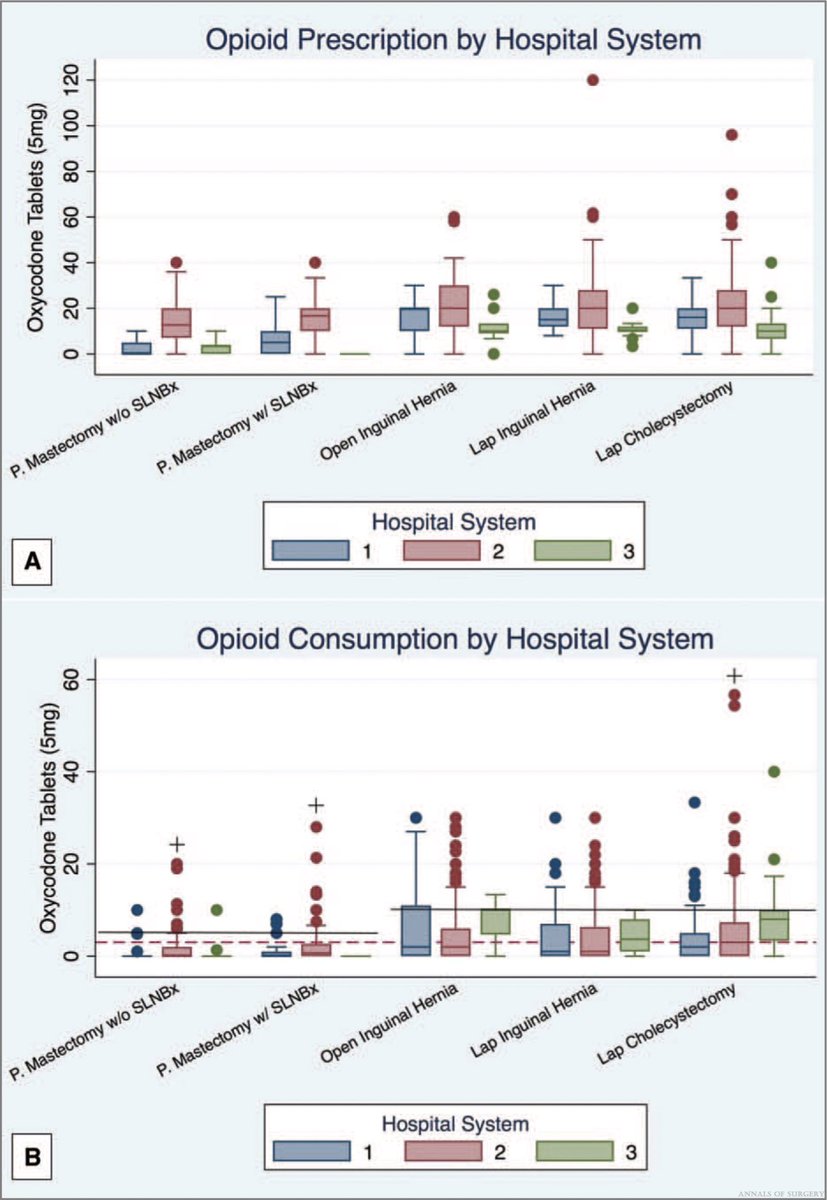
For each surgery and hospital systems, we found significant differences in amount prescribed and consumed. COVID may have delayed the research agenda, but feel free to DM or email our team to collaborate! We’re growing our collaborative. 2/2
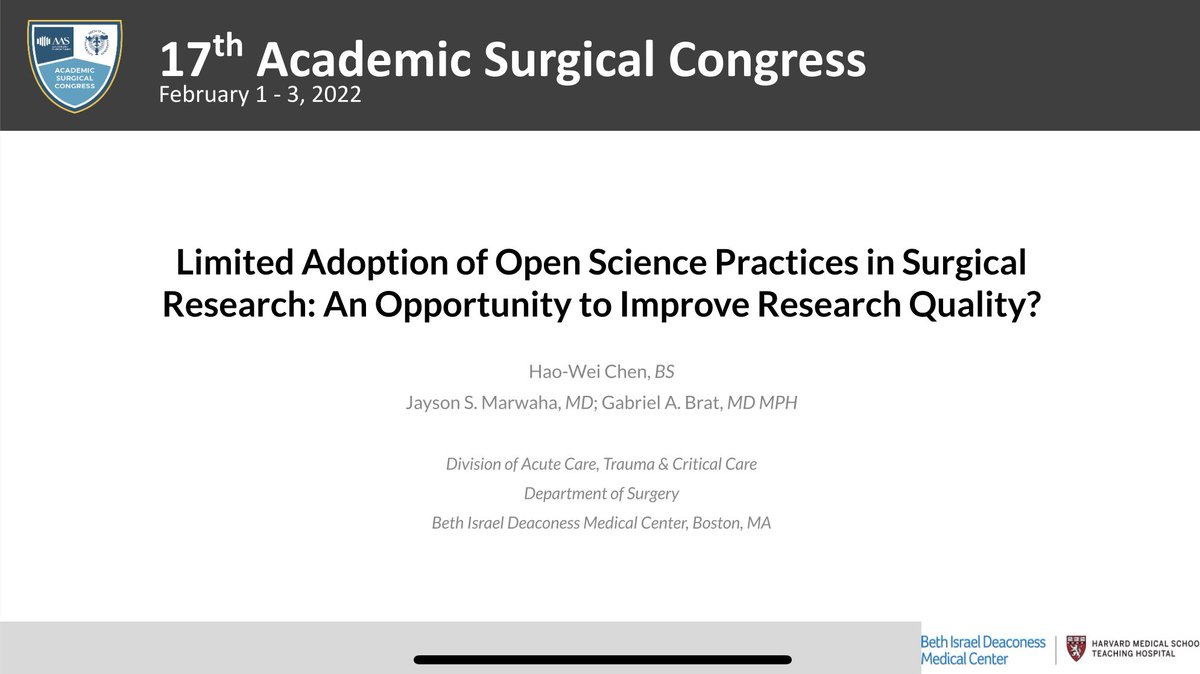
Using open science practices is important for producing reproducible & transparent research. The use of these tools by surgical journals & researchers is limited. This gap is a big oppty to improve the quality of surgical research. #ASC2022@BIDMCSurgery@HaoWei95@Jayson_Marwaha
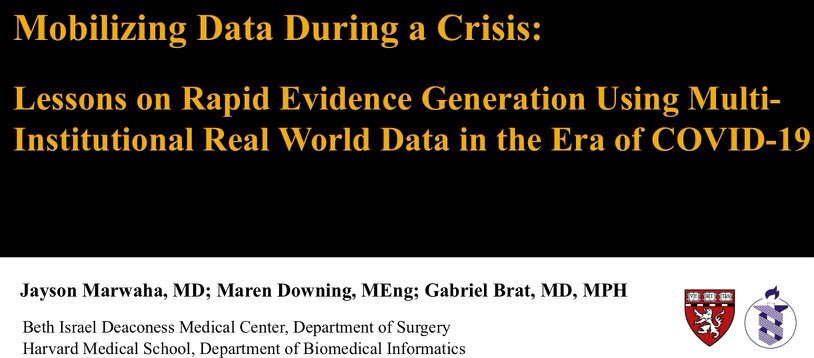
👏🏼@Jayson_Marwaha Collaboration strategies that creatively leverage real-world data from multiple institutions is key to rapidly generating high-quality evidence that can guide policy making, public health decisions, and clinical care. #ASC2022#medtwitter@BIDMCSurgery