The best way to teach children how to be critical thinkers about social media (or any new information) is for schools to:
1. Make sure they know lots of core knowledge about science, history, language, etc so that false information is easier to challenge, and they possess robust frameworks of existing information
2. Teach them how to formulate logical arguments and syllogisms, and identify faulty reasoning.
A few assemblies on fake news won’t cut it. The best way to nurture generations of informed critical thinkers, is by teaching them acres of knowledge-rich domain content, and how reasoning works. Critical thinking isn’t a skill separate from these things; it is composed of them.
How effective are open-plan classrooms or '21st Century learning spaces'? Is a noisy classroom a 'thinking classroom'? A short thread on why they're a really bad idea 🧵
‘Master Mathematics Teachers’ is now an open access eBook!
THANKS to @ZhenzhenMiao and David Reynolds for the collaboration. @SotonEd@unisouthampton for making it openly accessible.
Download the OA ebook from @tandfeducation@tandfonline
https://t.co/xQHkFHwTNr
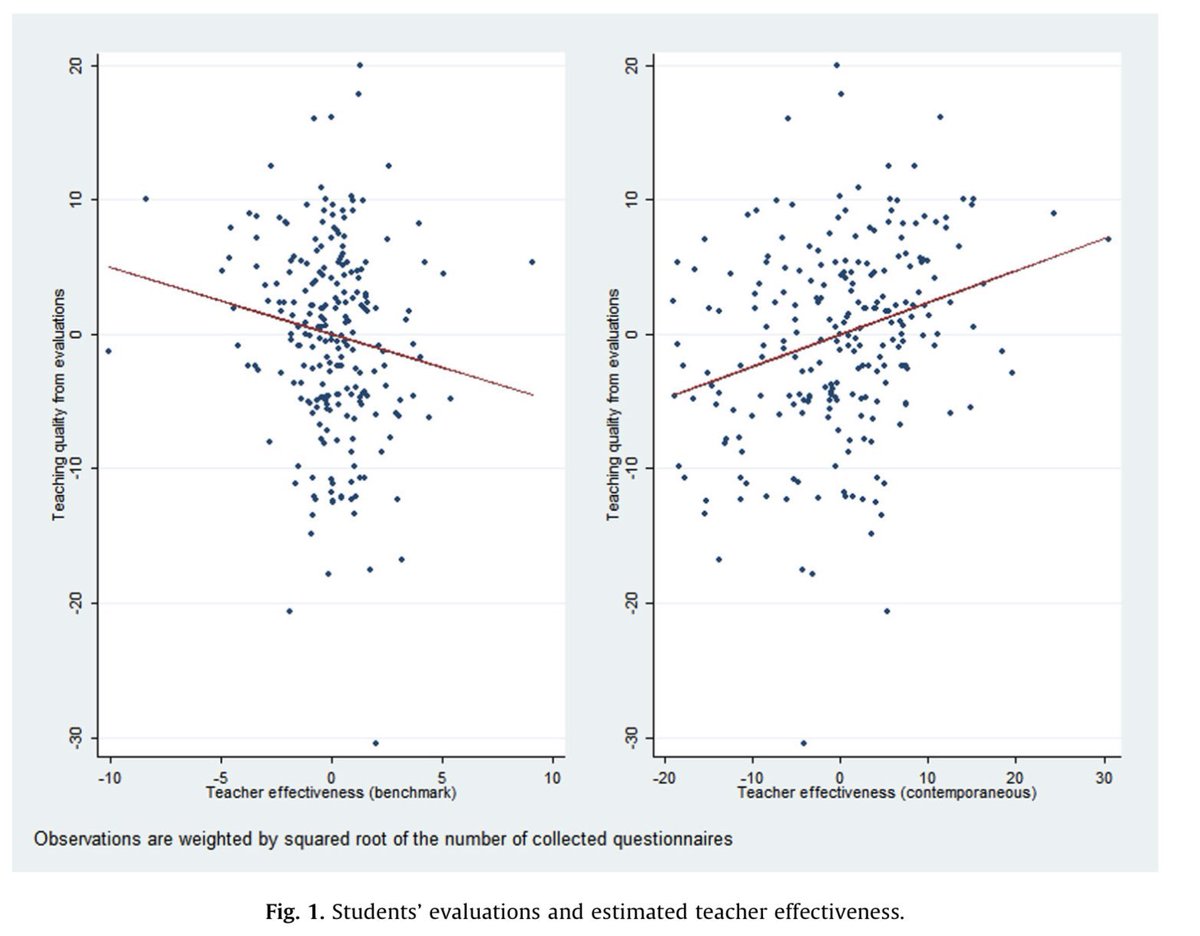
“Tough math teachers get lower ratings from students, because students like them less. However, students get better grades with the tough teachers than with laxer teachers. Reason #167 why student evaluations of teaching aren’t particularly useful.” https://t.co/rtyBRXjntE
Study on typed vs. handwritten notes for college students. "We conclude that handwritten notes are more useful for studying and committing to memory than typed notes, ultimately contributing to higher achievement.."https://t.co/FbtUnbyLEC
🚨 NEW POST 🚨
'Adaptive Teaching: Scaffolds, Scale, Structure & Style'
"It's important, if we're trying to help teachers move on from differentiation, to be clear how tasks can be adapted whilst retaining the same challenging goal." Feat. @ClareSealy
https://t.co/q7p1NjmINs
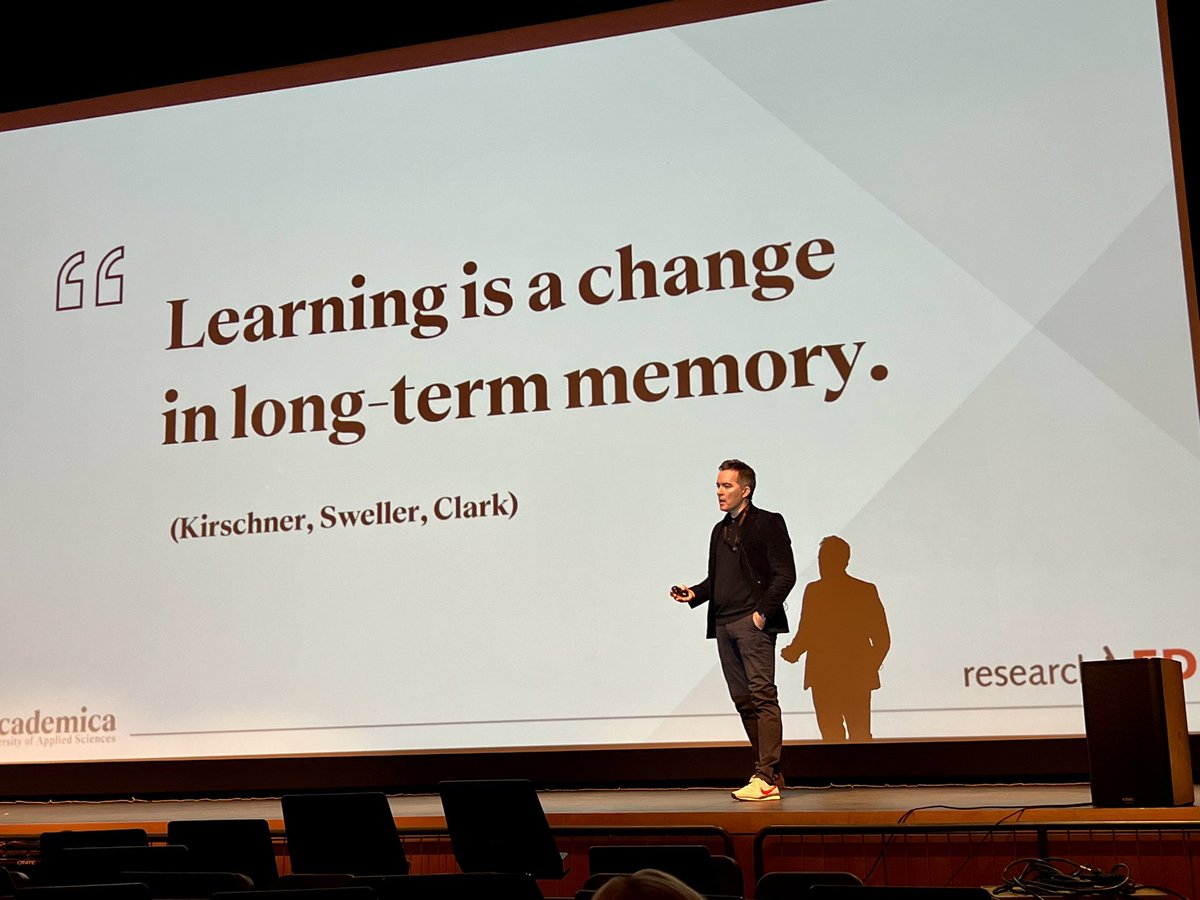
.@C_Hendrick’s keynote at @researchED_US was astoundingly good.
I caught most of it on video…
Sorry that it’s in Tweetable chunks, but I promise that it’s worth the headache of pressing Play a few times.
What is learning, Carl asks?
It is often assumed that the rate at which we forget things depends on how well we learned them. By varying how many times the material was presented, in four experiments, "the rate of forgetting proved to be independent of initial acquisition" https://t.co/misbtmG2lY
My daughter asked today why it is impossible to divide by zero.
The analogy with dividing apples for people doesn’t work anymore 😂
Do you know why, without googling?
The Matthew Effect: The rich get richer; the poor get poorer.
If you are in knowledge and language-rich home or school, you are poised to grow richer still in vocabulary. If you don't, you are likely to fall further behind.
11/11
"Our data suggest that for classes in which retrieval practice occurred, 92% of students reported that retrieval practice helped them learn and 72% reported that retrieval practice made them less nervous for unit tests and exams." https://t.co/QxjNTO50GS
@Debi22979287@helenrey@toddle_edu General problem solving is biologically primary—even crows can do it. Problem solving in a specific domain such as maths is biologically secondary, so for most learners, needs to be taught. For novices, this is best done by explicit teaching; for experts, problem solving is best.