@SinarOnline Kenapa tidak juga sama kedai motor yang buat pengubahsuaian ini? Masalahnya bukan satu pihak saja. Cari pengimport, yang membeli dan yang memasang. Tangkap #rempitsampah hanya cara mudah untuk KPI senang sahaja.
@NewsBFM Why build? When gov buy over a abandoned building and refurbish to make a hospital. There are many building such as....come on. "Out of the box" thinking oh my gov!
When AI implementation costs more than human talent, we need to rethink the balance. A 3-minute task consume higher costs, more power, and leave a larger environmental footprint. Many employers chase the easier route today, without fully realising the long-term impact tomorrow.
Microsoft just banned its own engineers from using AI.
The tool was literally costing MORE than the humans it was supposed to replace.
They lied to you about AI adoption and now the whole narrative is blowing up:
Microsoft gave thousands of engineers access to Claude Code six months ago and encouraged them to use it.
Engineers loved it and adoption exploded. But then the invoices arrived.
Token-based pricing means every query, every code review, every debugging session costs money. At scale across 100,000 engineers, the numbers became so large that Microsoft issued an internal order to cancel nearly all Claude Code licenses by end of June and force everyone onto their own cheaper tool instead.
The company that invested $5 billion in Anthropic just told its own people to stop using Anthropic's product because it costs too much.
Uber's story is even worse...
Their CTO Praveen Neppalli Naga told The Information that the budget he planned for the full year was "blown away already" by April.
Uber had rolled out Claude Code in December 2025. By March, 84% of their 5,000 engineers were using it with 70% of all committed code coming from AI systems.
Heavy users were burning $500 to $2,000 per month each. Naga himself spent $1,200 in a single two-hour demo session.
The company had even built internal leaderboards ranking engineers by how much AI they used. They literally gamified the spending and then ran out of money.
Now look at what Nvidia's own VP of applied deep learning Bryan Catanzaro said to Axios last month. Direct quote:
"For my team, the cost of compute is far beyond the costs of the employees."
This is a VP at the company that SELLS the chips saying that using AI is more expensive than paying humans.
Think about what this means for the entire AI narrative.
Every CEO on every earnings call for the past two years has said the same thing:
AI will make us more efficient, reduce headcount, and cut costs.
The stock market rewarded every company that said it.
Fired workers, stock goes up. Announced AI adoption, stock goes up.
But the actual companies deploying AI at scale are discovering the math doesn't work. The MORE employees use AI, the HIGHER the bill.
Goldman Sachs forecasts a 24x increase in token consumption by 2030 as companies adopt AI agents. Gartner just published a report showing that even though individual token prices will drop 90% by 2030, total enterprise AI costs will go UP because agents consume exponentially more tokens per task than basic tools.
Meta built an internal dashboard called "Claudeonomics" to track which employees use the most AI. Amazon started pushing engineers to "tokenmaxx," their internal term for consuming as many AI tokens as possible.
Both companies are spending hundreds of billions on AI infrastructure this year alone.
And Microsoft, the company that bet its entire future on AI, just told 100,000 engineers to stop using the tool they liked best because the per-token bills got out of control.
The companies building AI are telling investors it saves money. The companies using AI are finding out it costs more than the humans it was supposed to replace. And even the company that makes the chips just admitted it through its own VP.
This is the gap nobody on Wall Street is pricing in.
$725 billion in AI infrastructure spending this year across Big Tech. And the first companies to actually deploy these tools at scale are already pulling back because the economics don't work.
What do you think?
Our national education a hard reset. It's not just CTRL+ ALT+ DEL but a total Reboot!
If a country lacks original brain power to innovate, then emulate systems that have already proven successful elsewhere. Progress is not about ego, it’s about results.
Kindergartens in China are increasingly incorporating hands-on cooking, cleaning, and crafting into their curricula to foster independence, responsibility, and confidence in young children.
Kids as young as 3–4 years old use specialized mini stoves to prepare food, wash dishes, and perform tasks like sewing and farming.
Education should no longer stop at the 3Rs — Reading, wRiting & aRithmetic. From an early age, children must also learn human skills: critical thinking, communication, adaptability, emotional intelligence, financial literacy, and self-sustaining life skills.
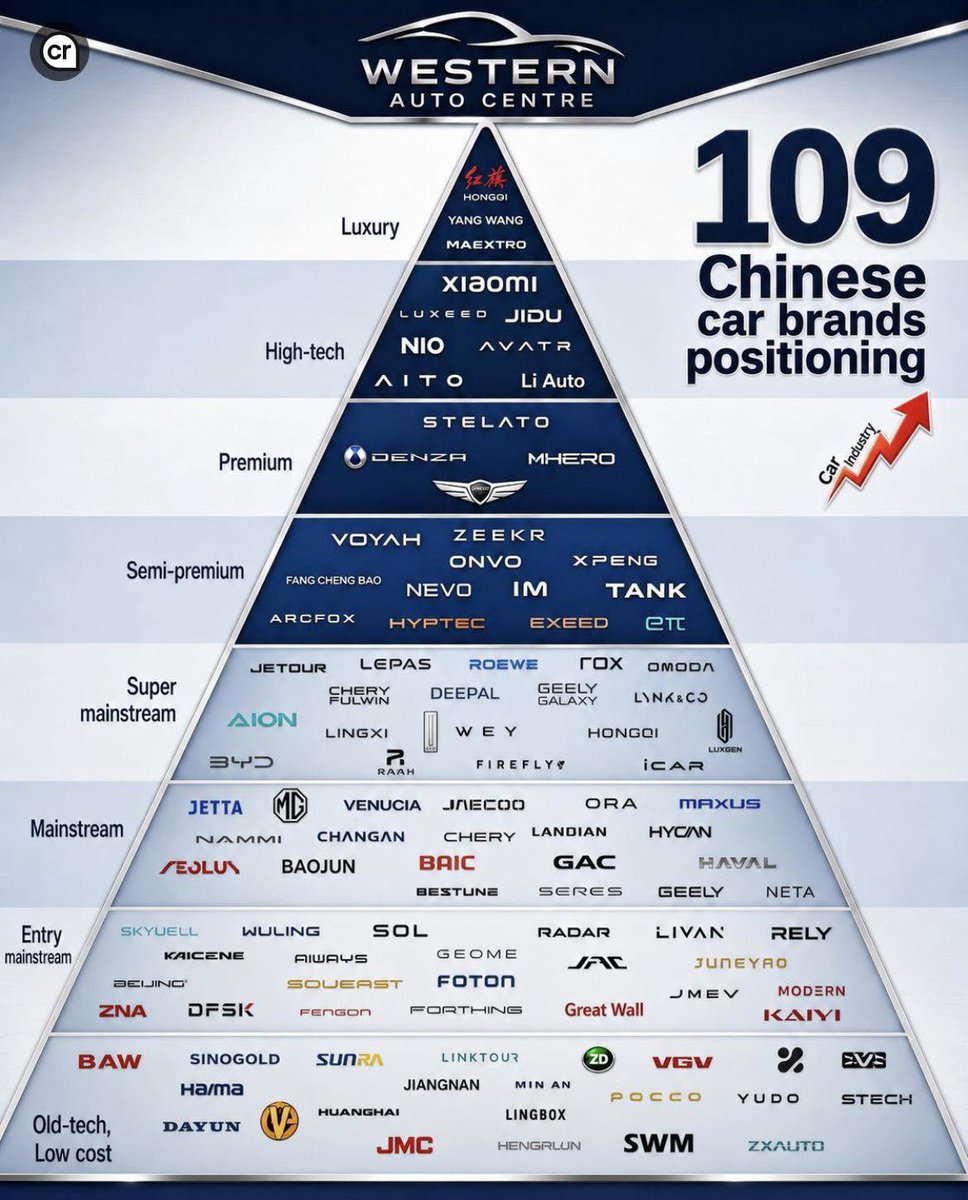
5 years ago, Chinese cars were a joke.
Today, BYD outsells Tesla.
Let that sink in.
BYD. Geely. NIO. XPENG. Zeekr.
Not catching up. Taking over.
Better tech. Sharper design. Half the price.
The takeover isn’t coming.
It’s already here.
If fuel prices keep rising, who really pays the price?
Global oil shocks are pushing petrol costs up, but in Malaysia, subsidies like BUDI95 are holding prices down for now. The problem is, this short-term help is expensive for the government and is not built to last.
Our deputy director of research, Dr. Rachel Gong and visiting researcher, Muhammad Najib Abu Hassan Alshari, highlight that while subsidies protect consumers and support groups like e-hailing drivers, they also create long-term pressure on public finances. Subsidies do not solve the root issue of high oil dependence.
So the bigger question isn’t just how we keep fuel cheap, but how Malaysia can become less vulnerable to global oil price swings in the future.
Read the full article via the link on our website here: https://t.co/FsX2W4vEgW
#KhazanahResearchInstitute #KRI #AdvancingMalaysia #fuelprices #energycrisis
Xiaomi wants to conquer Europe!
These are Xiaomi’s new hires and they’re not sitting in China. They’re in Munich, about 50 of them, including ex-BMW people who worked on things like the M4 GT3 and pretty much the entire 3 to 7 Series lineup. Serious engineers, now building cars for a phone company that’s aiming for Europe in 2027.
@Xiaomi@leijun
Untuk perhatian segera YB @hannahyeoh & @DBKL2u
Kompleks Renang Kuala Lumpur, Bandar Tun Razak tidak ada dipenyelenggaraaan dan masih tutup beberapa tahun.
https://t.co/qnqVdXBG8d
Mohon tindakan segera daripada pihak berkuasa YB dan aduhai DBKL. #BandarTunRazak