A patient with complete heart block has a ventricular rate of 35/min.
The blood pressure is surprisingly preserved.
The patient is conscious. No pulmonary edema.
Why isn't the patient in shock?
Because heart rate alone does not determine cardiac output.
Cardiac output depends on:
• Heart rate
• Stroke volume
• Preload
• Contractility
• Ventricular filling
A slow heart rate may permit greater diastolic filling and increased stroke volume.
But this compensation has limits.
Once the ventricular rate becomes critically low, stroke volume cannot compensate indefinitely.
A preserved blood pressure in complete heart block does not mean preserved cardiac reserve.
The next physiological stress may expose the instability.
#MedTwitter #Cardiology #ECG #InternalMedicine #EmergencyMedicine #ClinicalReasoning
A patient with severe metabolic acidosis is intubated.
The ventilator settings look conventional.
Within minutes, the patient develops profound hypotension and cardiac arrest.
The reason?
In severe metabolic acidosis, compensatory hyperventilation may be maintaining survival.
Intubation can abruptly remove that compensation.
If post-intubation minute ventilation fails to match the patient's pre-intubation respiratory compensation:
• PaCO₂ rises rapidly
• pH falls further
• Myocardial contractility deteriorates
• Catecholamine responsiveness decreases
• Hemodynamic collapse may follow
The ventilator doesn't merely replace breathing.
It can abruptly alter the patient's acid–base physiology.
In severe metabolic acidosis, preserving compensatory ventilation after intubation is a hemodynamic priority.
#MedTwitter #CriticalCare #EmergencyMedicine #InternalMedicine #AcidBase #ClinicalReasoning
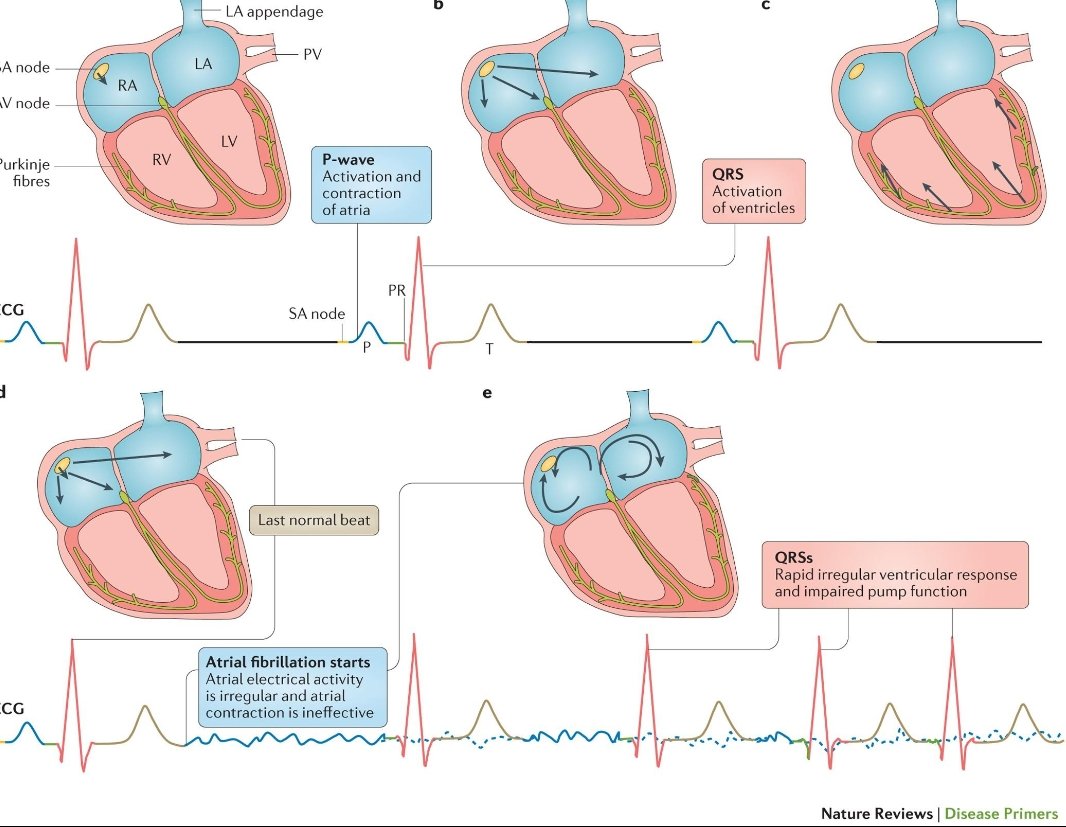
A patient with atrial fibrillation has a ventricular rate of 150/min.
You administer a beta-blocker.
The rate falls to 90/min.
But the patient becomes hypotensive.
Why?
In atrial fibrillation, the ventricular rate is only part of the hemodynamic problem.
Rapid ventricular rates:
• Shorten diastolic filling time
• Reduce coronary perfusion time
• Increase myocardial oxygen demand
• Eliminate effective atrial contraction
Rate control improves filling time—but excessive slowing or negative inotropy can compromise cardiac output, particularly in patients with impaired ventricular function.
In AF, a better heart rate does not automatically mean better hemodynamics.
The therapeutic endpoint is adequate perfusion—not simply a number below 100.
#MedTwitter #Cardiology #AFib #InternalMedicine #EmergencyMedicine #ClinicalReasoning
A patient with acute decompensated heart failure develops worsening renal function despite adequate blood pressure.
Creatinine rises. Urine output falls.
The reflex is to assume inadequate renal perfusion.
But the kidney is affected by venous pressure, too.
Elevated renal venous pressure can:
• Reduce the pressure gradient driving renal blood flow
• Increase renal interstitial pressure
• Impair glomerular filtration
• Promote sodium and water retention
This creates a vicious cycle: congestion worsens kidney function, and impaired sodium excretion worsens congestion.
Not every rise in creatinine in heart failure means the patient needs more fluid.
Sometimes, the kidney needs decongestion—not another bolus.
#MedTwitter #Cardiology #Nephrology #HeartFailure #CriticalCare
Cola addiction!
Dr. Thales Franco de Andrade removes over 30 bladder stones from a patient who consumed 2-3 liters of Cola daily while rarely drinking water.
A patient with acute right ventricular failure becomes hypotensive after intubation.
The ventilator is working.
The oxygenation improves.
The circulation doesn't.
Why?
Because positive-pressure ventilation can suddenly reduce venous return while simultaneously increasing RV afterload through changes in intrathoracic and pulmonary vascular pressures.
In a failing right ventricle:
• preload becomes critical
• RV coronary perfusion falls with systemic pressure
• septal shift can impair LV filling
• cardiac output can collapse rapidly
The patient's lungs may look better on the monitor.
The right ventricle may be losing the fight.
In RV failure, ventilation is not just respiratory support.
It is a hemodynamic intervention.
#MedTwitter #Cardiology #CriticalCare #EmergencyMedicine #InternalMedicine #ClinicalReasoning
Thank you for your taxes, Govt approves Rs 4,687 crore interest subsidy for ethanol projects!
Thanks for funding ethanol which will be put in your car ;)