@sytaylor Hi Simon, this is interesting and true. Today, value capture is completely misaligned and broken. It does not seem to stop in the models of the next generation big tech like open AI who are talking the same language. Would love to talk more and understand.
Most companies hire employees. Employees jostle for positions and roles.
We're recruiting Fellows. Fellows take risks.
ContraMinds Labs is opening a year-long fellowship for two deserving candidates.
🔗 Here's why: https://t.co/JJAFaNyNfa
At @contraminds we're building tools for systematic capability development.
Not what to think- but "how" to think.
Not what to do- but "how" to decide "what" to do.
Not more skills- but "establish" meta-skills that "compound".
Most professional development infrastructure was built for the last economy:
⌛ Courses that expire
🫣 Certifications nobody values
🔻 Skills that depreciate faster than you learn them
The Knowledge-Worker Athlete needs something different.
We've spent a year in conversation with extraordinary professionals.
One insight kept surfacing: the next billion professionals joining the workforce need infrastructure that doesn't exist yet.
Today, we built it a home: https://t.co/33r1iKwgoF 🧵
We're entering an era where growth and headcount will permanently decouple. Are you prepared for the efficiency revolution?
https://t.co/x2ZBV9xhBf
#headcount#growth#Tech#AI@contraminds
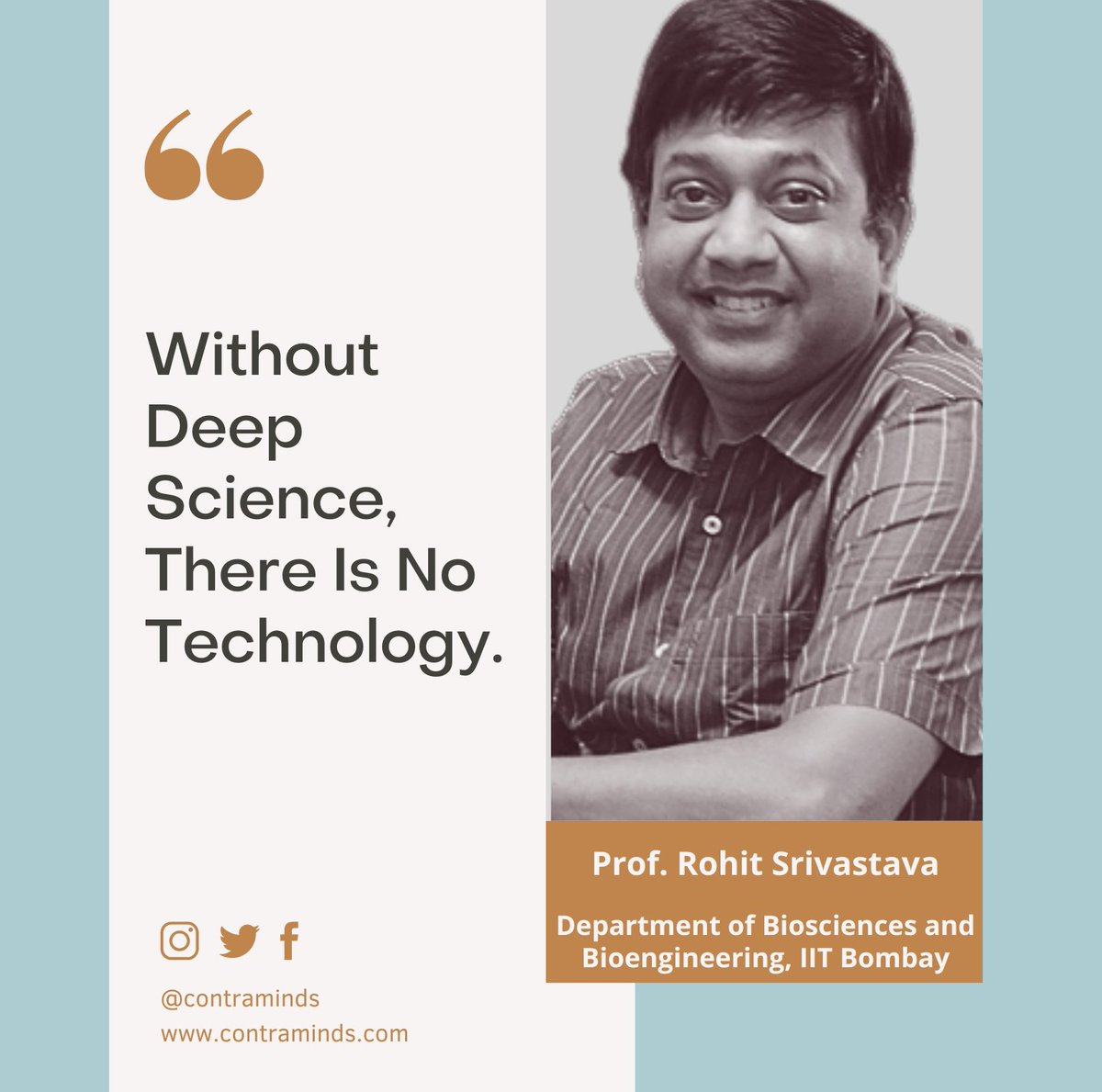
My conversation on the @contraminds podcast with Prof. Rohit Srivastava @iitbombay was thought-provoking and will definitely open your mind.
You can listen to the entire episode here: https://t.co/6yVLkcDOfA
Thought provoking @svembu, thanks.
This is something Prof. Rohit Srivastava @rsr004 from @BsbeIitb@iitbombay spoke to me on @contraminds podcast as to why we need 10x innovation to beat to China. https://t.co/6yVLkcDgq2
I have bookmarked this tweet on China's overlapping tech-indistrial ecosystems.
We must study China closely. There is a lot to learn from their experience which I categorise into two distinct phases.
1. At the entry level, India must make its own household goods (all the stuff we buy in local stores in small towns), and spread those small and mid-sized factories to every district of India. It is not that hard and it can work out cheaper to make and sell *locally* than to import from far away. To reach higher in the value chain, we need phase 2.
2. To scale the value chain, we need a strong strategic industrial R&D focus in essentially all areas of tech.
China started with Phase 1 over 40 years ago and now has mastered Phase 2 in the past 10-15 years.
Even if global markets are not so favorable to export driven growth anymore, India's domestic market can power our own growth and job creation. That is far more balanced growth anyway.
Let's learn from China and adapt the ideas to India.
Had an amazing and refreshing conversation with Prof. Rohit Srivastava of @BsbeIitb, @iitbombay
Just take your time to listen to his vision, work and think how can you contribute to the Indian innovation ecosystem and growth.
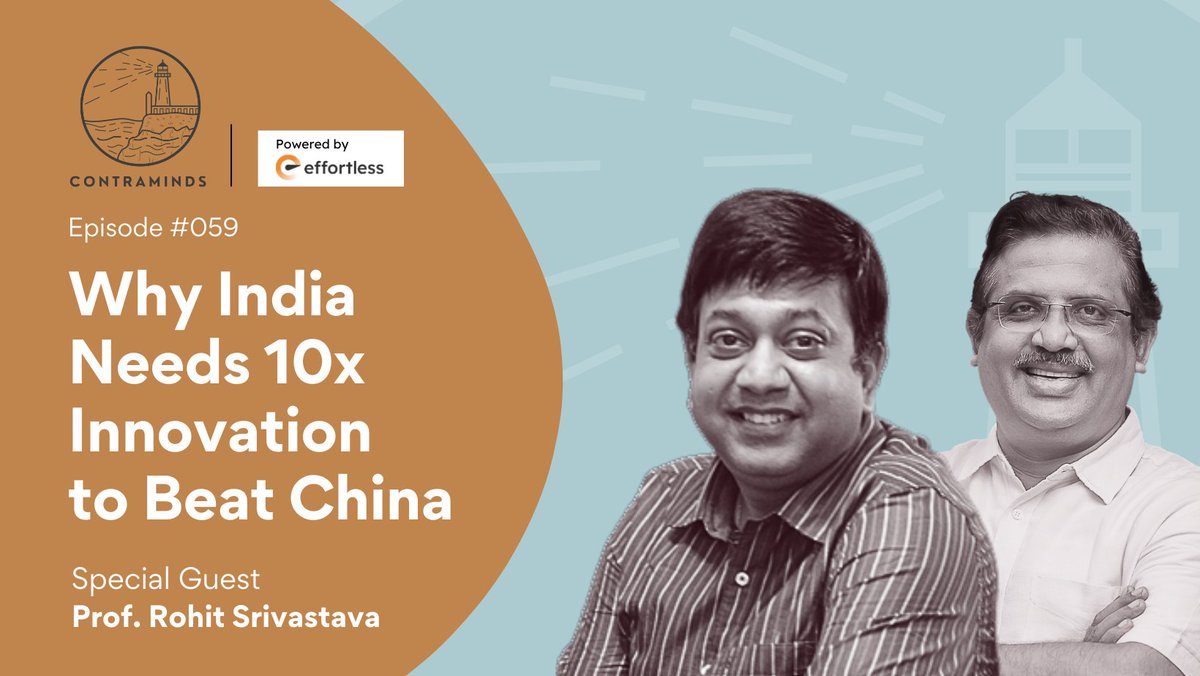
🎙️ NEW EPISODE: WHY INDIA NEEDS 10x INNOVATION TO BEAT CHINA 🎙️
In conversation with @swamicrm, Prof. Rohit Srivastava @iitbombay shares his vision of transforming India through a 10X innovation mindset, prioritizing patents over papers, and building product-focused ecosystems that turn academic research into market solutions.
Prof. Rohit Srivastava discussed the importance of India moving from a Lab-to-market mindset and creating an Ecosystem of Innovation Builders.
For Selected Links, Show Notes and Resources: https://t.co/clKysiU4E0
@BsbeIitb @rsr004 #india @PiyushGoyal@hrorq