How could data centers affect U.S. emissions and power sector planning?
Our new paper projects regional load growth from data centers and other sources and looks at how these loads could alter electric sector outcomes under a range of future scenarios.
A 🧵 of key findings...
How could climate policy options in 2025 shape emissions and fiscal outcomes? Our new working paper crunches the numbers across a range of possibilities and highlights differences in CO2 reductions, fiscal costs/revenues, and household impacts.
In new work with @JEBistline, @KClausing, @jimstockmetrics and Catherine Wolfram, we consider various climate policy reforms that may be on the table in 2025. We look at the climate and fiscal implications of a range of scenarios: 1/8 https://t.co/jA91Gzycp6
Come work with us! EPRI's Energy Systems and Climate Analysis group is looking for a modeler to conduct economic analyses on economy-wide decarbonization: https://t.co/tCrTGY8JBt
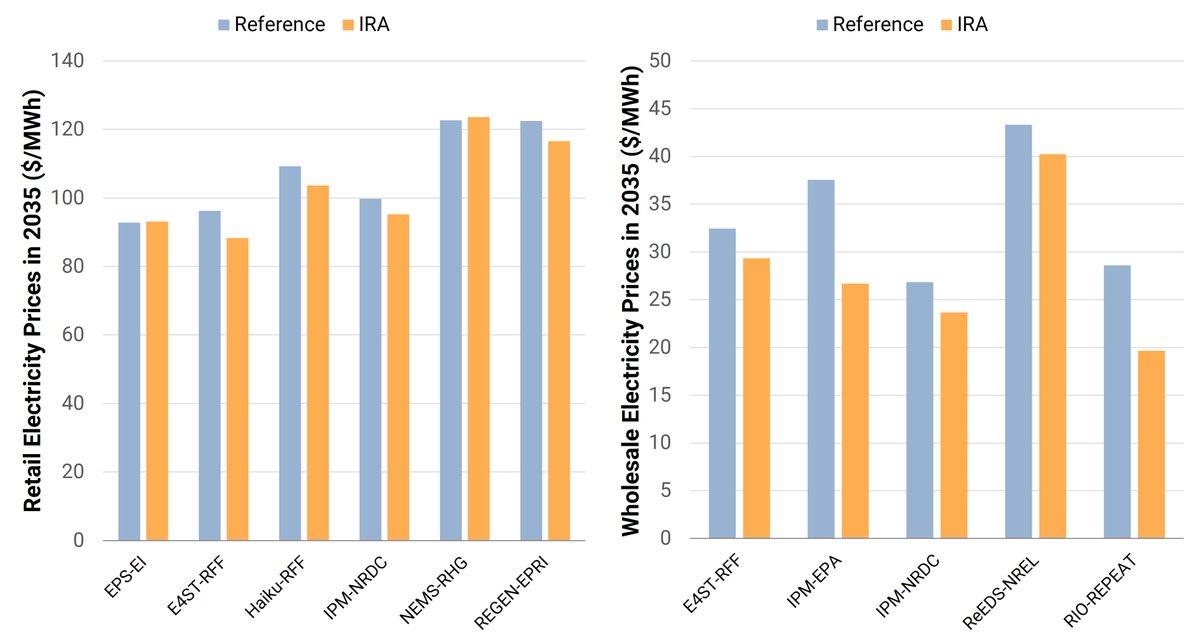
Wholesale and retail electricity prices decline across nearly all models and time periods with IRA. Our earlier work showed how total energy costs could be $73-370 per household per year lower by 2035 with IRA.
I think this is the strongest decision on climate change ever issued by any court. After a trial where climate scientists testified under oath and were subject to cross examination (very rare in itself), the court issued a 103-page decision that found that fossil fuel use is
@DestenieNock @lilyrhanig @TeaganGoforth Fantastic talks by the SPICE team, and a fantastic keynote from their advisor! It was great to meet all of you this week.
Happy to share that my paper with @AidanCoville, "How Do Policymakers Update Their Beliefs?", is accepted at the JDE!
We leverage World Bank and IDB workshops to examine how policymakers, practitioners and researchers respond to #evidence.
Here is what we find: 🧵
What are the potential micro/macro economic implications of IRA's climate provisions? Catherine Wolfram, @neilmehrotra, and I summarize key takeaways in our new piece at Brookings: https://t.co/9Rq4gQ5I35
@KenCaldeira @RogerAines @Tesla@JesseJenkins@DrChrisClack I attempted to summarize the economy-wide net-zero modeling literature in this 2021 Joule article: https://t.co/8oy11tgKOg
But studies have proliferated (like net-zero pledges) since then.
How close does the Inflation Reduction Act get to U.S. 2030 climate targets? What do recent inflationary drivers mean for the clean energy transition?
Our new white paper investigates!
https://t.co/1LodrPziqX
“Huge backlogs of renewable energy projects have built up around the world as developers are refused permission to pump their power into the grid,” write @JustinHGillis and @tylerhnorris. https://t.co/Ssh68cA2gq
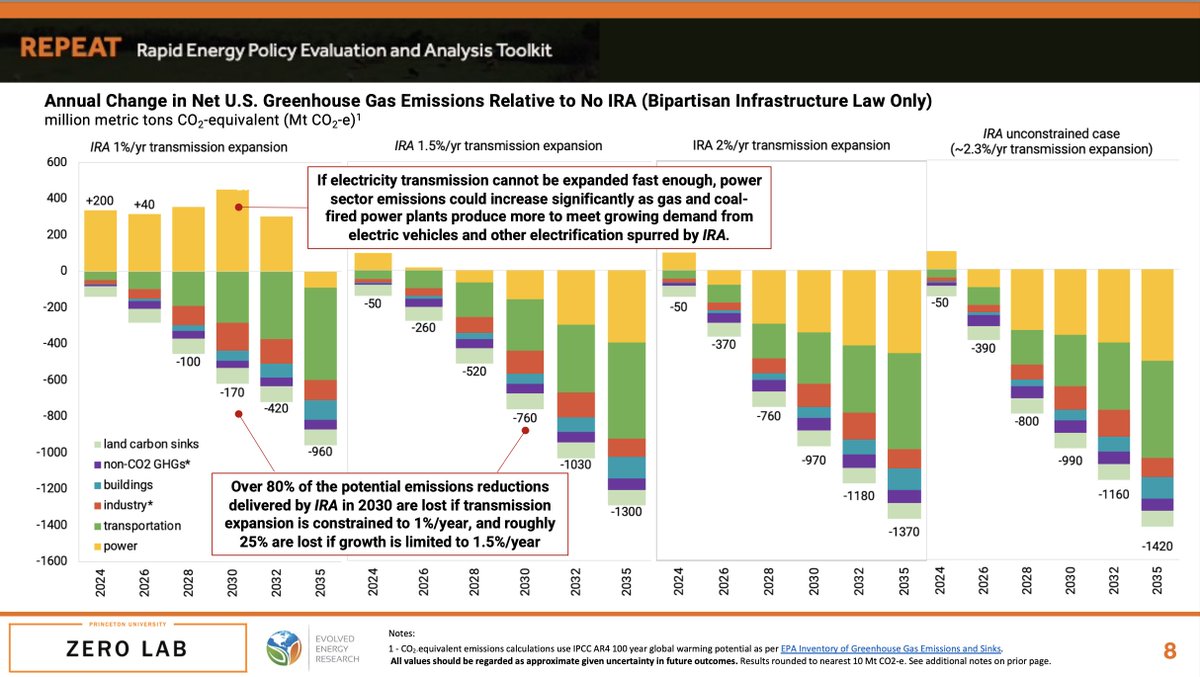
2. Over 80% of the potential emissions reductions delivered by IRA in 2030 are lost if transmission expansion is constrained to 1%/year, and roughly 25% are lost if growth is limited to 1.5%/year.
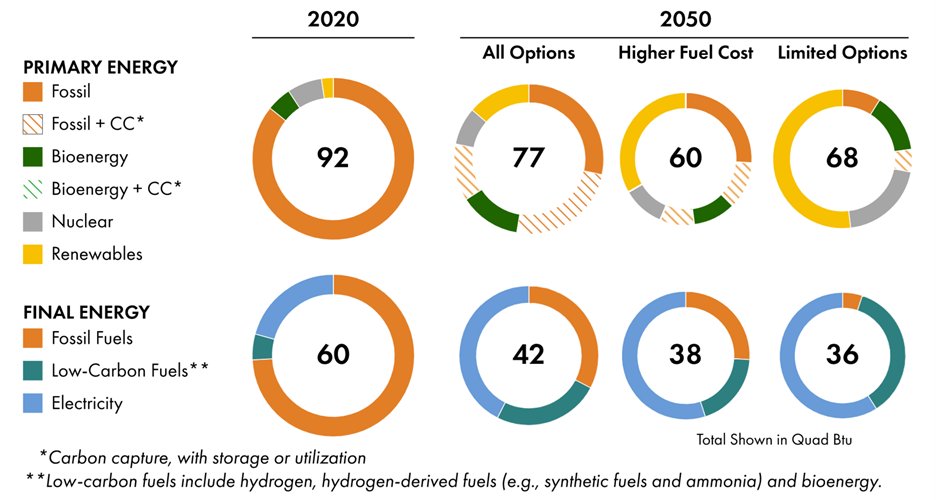
How can the U.S. reach net-zero emissions by 2050?
Our new report looks at decarbonization transitions to meet midcentury goals: https://t.co/qQeuyXfWXX
Now live: NET-ZERO 2050 report by EPRI and GTI Energy, which summarizes a major new study on strategies for reaching net-zero emissions across the U.S. economy! Explore the report and interactive documentation here: https://t.co/dAVBK6RZYi
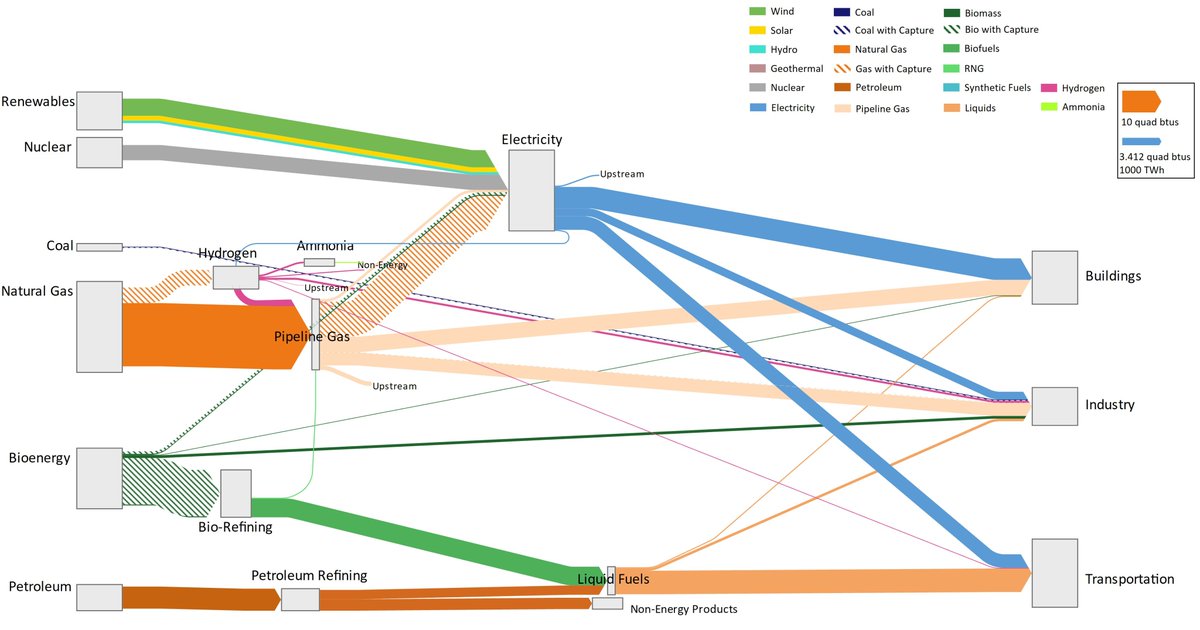
Coming tomorrow: What could net-zero economy-wide emissions mean for energy supply and customers? A large new EPRI study investigates (with Sankey diagrams!)
I’m excited to announce that at last, in my final semester, there is another Silas in my class.
I welcome advice from all those with more common names on how to navigate this situation.