the most fun and engaging book on algorithms, plus, world class lectures from @algo_class FREE for everyone, what a time to be alive.
Thanks from the bottom of my heart Prof. Roughgarden
The smartest Indians continue to come to build in the US for the simple reason that the economic incentives are far far better.
Perplexity ($20B), Skild ($14B+), Baseten ($13B), Together ($8B), Glean ($8B), Modal ($5B), Rubrik ($25B), Harness ($5B), Blacksmith, Parallel, Greptile, CodeRabbit, Composio, Distyl ($2B), Resolve, Luma, Cartesia, Wispr, dMatrix, Arize and many more - all started by at least one Indian-born founder.
The US is a far easier to raise capital in with far less dilution. Most Indian companies are switching where they're domiciled to get access to the US capital markets. Every single Indian venture firm is trying very hard to invest in the US or risk not participating in the AI race (ironically, the management fees of venture firms are so high in India relatively that this is the one group that net of carry actually has incentive to be in India because they take home well north of a living wage whether or not funds perform do)
While Zomato ($35B now, $8B at IPO) might be the biggest outcome in Indian venture, Cursor ($60B), Reflection (potentially $20B+), World Labs ($8B), OpenRouter ($8B), HuggingFace ($12B) and of course the $1T+ big labs quickly make those outcomes seem small and happen on a much smaller time scale, with much higher IRR.
Engineers at these startups regularly get paid $1M/yr, and make $10M+ on exit. Even in BigTech, it is trivial to pull up levels fyi and see that if you're L6/L7+ with ~10 years of experience, you're making $1M/yr there too. And of course, we all know the slew of Indian CEOs of companies here, not to mention a huge bench of lesser known executives across the board in public and private companies.
I say all this because every time there is a slight immigration hiccup in the US, I hear the online pleas to "build in India", I struggle to understand why most engineers, academics or founders would do that net of desire to be close to family, failure to obtain visa and devout patriotism.
This is not a superiority thing or a US v India thing. The economic incentives at least for technologists to being in the US outweigh India by at least an order of magnitude.
human cultures are not able to metabolize this amount of change this quickly. when you zoom back out to a big picture of history, it’s remarkable how glacially slow everything is. the first industrial revolutions took 80 years (very fast by the standards of previous revolutions), and the writings of Marx happen at the very end as working class politics arises. it takes about another 150 years after that for the great ideological struggles of post-industrial times to be completed in the 90s in what fukuyama called the “end of history”
today you see a compression of decades of technological change into a matter of months or years. there’s no wonder yann lecun (the respected inventor of the ConvNet and ex-chief scientist of Meta) wonder whether the hugging face incident was staged, and mathematicians whose minds are far more powerful than my own are nonetheless coping about training on their data or something while models begin to display superhuman mathematical capability
it would take a century or more to fully metabolize and legitimize the level of changes that have happened even in the past 20 years, to say less of the remarkable scientific revolution we will get over the next five should we avoid the doom of misalignment. I do not suspect any current form of science academia, or even political order will survive without great transformation, except through the course of slow evolution over decades - and of course, technology will keep moving too
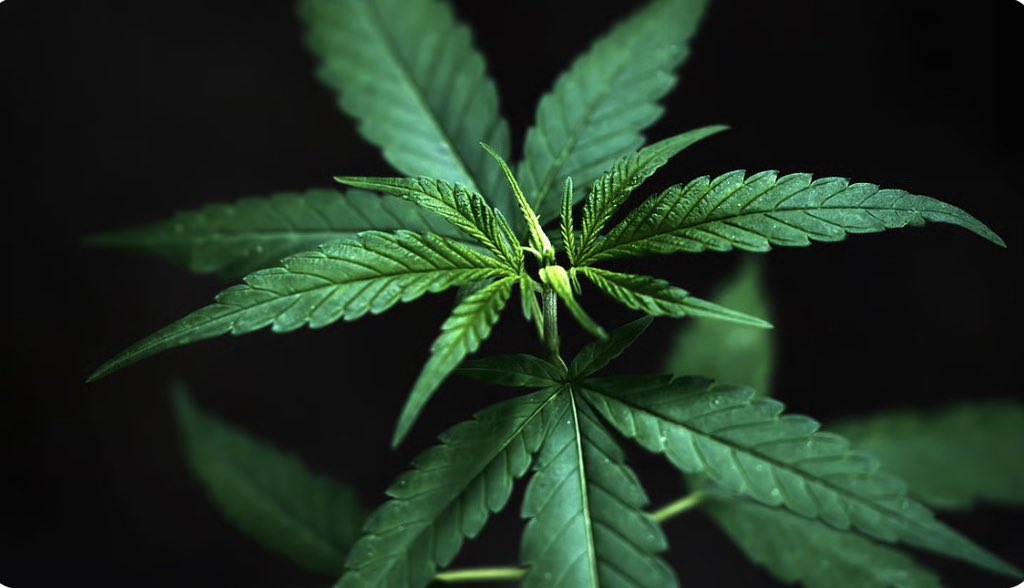
Why not legalise and regularise it, like America, Europe and many Asian countries?
Ganja/Marijuana was banned in India by Rajiv Gandhi under the pressure of USA.
But in last few years, many nations have legalised and regularised it.
While Indian law is still punishing Indians.
Supreme Court in an NDPS case: when it comes to Ganja, we are very liberal. Whenever it comes to us we grant bail. Get a dismissal (instead of seeking anticipatory bail) and come here, we will give you bail, no problem.
Terry Tao and 24 other Fields Medalists have issued a statement on the "severe misalignment of AI in mathematics."
"solving problems is only a tool and proxy for achieving the primary goal of conceptual understanding and insight. Forgetting this in the world of AI may turn the tool against the primary goal. Indeed, the mass production at faster and faster pace of “true/false” statements could destroy fertile ground instead of breathing life into new ideas."
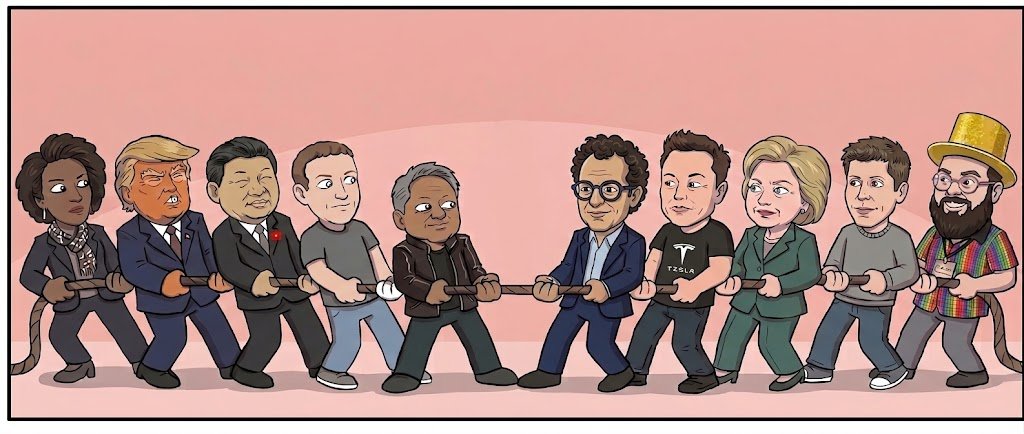
Very funny that xAI was created to stop Anthropic which was created to stop OpenAI which was created to stop Google which would've actually never developed ASI because it was afraid of cannibalizing its ads revenue from search.
We’re sharing a solution to the Navier-Stokes Millennium Prize Problem, one of the deepest problems at the frontier of mathematics.
The proof was produced by a group of agents, using an OpenAI next-generation model significantly more capable than GPT-6 Astra.
The problem concerns whether the description of smooth three-dimensional fluid motion modeled by the Navier-Stokes equations can break down. It has remained unresolved for roughly 90 years.