Why do we still hunt for black boxes after a crash when planes have satellite internet? Excited to be part of AERONET, a $4.8M NSF VINES Track-2 effort to make aviation comms more resilient, with HPE Labs, UC Berkeley, UC Riverside, Northeastern at Pittsburgh Airport and beyond.
@CarnegieMellon, led by @swarunk, is partnering with @HPE and leading research universities on AERONET, an @NSF-funded initiative developing AI-enabled tech to make aviation communications more intelligent, reliable, and resilient across cellular, Wi-Fi, and satellite networks.
Honored to receive the 2026 #InfosysPrize in Engineering & Computer Science for our work on low-power wireless to sense and control the physical world. This belongs to my amazing students & collaborators at CMU & beyond. Thank you to the @InfosysPrize jury https://t.co/SDLYWymPFO
The Infosys Prize 2026 in Engineering and Computer Science is awarded to Prof. Swarun Kumar, Sathaye Family Foundation Professor in the Department of Electrical and Computer Engineering at Carnegie Mellon University.
His research focuses on low-power wireless networks and their applications in connectivity, sensing, and actuation. His work has led to new ways of using wireless technology for contactless health monitoring, indoor positioning, and even powering and controlling soft robots.
@swarunk@CarnegieMellon
#infosysprize #infosyssciencefoundation #infosysprize2026 #engineering #computerscience #wirelesstechnology #wirelessnetworks #researchandinnovation #carnegiemellonuniversity
Super proud of Freddy Liu and Kuang Yuan for winning Best Demo Runner-up at ACM MobiCom 2026 (out of a record 61 demos at the conference)! This work demonstrates Active Noise Cancellation on open-ear wearables for the very first time. Link to demo here: https://t.co/8YjKMxfxcE
Excited to report our new National Science Foundation FutureCore award on “smart food” – embedding digestive tract sensing capabilities into the form factor of everyday food. Smart Food remains completely digestible while wirelessly sensing health. Link: https://t.co/0ZmY9bnVYc
Congratulations to Yiwen Song for being named 2026 Young Scholar by the Marconi Society, setup by the family of Guglielmo Marconi, who invented the radio in the 1800s. It annually recognizes top young wireless researchers worldwide. Proud advisor moment! https://t.co/T47Efpdiup
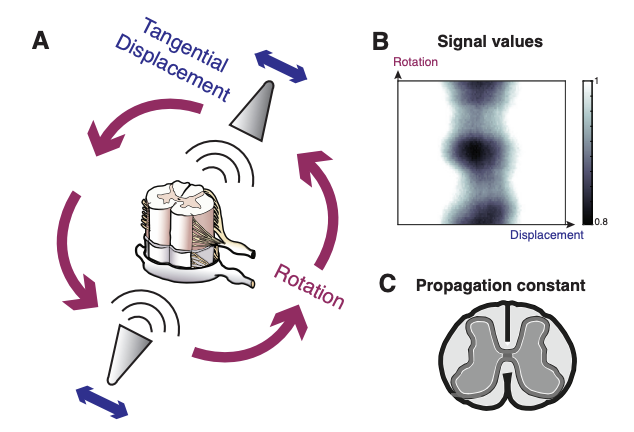
This year at MobiSys'26, we present OssiSense, an RF system (at 5-6 GHz) that images bones at a sub-cm resolution for the very first time! While X-ray CT remains the gold standard, OssiSense paves a path to low-cost and radiation-free tissue monitoring.
https://t.co/Hr4IihTaWX
Thrilled to share our brand new Nature communications paper on sensing and visualizing the heart's blood flow to map arterial stiffness. Joint work with: Jiangyifei Zhu, Kuang Yuan, Akarsh Prabhakara, Yunzhi Li, Gongwei Wang, Kelly Michaelsen, Justin Chan. https://t.co/AAW4AzSdoc
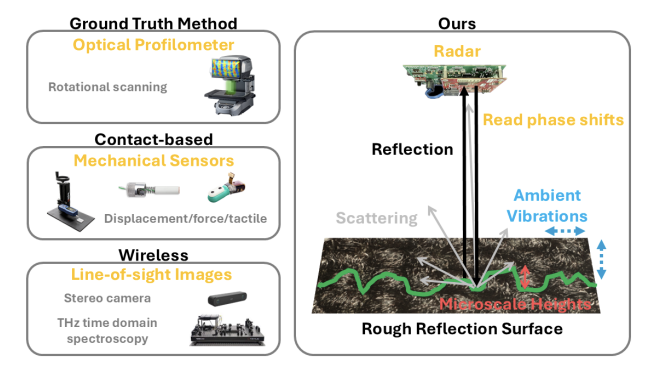
Can radars sense the texture of surfaces? Our work mmTextora models subtle radar phase vibrations to tease apart surface textures for robotic grasping. A cool paper by my students Bert Shan & Yawen Liu presented today at ACM SenSys 2026. Learn more here: https://t.co/7k9MnBLVbv
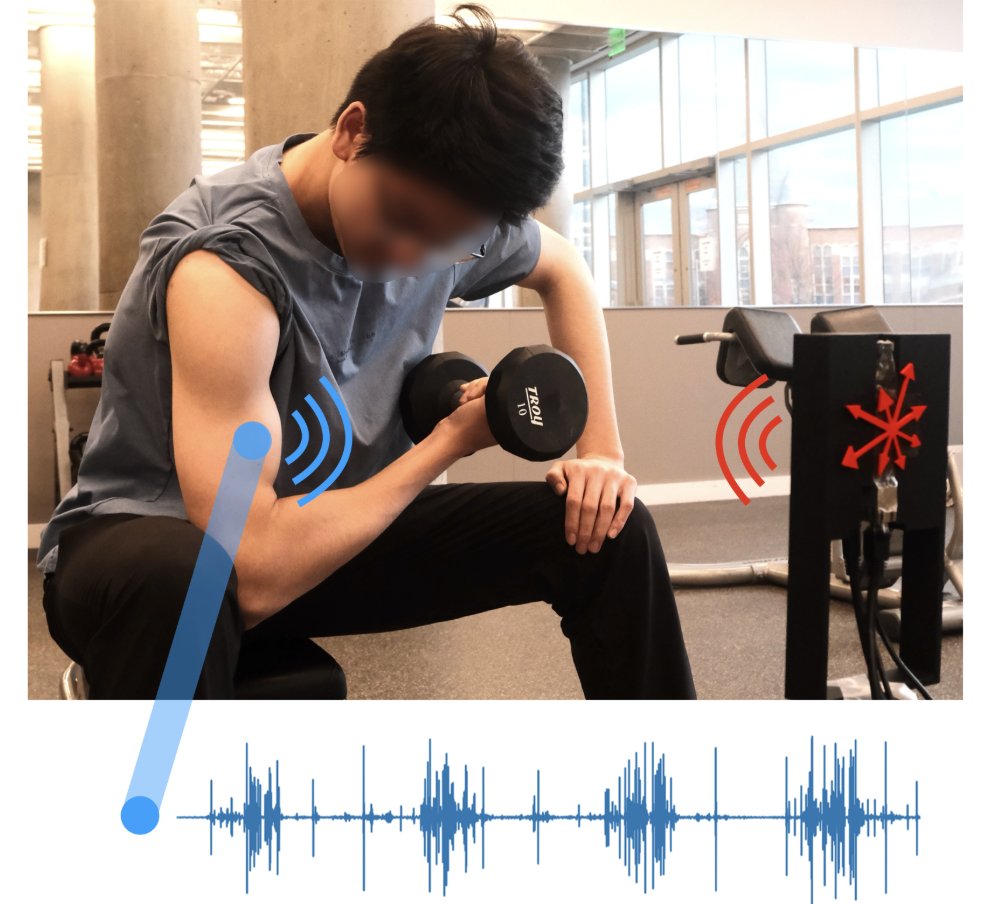
Today Jiangyifei presented our work GigaFlex on muscle health sensing using mmWave radar to detect fatigue at ACM SenSys 2026. An exciting work that uses chaos theory to model subtle body vibrations perceived during exercise. Check out the work here: https://t.co/19guRoeAGl
Our paper TranQuiL, on protecting radio telescopes from interference (at Wiley Radio Science'26), has been highlighted at Eos, the 100+ year old flagship magazine of the American Geophysical Union: fewer than 2% of all AGU papers are featured in this way! https://t.co/2NZWo8IRsL
Our system PolarVisor is a cool new way to build paper-like low-cost A/R tags scanned from a mmWave radar. Yiwen, who is on the academic job market for Asia/Pacific and North America is here for MobiCom'25 demos so pl catch him if you're @ACMMobiCom! https://t.co/gc4LvvwMe6 (2/2)
Yesterday was my first full conference talk as faculty at #MobiCom2025. My student, Yiwen Song who was supposed to be the presenting author had his flight cancelled at the very last minute flying in, so had to step in (and lead author Junbo Zhang is at Apple) (1/2)
Thrilled to share our Nature Communications paper on RFact: a frequency-selective RF system that wirelessly heats liquid crystalline elastomer actuators to power untethered soft robots.
Read it here: https://t.co/yTNV4hE4ds
Congrats to my PhD student Kuang Yuan for winning the best demo at MobiSys'25 for his exciting work on dental health sensing with a sonic toothbrush! Joint with Mohamed Ibrahim (HP Labs); Yiwen Song, Guoxiang Deng (CMU); Robert Nerone, Suvendra Vijayan (Pitt) & Akshay Gadre (UW)
The ACM MobiSys 2025 registration deadline is approaching soon!
More details about the registration and hotel booking are available at: https://t.co/qfWGI4fwTn
Standard Registration Due: June 16th, 2025 23:59 PDT
Hotel Room Conference Rate Deadline: June 16th, 2025
Thrilled to report that my PhD students: Jiangyifei Zhu (co-advised by Prof. Justin Chan) and Kuang Yuan have received a prestigious and highly competitive Qualcomm Innovation Fellowship! Excited about their ongoing work on heart monitoring using radar! https://t.co/fB7FTB8JXL
It was a special day to hood three of my recently graduated Ph.D. students at the 2025 @CMU_ECE commencement ceremony: Dr. Junbo Zhang (now at Apple), Dr. Atul Bansal (now at Apple) and Prof. Akarsh Prabhakara (now at UW Madison). Congratulations -- super proud of all of them!
It was a pleasure to receive the Young Alumni Achiever Award from my undergraduate alma mater @iitmadras. A truly nostalgic experience at IITM and lovely to share the stage with so many distinguished alumni. Truly grateful to everyone who made this recognition possible!
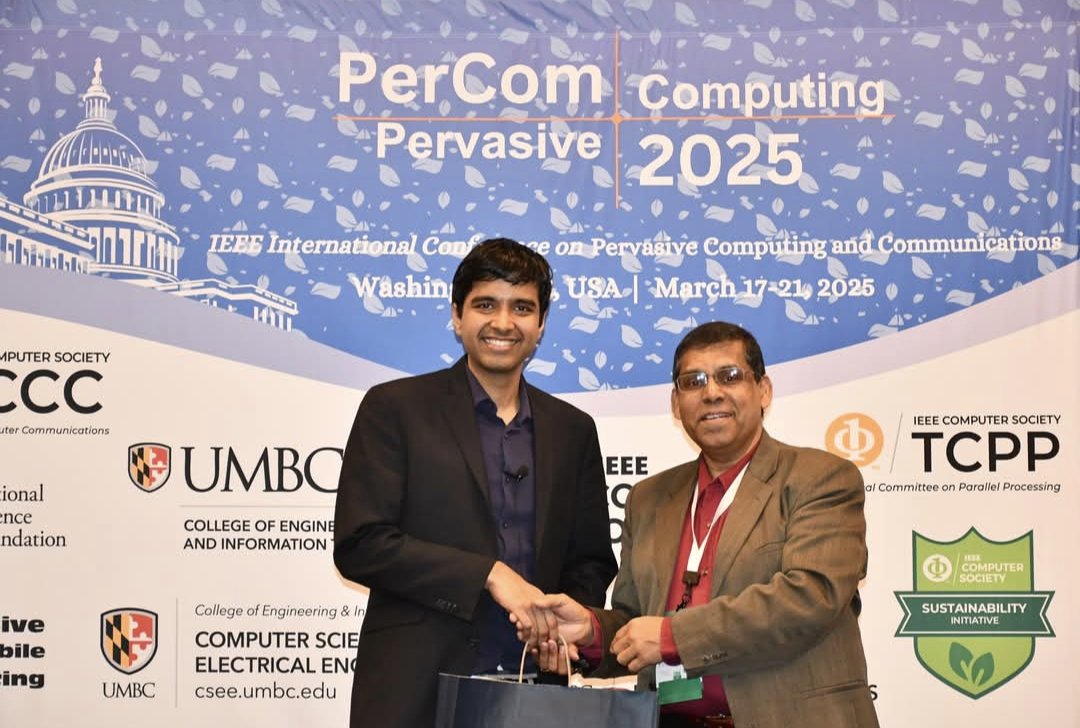
It was a pleasure to present the opening keynote address at IEEE PerCom 2025 in Washington DC. In my talk "Exploring new frontiers for pervasive wireless", I presented our lab's exciting work in wireless sensing and actuation. A truly fun time for pervasive computing!