American bought a brand new 2026 Ford F-150
If you notice on the door, there is now a sensor that flashes, he has no idea what it is
You can see it has power and is flashing
It’s actually a new sensor that makes sure you are paying attention got the road. The sensor monitors the driver to attentiveness on the road and is even designed to see through sunglasses. It’s located on the driver's side door pillar
It’s part of Ford’s BlueCruise hands-free highway driving and broader Co-Pilot360 Active driver assistance suite
If you aren’t paying attention to the road the car will alert you with lights, chimes, brake pimps, eventually slow you down and even bring you to a stop
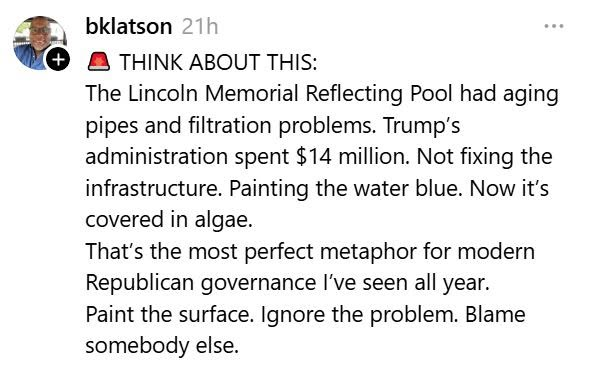
Step 1: Remove filters in Reflecting Pool because Obama put them in.
Step 2: Give your criminal neighbor who runs "Greenwater Services" a $20 million no-bid contract to paint the pool.
Step 3: Fill the pool with water from the Potomac River, the phosphates from which cause algae blooms.
Step 4: Freshly sealed pool and extreme heat result in a super scum event
Step 5: Direct National Park Service to dump hydrogen peroxide into the pool which causes the paint to peel.
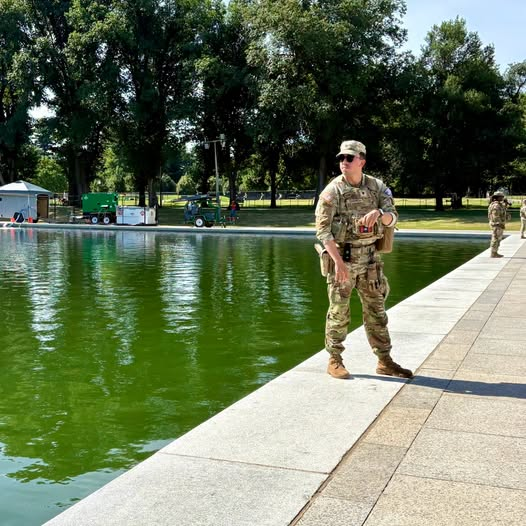
Step 5: Deploy US National Guard to stop people from taking photos of the swamp as a perfect metaphor for the administration.
Step 6: Blame someone else.
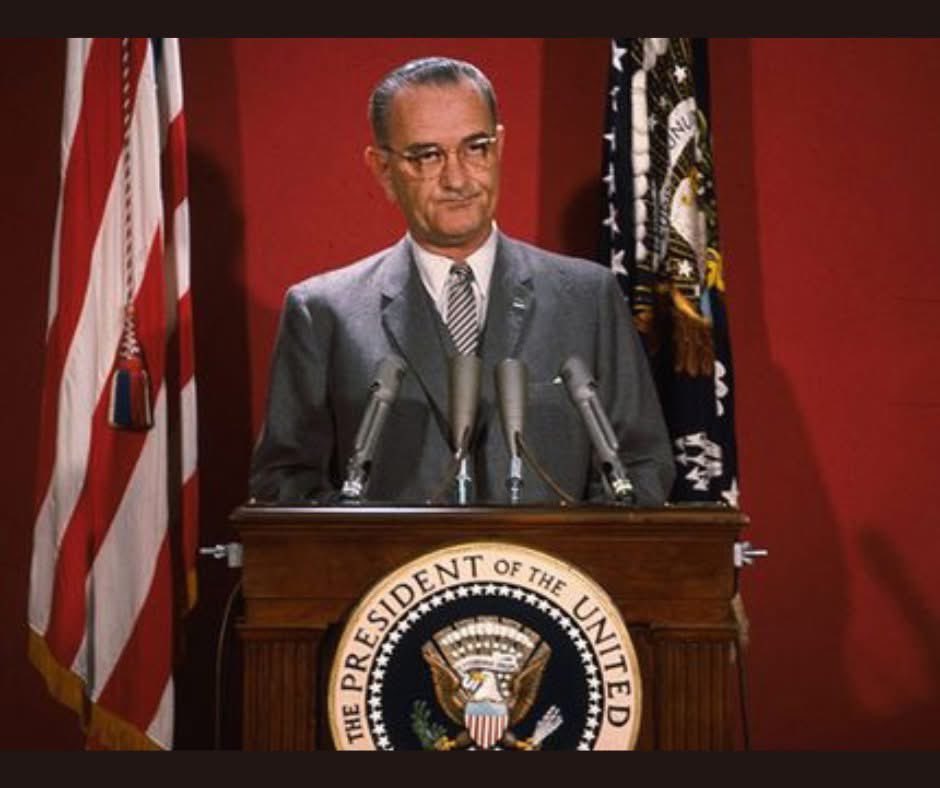
On July 30, 1965, Lyndon B. Johnson did something no American president had ever done before.
Instead of signing historic legislation at the White House, he boarded a plane and flew to Independence.
His destination was the Harry S. Truman Presidential Library and Museum.
And waiting there was Harry S. Truman the man who had first proposed national health insurance for elderly Americans nearly twenty years earlier.
Truman had introduced the idea back in 1945.
At the time, many people mocked it as impossible.
Critics called it “socialized medicine.”
The American Medical Association fought it aggressively.
Congress repeatedly blocked it.
Year after year, Truman kept pushing for healthcare protections for older Americans.
And year after year, he lost.
But Lyndon Johnson never forgot who planted the idea first.
So when Medicare finally passed Congress in 1965, Johnson decided the moment didn’t belong only to the president signing the bill.
It also belonged to the president who spent decades fighting for it before the country was ready.
Johnson flew senators, representatives, cabinet members, and guests to Missouri for the ceremony.
Then, standing beside the 81-year-old Truman, he signed Medicare into law.
The moment carried enormous symbolism.
One president had planted the seed.
Another had finally made it bloom.
After signing the bill, Johnson turned toward Truman and did something deeply personal:
He officially enrolled Harry Truman as Medicare’s very first beneficiary.
Johnson handed Truman Medicare card number one.
Then he handed Bess Truman card number two.
The room reportedly filled with emotion.
Truman looked at the card and told Johnson:
“You have done me a great honor in coming here today, and you have made me a very, very happy man.”
It was more than a political ceremony.
It was one generation honoring the unfinished work of another.
Within six months of Medicare becoming law, millions of older Americans had already received hospital coverage through the program.
Today, tens of millions of Americans rely on Medicare for healthcare.
And it all traces back to that warm afternoon in Missouri when two presidents sat side by side one who dreamed of the idea, and one who finally made it reality.
History often remembers the person who crosses the finish line.
But sometimes the most meaningful moments happen when the person who finishes the work pauses long enough to honor the person who started it.