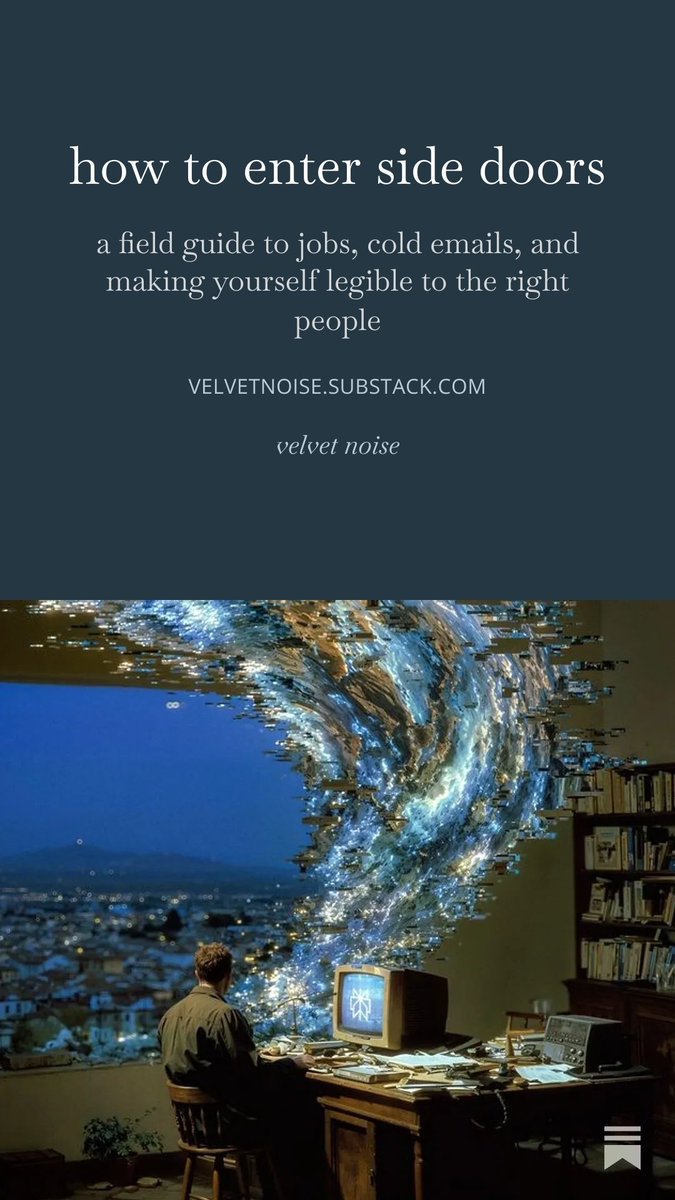
i made an app that turns videos into stop motion animations
you can create an animation in <1 minute using just your iphone
made with roboflow RF-DETR (+other computer vision magic) to auto-select keyframes
i'll release a testflight app soon, let me know if you want to try :]
Finish something. Anything. Stop researching, planning, and preparing to do the work and just do the work. It doesn’t matter how good or how bad it is. You don’t need to set the world on fire with your first try. You just need to prove to yourself that you have what it takes to produce something.
There are no artists, athletes, entrepreneurs, or scientists who became great by half-finishing their work. Stop debating what you should make and just make something.
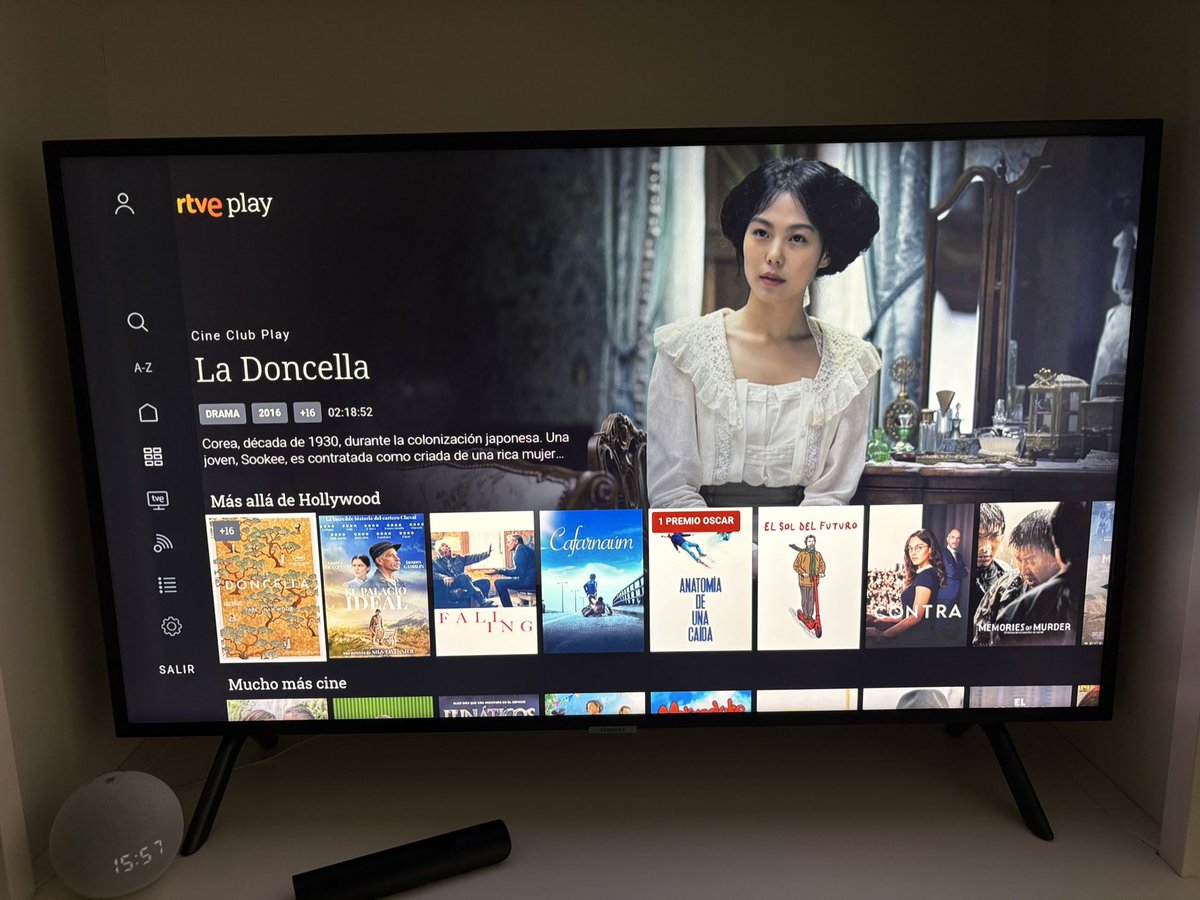
good thing about being spanish… we have a public streaming service where we can watch a great catalog of critically acclaimed international movies for free
If you want to increase your ability to concentrate and have more control over your own mind, try this exercise daily for 5 minutes. It was created by one of the most intelligent men of the 20th century, Rudolf Steiner.
Use an ordinary object (a pencil, clothe spin, clip, book, etc.) and think about it for five minutes every day. You take an object in front of you or in your mind and the first time you describe it to yourself aloud. You can also imagine yourself describing it to a blind person.
Use all your senses and make as many observations as you can in five minutes. Repeat this the next day, you will probably notice new details.
After a while you can ask questions about the object: "What can I do with it?", "What is it made of?", "Why this shape?", "What other shapes could it have?", "Where was it made?", "How did I get it?"," How are the raw materials mined?", etc. You will be able to answer some of these questions. If not, you can search for an answer in an encyclopaedia or on the internet.
Your should be able to determine whether your thoughts are correct, otherwise your thoughts will wander. which is not the intention.
You can repeat what you did the day before and build on your previous thoughts. After some time you will have covered all possible questions, then do it one or two more times until you can really find no more issues to think about. Then follow the same procedure with another object.
When doing this exercise you may notice that your thinking gets clearer and sharper, and that your perception, concentration and objectivity increase. Also, your interest grows.
The difficulty of the exercise is that your mind wanders. The challenge is to be able to think about the object for five minutes, but you will find that your mind wanders to something else very easily, that your thoughts are associative and work automatically. E.g. you think of a pencil and suddenly you see in your mind your grandma with a pencil in her hand, grandma has a budgerigar and suddenly you are thinking about the whistling of this bird. Interrupt such thoughts: you wanted to think about the pencil.
The exercise is called control of the mind. The example just given shows that often there is no control over our thinking. We are thought, our thinking is associative and automatic. We believe that we think, but our thinking is often not focused.
Make sure that you do the exercise every day. You can choose a fixed time. Choose a time when you are awake and clear-headed, so not after dinner, but for example before or after breakfast or at 8 o'clock at night. You can also do it while waiting for the train, in a spare moment. Doing the exercise with two or three objects should be sufficient.
go on a walk. read a book. plant a tree. help a stranger. go outside. call a friend. make something. write something. volunteer somewhere. go to the gym. watch the sunset. watch the sunrise. stroke a dog. clean your room. eat a piece of fruit. cook something. put your phone down.
optimism isn't delusional positivity. it isn't the denial of reality. it isn't the absence of problems or doubt. optimism is the belief that the future can be better, and we have control over whether it will be.
Today, we share a breakthrough on the planar unit distance problem, a famous open question first posed by Paul Erdős in 1946.
For nearly 80 years, mathematicians believed the best possible solutions looked roughly like square grids.
An OpenAI model has now disproved that belief, discovering an entirely new family of constructions that performs better.
This marks the first time AI has autonomously solved a prominent open problem central to a field of mathematics.