A billionaire bought a logging company in the Amazon rainforest just to shut it down.
Swedish-British billionaire Johan Eliasch has taken a bold, hands-on approach to fighting climate change, shifting from business leadership to direct environmental action.
In 2005, he acquired a logging company in Brazil, gaining control of approximately 400,000 acres (1,600 km²) of Amazon rainforest, which he immediately dedicated to preservation by halting all logging operations. This decisive move transformed a potential deforestation site into a protected carbon sink, safeguarding biodiversity on a vast scale.
Eliasch's efforts extend far beyond this landmark purchase. He founded the Rainforest Trust, which has helped protect millions of acres worldwide, and co-founded Cool Earth in 2006—a charity that empowers indigenous communities to conserve endangered rainforests.
His influence reaches policy and sports: he advised the UK government on deforestation (authoring the influential Eliasch Review in 2008), and as president of the International Ski Federation (FIS) since 2021, he has driven sustainability initiatives, including committing to the Race to Zero campaign to halve winter sports emissions by 2030.
Eliasch exemplifies a rising movement among ultra-wealthy individuals who deploy private resources for immediate, impactful climate solutions—bypassing conventional channels to deliver tangible protection for the planet's vital ecosystems.
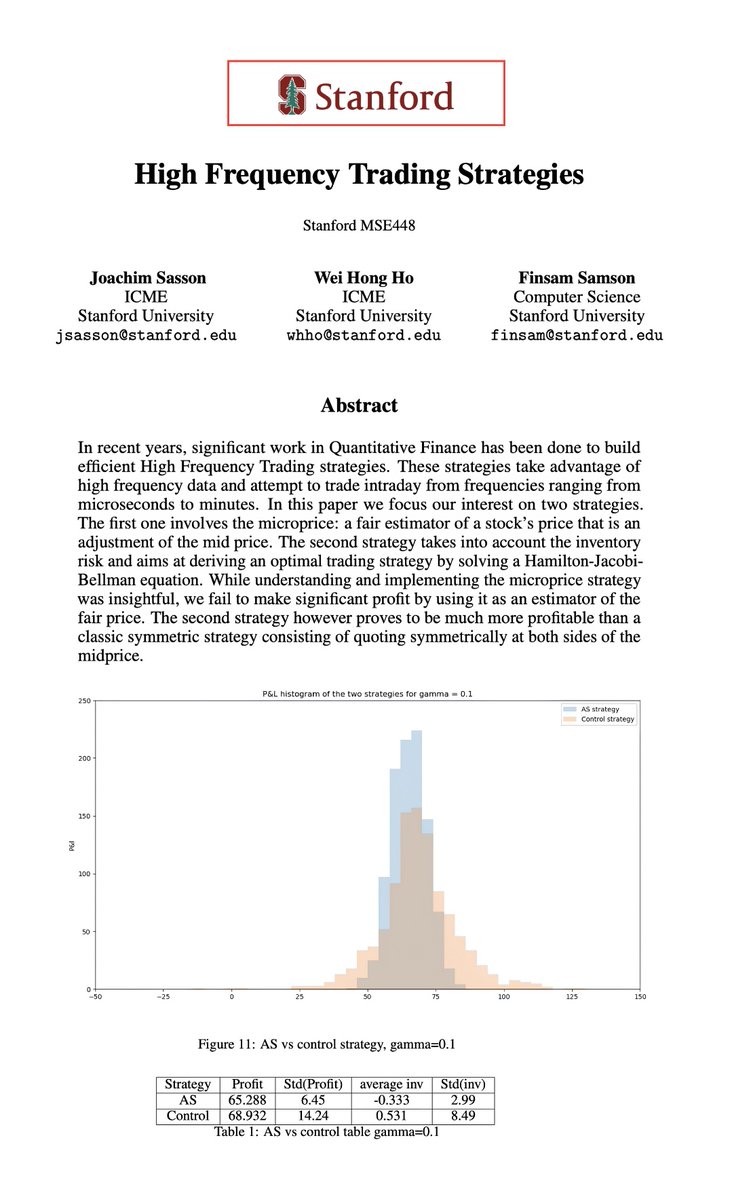
As someone who builds institutional level quant systems, this Stanford paper is the closest thing to an HFT desk I have ever seen publicly shared.
14 pages. Top Trading Strategies. Bookmark & get this, then read the article below before someone takes it down.
below is what the company says it does. I test the water monthly and it performs to spec:
"This nine-stage reverse-osmosis system progressively purifies and “polishes” tap water. A sediment filter first strains out large particles, followed by a carbon block that removes chlorine, volatile organic compounds, and odors. The 75-gallon RO membrane then eliminates 95–98 % of dissolved impurities, while a permeate pump improves efficiency and extends filter life. Purified water is stored in a 3-gallon non-electric holding tank for on-demand use. Two de-ionization filters further strip out nearly all remaining contaminants, raising purity to near-zero TDS. A coral-calcium cartridgethen remineralizes and alkalizes the water (pH ≈ 8), restoring trace minerals, and a final coconut-carbon filter “polishes” taste and texture for clean, alkaline, mineral-balanced water."
Instead of watching an hour of Netflix, watch this 2 hour hour Stanford lecture will teach you more about how LLMs like ChatGPT and Claude are built than most people working at top AI companies learn in their entire careers.
ANTHROPIC PAYS $750,000 A YEAR FOR ENGINEERS WHO UNDERSTAND WHY AI WORKS.
STANFORD JUST PUT THE SAME KNOWLEDGE ON YOUTUBE FOR FREE.
WATCH IT THIS WEEKEND. NOT EVENTUALLY. THIS WEEKEND.
Claude controlling @tradingview live — switching symbols, writing Pine Script, batch scanning futures, replay trading, drawing levels. All from the terminal. Still rough edges but the vision is clear.
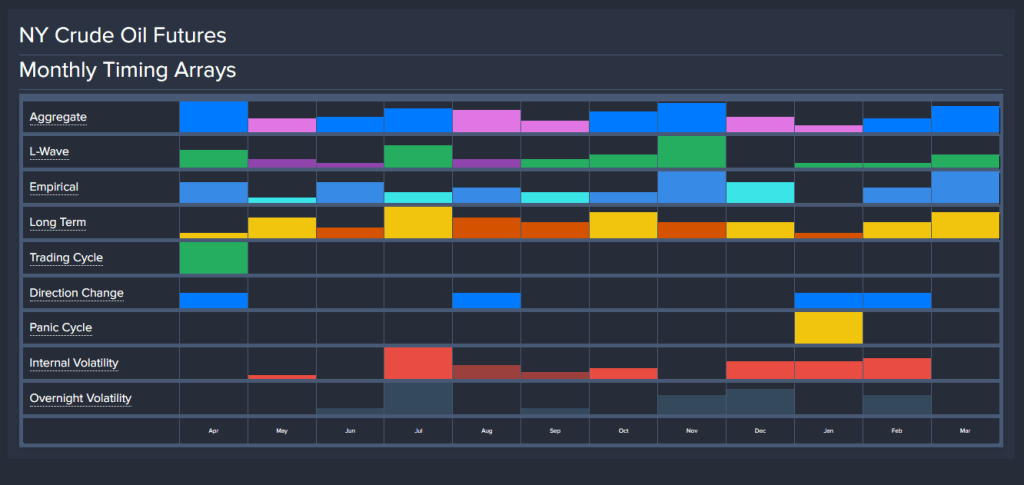
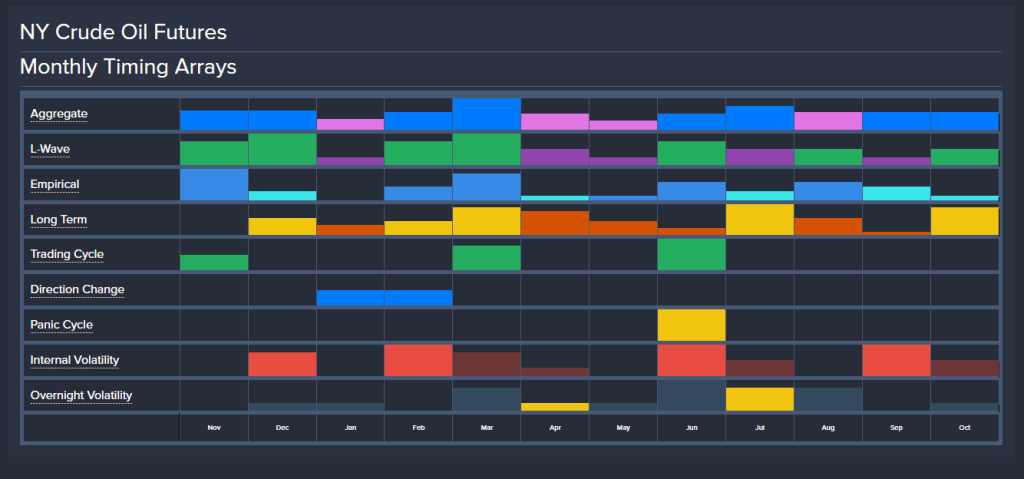
OIL. Here is the Array we published last May. It showed a Panic Cycle in January and back-to-back directional changes in Jan/Feb 2026 with a target into March 2026. Here is the Array from last November. This also showed March as the target for a high.
A MASTERCLASS IN MILITARY INCOMPETENCE
The Starmer administration’s handling of the Iranian crisis is being whispered about in the corridors of Whitehall as a historic "cock up" of the highest order. Despite receiving a formal request from the Americans on 11 February—a full 17 days before the offensive actually commenced—the British government appears to have spent that critical window in a state of paralyzed indecision. The U.S. request was not an invitation for Britain to join the initial "decapitation strikes," but rather a plea for the Royal Navy to help shield vulnerable Gulf allies from the inevitable Iranian retaliation. Instead of stepping up to protect the 240,000 British citizens living in Dubai and Abu Dhabi, the Ministry of Defence oversaw a period of baffling inaction that has left regional partners feeling utterly betrayed.
The diplomatic fallout has been described by insiders as nothing short of catastrophic, with Middle Eastern allies expressing "undiluted fury" at the lack of British support. A former minister with deep ties to Amman reports that Jordan is "fking furious," while leaders in Kuwait and the Emirates are openly questioning whose side Britain is actually on. The Cypriots are reportedly "incandescent" after learning that military assets were actually withdrawn from their vicinity just as the threat level spiked. Only this week did it emerge that HMS Dragon would finally deploy—nearly three weeks after the initial American SOS—a timeline that military experts say is far too little and far too late to restore trust.
Strategic failures have been compounded by what veteran commanders call a total lack of foresight regarding naval positioning. The only available Astute-class submarine was permitted to continue its journey toward Australia, despite having passed through the Gulf just weeks ago when it could have been held as a vital contingency. Security officials now warn that the Trump administration is viewing the UK’s "free riding" with growing contempt. There is a palpable fear in the MOD that the Americans, tired of London’s dithering, will simply cut Britain out of the loop entirely and strike a direct deal with Mauritius to secure the long-term use of Diego Garcia for future operations.
Inside the government, the situation is being described as "incoherent" and "unconscionable." By allowing the United States to utilize British bases like RAF Fairford for strikes while simultaneously refusing to participate in the missions themselves, Starmer has managed to achieve the worst of both worlds. Critics say they have invited the risk of being targeted by Tehran without the benefit of having any say in the coalition's strategic direction. One former defence chief has branded this policy "reprehensible," arguing that Britain has effectively surrendered its seat at the table in exchange for a front-row seat to its own strategic irrelevance.
The sobering reality in Whitehall is a growing sense that the UK no longer has the capacity to shape events in the Middle East. A former Downing Street adviser noted that the "intensity of Labour’s feelings" on the conflict is now matched only by their lack of influence. Allies have stopped listening because they no longer believe Britain can—or will—deliver on its security promises. As the Trump administration continues its high-tempo campaign to dismantle the IRGC, the United Kingdom finds itself sidelined, watched with suspicion by its friends and emboldened by its enemies, all due to a fortnight of inexcusable hesitation.
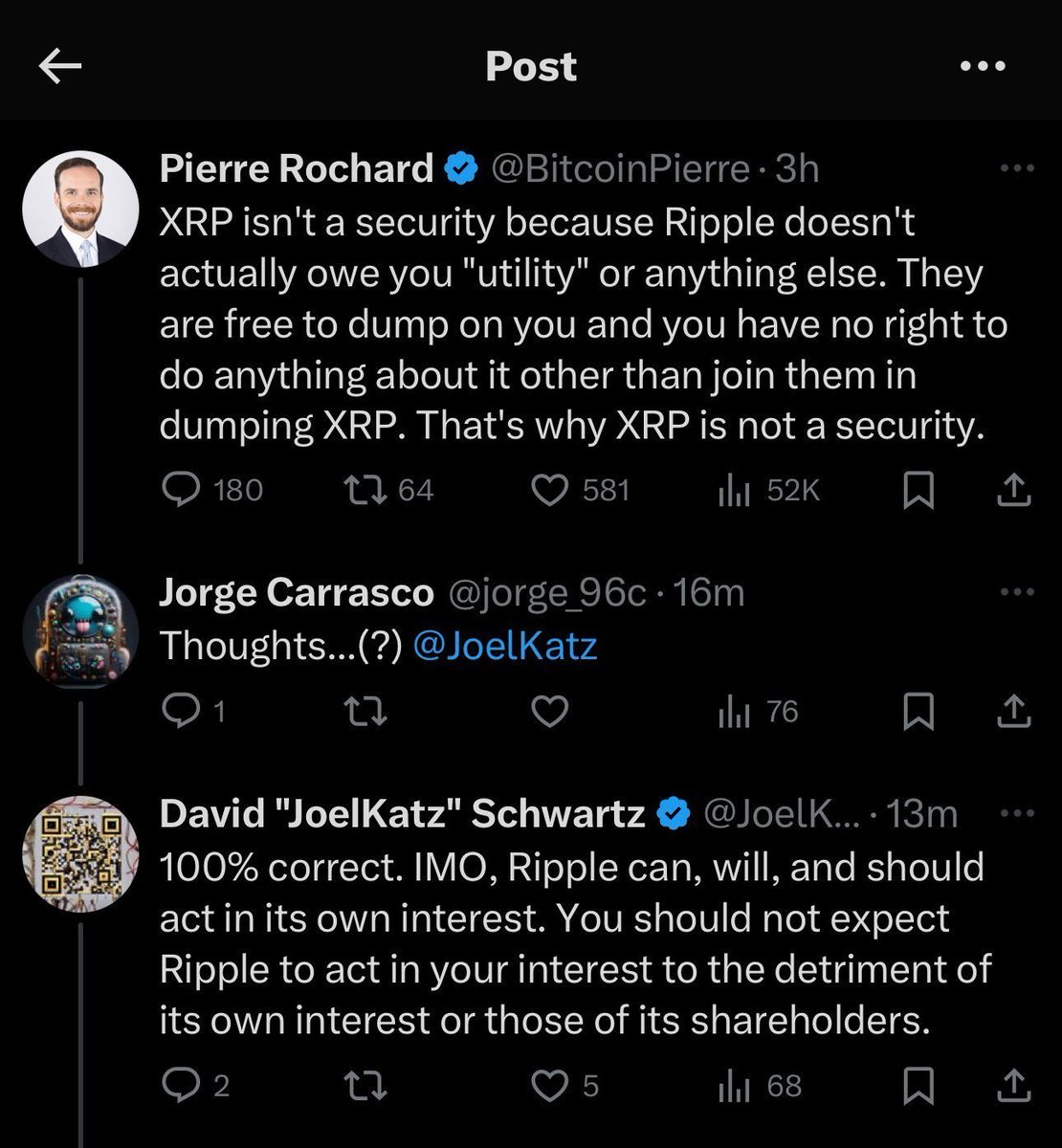
By owning $XRP, you are funding a company that has openly stated it will prioritize its equity shareholders over you
Ripple wrote the playbook on this. Let me walk you through how it works👇
When a company sells both tokens and equity to investors, it creates two competing stakeholder groups whose economic interests may not, and often do not, align
For example, when there’s excess revenue or profits, where does that value ultimately go: to equity holders via buybacks/dividends, to token holders via buybacks/staking rewards, or some split between the two?
There is a fixed pot of revenue to distribute, and equity investors often have superior, clearer economic rights to that revenue that can be legally enforced, while token investors often do not
Look at Circle’s recent acquisition of Interop Labs (Axelar team), Coinbase’s acquisition of Tensor, PumpFun’s acquisition of Padre, Ripple vs XRP. etc
These are all situations in which equity holders benefited at the expense of, or isolation from, token holders
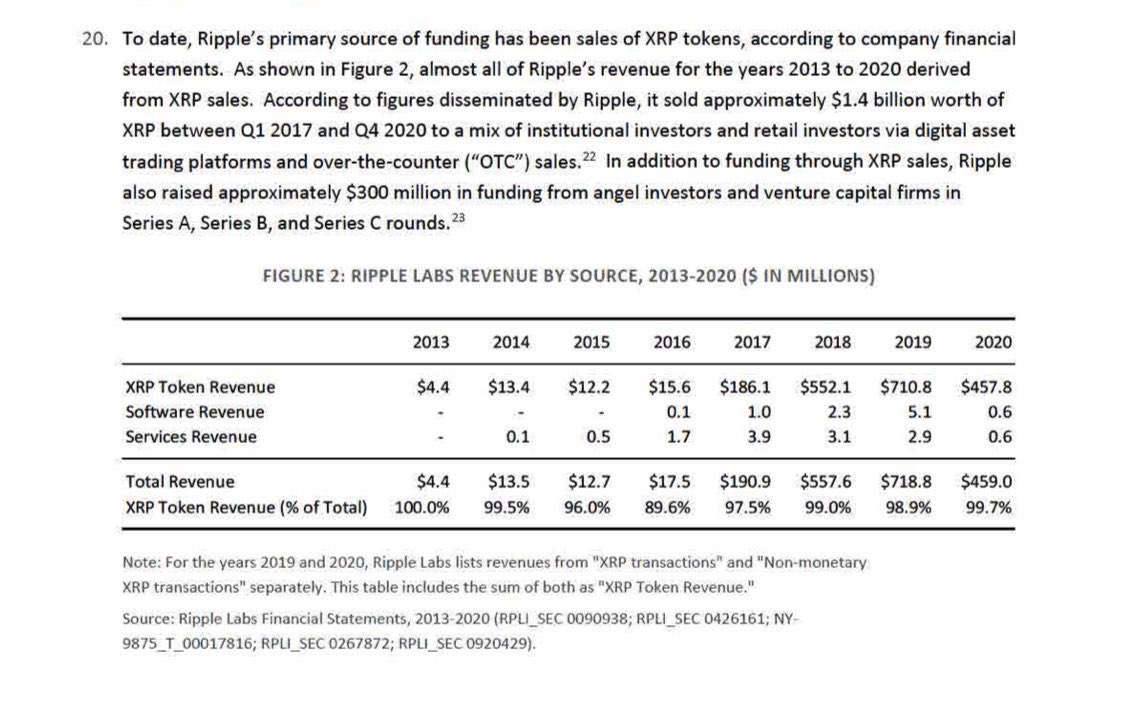
In Ripple’s case, they have spent the past decade+ systematically selling XRP to retail while spinning a story of inevitable institutional adoption
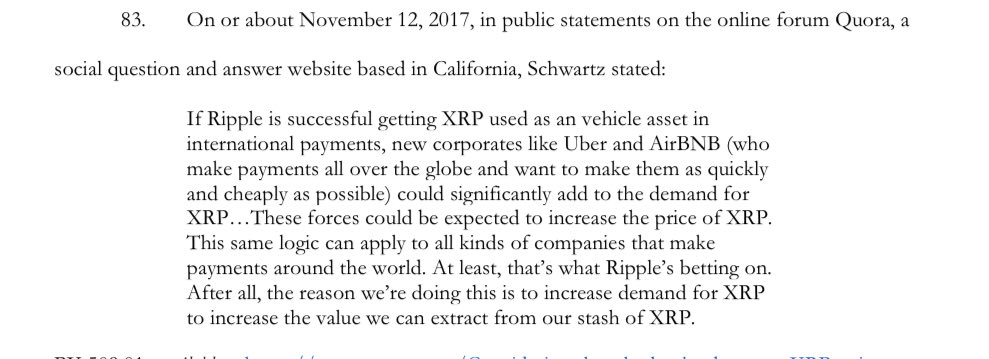
In reality, Ripple uses the proceeds of XRP sales to acquire real companies and fund Ripple Labs stock buybacks, to the sole benefit of Ripple Labs shareholders
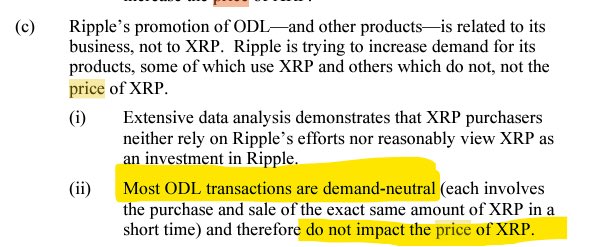
No value is created for the XRP token, even Ripple admitted under oath in court filings that the bridge currency use case of XRP is demand neutral and does not impact price
Ripple Labs socializes its costs to XRP holders to fund product launches and corporate acquisitions, then privatizes the value for its own shareholders
XRPL is an obsolete ghost chain that's not even in the top 40 chains by usage. It has less than 1% marketshare in RWAs and less than 0.01% in stablecoins. There is no metric the chain leads in
Ripple themselves issued 90% of RLUSD on Ethereum and have now expanded it to even more chains outside of XRPL including BNY Mellon's private EVM chain and L2s
The list goes on
By owning XRP, you do not have complete exposure to the success of the ecosystem Ripple is building, because you do not own the equity, you own some undefined percentage of the success
This issue doesn’t exist for Chainlink, because there are no equity investors. There is only the $LINK token to accrue value from the network’s growth. Even CLL employees receive long-term incentives rewards in LINK, not equity
Unfortunately, depending on how you want to put it, there is no mass social media misinformation campaign driving retail towards Chainlink like we see with XRP
However, Chainlink‘s clear dominance in DeFi (70%+ marketshare w/ $60B in DeFi TVL secured) and its tangible verifiable institutional adoption by the largest institutions in the world (Swift, DTCC, Euroclear, SBI, UBS, JP Morgan, Fidelity, ANZ, etc) will inevitably become too impossible to ignore
While the XRP army comes up with bizarre conspiracy theories about why institutions don’t talk about XRP, enterprises adopting Chainlink have no issue publicly talking about their use of Chainlink
And before you say Chainlink and Ripple/XRP are not competitors bc they do different things, I would agree from tech perspective, Chainlink actually offers useful products for banks and isn’t a retail grift
Chainlink is the only unified platform that provides the critical data, interoperability, compliance, privacy, and orchestration standards that financial institutions need for advanced tokenization use cases
None of these institutional use cases Chainlink powers have ever required a “bridge currency”, that is a fantasy narrative dreamt up by retail
This has been proven time and time again
The reality is that $LINK is the best index bet on the institutional adoption of blockchain, while $XRP is a bank themed memecoin that Ripple sells to retail to fund corporate acquisitions and stock buybacks
Documented.📝
Roadmap to Become an AI/ML Engineer:
• Python - Basics + NumPy & Pandas for data.
• Math - Linear Algebra & Calculus for ML understanding.
• Data Engineering - SQL & PySpark for pipelines & big data.
• ML Basics - Scikit-learn for building models.
• Projects - End-to-end ML practice.
• Deep Learning - PyTorch 2.0 for neural networks.
• Computer Vision - YOLOv9 & CV pipelines.
• NLP & RAG - Transformers & text AI systems.
• MLOps - Kubeflow & MLFlow for deployment.
• Agentic AI - AutoGen & LangGraph for multi-agent AI.
• Production AI - Ray + Vertex AI for scaling real-world systems.
exploring shapes of thoughts: extracted my obsidian notes' embeddings and arranges them as a 3d network using 3 different topologies:
- centralized: one core idea connecting all
- decentralized: notes cluster into themed hubs
- distributed: edges labeled by llm describing how ideas connect