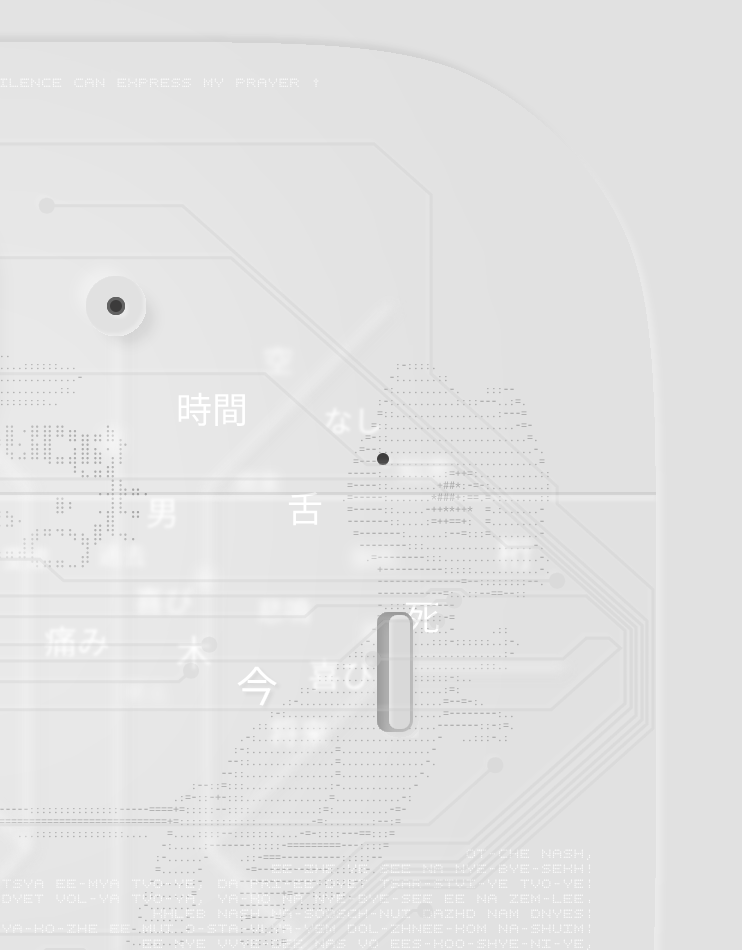
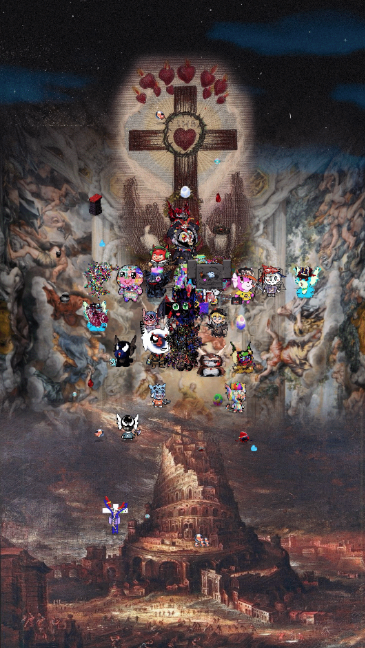
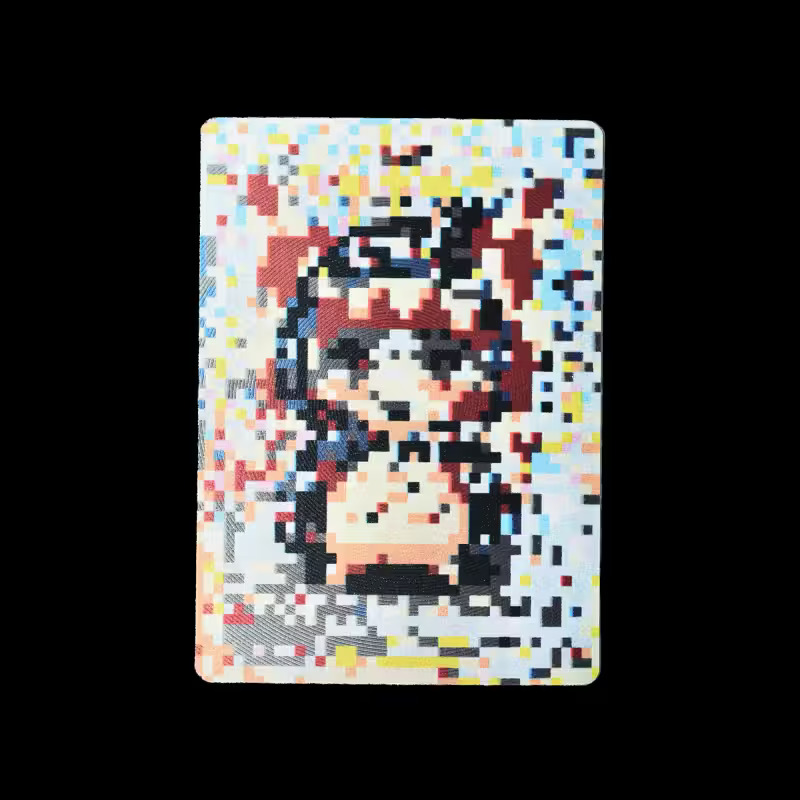
PILGRIMS is an ongoing series exploring fully onchain art, created entirely in HTML and CSS.
PILGRIM 111 is the fourth work in the series, following PILGRIM 11.
-sys(cry), created 2024, minted 27/12/25, 8kb, HTML/CSS
→ https://t.co/gZBHGBKgAe
Three artists assemble the anatomical theatre as a living structure: dissection tables, ceramic relics, and mirror-shards mapping the body as site where power inscribes itself and refuses to dissolve. †
https://t.co/RXv9zGAUMV
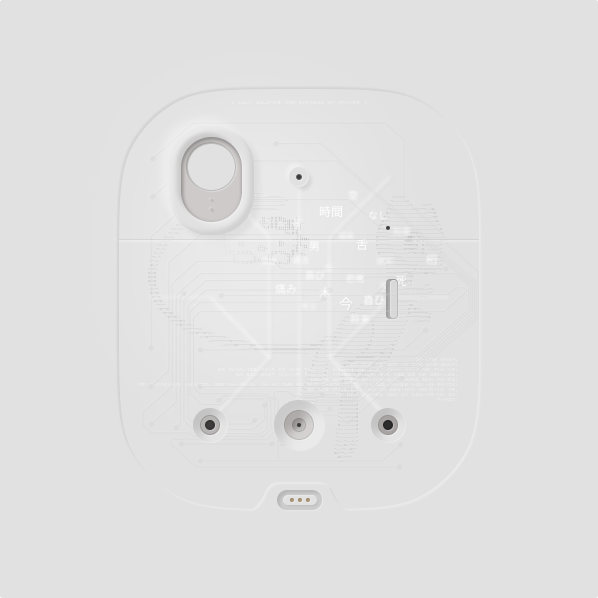
n:euganics [a portrait of the many]
I bred two ways of seeing against each other.
One was mine: a private collection of photographs taken over the previous eight years, a record of what I had been looking at. The other was a public model trained on a wide array of internet-sourced human faces. The portraits that emerge are samples from the offspring distribution: not portraits of anyone in particular, not characters, but descendants of the cross.
Selected images I outpainted by hand in DALL·E 2, a model OpenAI has since retired. That second pass works on the surface of an individual body without entering the lineage.
Other traits come from earlier in the chain. The scars, the skin anomalies, the marks that read like accidents of biography — these surface from the bred latent itself. They are not in any photograph I took. They are in the shape eight years of looking has when the network compresses it. The cross found them in the geometry of an attention.
I left the artifacts in. The pebbled, lichen-like skin across the series is the seam where the two distributions disagreed about what flesh is. That surface is the most honest thing in the work.
I called it n:euganics. The colon is a wound and a namespace. These are not portraits of individuals. They are portraits of the encounter. Made while it still left a seam.
StyleGAN2, DALL·E 2, custom dataset, 2023
congrats to @sssluke1 and @briandroitcour on
new bad image exhibition
blessing/curse; preliminary dimensional drifella composer & breeder @bis__cut
Naoko Yamada turns a Catholic girls' school, a teenage rock band and a synesthete's watercolour vision into a soft liturgy on faith, friendship and unspoken queer longing. †
https://t.co/3qqKDpRhVi
artists on ethereum should own more of the system around their work
i've always built tools for myself as an artist and PND is me trying to make those tools useful for other artists too
after foundation announced they were closing, i built a tool to help artists preserve their work by pinning their own media to ipfs
then foundation's frontend went down, so i added a way to delist work from their auction contracts
then i launched artist owned auction contracts
then bulk migration from foundation into those contracts
now there's a PND frontend where artists can list work, run auctions, and where collectors can browse and bid
the goal is to increase artist capability on ethereum
platforms add value by providing taste, context, curation, audience, trust, etc
but artists shouldn't need a platform to keep existing forever in order to preserve, manage, sell, or move their own work
the current version of PND is the first step
the larger vision is artist owned infrastructure
tools that make sovereignty feel practical instead of theoretical
i want to keep building this
but i don't want to fund artist owned infrastructure with platform fees or vc money
the model should match the work
supported by people who believe it should exist
with sale proceeds staying with artists
your work
your contracts
your fees
i'm thinking about funding the next phase of this through funding works
supported by people who believe artist owned infrastructure should exist
if that’s you, i'd love to know
With @sssluke1 and @briandroitcour 🎙️
This episode of Verse Talks dives into New Bad Image, not just as an exhibition concept by @sssluke1, but as an emerging condition within art that we are seeing.
We also discuss NFT curation, bridging different art worlds, burnout, and returning online.


![syscry_'s tweet photo. n:euganics [a portrait of the many]
I bred two ways of seeing against each other.
One was mine: a private collection of photographs taken over the previous eight years, a record of what I had been looking at. The other was a public model trained on a wide array of internet-sourced human faces. The portraits that emerge are samples from the offspring distribution: not portraits of anyone in particular, not characters, but descendants of the cross.
Selected images I outpainted by hand in DALL·E 2, a model OpenAI has since retired. That second pass works on the surface of an individual body without entering the lineage.
Other traits come from earlier in the chain. The scars, the skin anomalies, the marks that read like accidents of biography — these surface from the bred latent itself. They are not in any photograph I took. They are in the shape eight years of looking has when the network compresses it. The cross found them in the geometry of an attention.
I left the artifacts in. The pebbled, lichen-like skin across the series is the seam where the two distributions disagreed about what flesh is. That surface is the most honest thing in the work.
I called it n:euganics. The colon is a wound and a namespace. These are not portraits of individuals. They are portraits of the encounter. Made while it still left a seam.
StyleGAN2, DALL·E 2, custom dataset, 2023](https://pbs.twimg.com/media/HH3t5faW4AMc_A4.jpg)







![syscry_'s tweet photo. n:euganics [a portrait of the many]
I bred two ways of seeing against each other.
One was mine: a private collection of photographs taken over the previous eight years, a record of what I had been looking at. The other was a public model trained on a wide array of internet-sourced human faces. The portraits that emerge are samples from the offspring distribution: not portraits of anyone in particular, not characters, but descendants of the cross.
Selected images I outpainted by hand in DALL·E 2, a model OpenAI has since retired. That second pass works on the surface of an individual body without entering the lineage.
Other traits come from earlier in the chain. The scars, the skin anomalies, the marks that read like accidents of biography — these surface from the bred latent itself. They are not in any photograph I took. They are in the shape eight years of looking has when the network compresses it. The cross found them in the geometry of an attention.
I left the artifacts in. The pebbled, lichen-like skin across the series is the seam where the two distributions disagreed about what flesh is. That surface is the most honest thing in the work.
I called it n:euganics. The colon is a wound and a namespace. These are not portraits of individuals. They are portraits of the encounter. Made while it still left a seam.
StyleGAN2, DALL·E 2, custom dataset, 2023](https://pbs.twimg.com/media/HH3t6UBXEAEBPXT.jpg)