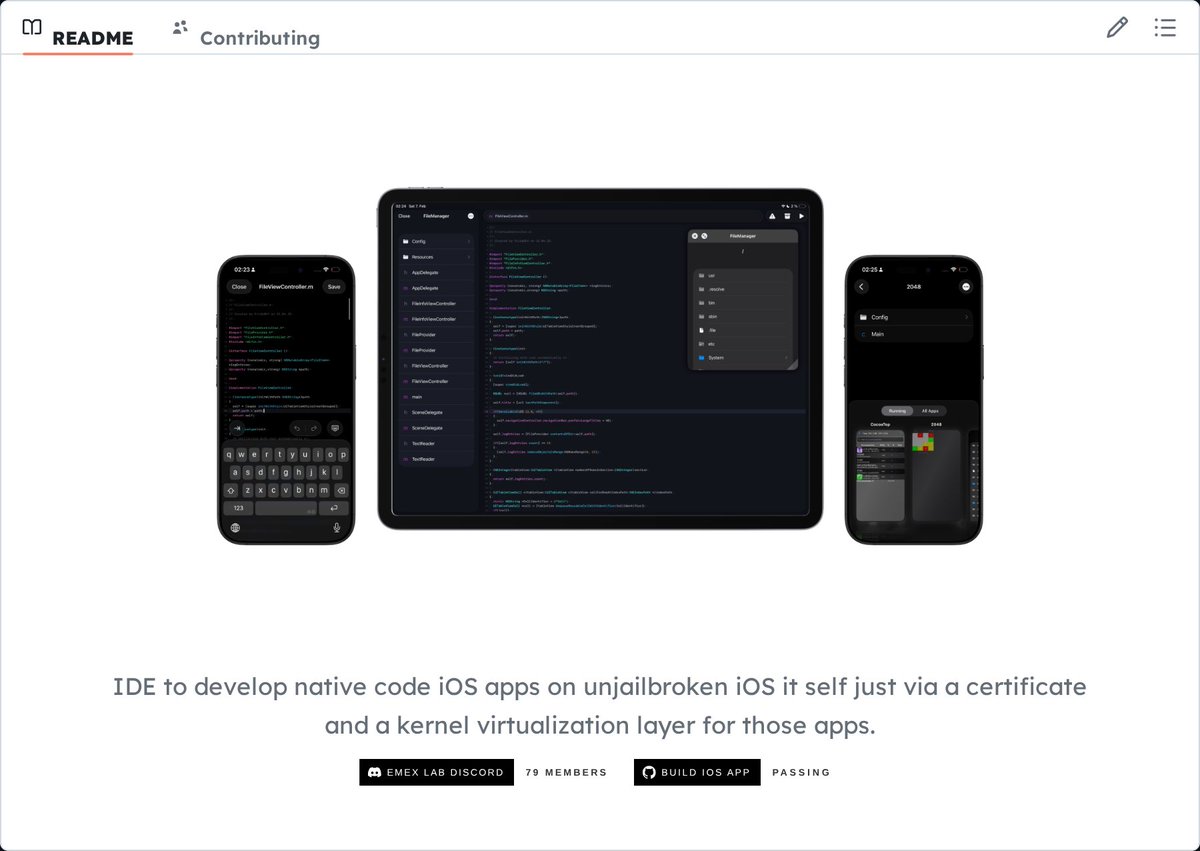
A fully on-device iOS IDE that compiles and runs native Swift, Objective-C, C, and C++ apps without a cloud connection or jailbreak, even in airplane mode.
Explore it here:
https://t.co/sWuCnwkQ36
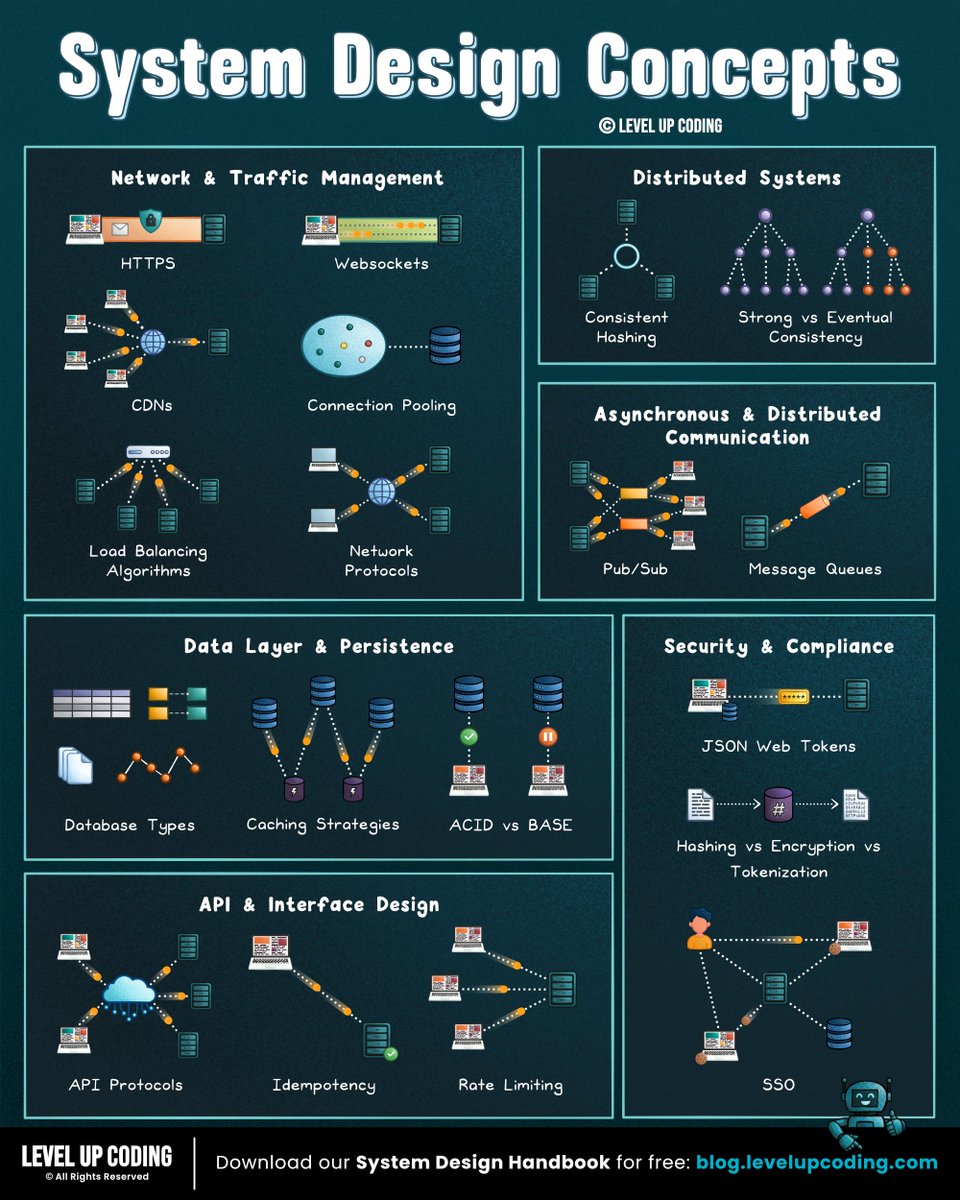
Modern distributed systems need fast, reliable ways for services to communicate.
In this handbook, @devseyi explains how RPC, Protocol Buffers, and gRPC work together.
You’ll explore gRPC’s communication patterns, build a complete system with Dart and Flutter, and learn when to use gRPC vs REST or WebSockets.
https://t.co/BmOHH6e93c
Your grandmother has one photo from 1962.
It is faded. Torn at the corner. Her face is blurry. The details are gone. You have looked at it a hundred times and wished you could see her clearly.
Professional photo restoration costs $50 to $500 per photo. MyHeritage bundles photo enhancement into a $119 to $259 per year genealogy subscription. Remini adds a watermark on the free tier and limits your daily uses. Adobe Photoshop costs $55 a month.
A researcher at Tencent ARC Lab in Shenzhen named Xintao Wang built an AI that restores damaged face photos. For free.
It is called GFPGAN. 37,000+ stars on GitHub. Apache 2.0 licensed.
You upload the photo. The AI studies the face. It reconstructs every detail. Eyes. Teeth. Hair. Skin texture. Wrinkles. Expression. The things that make her face HER face.
The result looks like the photo was taken yesterday.
Upload any old photo. See the result in seconds. In your browser. No download. No account.
Here is what GFPGAN restores:
Old family photos from the 1940s to 1990s. Faded, yellowed, damaged.
Low-resolution photos from early digital cameras and flip phones.
Blurry photos where faces are barely recognizable.
Compressed photos from old social media downloads.
Damaged photos with scratches, tears, and water stains.
The AI does not invent a new face. It uses facial priors learned from millions of faces to reconstruct the most likely original detail. The identity stays. The damage disappears.
Here is the math:
Professional photo restoration: $50 to $500 per photo.
MyHeritage: $119 to $259/year. Bundled with genealogy.
Remini: watermark on free tier. Paid plans start at $6.99/week.
Adobe Photoshop: $660/year.
GFPGAN: $0. Unlimited photos. No watermark. No subscription. Apache 2.0.
Runs on CPU. No GPU required. Can be combined with Real-ESRGAN to restore the background too.
37,000+ stars. Built by Xintao Wang at Tencent ARC Lab in Shenzhen. Apache 2.0.
The photo of your grandmother you wished was clearer.
It can be. Right now. For free.
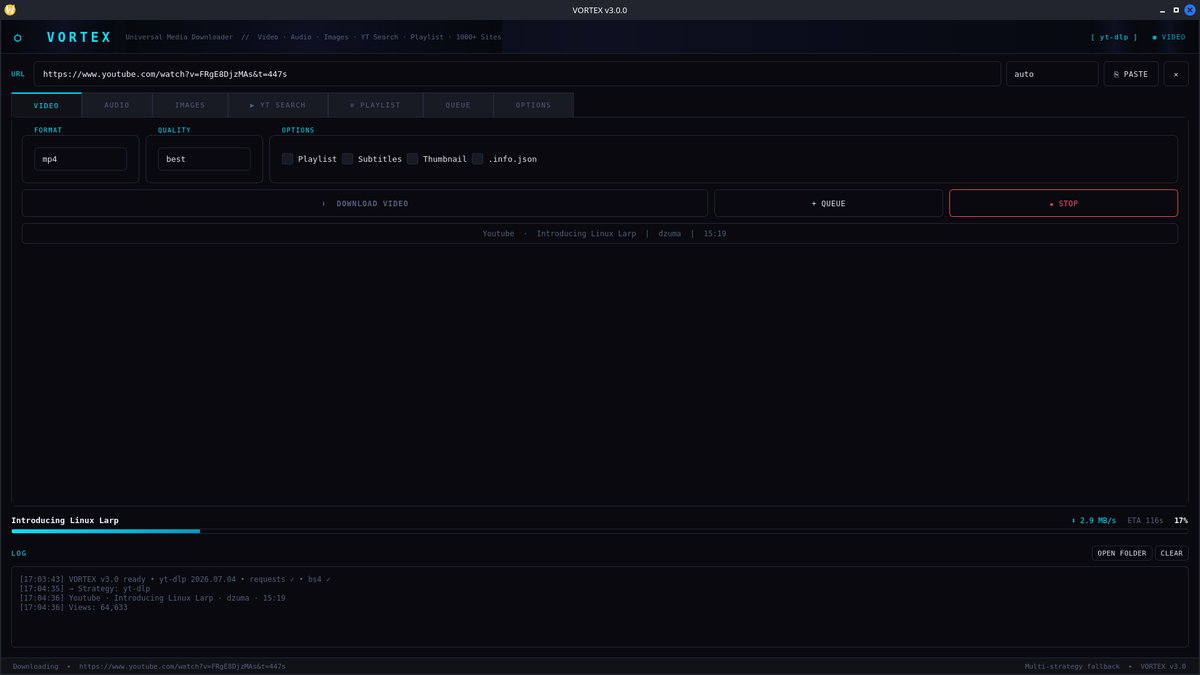
Built VORTEX 🌀! a dark, terminal-styled desktop app for downloading video/audio/images from 1000+ sites. YT search, playlist batch downloads, multi-strategy fallback engine, all in PyQt5. 🐍
https://t.co/kZkAbhGGQW
#buildinpublic#python#opensource
Windows 11 has been secretly running a keylogger in the background
this whole time
and sending every keystroke to Microsoft servers.
Here's the fix they don't want you to know about
Win+R → regedit → HKEY_LOCAL_MACHINE\SOFTWARE\Microsoft\Input\TIPC → Double click "Enabled" → Set value to 0 → Restart PC
Stop Microsoft from reading every word you type in Valorant chat, Discord, and Chrome.
A new module is now live on Hack The Box Academy and Enterprise platforms: Red Team Mindset.
Built for offensive security learners, this medium-difficulty module explores the fundamentals of red teaming — what it is, why it matters, and how red team engagements are structured from start to finish.
Learn the differences between red teaming and penetration testing, understand the roles of red, blue, and white teams, and explore key concepts around engagement lifecycle, ethical obligations, communication strategies, and the evolving role of AI in adversary simulation.
Tier: 3
Difficulty: Medium
Category: Offensive
Start learning now >>> https://t.co/bO4i23tduJ
#HackTheBox #HTBAcademy #RedTeam #OffensiveSecurity #Cybersecurity #CyberTraining #PenetrationTesting #AdversarySimulation #CyberSkills #InfoSec
Impacket DACLedit: Active Directory Privilege Escalation 🔥
🔥 Telegram: https://t.co/upuP8k8ckB
✴ Twitter: https://t.co/Za7rYILz6E
Impacket-dacledit is a powerful tool used to modify Active Directory DACLs, allowing attackers to abuse permissions like WriteDACL, WriteOwner, and FullControl to escalate privileges and take over domain objects.
📚 Techniques Covered in This Guide
⚙️ Lab Setup
🧠 Understanding AD ACL & DACL
🔎 Enumerating Object Permissions
⚡ WriteDACL Abuse using dacledit
🔑 Granting FullControl over Users/Groups
👥 Adding User to Domain Admins
💻 WriteOwner Abuse & Ownership Takeover
🔄 Reset Password without Knowing Current
📡 Privilege Escalation using DACL Misconfigurations
🛠 Post-Exploitation with Impacket Tools
👉 Abuse of DACL permissions can lead to full domain compromise if misconfigured and not monitored properly.
📖 Article:
https://t.co/tnfgHLLGoq
#CyberSecurity #EthicalHacking #Pentesting #RedTeam #ActiveDirectory #Impacket #InfoSec
BlueKeep (CVE-2019-0708) wasn't scary because it was "just another RCE." It was scary because it was wormable.
The vulnerability existed in Windows Remote Desktop Services (RDP) and could be triggered before authentication, with no user interaction. An attacker only needed to send specially crafted RDP packets to a machine with RDP exposed. Once exploited, arbitrary code could run on the target system.
What made BlueKeep unique was where the bug occurred. During the RDP connection sequence, virtual channels are created before security begins. The vulnerability involved the internal "MS_T120" static virtual channel, which could be improperly bound during the GCC Conference Initialization phase. Because this happens before authentication, a compromised machine could automatically scan for other vulnerable systems and spread without user interaction similar to how WannaCry propagated.
The exploit itself wasn't trivial, but the design made defenders nervous enough that Microsoft released patches for unsupported operating systems like Windows XP, something it rarely does. BlueKeep remains one of the best case studies for understanding RDP internals, virtual channels, pre-authentication attack surfaces, and why protocol design matters just as much as implementation security.
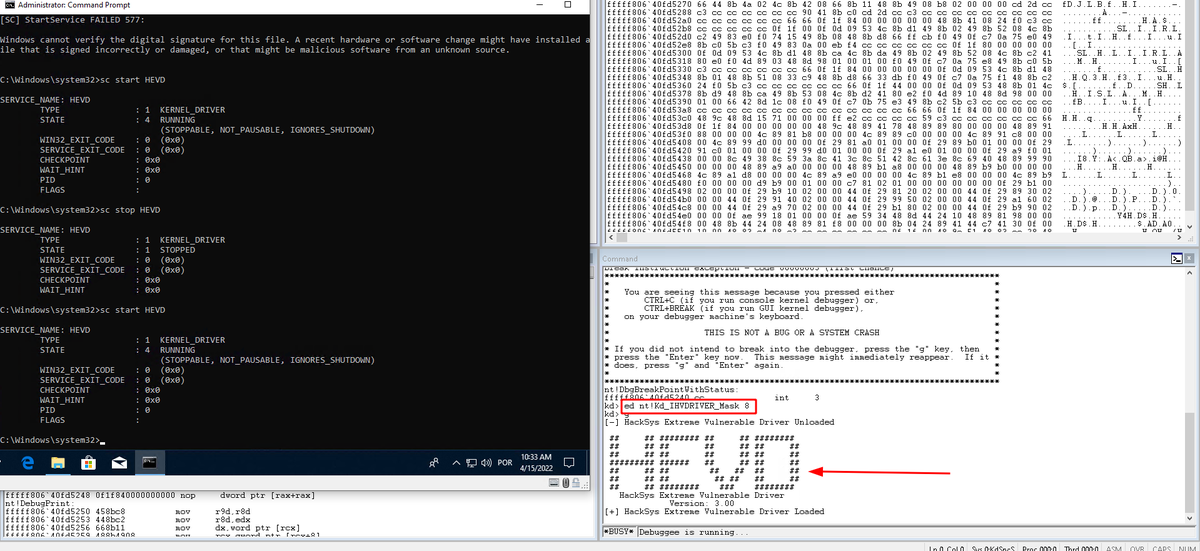
Windows security doesn't stop at SYSTEM.
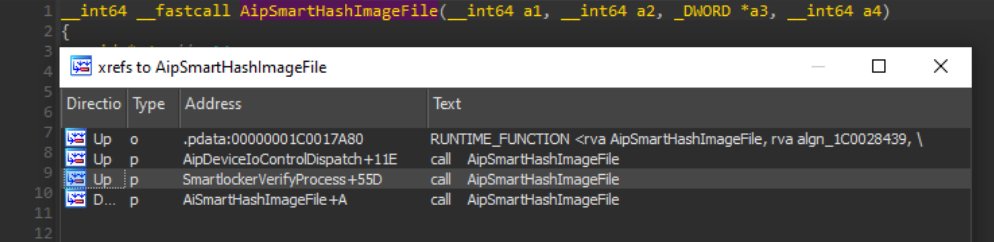
CVE-2024-21338 shows that even an administrator isn't necessarily at the highest privilege level. The vulnerability exists in "appid.sys" (AppLocker) and allows an attacker to cross the boundary from Administrator to kernel by abusing an untrusted pointer exposed through a kernel IOCTL. Once kernel code execution is achieved, the exploit manipulates process tokens to obtain full kernel privileges while bypassing protections such as HVCI.
What makes the Hakai Security research worth reading isn't just the exploit, it's the journey from a vulnerable IOCTL to a reliable kernel exploit. The write-up covers IOCTL dispatching, kernel callbacks, PreviousMode abuse, token manipulation, HVCI-aware exploitation, and modern Windows kernel exploitation techniques. If you're interested in Windows internals, it's an excellent deep dive into how real-world kernel exploits are built.
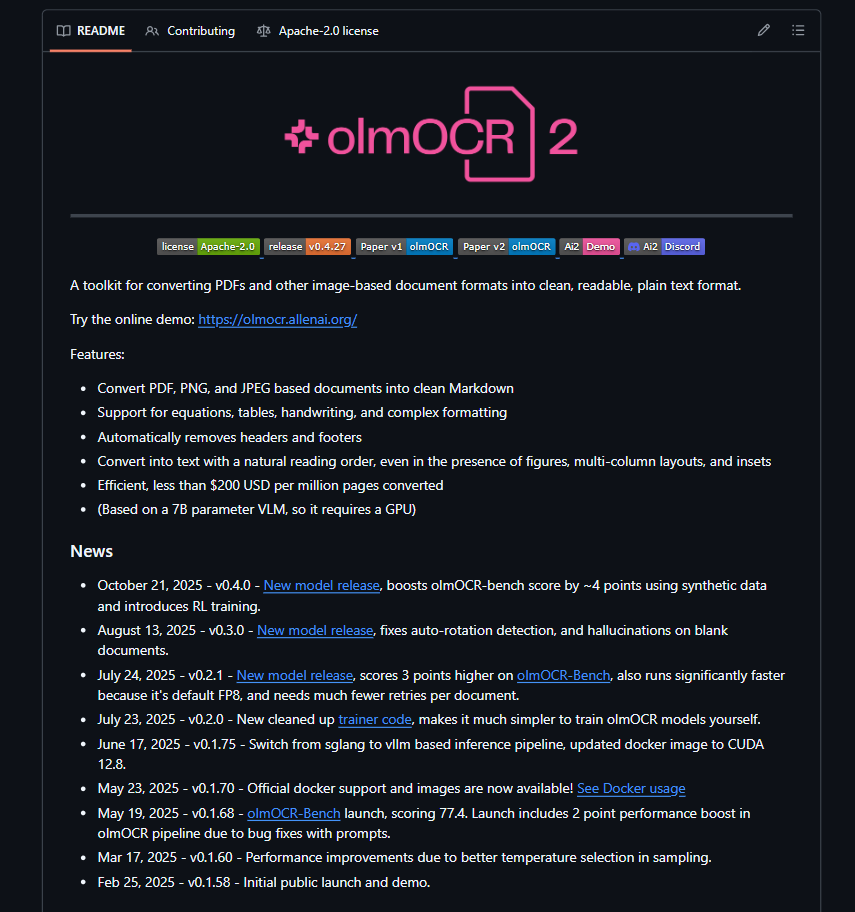
LA HERRAMIENTA DE OCR QUE ESTABA HECHA PARA LA ERA DE LOS LLMs Y QUE NADIE ESTABA HABLANDO
Gran parte del conocimiento del mundo sigue atrapado en PDFs. Y cuando se lo pasas a tu IA con un OCR mediocre, el sistema ya empieza fallando desde el primer paso.
olmOCR convierte cualquier documento en Markdown limpio que los modelos entienden de verdad:
→ Tablas, ecuaciones y texto manuscrito sin romperse
→ Diseños de varias columnas respetando el orden de lectura
→ Documentos antiguos escaneados, encabezados y pies de página
→ Figuras e insets correctamente estructurados
→ Salida en Markdown que preserva la estructura original
Si estás armando RAG o agentes sobre documentos, tu pipeline es tan bueno como tu OCR.
Esta es la primera milla que nadie menciona hasta que tu agente empieza a alucinar por culpa de un texto roto.
Os dejo el repo en los comentarios 👇