Chỉ kỳ họp trong năm đầu nhiệm kỳ khóa XVI, Quốc hội xét, thông qua 62 luật và 16 nghị quyết,nhưng cơ quan có thẩm quyền ban hành luật là Quốc hội. Các luật được thông qua nhằm cụ thể hóa chủ trương của Đảng.
Luật nào cũng toàn cướp dân. Hummm 😡
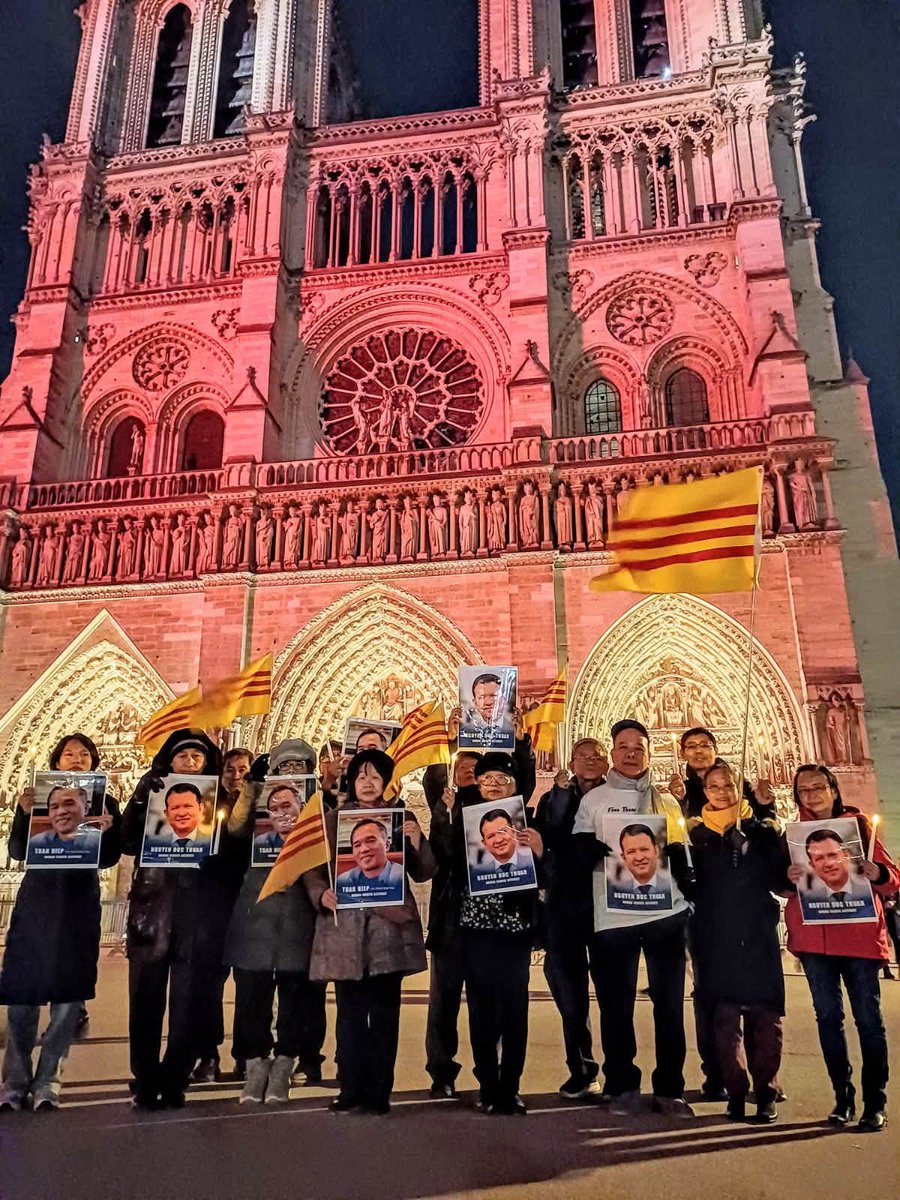
Chloe was in Paris with friends and supporters to garner international attention for the immediate release of her husband, Hiep Tran and his colleagues Duc Thuan and Thai Cong Truong Son, who are in Vietnamese custody after being violently abducted for their human rights work.
November 18 marked exactly two months since the three activists were abducted in broad daylight in Cambodia by Vietnamese agents. For two months, these three individuals have been held illegally and arbitrarily by the Vietnamese authorities.
It was Red Week in Paris to raise awareness about religious persecution. A timely moment to highlight the efforts of these three human rights defenders.
#BringThuanHiepHome #FreeThemNow #TransnationalRepression
One day in September, Cambodian civilians said they saw something they’d never witnessed before in the village: an abduction, seemingly of foreigners.
Reporters visited Prey Veng province on October 31 and found reports of an abduction in September in Por village, a sparse village of family homes and lotus fields on a rural road intersecting National Road 1. The people said they didn’t know exactly what they had witnessed, but knew it was brief, and involved apparent foreigners and violence.
Several residents said they had heard about an abduction at the site in September.
Two pro-democracy activists, Nguyen Duc Thuan of Norway and Tran Hiep of Australia, were reported missing for a week in Cambodia on September 25. Three days later, Vietnam’s Ministry of Public Securityannounced it had arrested the pair and a third person, Thai Cong Truong Son, for illegal entry, forged documents and intention to “carry out terrorist and sabotage activities.”
https://t.co/yrJp4EjaNO
These plastic shopping bags, selling in German supermarket were produced by female prisoners in Vietnamese prisons. Female prisoners are forced to work to get released earlier.
Một phụ nữ thành công trốn thoát sang Đức đã phá vỡ sự im lặng, cô ấy tuyên bố rằng các cơ quan của mình ở Trung Quốc đã bị cưỡng chế cắt bỏ.
Cô ấy phơi bày sự thật rùng rợn của Đảng Cộng sản Trung Quốc:
“Trung Quốc hiện có 188 bệnh viện cấy ghép nội tạng. Mỗi ngày đều có trẻ em mất tích.”
Human rights activists and families raise alarm on the rise in transnational repression
The practice is called transnational repression. The United Nations defines it as measures states take to control, deter, or punish individuals or groups beyond their borders.
https://t.co/HySv3j89Cx
#BringThuanHiepHome #TNR #Vietnam #ToLam
ĐẢNG VÀO TẬN LỚP HỌC: AI CHO PHÉP BAN TUYÊN GIÁO KIỂM SOÁT SÁCH GIÁO KHOA VÀ TRƯỜNG LỚP CỦA CON EM CHÚNG TA?
Khi Trưởng Ban Tuyên giáo Trung ương Trịnh Văn Quyết tuyên bố đoàn giám sát của Ban Bí thư sẽ giám sát toàn diện giáo dục phổ thông, từ chương trình, sách giáo khoa, tổ chức bộ máy đến cơ sở trường lớp khiến người dân không khỏi bàng hoàng. Một ban nội bộ của đảng chính trị, vốn chuyên lo tuyên truyền, tư tưởng, giờ lại ngồi vào ghế chỉ đạo cả nền giáo dục quốc gia. Vậy Bộ Giáo dục và Đào tạo lập ra để làm gì? Quốc hội, chính phủ, các nhà chuyên môn ở đâu?
Giáo dục không phải sân chơi của một tổ chức chính trị. Nó là quyền của mỗi công dân, là tương lai của cả dân tộc. Khi một đoàn do Ban Tuyên giáo chủ trì được giao nhiệm vụ đ��nh giá tính khoa học, tính kế thừa của chương trình, đặc biệt là nội dung đạo đức, lịch sử, chính trị, tư tưởng trong các môn Ngữ văn, Lịch sử, Giáo dục công dân, người ta thấy rõ đây không còn là giám sát chuyên môn mà là siết chặt định hướng tư tưởng từ gốc rễ. Họ nói phải trưng cầu ý kiến chuyên gia, nhưng ai chọn chuyên gia, tiêu chí nào, và kết quả cuối cùng vẫn phải đề xuất với Bộ Chính trị, Ban Bí thư?
Câu hỏi lớn hơn vẫn treo lơ lửng: Ai cho phép một đảng chính trị có quyền giáo dục nhân dân theo đúng ý mình? Trong khi phụ huynh đang lo thiếu sách, học sinh kiệt sức vì tải nặng, giáo viên thiếu thốn, thì bộ máy đảng lại nhảy vào đánh giá toàn diện từ năm 2023 đến nay. Bộ Giáo dục thừa nhận trách nhiệm về thiếu SGK, nhưng giờ lại phải giải trình trước đoàn của Ban Tuyên giáo. Đây không phải cải cách, mà là sự mở rộng quyền lực chính trị vào từng trang sách, từng lớp học.
Giáo dục cần chuyên môn, cần khoa học, cần tiếng nói của nhà giáo và xã hội, chứ không phải là công cụ tuyên truyền. Khi một ban đảng tự cho mình quyền giám sát cả nền móng tri thức của dân tộc, thì câu hỏi về sự độc lập của giáo dục càng trở nên cấp thiết hơn bao giờ hết.
Trọng Đức
#tuyengiao #sachgiaokhoa #truonglop #chantroimoi
Tran Hiep and two other Viet Tan members were seized in Thailand. Human Rights Watch documented it and published a formal demand for their release on October 13, 2026. Vietnam didn't snatch dissidents off its own streets this time. It reached into a neighboring country and took them.
This is not new behavior. It is a campaign.
Hanoi has designated Viet Tan a terrorist organization. Viet Tan is a U.S.-based pro-democracy group that operates without weapons. The terrorist label isn't a legal conclusion, it's a toolkit. Once you're "terrorism," every abduction becomes counter-terrorism. Every rendition becomes law enforcement. The framing does real work for Vietnam internationally, and it's a playbook lifted almost verbatim from how other authoritarian states launder political repression into something that sounds defensible in a UN chamber.
Thailand keeps showing up in these cases and that's worth sitting with. It's a transit country for Vietnamese dissidents, and its refugee determination system has enough ambiguity in practice that Vietnamese intelligence has learned to exploit the gaps. This isn't a one-off. Earlier documented operations include Viet Tan members grabbed from Cambodia. A Lao activist disappeared in Thailand in what analysts assessed as part of the same regional architecture. You start to see the shape of it: Mekong-region authoritarian states sharing operational space, tacit cooperation from host country security services, dissidents who thought they'd found a buffer and found out they hadn't.
Vietnam, Laos, Cambodia, Thailand, China. Different governments, different specific interests, but a shared tolerance for, and sometimes active participation in, each other's cross-border suppression operations. The person who fled one of these states and made it to another one in the region hasn't necessarily made it anywhere safe. That's the functional reality these cases document, one by one.
HRW is invoking refugee law and the prohibition on refoulement. The argument is straightforward: these activists were returned to a country where they face prosecution for political activity, which violates core international legal protections. The case will almost certainly come up at the UN Human Rights Council. The U.S. and EU have both made diplomatic representations to Hanoi over transnational repression before, and this will likely generate more.
Whether any of that moves Vietnam is a separate question. Hanoi has absorbed international criticism on dissident treatment for years while continuing the operations. The cost-benefit calculation from their perspective appears settled.
The mechanism here is consistent enough across cases that it has a legible structure. Identify the dissident abroad. Assess host country tolerance or exploit host country ambiguity. Coordinate or pressure local actors. Conduct the physical seizure. Return the target to Vietnamese custody. Prosecute under national security statutes broad enough to cover almost any political activity. The terrorism designation on Viet Tan means membership itself is potentially prosecutable, which eliminates the need to prove specific acts.
Three more people are in Vietnamese custody for being part of a pro-democracy organization. The rendition operation that put them there ran through a country that should have offered them some protection. It didn't.
https://t.co/LsoP1u5lLd
#foreigninterference #TransnationalRepression #CrossBorderRendition #ForcedAbduction #LegalWeaponization #TerrorismClassificationOfInformationOperations
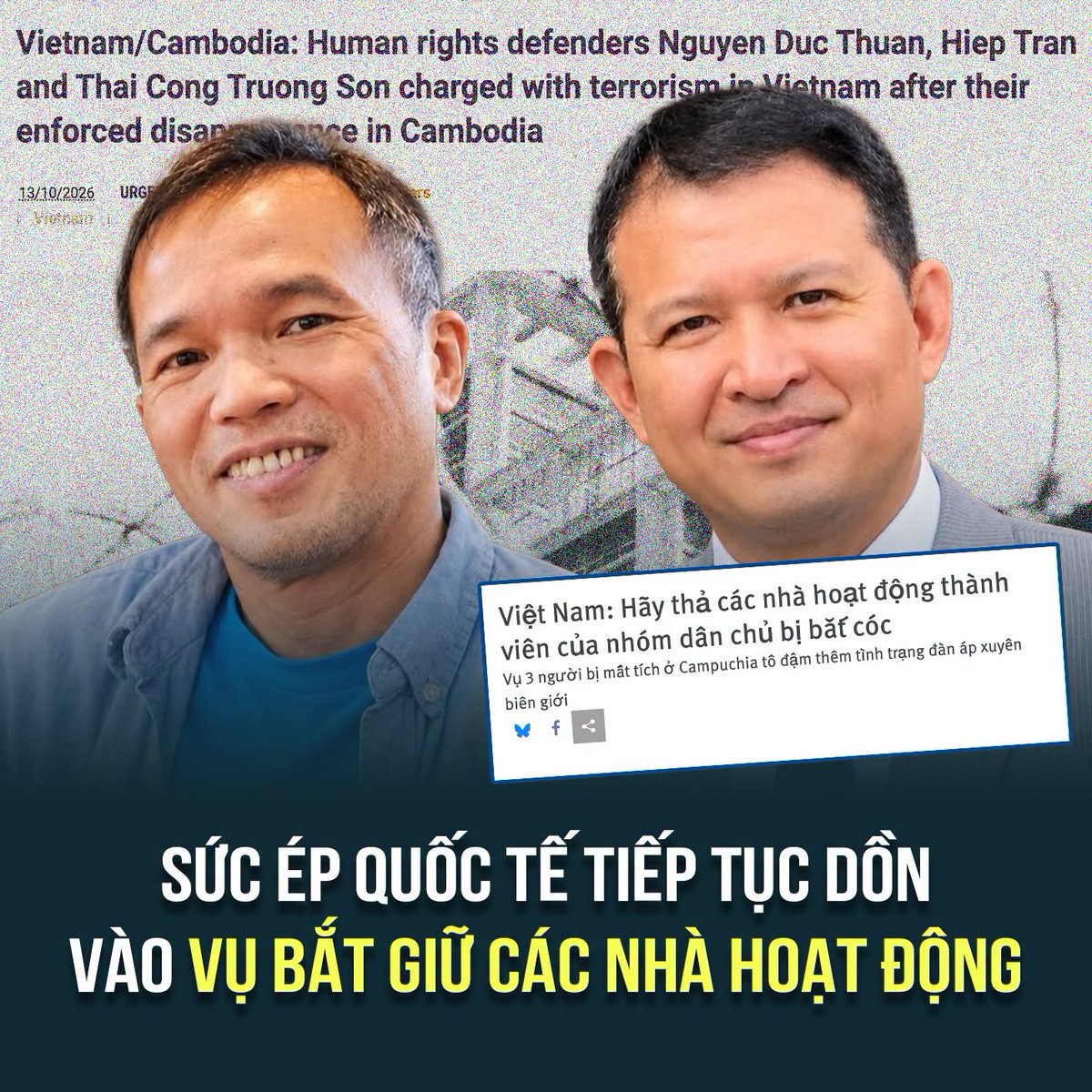
SỨC ÉP QUỐC TẾ TIẾP TỤC DỒN VÀO VỤ BẮT GIỮ CÁC NHÀ HOẠT ĐỘNG, VIỆT NAM VÀ CAMPUCHIA KHÓ NÉ TRÁNH
Vụ Nguyễn Đức Thuận, Trần Hiệp và Thái Công Trường Sơn tiếp tục thu hút sự chú ý của các tổ chức nhân quyền quốc tế.
Chỉ trong ngày 13/10, Human Rights Watch (HRW) và Tổ chức Chống Tra tấn Thế giới (OMCT) và Liên đoàn Quốc tế Nhân quyền (FIDH), đã đồng loạt lên tiếng về vụ việc.
HRW là một tổ chức nhân quyền quốc tế có ảnh hưởng, trong khi FIDH quy tụ gần 200 tổ chức thành viên tại hơn 100 quốc gia, OMCT có mạng lưới quốc tế chuyên chống tra tấn và bảo vệ nhân quyền. Việc các tổ chức này đồng loạt lên tiếng khiến vụ việc tiếp tục được chú ý tầm quốc tế, thay vì chỉ dừng lại ở những tuyên bố giữa Việt Nam và Campuchia.
HRW kêu gọi Việt Nam trả tự do cho cả ba nhà hoạt động, hủy bỏ các cáo buộc và cho phép gia đình cùng đại diện lãnh sự Úc, Na Uy.
OMCT- FIDH đi sâu vào những điểm bất thường trong lời giải thích của chính quyền hai nước, đặc biệt là khoảng cách hơn 250 km giữa nơi hai nhà hoạt động liên lạc lần cuối tại Campuchia và cửa khẩu Mỹ Quý Tây, Việt Nam.
Phía Việt Nam nói ba người bị bắt khi nhập cảnh trái phép. Phía Campuchia phủ nhận việc bắt giữ hoặc bàn giao hai công dân nước ngoài và cho biết không có hồ sơ ghi nhận họ rời khỏi nước này.
Trong khi đó, các tổ chức nhân quyền quốc tế đặt nghi vấn về khả năng họ bị bắt cóc và cưỡng ép về Việt Nam. Đây là những cáo buộc nghiêm trọng cần được điều tra độc lập.
Điều đáng chú ý là sức ép lần này không chỉ nhắm vào Việt Nam. OMCT-FIDH còn yêu cầu Campuchia điều tra minh bạch về sự mất tích bí ẩn của các nhà hoạt động, bao gồm khả năng có sự tham gia hoặc làm ngơ của quan chức Campuchia.
HRW và OMCT- FIDH cũng kêu gọi Na Uy và Úc can thiệp để công dân của họ được tiếp cận lãnh sự.
Khi các tổ chức quốc tế liên tiếp yêu cầu trả tự do, điều tra độc lập khiến vụ việc được theo dõi rộng rãi hơn. Cả Việt Nam và Campuchia đều không thể khép lại vụ việc trong im lặng, họ khó có thể né tránh việc phải giải trình trước cộng đồng quốc tế.
#ĐànÁpXuyênQuốcGia, #BringThuanHiepHome, #BringThuanHome, #BringHiepHome
“KỶ NGUYÊN ĐÀN ÁP XUYÊN QUỐC GIA” CỦA ÔNG TÔ LÂM
Kể từ khi ông Tô Lâm lên nắm quyền lực cao nhất. Ở trong nước, Bộ Công an ngày càng bành trướng quyền lực của mình từ việc ngày càng đẩy mạnh các đề xuất luật mới để siết chặt kiểm soát xã hội và thu về những khoản phạt khổng lồ. Không chỉ dừng lại trong nước. Bên ngoài lãnh thổ, chiến dịch "đàn áp xuyên quốc gia" đang được chính quyền Việt Nam triển khai có hệ thống, nhắm trực tiếp vào những người Việt lưu vong và tị nạn chính trị tại ngước ngoài, đặc biệt là ở Thái Lan.
#DanApXuyenQuocGia #NhanQuyen #TuDoNgonLuan
Vietnamese Norwegian human rights defender Nguyen Duc Thuan and Vietnamese Australian human rights defender Tran Hiep have reportedly gone missing in Cambodia. We urge Cambodian authorities to determine their whereabouts and allow them to return home to their families.
CỘNG SẢN BẮT BÀ NGUYỄN THỊ CHÂU THEO ĐIỀU 331: BỘ MÁY ĐỘC TÀI CHUYÊN NGHIỆP TRONG VIỆC BÓP NGHẸT TỰ DO NGÔN LUẬN
Một lần nữa, công an Cần Thơ lại bắt giam một phụ nữ 58 tuổi chỉ vì bà dám đăng bài trên Facebook phản ánh những gì mình trải qua trong các vụ án dân sự. Ngày 21/9, Bà Nguyễn Thị Châu bị bắt và khởi tố theo Điều 331 Bộ luật Hình sự, cái điều luật ma quái mang tên lợi dụng quyền tự do dân chủ, là thứ vũ khí pháp lý được chế độ cộng sản Việt Nam dùng để hợp thức hóa việc bịt miệng bất kỳ ai dám mở miệng.
Đây không phải trường hợp cá biệt. Đây là bản chất của một chế độ độc tài toàn trị. Ở Việt Nam, tự do ngôn luận chỉ tồn tại trên giấy tờ. Thực tế, bất kỳ lời phản biện nào, bất kỳ thông tin nào làm ảnh hưởng đến uy tín của tổ chức, cá nhân hay nhà nước đều có thể bị quy thành tội hình sự. Tòa án kiến nghị khởi tố, công an bắt giam, sở văn hóa giám định nội dung là một quy trình khép kín, không cần bằng chứng nghiêm túc về thiệt hại thực tế, chỉ cần dấu hiệu xâm phạm lợi ích.
Chế độ này không chấp nhận phản biện. Nó không chấp nhận người dân kể lại những gì họ cho là bất công. Nó chỉ chấp nhận một thứ là sự im lặng và sợ hãi. Điều 331 đã trở thành công cụ đàn áp thường xuyên, được dùng đi dùng lại để bỏ tù blogger, nhà hoạt động, thậm chí cả những người chỉ đơn giản bất mãn với phán quyết của tòa án. Nhân quyền bị đạp dưới chân. Tự do biểu đạt bị bóp nghẹt đến mức người dân phải tự kiểm duyệt trước khi gõ từng chữ.
Đây chính là bộ mặt thật của chủ nghĩa cộng sản Việt Nam sau nhiều thập kỷ cầm quyền, một bộ máy quyền lực không chịu trách nhiệm, không chấp nhận giám sát, và sẵn sàng dùng công an, tòa án, nhà tù để duy trì độc quyền thông tin và độc quyền chân lý. Khi một bà già 58 tuổi bị bắt vì đăng Facebook, thông điệp gửi đến toàn xã hội rất rõ ràng, im lặng hoặc chịu hậu quả.
Một chế độ sợ hãi đến mức phải bỏ tù người dân vì lời nói thì không còn là nhà nước của dân, do dân, vì dân. Đó là một chế độ độc tài đang run sợ trước chính tiếng nói của người dân mình.
#dieu331 #doctai #quyenluc #nhatu #thongtin #chantroimoi
XI: You’re not welcome here!
FOOTAGE OF US GETTING VIOLENTLY ASSAULTED BY CCP AGENTS AS XI JINPING’S MOTORCADE ARRIVED #FreeTibet#FreeHongKong#FreeUyghurs
TÔ LÂM KÊU GỌI “KHÉP LẠI QUÁ KHỨ”, NHƯNG CHÍNH QUYỀN VẪN ĐÀN ÁP TIẾNG NÓI TRÁI CHIỀU
Nói một đằng, làm một nẻo như đã trở thành “đặc sản” của chính quyền cộng sản Việt Nam. Lời kêu gọi “khép lại quá khứ” của ông Tô Lâm tại Mỹ đang khiến dư luận đặt ra câu hỏi lớn về tính chân thật đằng sau những câu từ, tuyên bố hoa mỹ này.
#ToLam #NguoiViet #KieuBaoVietNam
Today marks exactly one week since Nguyen Duc Thuan, a Vietnamese-Norwegian, and Tran Hiep, a Vietnamese-Australian, went missing in Cambodia.
Their disappearance is not an ordinary “missing person” incident. Both men are long-time human rights advocates and Viet Tan members. They went to Cambodia to meet with human rights defenders from inside Vietnam.
The family members have written an appeal to the Cambodian government to “expeditiously and fully determine the whereabouts” of these two activists. They have also been working closely with their respective foreign affairs ministries and urge anyone to share updates on the whereabouts of their loved ones.
@NorwegianMFA@dfat@hrw@amnestyOz@Amnesty_Norge@ABCaustralia@theage@theheraldsun@ReutersAustral1@smh@dagbladet@Nettavisen@NTB_PRM@AFPASIA@dpa
September 24, 2026
Urgent Alert: Norwegian and Australian Activists Missing in Cambodia
We are issuing an urgent appeal on behalf of the families of Nguyen Duc Thuan and Tran Hiep to determine their whereabouts and ensure their safety. Our loved ones have been incommunicado since September 18, 2026.
Nguyen Duc Thuan, a Vietnamese-Norwegian, and Tran Hiep, a Vietnamese-Australian, have been long-time human rights advocates, supporting grassroots movements in Vietnam and combating social injustice.
They flew into Phnom Penh, Cambodia on September 15 (from Bangkok) to meet with Vietnamese human rights activists. Their last known communication took place on the morning of September 18 with a scheduled return flight to Bangkok on September 19 at 10:30AM (on Cambodia Airways flight KR701). According to the airline, they never boarded their flight.
We have been in close contact with the Norwegian and Australian Foreign Ministries and their local embassies in Bangkok and Phnom Penh. We acknowledge and appreciate the efforts from the Norwegian and Australian governments to resolve the case.
The Cambodian authorities must expeditiously and fully determine the whereabouts of Nguyen Duc Thuan and Tran Hiep. This is not an ordinary “missing persons” case given their long standing work advocating for human rights in Vietnam. Our families have filed an appeal to the UN Working Group on Enforced or Involuntary Disappearances in light of their disappearance.
Nguyen Duc Thuan, 52, is based in Oslo with his wife and two children. As a member of Viet Tan, a pro-democracy party, Nguyen Duc Thuan has campaigned for the release of Vietnam's political prisoners, working with Norwegian elected representatives, the Norwegian Ministry of Foreign Affairs and human rights organizations, including the Rafto Foundation for Human Rights. He is also an active member of the Catholic community in Norway, raising awareness of violations of freedom of religion in Vietnam. He has diabetes and requires daily insulin injections.
Tran Hiep (also known as Ho Pham Hiep Huy), 51, is based in Melbourne with his wife. He is also a member of Viet Tan and has trained activists on digital security. As a key member of the Em Viet group, he has helped deliver programs supporting young people facing difficult circumstances. He helped launch the Australian Alliance to Combat Human Trafficking (AusACT), organizing fundraising events and advocacy workshops to combat trafficking of young Vietnamese girls to neighboring countries.
We hope that anyone with information on their whereabouts will come forward and help reunite our families.
Respectfully,
Nguyen Duc Thien (brother of Nguyen Duc Thuan)
Chloe Dang (wife of Tran Hiep)
Luật Sư Nhân Quyền Đặng Đình Mạnh nói về nghị quyết 23 Tháng 9 năm 2026, ông Tô Lâm đến New York trong vai trò lãnh đạo cao nhất của đảng cộng sản Việt Nam. Hơn nửa thế kỷ đã trôi qua, nhưng nhiều người Việt hải ngoại vẫn tiếp tục lên tiếng phản đối chính quyền Việt Nam. Vì sao? Đó là câu chuyện của series này.
#NghịQuyết23, #ĐànÁpXuyênQuốcGia
Chinese embassy staff in London were caught on camera brandishing illegal stun batons at a peaceful vigil for Tibetan activist Lobga Rangzen.
Beijing’s repression doesn’t stop at its borders; it exports intimidation and violence onto the streets of democratic countries too