Art, Story & Music by Tacki_NO
Tearless Serenity | Performed by Suno
Here is where memories die and live again.
With no salt left to cry, she murmurs her soft, recurring mantra
—“Floating… weightless… the water remembers… for me”
As shadows of what was once held slip through her open hands. In this hushed, tearless limbo of preserved grief, the surface finally trembles ever so slightly, carrying her toward an uncertain dissolution that leaves only the horizonless water behind.
Tools / Workflow Breakdown:
Lyrics - Tacki_NO
Suno - Music Creation + Generation
Midjourney - Personal Moodboard + Base Images
Photoshop - Storyboarding + Frame edits
Nano Banana - Character Consistency
Grok & Vidu - Vid Generation
Premiere Pro - Edit + Effects
CapCut - Minor Effects + Final Cut
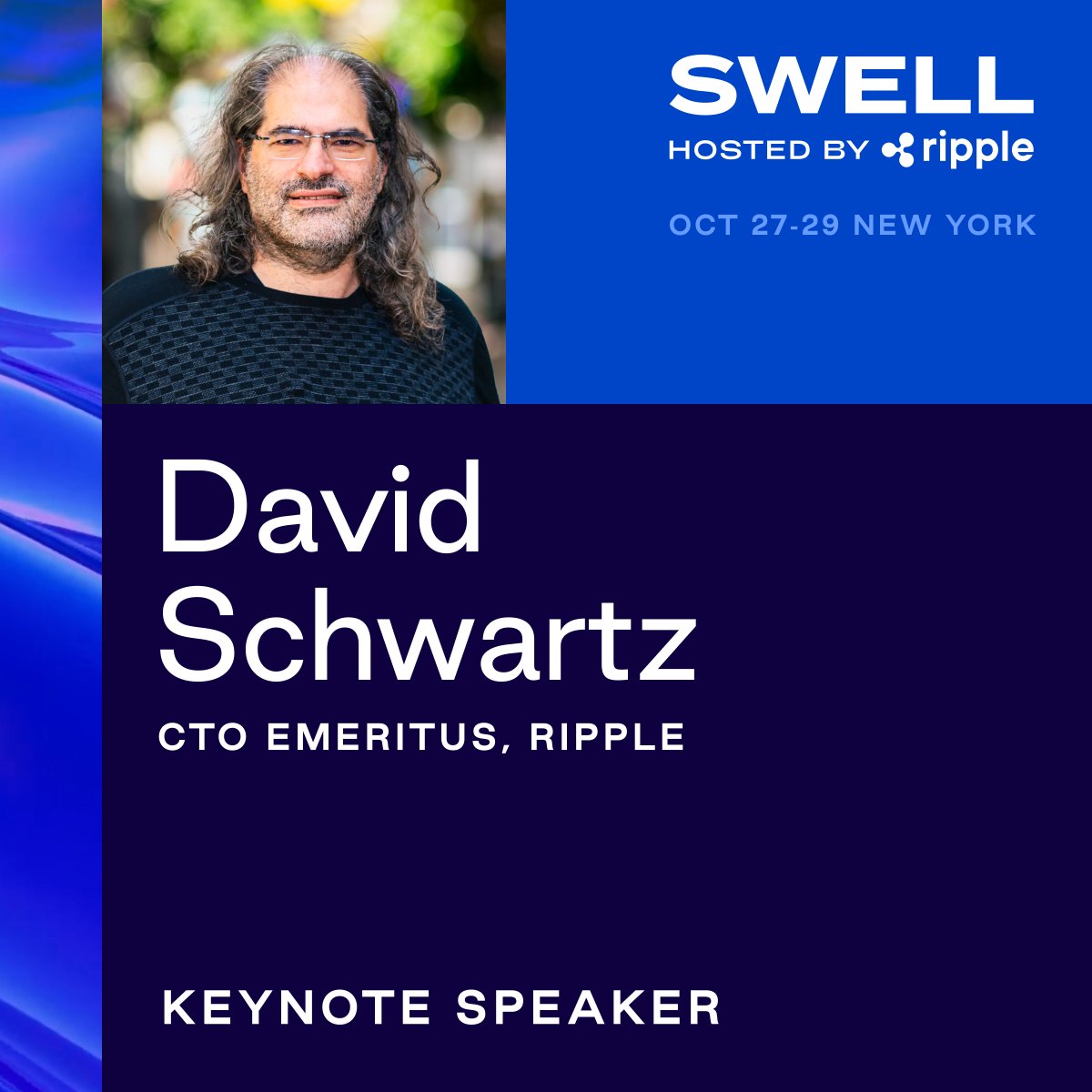
I hear this will be the largest @RippleSwell yet. I wouldn't miss it.
The best part of these events is always seeing the new ways people are using XRP and building on the XRP Ledger. Looking forward to diving into core use cases around payments, tokenization, interoperability, DeFi, AI, and whatever comes next.
Bring your best ideas and meet me there, XRP community.
https://t.co/ZOxGt3Ni59
When @FTDA_US started leveraging the Stellar network, the cost of 50,000 transactions fell from $75,000 to just $1.13.
Years before institutional adoption of blockchain took hold, Franklin Templeton saw the vision for traditional finance onchain. And Sandy Kaul, EVP and Head of Innovation, led the charge.
Sandy joins @DenelleDixon on block by block to discuss Franklin Templeton's onchain evolution and the learnings other institutions can take from it.
00:00 Intro & Hook
00:28 Sandy's Background & Aha Moment
10:00 Franklin Templeton's Blockchain Journey
12:02 SEC Approval & Dual Ledger Pilot
19:04 Cold Wallet Security & Engineering
24:05 Going Multi-Chain & Protocol Learnings
32:23 Real-Time Settlement & Interest Innovation
35:18 CFTC Role & Regulatory Shift
39:02 Five Years of BENJI: Stats & Milestones
43:13 Institutional Adoption & Democratizing Finance
45:25 What's Next: Yield & Private Asset Access
BREAKING: The US has released the full text of its 14-point "Memorandum of Understanding" with Iran.
Key terms include:
1. The US, Iran, and their allies agree to immediately and permanently end military operations on all fronts, including in Lebanon
2. The US and Iran agree to respect each other's sovereignty and territorial integrity and not interfere in each other's internal affairs
3. The US and Iran commit to negotiating and reaching a final deal within 60 days, unless mutually extended
4. The US will begin removing its naval blockade immediately and fully end the blockade within 30 days
5. Iran will use its best efforts to ensure safe passage for commercial vessels through the Strait of Hormuz for 60 days with no charge
6. The US and regional partners will develop a mutually agreed plan of at least $300 billion for Iran's reconstruction and economic development
7. The US will work toward terminating all types of sanctions against Iran, including UN, IAEA, primary, and secondary sanctions
8. Iran reaffirms that it will not procure or develop nuclear weapons and agrees to address its enriched material stockpile under IAEA supervision
9. Until a final deal is reached, Iran will maintain the current status quo of its nuclear program, while the US will impose no new sanctions and deploy no additional forces
10. The US Treasury will issue waivers for Iranian crude oil, petroleum products, derivatives, and associated banking, insurance, and transportation services
11. The US will make frozen or restricted Iranian funds and assets fully available for use
12. The US and Iran will establish an executive mechanism to monitor implementation of the MOU and future compliance with the final deal
13. After signing the MOU and implementing key ceasefire, blockade, shipping, oil waiver, and asset-release provisions, the US and Iran will begin final deal negotiations
14. The final deal will be endorsed by a binding UN Security Council resolution
The memorandum will trigger a 60-day window to negotiate a final deal.
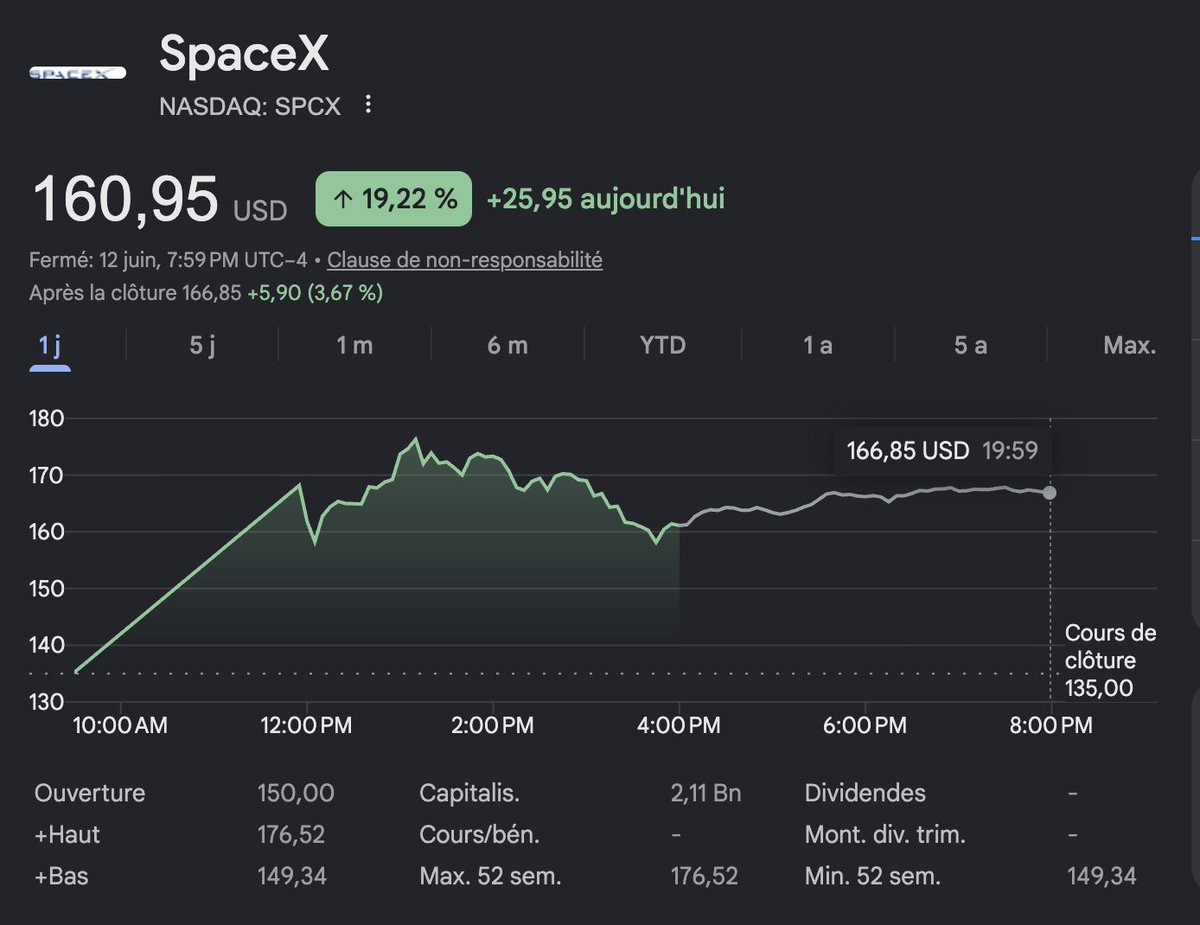
SpaceX a clôturé son premier jour de cotation à 2 100 milliards de dollars, +19%. Tout le monde regarde le chiffre. Personne ne regarde ce qu'il price réellement.
Laissez-moi vous dire ce que le marché vient d'acheter, et pourquoi je pense que cette boîte vaudra 30 à 50 trillions d'ici 5 ans.
D'abord, le symbole. Cette IPO est un référendum. D'un côté, 20 ans de discours sur la décroissance, la sobriété, la redistribution, la fin de l'histoire gérée par des comités. De l'autre, un homme qui a dit "je vais rendre l'humanité multiplanétaire", que tout le monde a traité de clown, et qui vient de créer la plus grosse entreprise cotée de l'histoire en partant d'un entrepôt à El Segundo. Le marché a voté. Le wokisme avait des départements RH, SpaceX avait des fusées. Les fusées ont gagné.
Ensuite, la mécanique économique, parce que c'est là que tout le monde se trompe. Les analystes valorisent SpaceX comme une entreprise de lancement plus Starlink. C'est comme valoriser Internet en 1995 sur le marché du fax. Starship ne réduit pas le coût du kilo en orbite de 20%, il le divise par 100. Et chaque fois dans l'histoire qu'un coût d'infrastructure est divisé par 100, ce n'est pas le marché existant qui grossit, ce sont des industries entières qui naissent. Le coût du calcul divisé par 100 a donné Internet, le smartphone, l'IA. Le coût de l'orbite divisé par 100 va donner une économie spatiale complète.
Faisons la liste de ce qui devient rentable quand le kilo en orbite coûte le prix d'un billet d'avion. Les data centers orbitaux, avec énergie solaire continue et refroidissement gratuit, au moment exact où l'IA fait exploser la demande énergétique terrestre. La fabrication en microgravité de semi-conducteurs, de fibres optiques, d'organes imprimés impossibles à produire sous gravité. Le tourisme orbital de masse, puis les hôtels lunaires, qui passeront du fantasme au business plan exactement comme la croisière de luxe au 20ème siècle. Le transport point à point terrestre, Paris-Tokyo en 40 minutes. L'industrie minière des astéroïdes, dont un seul corps de classe M contient plus de métaux que tout ce que l'humanité a extrait depuis le néolithique. Et Mars en ligne de mire, pas comme destination touristique, mais comme le plus grand projet d'infrastructure jamais entrepris, avec tout ce que ça implique de demande en énergie, matériaux, robotique, IA.
SpaceX ne participera pas à ces marchés. SpaceX possède le péage d'entrée de tous ces marchés. C'est AWS, mais pour la civilisation. Apple vaut 3 500 milliards en vendant des rectangles de verre sur une seule planète. Le premier monopole d'accès à une frontière infinie à 30 ou 50 trillions dans 5 ans, ce n'est pas de l'exubérance, c'est une simple règle de trois sur l'expansion du marché adressable.
Et maintenant, la partie que je préfère. Ce futur n'a pas besoin de bureaucrates. Il n'y a pas de comité consultatif en orbite. Pas de commission Théodule sur Mars. Chaque dollar de cette nouvelle économie sera créé par des ingénieurs, des techniciens, des soudeurs, des pilotes, des entrepreneurs. Les diplômés en gestion de la norme vont devoir apprendre un métier utile, et franchement, c'est une excellente nouvelle pour eux aussi : construire est infiniment plus fun que contrôler.
Parce que c'est ça, le vrai signal d'aujourd'hui. Pendant 50 ans on nous a vendu un futur rétréci : moins d'énergie, moins d'enfants, moins d'ambition, gérer le déclin proprement. Et là, d'un coup, le plus gros actif financier du monde est un pari sur l'abondance, l'expansion et l'aventure. Le pessimisme vient de passer en position vendeuse sur lui-même.
Le futur sera méga fun. Il y aura des hôtels avec vue sur la Terre, des honeymoons en orbite, des gamins qui diront "papa, c'était comment avant les fusées réutilisables" comme on dit "c'était comment avant Internet". Et quelque part dans les années 2030, un humain marchera sur Mars en livestream devant 5 milliards de personnes, et ce jour-là plus personne ne se souviendra du nom d'un seul de ses détracteurs.
Achetez de l'optimisme. C'est encore sous-valorisé.
A quantum migration shouldn't force you to re-issue tokenized assets or re-paper every system that references your accounts.
On Stellar, the account will keep its address and history. Only the signing key changes while the holdings and integrations around them stay put.
How that's possible:
https://t.co/eeVmi87BMu
So do art and stop worrying about when rent is due. Nobody ever said you couldn't.
You want to create? Create. What does rent have to do with it?
Separate money from the equation and then ask yourself if you still want to create.
If you do, then do. If you don't, then don't.
Rich kids being able to do art for a living may be a reflection of their privilege but it seems to me like a reflection of the fact that a human that doesn't have to worry about money will often choose art. everyone is an artist until rent is due. i wish we all had that right
Tried out FXRP direct minting from @UpholdInc to @FlareNetworks into a Bifrost wallet, and the only thing that left my mouth was
DAMN, THAT'S DISGUSTINGLY GOOD.
Keep Going!
○ Direct FXRP minting from exchanges is live on Flare
○ Monarq XRP yield vault's cap raised to 7.5M FXRP
○ RLUSD is now live on XRPL EVM sidechain
○ Mastercard added RLUSD & USDC support on XRPL
○ Societe Generale-FORGE stablecoin launched on XRPL
○ David Schwartz shared a video on XRP's enterprise adoption
👀👇
Watch our full conversation with @HugoPhilion, Co-Founder of @FlareNetworks. We discuss XRP DeFi, Flare’s data-native Layer 1 architecture, RWAs, FLR tokenomics, and why real utility could define crypto’s next phase. https://t.co/lZ072IqZEb
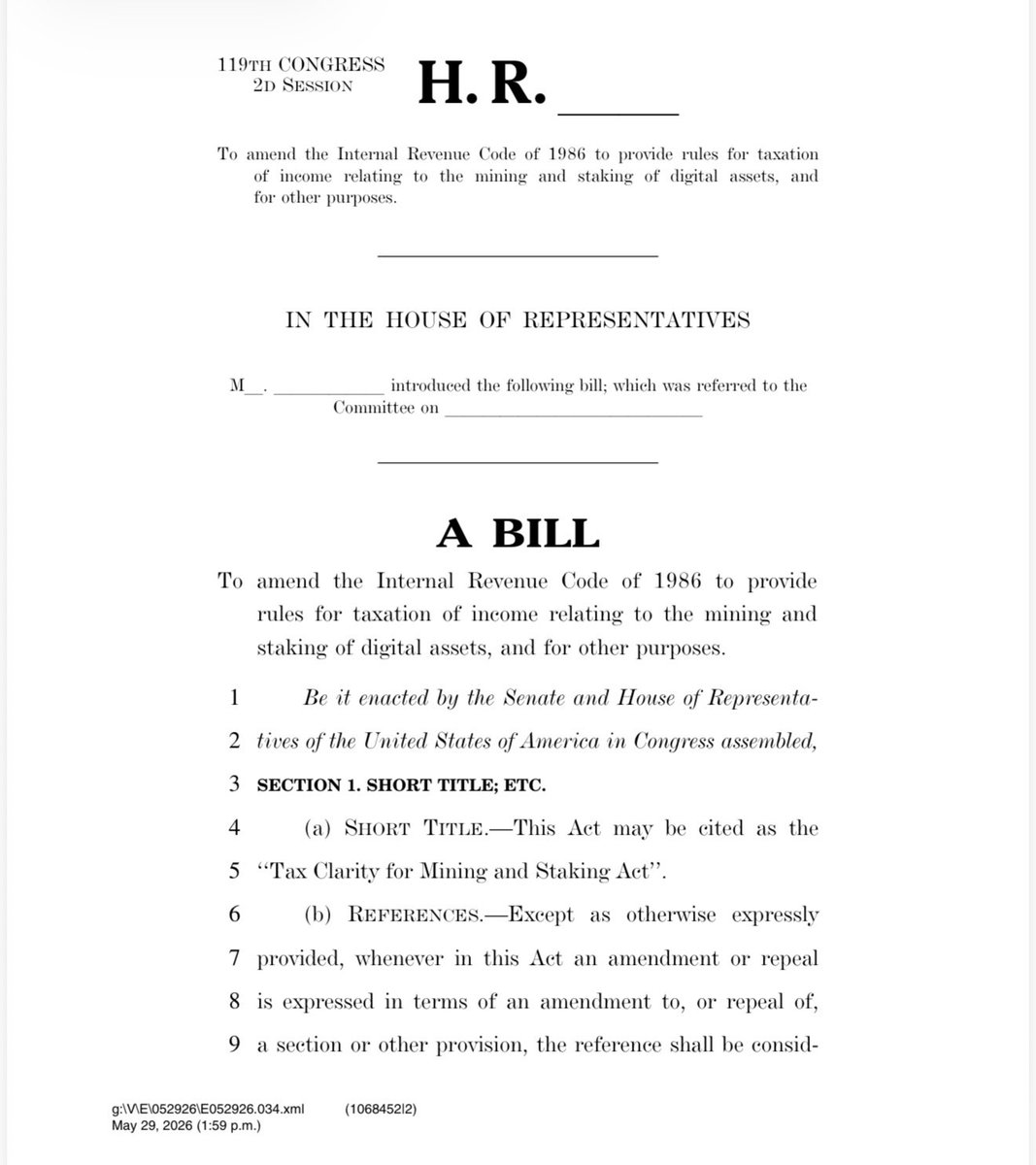
🚨SCOOP: The House Ways and Means Committee is circulating a package of SEVEN digital asset tax discussion drafts that would overhaul how crypto is taxed in the U.S.
The bills tackle everything from stablecoin transactions, mining and staking, crypto lending and wash sale rules to charitable donations and a voluntary disclosure program for taxpayers with past digital asset reporting issues.
The move effectively breaks apart the broader Miller-Horsford Digital Asset PARITY Act, as well as similar legislation introduced last year by @SenLummis, into a series of standalone proposals.
The drafts will likely feature prominently at Tuesday’s scheduled Ways and Means hearing on crypto taxation.
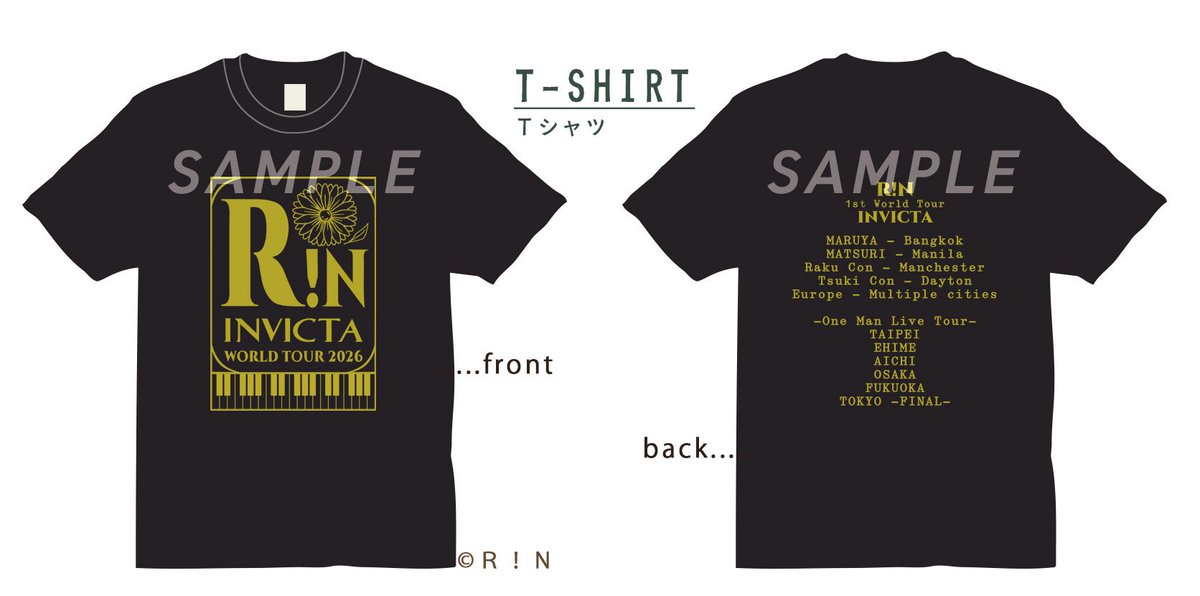
🌸 I’ve launched my Patreon!
Welcome to R!N di fiore Global 🌍
Join me for exclusive content, world tour updates, and behind-the-scenes moments.
🔗 https://t.co/FiDnrJgu5X
Music is our language. 🎶