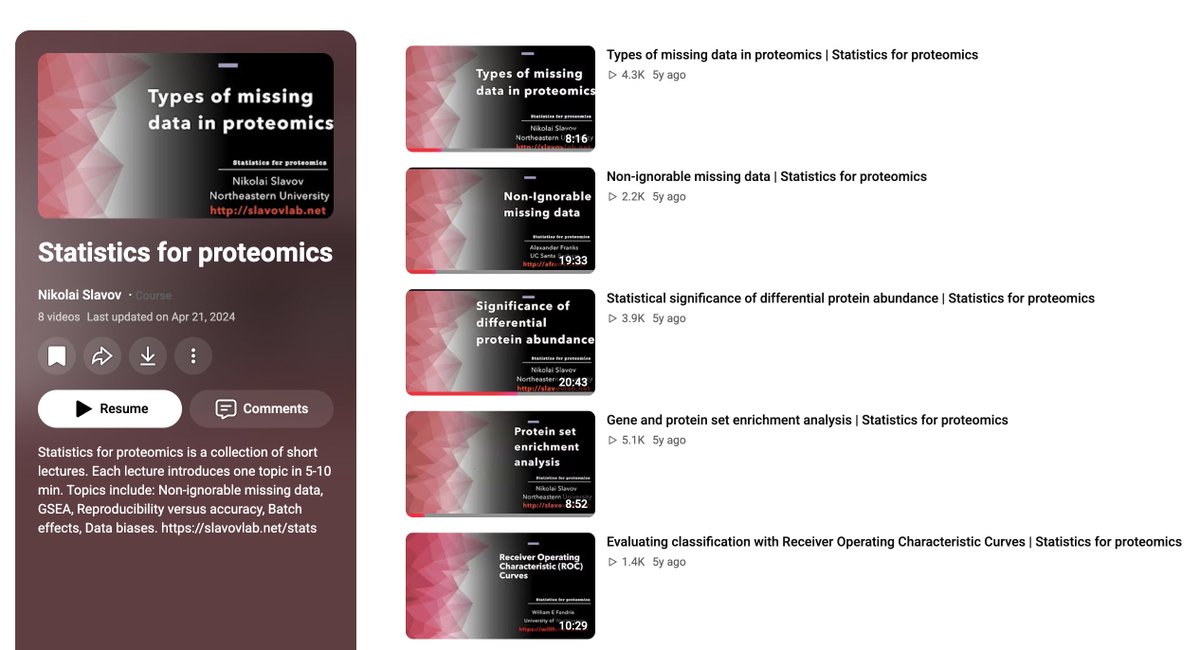
Do you need an intro to analyzing (prote)omics data?
This series of lectures may be helpful.
We aimed to make them short & accessible.
Enjoy watching & learning !
https://t.co/gTHe1J19Jq
As an example of how we are building on top of Gemini 3, AI Mode in Search now uses Gemini 3 to enable new generative UI experiences, all generated completely on the fly based on your query. Here’s how you might use this to learn a complex topic like how RNA polymerase works.
(1/n) Can diffusion models simulate molecular dynamics instead of generating independent samples?
In our NeurIPS2025 paper, we train energy-based diffusion models that can do both:
- Generate independent samples
- Learn the underlying potential 𝑼
🧵👇
https://t.co/TSurVY3YEl
Check out the tutorial video made by the awesome nano-protein-viewer user @DrAhmadAshfaq !
Also thank you all for the support, really glad it's helpful for many people :)
@DdelAlamo It's pymol. You want to use settings that create low depth images. Here's some code - look at the `low_depth_image` function:
https://t.co/zh2hu3gZDS
QuantaMind MD enables protein modeling with ab initio accuracy
1. A groundbreaking study introduces QuantaMind, a machine learning force field (MLFF) that achieves ab initio accuracy in molecular dynamics simulations, significantly advancing protein engineering and drug design. This workflow extends the chemical and conformational coverage of MLFFs, particularly in transition-state regions, enabling the simulation of complex phenomena like proton diffusion and acid-base neutralization.
2. QuantaMind addresses the limitations of traditional quantum mechanical methods, which are computationally expensive and not scalable for large biomolecular systems. By incorporating transition state data and expanding element diversity in training, QuantaMind can accurately simulate bond formation and breaking events, achieving remarkable agreement with experimental data.
3. The study demonstrates QuantaMind's ability to optimize protein structures with high accuracy, improving the prediction of residue contacts and hydrogen bonds. This is achieved through a robust training protocol that includes classical molecular dynamics simulations, transition state optimization, and DFT method embedding, ensuring the model's effectiveness across diverse chemical environments.
4. A novel pocket-centric simulation strategy allows QuantaMind to efficiently model protein-ligand interactions with high structural accuracy. This approach restricts simulations to residues within a specified distance from the ligand, significantly reducing computational overhead while maintaining precision.
5. The QuantaMind model is trained on a variety of datasets, including a dedicated phosphorus-containing dataset and transition state datasets, enhancing its generalizability. The model's performance is validated through simulations of proton diffusion, acid-base neutralization, and water dissociation, showcasing its versatility and scalability.
6. The study highlights the potential of QuantaMind as a general-purpose AI platform for atomistic modeling with ab initio-level accuracy. Future work could focus on expanding the model's training regime to include more diverse small molecules and reaction pathways, further enhancing its applicability in drug discovery and enzyme design.
📜Paper: https://t.co/yusUKpRUtm
#QuantaMind #MolecularDynamics #ProteinModeling #MachineLearning #DrugDesign #ProteinEngineering
Rational Engineering of Allosteric Protein Switches by In Silico Prediction of Domain Insertion Sites @naturemethods
1. A groundbreaking study presents ProDomino, a machine learning pipeline that predicts optimal sites for domain insertion in proteins, validated in both E. coli and human cells. This innovation accelerates the design of customized allosteric proteins with novel activities.
2. ProDomino leverages a semisynthetic dataset derived from natural intradomain insertion events, overcoming the challenge of limited experimental data. The model accurately identifies insertion sites with an ~80% success rate, demonstrated through experiments with light- and chemically regulated receptor domains.
3. The study highlights the creation of potent, single-component optogenetic and chemogenetic protein switches, including novel CRISPR–Cas9 and –Cas12a variants for inducible genome engineering in human cells. These switches enable precise control of protein activity.
4. ProDomino's predictive power is showcased through its ability to identify allosteric sites in complex proteins like CRISPR–Cas nucleases. The model's predictions were experimentally validated, demonstrating tight control of gene editing with dynamic regulation ranges.
5. The study emphasizes the potential of ProDomino to revolutionize protein engineering by enabling one-shot domain insertion engineering. This approach significantly reduces the time and effort required for traditional protein switch development.
💻Code: https://t.co/BzLJKLnWKe
📜Paper: https://t.co/oT4VPE3MYL
#ProteinEngineering #MachineLearning #CRISPR #Optogenetics #Bioengineering
Want to run and analyze MD simulations of a disordered protein?
Check out our step-by-step practical guide (+ tutorial with code) for preparing, running and analyzing replica exchange solute tempering (REST2) simulations of IDPs with @GMX_TWEET and @plumed_org on arxiv!
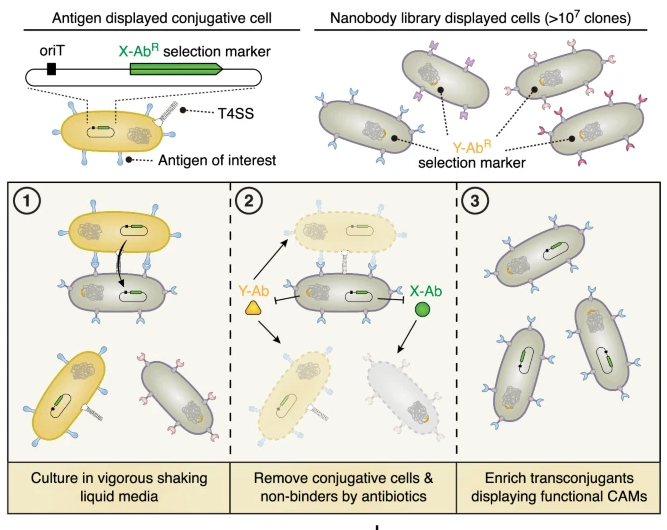
"programmable DNA conjugation between specific cells through synthetic cell-cell adhesion"
A whole-cell platform for discovering synthetic cell adhesion molecules in bacteria
https://t.co/7RcQ0Zm1N3
1/ Are you struggling to keep track of all the #H5N1 developments in the US?
Together w/ @jkbren & @MOUGK, we started an open-access timeline of key events related to the outbreak.
As you can see, the situation is rapidly progressing, so we will keep updating.
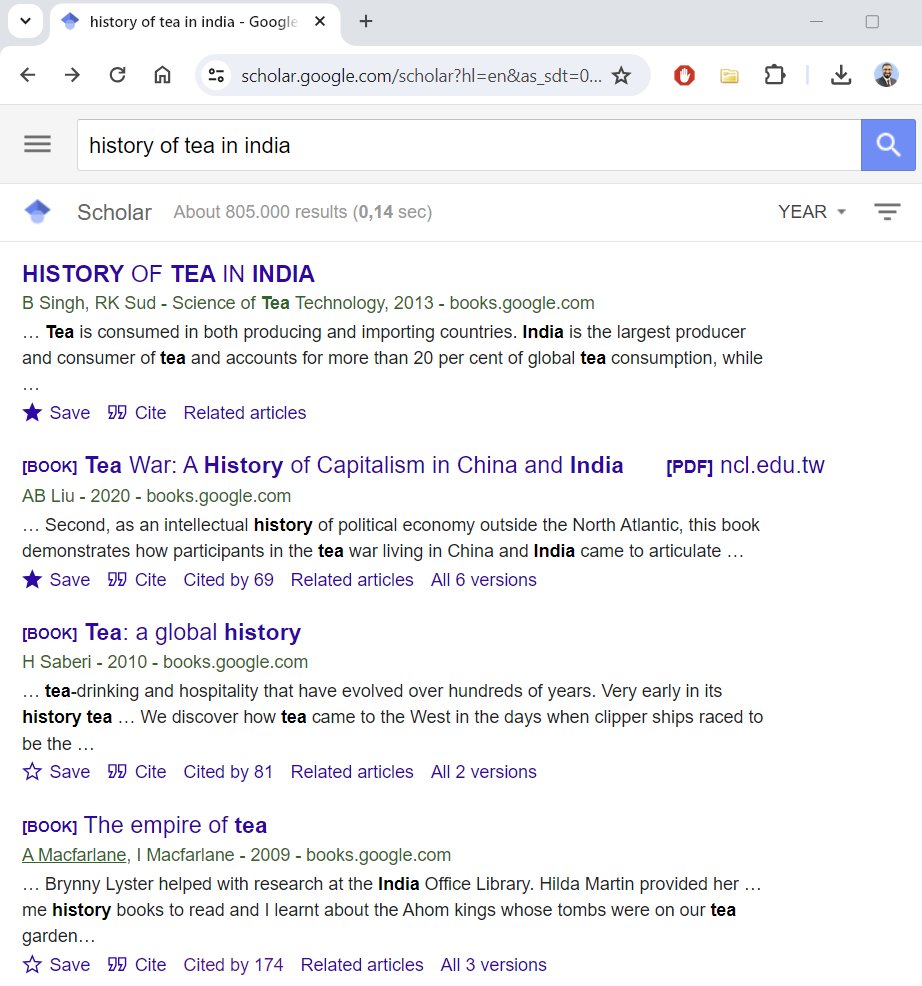
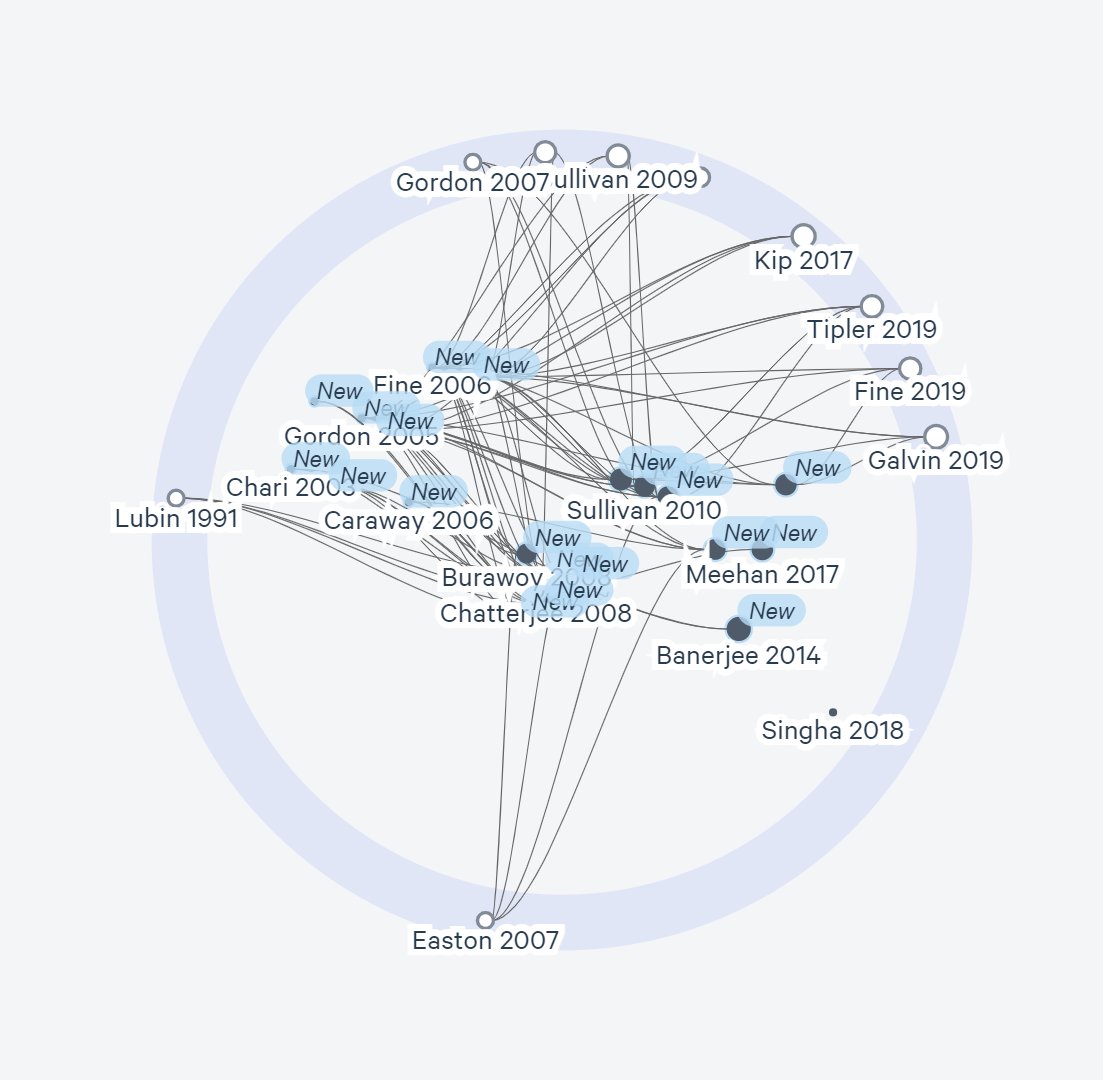
☹️Google Scholar is a great tool. But it doesn't show how papers are connected with each other.
😀Here's how to fast-track your literature review with a "visual search."
And export your papers to Zotero, Mendeley, or EndNote.
You can learn this workflow in 15 min:
🚨Don't use ChatGPT for academic research.
It's hallucinating wildly, making up fake papers that don't even exist.
Instead, use these 6 AI apps to get real citations to published papers.
Led by @HegelundOlsen, our latest preprint explores the antibody (Ab) germline bias & its impact on protein-/Ab-specific language models for Ab design. We release AbLang-2, optimised to predict non-germline residues, trained on both unpaired+paired data.
https://t.co/Wf63YPaxpT
A year ago, a lot of academic folks were freaking out that ChatGPT was making up fake articles
Now ChatGPT can easily cite real articles.
Academic Paper Finder is a custom GPT you can use for this purpose.
Open ChatGPT-4 and click on "Explore GPTs."
Look for "Academic Paper Finder" and start asking questions.
You will get a table of published papers with clickable links.
PS: If you can afford, I'd highly recommend getting a ChatGPT-4 subscription. Think of it as an investment in your future skills.