Israeli networking company DriveNets raised a $410M Series D led by Bessemer and Atreides at an $8.5B valuation, taking its total funding to ~$1B (@meirorbach / CTech)
(Visit Techmeme dot com for the link and full context!)
Retatrutide stuns in Phase 3 trials.
Colossal hatches chick from artificial egg.
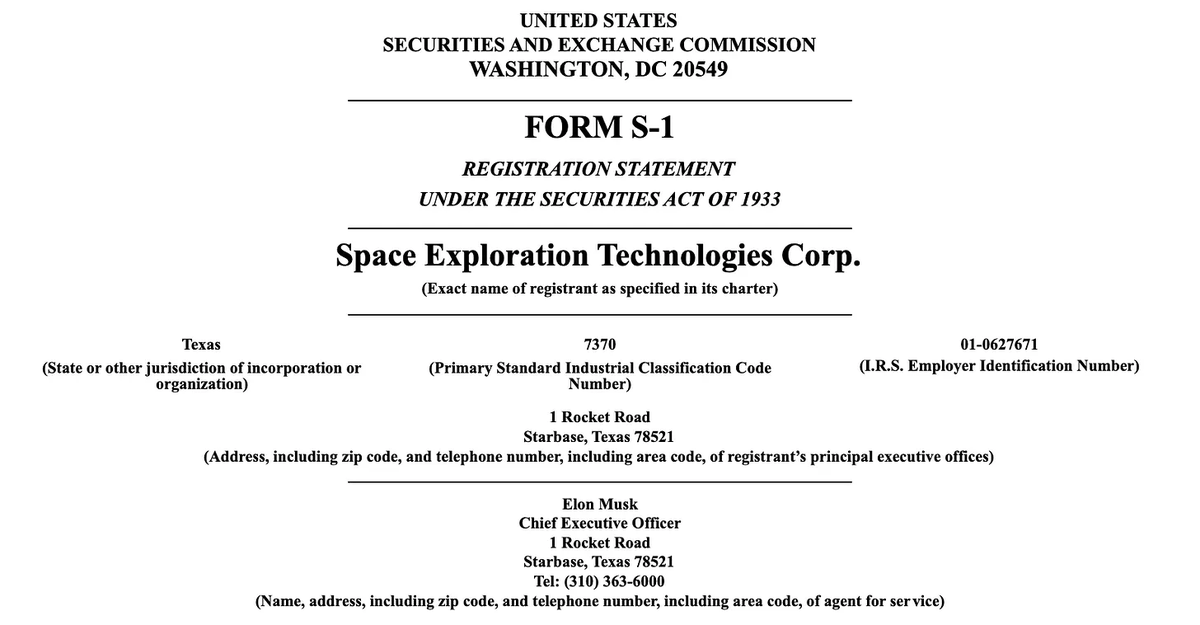
SpaceX Launches its S-1.
GPT 5.5 makes Erdos planar distance breakthrough.
SendCutSend raises $110M at $1B.
+ Science Breakthroughs, Anthropic, Quantum, Grindslop
What a week for the optimists.
Throughput vs. latency is a foundational tradeoff in almost any system. @sailresearchco is building inference for long-horizon agents, so we’re all about the former - exactly as Ben predicts! Software is our first lever here, and in time we’ll rebuild the whole computing stack.
Finding the undiscovered talent and betting on it hard is a unique skill very few in the world have and can pull off
Julia is one of the greatest of all time
I call bullshit. People routinely write incendiary material about Sam. That piece was absolutely one of them. This is a shameful reaction on a day where someone tried to hurt Sam.
We live on a planet with 1.3 billion habitable years left. We've had rockets for 69 of those years. In that time, the cost of reaching orbit dropped from $54,500 per kilogram to $2,720, and SpaceX is targeting under $100 with Starship. If they hit that number, getting to space becomes 545 times cheaper in a single lifetime.
329 orbital launches happened in 2025. Almost one a day. The space economy crossed $626 billion last year and should hit a trillion by 2034. SpaceX just filed for an IPO targeting a $2 trillion valuation, worth more than every airline on Earth combined. Starship, their fully reusable rocket (both stages fly back and land), can lift 150 tons to orbit. The entire International Space Station weighs 420 tons. Three flights could put the whole thing up there.
The engineering side of this is solved. What remains is a survival problem. Researchers published a paper in Scientific Reports calculating the natural extinction rate for humans, how often we'd get wiped out by asteroid strikes, supervolcanoes, the stuff we can't control. Less than a 1-in-14,000 chance in any given year. At that rate, we'd survive millions of years, more than enough to spread across the solar system.
Toby Ord, a philosopher at Oxford who spent a decade studying how civilizations end, puts the odds of a civilization-ending catastrophe before 2100 at 1-in-6. The threats aren't from space. Nuclear war. Viruses engineered in labs that could spread before anyone understands what hit them. AI systems are smart enough to act on goals we never gave them. All things we built ourselves.
A 2017 NASA paper made this case: we have a roughly 50-year window to lock in spacefaring infrastructure before resources run thin and energy costs make a restart nearly impossible. We're 9 years into that window. Given enough time, the math takes this to 100%. The only question that matters is whether we make it through the next few decades without blowing our shot.
i've never met him, but sam altman has had many positive impacts on me over the years. so, i would like to weigh in with some counterpoints that were ignored in ronan farrow's lengthy op-ed about how he is the devil:
- when SVB was collapsing, sam spent the weekend wiring personal cash to startups that feared they would miss payroll. no ratchet terms, no written terms at all, just money out the window and trust that it would work out
- when VCs tried to destroy parker conrad, sam stepped in and leveraged his influence to get them to leave him alone
- sam created a free course at stanford on entrepreneurship that has been watched by millions and helped inspire many thousands of entrepreneurs
- sam took YC from a small (albeit dominant) accelerator to a scaled machine that deploys hundreds of millions of dollars supporting an entire generation of founders, most of whom show up as outsiders
- when sam was fired, he had such deep loyalty among employees that 90%+ were going to walk out the door if he didn’t return. that is not the norm for an ousted leader, by a long shot
- ronan farrow would have you believe sam is a master manipulator who takes advantage of everyone around him. who exactly is he manipulating and taking advantage of? his employees who are on the ride of a lifetime building products loved by millions? his investors who universally boast openai first and foremost in their portfolios? his customers who happily pay billions of dollars for said products?
- sam literally helped brute force an industrial revolution into existence. without his perseverance you do not get chatgpt. what did that give us? an explosion of innovation, GDP growth, a domestic manufacturing and construction boom. a global reduction in friction to create things, build products, and get work done. the most promising path so far to curing cancer and solving climate change and countless other humanity-scale problems. ironically, without sam you do not get the essay Machines of Loving Grace, let alone the abundance that essay promises
so instead of dwelling on the fact that in 2011 some employees at sam’s company weren’t happy that he misrepresented his ping pong skills, i think i’ll bask in awe at the future we are living in, which sam helped pull forward
It's becoming clear that every software company needs to become an agent company. That’s because software is just a sequence of decisions based on user inputs, and good decisions require the flexibility of intelligence.
Even if your product needs high performance / high reliability, you will eventually use agents and should prepare for that. When agents get 10x faster/more reliable, are you still not going to integrate? What about 100x?
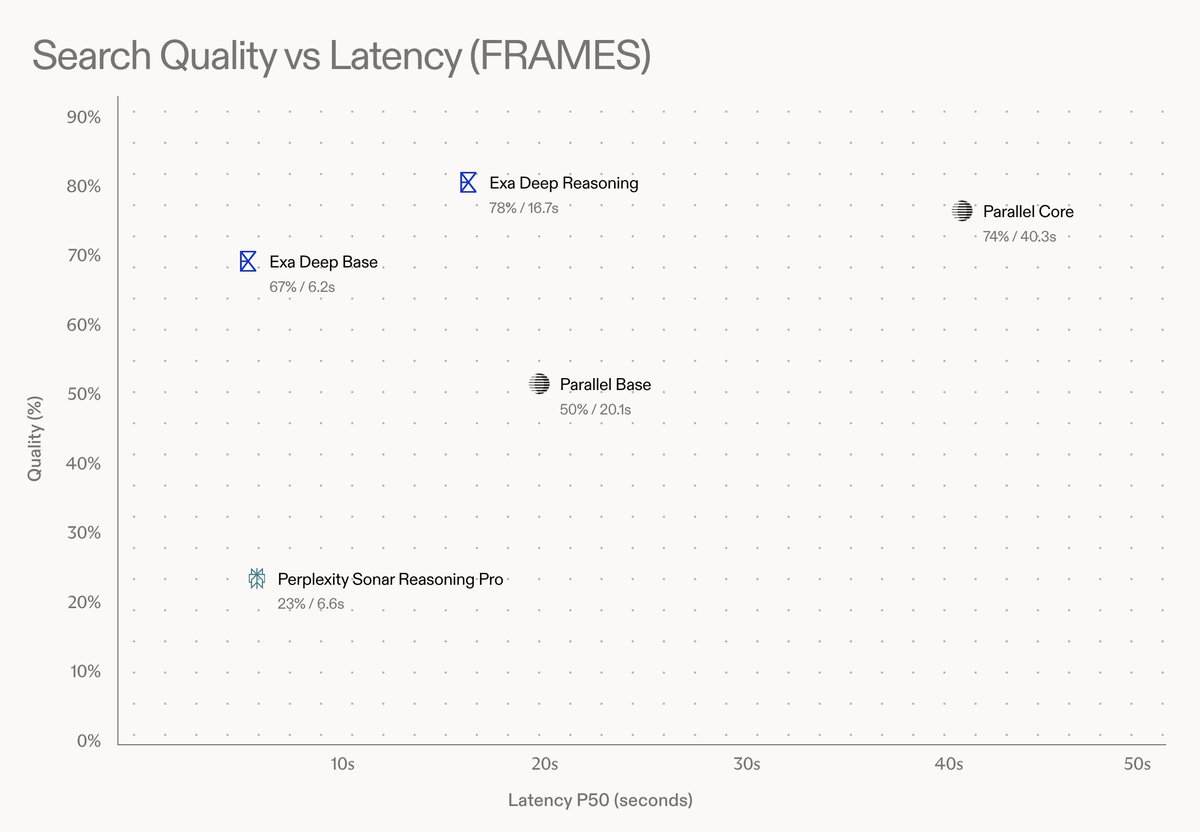
We knew agents would one day be embedded in our search algorithm. A year ago agents were slow and stupid. But the trend was clear. Today we announced Exa Deep → search redesigned to use agents + our instant search, which makes it extremely high quality while minimizing latency.
Again the trend is clear - we know agents will continue advancing in accuracy/speed. And so the percentage of products that want this agentic endpoint will increase. This is probably true for your software company as well.