@olsonplanner@BRoseMDMPH@JaneHenri Missed the very beginning of the live so forgive me if this was answered, but still wondering the answer to this question!
@trpender@aribindi@SportsSurgeryNY We had a great system and would usually get one of those days in between calls off (besides the post call day). I got a haircut on that rotation lol. I didn’t feel exploited at the time
@aribindi@trpender@SportsSurgeryNY I loved this trauma rotation but imagine those knowing they didn’t want to do surgery may not have. I learned a lot of valuable skills that have helped me as an intern. But now I see that not all academic hospitals have a call system that students have much to gain from
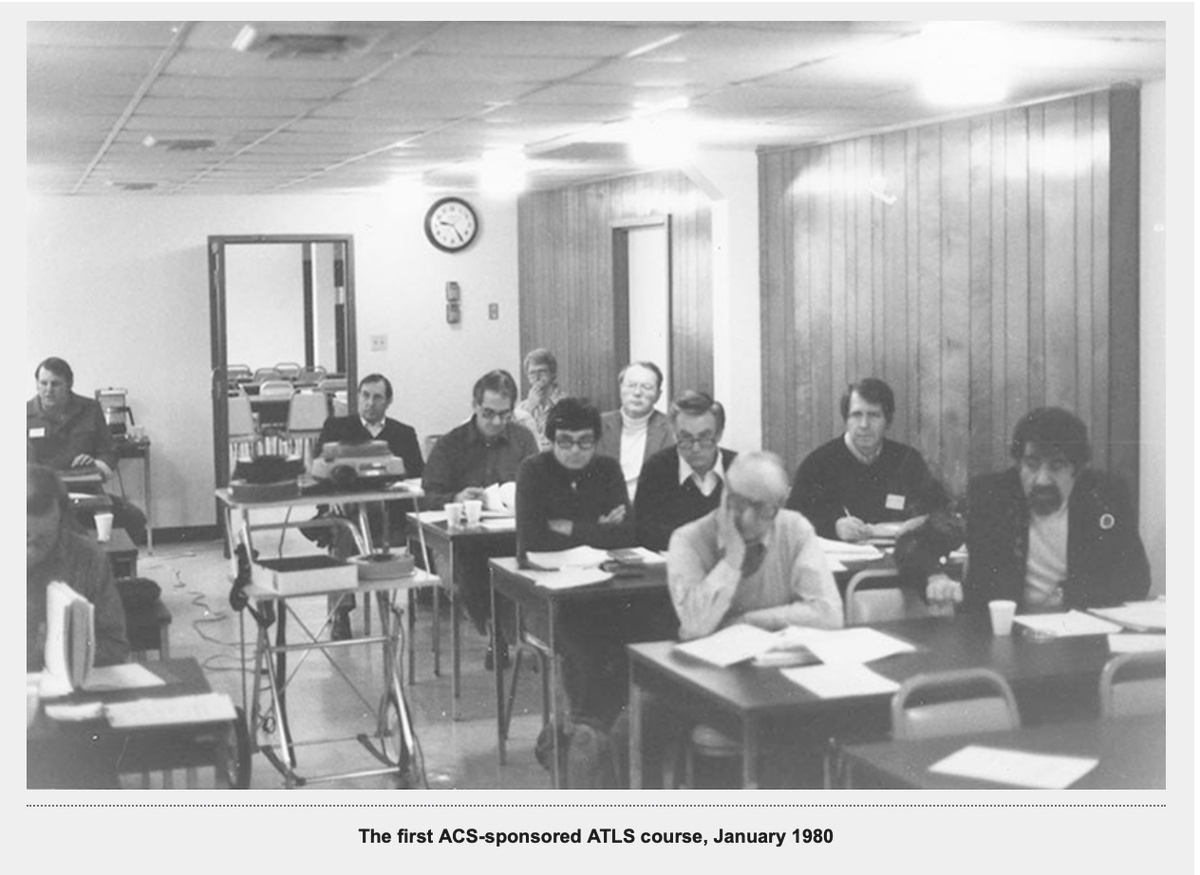
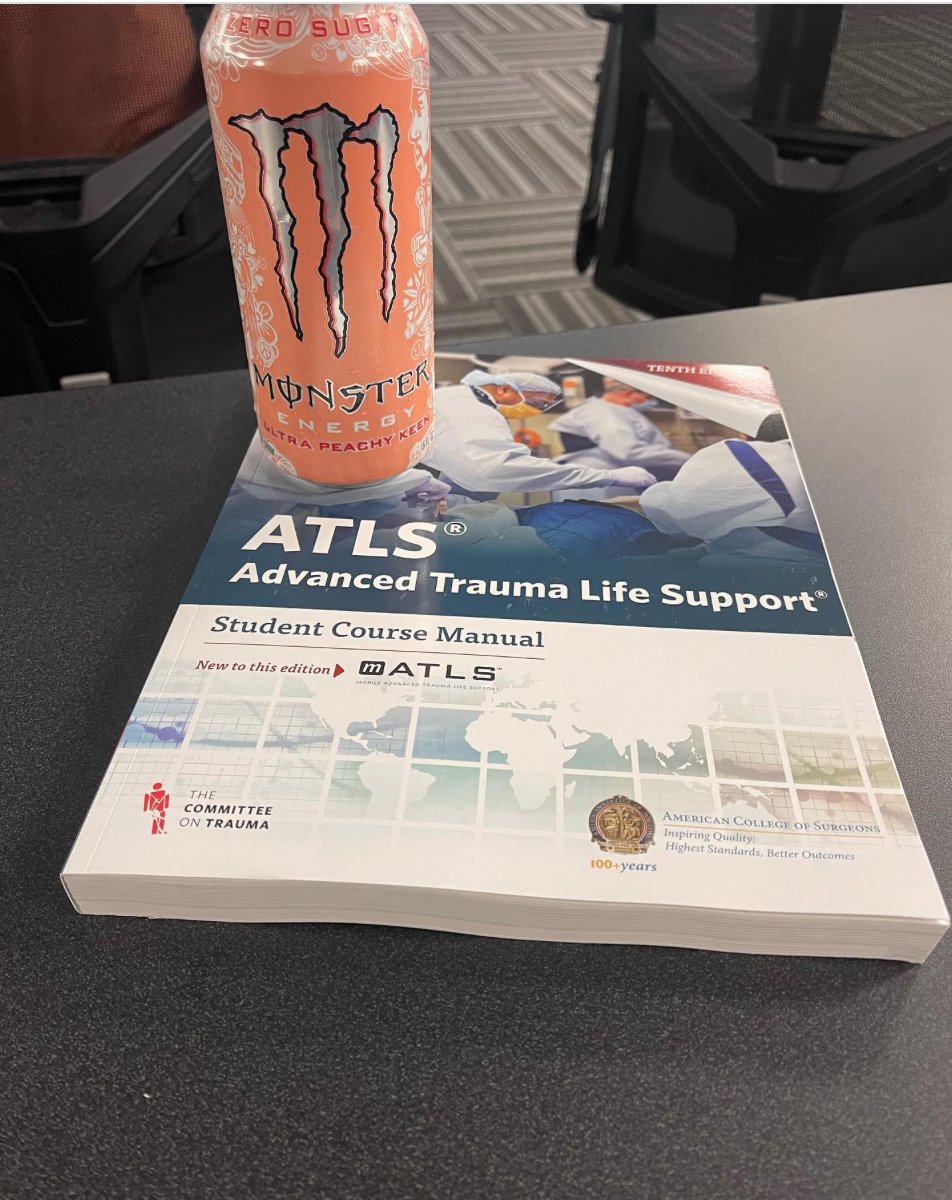
Yesterday I completed my once every four years refresher course of ATLS (Advanced Trauma Life Support System.)
I am one of over 1 million health care providers who have taken the course, a course borne of a tragic private plane crash almost 50 years ago.
ATLS is systematic approach to treating injured patients when they arrive in an emergency room, whether it’s a rural hospital in Haiti or a top trauma center in Houston. It has been taught in over 65 countries. It’s a common language, a universal protocol. A method to insure that severely injured patients get the same proper care wherever they are.
But care of the injured patient was not always systemized in a universal fashion. The origins of ATLS were born in Lincoln, Nebraska nearly 50 years ago.
In 1976, an orthopedic surgeon from Lincoln, Dr. James Styner, was piloting his small propeller plane carrying his wife and four children back from a wedding they attended in California. As they got closer to home on their long trek, the weather deteriorated over rural parts of Kansas.
With weather worsening and darkness approaching, Styner had to choose between turning around and flying away from home, landing in the middle of nowhere, or forging ahead. Styner pushed forward.
After flying over 1,000 miles and only 60 miles from home, tragedy struck. With decreased visibility due to clouds, fog, and darkness, James Styner become disoriented and crashed the plane. They flew through trees at around 160 miles per hours, shredding off both wings, and crashed into a corn field.
Styner survived the crash. His wife was ejected from the cockpit and died instantly when a piece of the propeller hit her head. His four children were in back of the plane and survived but three of them suffered head injuries and were unconscious. After waiting for help for hours in the desolate field, Styner decided he had to look for help. He left his oldest child behind to watch his three siblings, and walked in the direction of distantly appearing headlights from passing cars.
He eventually reached a nearby road, flagged down a car for help, and they returned to the field to retrieve his children.
Styner learned he had crashed near a small town called Hebron, Nebraska, a town he would soon learn which had a small hospital not well equipped to handle severely ill or injured patients. Only two doctors staffed the small hospital and they had little experience with severe trauma.
House after the crash and in the Emergency Room at Hebron with his 4 injured children, Styner was shocked at the care, or perhaps better said, lack of appropriate care given to his injured children.
Later he would say: “When I can provide better care in the field with limited resources than what my children and I received at the primary care facility, there is something wrong with the system, and the system has to be changed.”
He demanded the he and his children be transferred out of that hospital to the the large hospital at which he practiced, 60 miles away in Lincoln, Nebraska.
Over the course of time, Styner and his children had complete physical recoveries, but he remained troubled by his experience at the small hospital. Dr. Styner would vocally complain about the small town hospital.
One of his medical colleagues, an ER doc, grew tired of his complaining and told him to change the system. Well in this case there was no system. As Styner said: “You have to train them before you can blame them.”
So Styner together with the help of colleagues created a protocol for the treatment of severely injured patients with the goal of teaching it to health care providers in rural settings. Their system was called ATLS, and first debuted in Nebraska in 1978.
Their little course was picked up the University of Nebraska, and eventually the American College of Surgeons, and by global institutions.
Since it’s humble beginnings in a class in a small town in Nebraska, it was been taught in thousands of classes in over 60 countries to over 1 million providers.
From a personal tragedy to a global protocol which has saved countless lives over decades, James Styner proved several things.
• One person can change the world.
• Humble beginnings don’t reduce the chance of massive succes.
• The solution to complex problems is often to have a systemized protocol in place.
• You have to train them before you can blame them.
#ship30for30
Let’s talk about Black physicians (5% of all physicians). We have statistically lower MCAT and Step scores. However, Black physicians taking care of Black patients decreases mortality. If we let less Black applicants into medical school, more patients will die.
Period.
Oh you’re going to a teaching hospital in July? Well get ready…
for the most compassionate care from extremely empathetic interns along with their vigilant supervising attendings. Hope you like open ended questions and doctors listening to you bc you’re gonna drown in it.
Seven years ago, 49 people were shot and killed and more than 50 others were wounded at Pulse, an LGBTQ+ nightclub in Orlando, Florida. It is the second-deadliest mass shooting in modern American history, and most of the victims were LGBTQ+ and Latinx.
Happy Pride Month to our members, supporters and everyone else on behalf of AOSA! Look for many fun LGBTQ+ Surgery and AOSA facts, announcements and more daily during June! Also tag us #SurgeryPride in your posts!
Want to become an institutional or individual member? -->