Help shape what healthcare becomes next — and earn along the way.
Your voice counts.
Join me: https://t.co/IzDZDxrqN6
Code: GSGMR4A
#LifeAITestnet#HealthcareAI
Introducing the LIFE Habit Challenge
The challenge where your habits prove you're human.
📅 Season 1: 7-Day Sprint (Mar 19 – 28)
📅 Season 2: 21-Day Builder - opens after S1
💵 Total prizes: $2,000 USDT + LIFE testnet tokens + exclusive roles
Full thread below 👇
(1/5)
#LIFEHabitChallenge #ProofOfHabit #Web3Health
Introducing the LIFE Habit Challenge
The challenge where your habits prove you're human.
📅 Season 1: 7-Day Sprint (Mar 19 – 28)
📅 Season 2: 21-Day Builder - opens after S1
💵 Total prizes: $2,000 USDT + LIFE testnet tokens + exclusive roles
Full thread below 👇
(1/5)
#LIFEHabitChallenge #ProofOfHabit #Web3Health
Introducing the LIFE Habit Challenge
The challenge where your habits prove you're human.
📅 Season 1: 7-Day Sprint (Mar 19 – 28)
📅 Season 2: 21-Day Builder - opens after S1
💵 Total prizes: $2,000 USDT + LIFE testnet tokens + exclusive roles
Full thread below 👇
(1/5)
#LIFEHabitChallenge #ProofOfHabit #Web3Health
🩺 Community Question:
Healthcare is a paradox: trillions spent and cutting-edge technology, why is humanity only getting sicker?
Viewpoint A: The healthcare system is broken (reactive, wasteful, poorly coordinated).
The system prioritizes treatment over prevention, carries massive administrative waste, and fails to use advanced technology efficiently. The result is high spending and weak outcomes.
Viewpoint B: The real drivers lie outside healthcare (social factors, lifestyle, inequality).
Healthcare accounts for only a small share of health outcomes. Poverty, obesity, unhealthy lifestyles, and inequality are the root causes. Increasing medical spending alone does not address the core problem.
👇 Drop A or B and share your perspective
🩺 Community Question:
Healthcare is a paradox: trillions spent and cutting-edge technology, why is humanity only getting sicker?
Viewpoint A: The healthcare system is broken (reactive, wasteful, poorly coordinated).
The system prioritizes treatment over prevention, carries massive administrative waste, and fails to use advanced technology efficiently. The result is high spending and weak outcomes.
Viewpoint B: The real drivers lie outside healthcare (social factors, lifestyle, inequality).
Healthcare accounts for only a small share of health outcomes. Poverty, obesity, unhealthy lifestyles, and inequality are the root causes. Increasing medical spending alone does not address the core problem.
👇 Drop A or B and share your perspective
Debate to earn and innovate
Join @LifeNetwork_AI, share your insights, and help shape the future of healthcare.
Start here: https://t.co/IzDZDxrqN6
Code: GSGMR4A
#LifeAITestnet
Help fix healthcare by telling the truth about what isn't working.
It starts with conversations like this.
Jump in: https://t.co/IzDZDxrqN6
Code: GSGMR4A
#LifeAITestnet#HealthcareAI
🩺 Community Question:
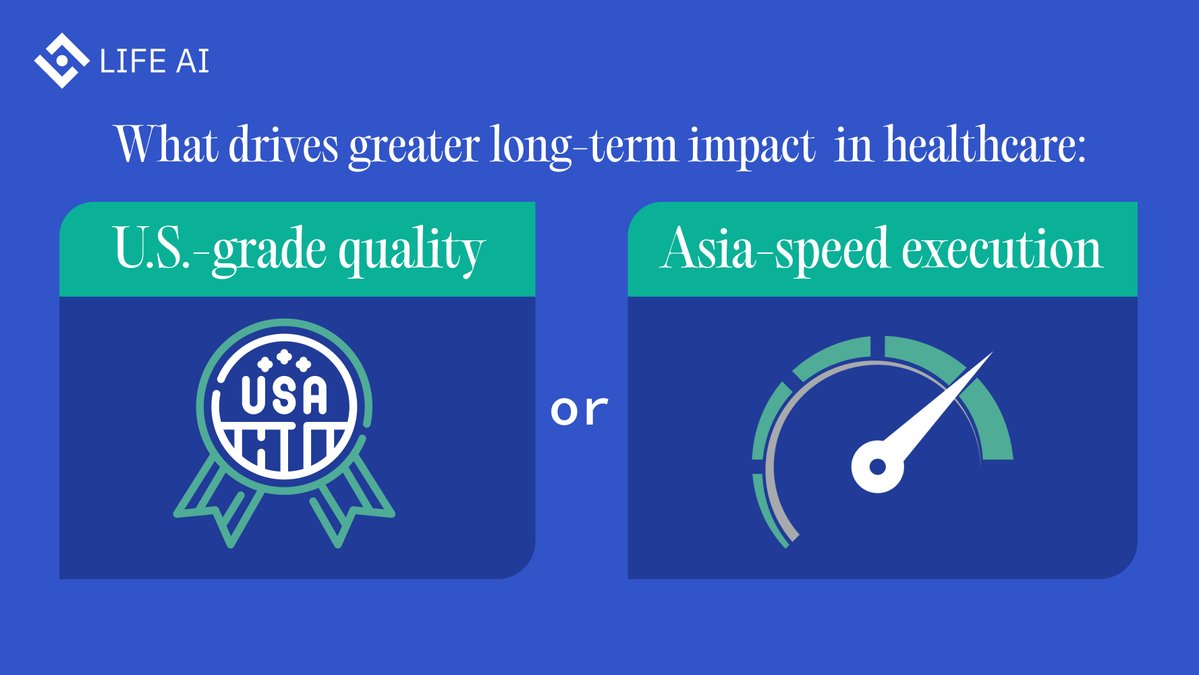
In medical innovation, what drives greater long-term impact:
U.S.-grade quality for rigorous validation and strict regulation
or Asia-speed execution for faster approvals and rapid scale?
Viewpoint A: U.S.-Grade Quality
Through institutions like the U.S. Food and Drug Administration, the U.S. emphasizes deep clinical validation before approval.
Rigor reduces risk, protects trust, and supports durable breakthrough innovation.
Viewpoint B: Asia-Speed Execution
Countries such as China and India accelerate approvals and deploy innovations at scale.
Faster access can save lives, especially in high-burden diseases.
👇 Drop A or B and share your perspective.
Talk. Debate. Earn.
Step into Health & AI debates with @LifeNetwork_AI. Make your voice count and earn rewards.
Join me: https://t.co/IzDZDxqSXy
Code: GSGMR4A
#LifeAITestnet
Every person has a moment when healthcare felt complicated or out of reach.
Your voice can turn those moments into something meaningful.
Join me on @LifeNetwork_AI: https://t.co/IzDZDxrqN6
Code: GSGMR4A
#LifeAITestnet#HealthcareAI
🩺 Community Question
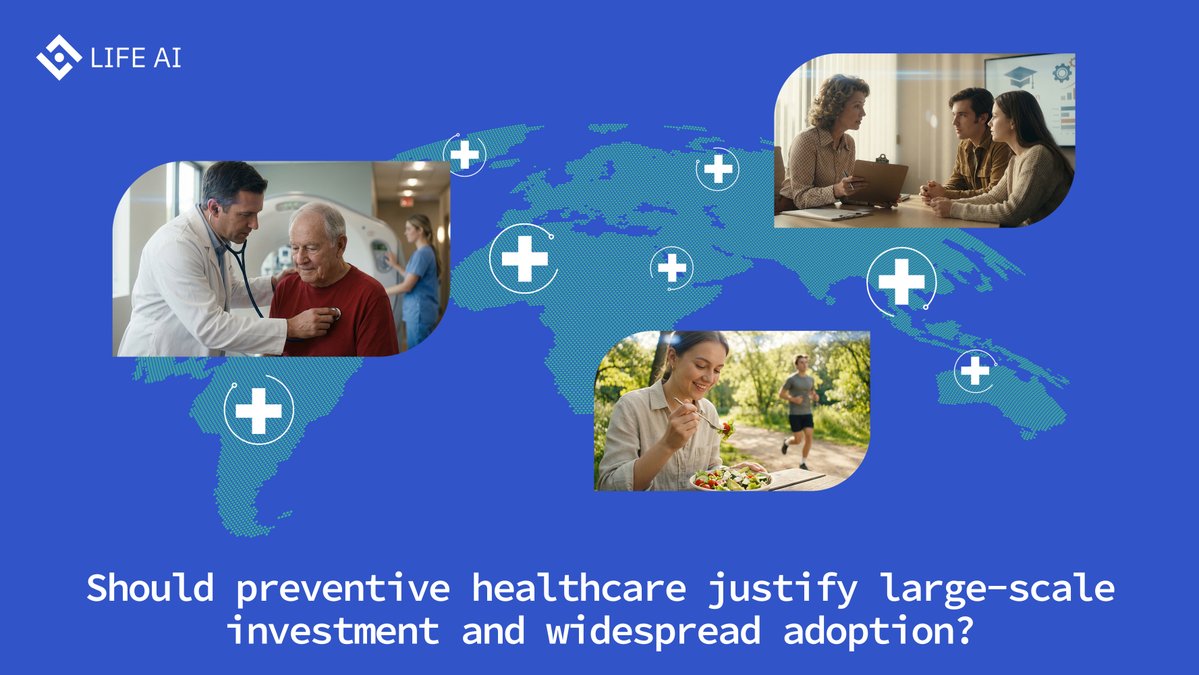
Should preventive healthcare justify large-scale investment and widespread adoption?
Viewpoint A:
Preventive care involves significant upfront costs and carries risks of overdiagnosis and overtreatment, potentially increasing anxiety and spending without clear mortality gains.
Viewpoint B:
Prevention through screening and lifestyle interventions can reduce disease burden, hospitalizations, and long-term costs, while improving life expectancy and quality of life.
Is prevention a cost-effective long-term strategy or an overextended approach with uncertain net benefit?
👇 Drop A, B, or share your perspective.