This Sunday, not a startup. A 9 year old Polymath Bridging Paninian Grammar with Modern Code
Before the rest of Bengaluru even wakes up, he has already chanted 6 chapters of the Bhagavad Gita from memory. He can break down every single word, root, and rule of Paninian grammar across all 700 shlokas.
By mid morning, he is standing in a 12th grade labs, working through complex chemistry experiments alongside students nearly twice his age.
By evening, he sits in front of a terminal, compiling self-taught C and Python code to engineer custom hardware prototypes, build offline edge AI voice assistants, and deploy apps downloaded across the globe.
His name is Vrishvardhan Sharma and he is not a product of commercial coaching.....
He is a 9 year old polymath operating at the precise, breathtaking intersection where 2,500 year old Sanskrit computational logic meets the frontiers of modern software engineering.
His story is about what happens when ancient Indic scholarship (Shaastras) meets self-taught modern tech in a mind that operates purely on curiosity.
Originally hailing from Patna (mother side) and Jaipur (father side) and now based in Bengaluru, Vrishvardhan’s academic and spiritual depth developed at an astonishing pace:
Age 5: Memorized the entire Bhagavad Gita and was blessed to recite complete Gita at Shringeri infront of personal audience of Shankaracharya Vidhushekhar Bharati ji.
Age 6: Winning the National Gita Medal. Today, he has completed 526+ full Gita Parayanas, chanting 6 chapters every morning and analyzing every shloka grammatically.
Age 8: Memorized the Ashtadhyayi (Panini's masterwork on Sanskrit grammar), winning a National Gold Medal competing against university level postgrad scholars.
Linguistic Versatility: Achieved fluency in 6 languages, with the ability to read and write in 13 scripts. He personally handwrote the Gita in 11 different Indian scripts, dedicating the work to the spirit of Ek Bharat Shreshtha Bharat.
Vedic Mastery: Attained the status of a Ghanapathi of Shri Rudram (Namakam and Chamakam), 1 of the most complex, rigorous modes of Vedic chanting and memory retention known to human tradition.
Yet, rather than remaining exclusively within classic academic frameworks, Vrishvardhan taught himself programming languages like Python and C, applying computational logic directly to modern software problems.
Instead of following commercial app frameworks filled with popup ads / aggressive paywalls / artificial gamification tricks, Vrishvardhan builds tools centered on human cognition and cultural connection.
- KannadaVardhan: Created after moving to Bengaluru to help users pick up Spoken Kannada naturally. Built on what he terms "The Sahaj Way", an ambient cognitive process where users learn by listening, guessing, receiving gentle corrections, and speaking without the anxiety of rigid grammar charts.
- GitaVardhan: A clean, user-focused digital interface designed for deep engagement with scripture.
- Offline Voice-Command Gita Assistant: A tiny custom hardware prototype engineered to run voice commands locally, processing requests completely offline without reliance on internet servers or data tracking.
Vrishvardhan’s dual mastery of Panini’s Ashtadhyayi and modern code is where his greatest potential lies.
Panini’s 4,000 algorithmic rules written 2,400+ years ago are widely recognized by computer scientists as the world's 1st formal, context-free generative grammar system, the direct intellectual ancestor of modern programming languages and natural language processing (NLP).
By combining formal Sanskrit computational linguistics with software architecture, Vrishvardhan represents a rare bridge between India's intellectual heritage and modern deep-tech innovation.
While Vrishvardhan's parents carefully limit public media exposure to shield his growth, his work shows what is possible when deep root discipline meets unstructured modern curiosity.
A 9 year old is building to solve problems, bridge cultures, and explore the boundaries of learning.
Bharat is really rising. 🙏🙏
PS: I have written this with his parents’ direct approval. I had also told his father that, at any cost, he needs to be protected from all the noise and negativity on SM.
In 1927, diggers at Mohenjo-daro pulled a small steatite bust out of the earth. Half-closed eyes. A neatly trimmed beard. And a piece of cloth thrown over his left shoulder, tucked under his right arm, leaving the right shoulder bare.
Archaeologists call him the Priest-King. Nobody knows his real name / who he actually was. He is ~4,500 years old, and he remains 1 of the great unsolved mysteries of the Indus Valley (There are a few theories about that I will write separately).
But the way that cloth sits on his body is still exactly how a person wraps an uttariyam over his upper body today. It is how a groom wears his shawl at a South Indian wedding this month. A civilization we cannot even read the writing of left behind a fashion instruction that never stopped being followed.
A friend (I may proudly say), Mohan ji, a Prof. at IIT Hyderabad, sent me a paper I would genuinely never have stumbled onto myself, published in 2021, in Archaeometry, a serious peer-reviewed Oxford journal.
Written by a biomedical engineer at IIT Hyderabad. Title alone should tell you this is not folklore: "Indian Costumes Through the Ages: Insights into Sartorial Choices Using Mathematical Biology."
Mathematical biology. On clothes.......
They took the exact statistical technique scientists use to compress genetic data, the same math behind facial recognition software, the kind that reduces a human face down to a handful of defining "eigen-features" and pointed it at 70 costumes spanning from the Indus Valley to today, plus Egyptian, Greek, Roman, and Arab dress for comparison.
46 points on the body. 5 ways cloth can touch each point, knotted / banded / draped / enveloped / untouched. Every costume in history, reduced to a number sequence.
Then they let the math sort it. No labels. No hints about culture / religion fed in.
The Indic costumes clustered together on their own as one unbroken thread stretching from that same Priest-King bust all the way to a contemporary sari.
Egypt sat in a completely separate zone. Greece and Rome sat in between, like a bridge.
And buried inside that math, 4 patterns repeated for 4,500 unbroken years, present in stone before the pyramids finished aging and present on Indian bodies today: Cloth draped diagonally, left shoulder to right hip and almost never the other way (a few try the other way to look fashionable though).
The researchers went back into the Ṛgveda, the Upaniṣads, the Haṭhayoga-pradīpikā and found that every 1 of those 4 mathematical patterns lines up with something specific in yogic anatomy.
That left shoulder to hip diagonal is described in an old Pāśupata text as the exact path the body's prāṇa is said to travel.
The waistband corresponds to Uḍḍīyāna bandha, a foundational energy lock in Haṭha Yoga. The forehead emphasis sits right where classical yoga places the ājñā cakra.
Cold, blind mathematics, the same kind used on genomes landed on the same map yogic philosophy drew 1000s of years ago.
Nobody carving that Priest-King's shoulder cloth and nobody folding an uttariyam this morning coordinated with each other. And yet, run through the numbers, they are speaking the exact same language.
Thank you, Mohan ji, I would have never found this on my own.
Link to the Paper: https://t.co/BOXD37CuW4
The Church made St Thomas went to both India and America !!!!
Fray Diego Durán, a Dominican friar raised in Mexico and fluent in the Aztec language of Nahuatl, produced the fullest Spanish account titled, Book of the Gods and Rites and the Ancient Calendar, of the Aztec pantheon, in the 16th century. His treatment of the important Aztec god Quetzalcoatl (also named as priestly as Topiltzin) is noteworthy. He not only demotes that god to a mortal man, but he transforms him into the apostle St Thomas, the same missionary, who is also believed to have evangelized India !! The legend made up by the Spainiards goes as follows.
The god Quetzalcoatl (who was actually the human person of St Thomas as per the Spainiards) was described as a bearded, white-skinned man (instead of a serpent bodied god) who advocated for peace, knowledge, and virtue, and is said to have taught a way of life that friars compared to Christian monasticism. The presence of some apparently Christian-shaped crosses on ancient Mexican monuments (such as those observed by the Spanish at Veracruz) convinced early missionaries that an Apostle had already reached the continent. Durán held that God had sent Saint Thomas — whom the Mexicans knew as Topiltzin-Quetzalcoatl — to evangelize these peoples and turn them back from the idolatry into which they had fallen, until Tetzcatlipoca (his nemesis god in Aztec pantheon now demoted as a human again by the Catholics) rose up against him and, after wars that destroyed Toltec Tula, drove Topiltzin-Quetzalcoatl into exile, from which he prophesied his eventual return. Quetzalcoatl eventually is said to have left, sailing away on a raft of serpents (which later devolved into his depiction as the snake bodied god) with a promise to return.
St Thomas went to India and then all the way back to America 2000 years ago !!!! And there are fools in both places who believe them !!
If you want to read more about the Church’s strategy of demoting pagan gods to ancestral humans, read my latest article here
https://t.co/0GnAeHazdk
🚨 Murugan is back in the headlines : debates exploding over whether he’s a pan-Indian god, a Tamil ancestor, or something else entirely. Most people think this is some new Church “appropriation” tactic. It isn’t.
This is a time-tested ancient strategy that Christianity has used for nearly 2,000 years to dismantle pagan traditions by saying : “Your gods were once men.”
Around 300 BCE, the Greek pagan writer Euhemerus claimed the Olympian gods were not divine at all ; they were just deified kings and culture heroes whose exploits got exaggerated over time.
His doctrine is called Euhemerism now. Pagans of his own time largely rejected Euhemerism as impious. But early Christian writers loved the idea. They weaponised it. Church-fathers admiringly note that the mocking that Euhemerus received was undeserved, because Christians believed that pagans like Euhemerus had at least seen through popular error of the pagan religion (worshipping men as gods) even if they hadn’t reached the full truth of the Gospel of the one true God.
Church Fathers like Athenagoras (2nd century) and Clement of Alexandria openly argued that the Greek and Egyptian gods were simply historical kings who had been turned into deities by grateful (or fearful) subjects.
Their strategy was :
Concede they once existed as humans → deny their divinity → rewrite their myths as “history” instead of religion.
This “euhemerist” move gave Christians a powerful triple advantage:
1. It explained temples, statues, and festivals without admitting real gods.
2. It let them preserve and enjoy pagan myths and classics as mere literature.
3. It justified the destruction or conversion of sacred sites (any human however great does not deserve worship which belongs only to the one true God)
The same playbook later traveled to medieval Scandinavia, the Spanish conquest of the Americas, and now appears in modern India.
In my latest Substack article, I trace this exact Christian Euhemerist tactic from ancient Greece and Egypt, through the Patristic period, the Medieval period, and Colonial eras, right up to today’s debates around Murugan and other Hindu deities.
I quote the primary sources (including bolded key passages from the Church Fathers) so you can see the strategy in their own words.
If you want to understand why these “gods were once men/ancestors” arguments keep resurfacing — and why they feel so familiar in the Indian context — this piece connects the dots across two millennia.
Read it here :
https://t.co/UfbJKUDG2V
What do you think is this latest fad of Murugan being an ancestor after reading this article — novel historical revisionism? Nah, a recurring and time-tested pattern worth recognising, right?
Sanskrit belongs to all people was said by Thirumuruga Kirubanandha Vaariyaar. Thankfully, he is not a Brahmin else such bad faith handles would have targeted him for that as well.
If you want to worship Murugar in Tamil, you are free to do so. A simple point is being raised about those doing language politics saying Murugar should not be worshipped using Sanskrit Mantras.
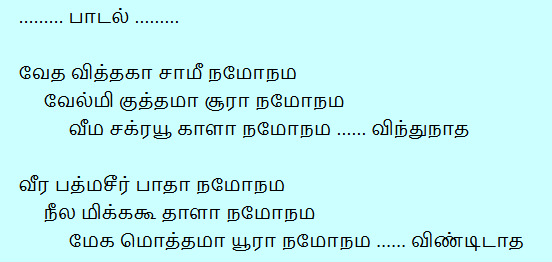
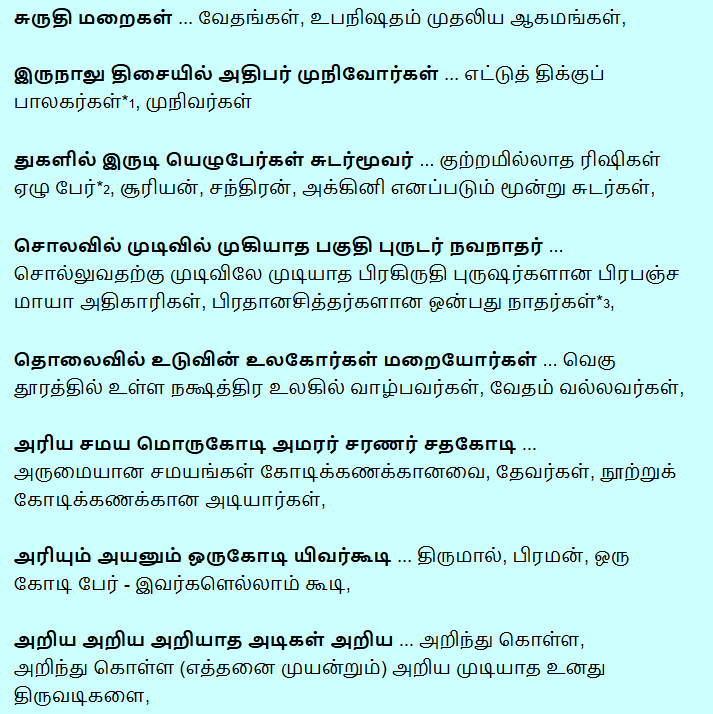
Here are two beautiful Tamil compositions from Muruga bhakthar Arunagirinadhar's Thirupugazh 714 where he hails the four Vedas (literally using the Sanskrit word Shruti), and even starts his Thirupugazh 994 by calling Murugar as Veda Vithagar. Every line of this Tamil song ends with Namo Namaha, which is not Tamil. So, does that make Arunagiri a Tamil hater?
The DMK ecosystem is attacking me that the school issue I reported was a lie I concocted to help the TVK government. Let me state the facts.
We run two rural schools, both free NIOS schools under the Kalaivani Kalvi Maiyam umbrella, one in rural Tenkasi and the other in rural Theni.
The Theni school was originally started and run by a retired IPS officer, a honest and upright man. He built very nice facilities but had to shut down his CBSE school because the state government demanded too much money to issue the NOC. He told me that as a honest retired officer he did not have the money to pay and they would not issue the NOC otherwise.
He urged us to take over his trust so we could run our free NIOS school in the premises. That is how we started our NIOS school in Theni.
Unlike in Tenkasi, where I live, the Theni school faced occasional harassment from the DMK government because we did not have a state government registration, so we tried getting state government approval again (this time for the state board) and that of course would also cost money. So it was in a limbo.
Meanwhile in Tenkasi we wanted to build new school facilities (we were operating in make-shift facilities, the ones that came in frequent photos) and we applied for DTCP approval to construct the new buildings. Everyone who knows DTCP in our state knows what kind of corruption happened there under the DMK.
We waited patiently for DTCP approval for the new school buildings but the approval never came as long as the DMK was in power. The approval came automatically once the government changed.
It is this DTCP approval that I posted about in X. I want to once again appreciate the refreshing change.
Not only did the approvals come, government people told us not to pay money to anyone for any approvals. I have to appreciate this in public, having endured what we had endured before.
This is the "lie" that DMK wants to attack me on.
I do not need their certificate on my character.
They can examine their conscience and ask why a technology nerd like me who is mostly immersed in code would post these.
If they think I would back down by their vile personal attacks because I am a Brahmin or TVK Stooge or Sanghi or whatever, I will tell them this: unlike you dynasts I grew up with nothing. I studied in Tamil medium schools. I know how to live on nothing. I have dedicated the remainder of my life to make Bharat self reliant in technology while reviving our rural areas, the soul of our eternal sanatana civilization.
I will not be intimidated by their attacks. I am unafraid of death, why would I be afraid of the mere DMK?
And if they had any conscience they can return the money they looted (they know there they keep it) and then they can attack my character.
I will now go back to optimizing the code of our compiler!
Part 2. A hospital in India can take someone who has been blind for years and give them their sight back in six minutes. It costs less than a pizza. And they have done it 6.8 million times.
The hospital is called Aravind. It was started in 1976 by a man named Govindappa Venkataswamy, known as Dr. V. He was 58, had just been forced to retire, and his hands were crippled by arthritis so bad he could barely hold a pen. He had scalpels custom-made for his twisted fingers and still performed over 100,000 eye surgeries in his life.
Two years before he retired, Dr. V walked into a McDonald’s for the first time. He looked at the menu, looked at the assembly line in the back, and came out with an odd idea. He would sell cataract surgeries the way McDonald’s sold burgers.
So he mortgaged his house. His brothers and sisters pooled their life savings. He opened an 11-bed clinic in Madurai. Then he flew to Chicago and enrolled in Hamburger University, the actual McDonald’s training program, to learn how the assembly line worked.
At Aravind, cataract surgery is broken into small steps. Nurses prep one patient while the surgeon operates on another. Each surgeon switches between two tables. The operation itself takes about six minutes.
So far Aravind has seen 55 million patients and done 6.8 million surgeries. More than half of those patients paid nothing. Not a rupee. The ones who can pay subsidize the ones who cannot.
A surgery at Aravind costs between $40 and $125 depending on the lens. In the US, Medicare pays about $1,766 for the same operation. Aravind also has better results. Their complication rate is 1.5%, and serious eye infections happen in about 2 out of every 10,000 surgeries. Most American hospitals are not that good.
They built their own lens factory too, called Aurolab. Imported lenses were costing hundreds of dollars each, so Aurolab makes them for around ten. Today Aurolab produces roughly 10% of the world’s eye lenses and ships to 160 countries.
Every year, Aravind sends doctors and nurses out to rural villages for 2,500 eye camps. They screen people who have been blind for years, bus them to the hospital, operate on them, and bus them back home seeing.
Dr. V died in 2006. His family still runs Aravind. Harvard Business School has been teaching the story as a case study since 1993. I still do not see it in my feed.
A 58-year-old with crippled hands walked into a McDonald’s. Fifty years later, 6.8 million blind people can see.
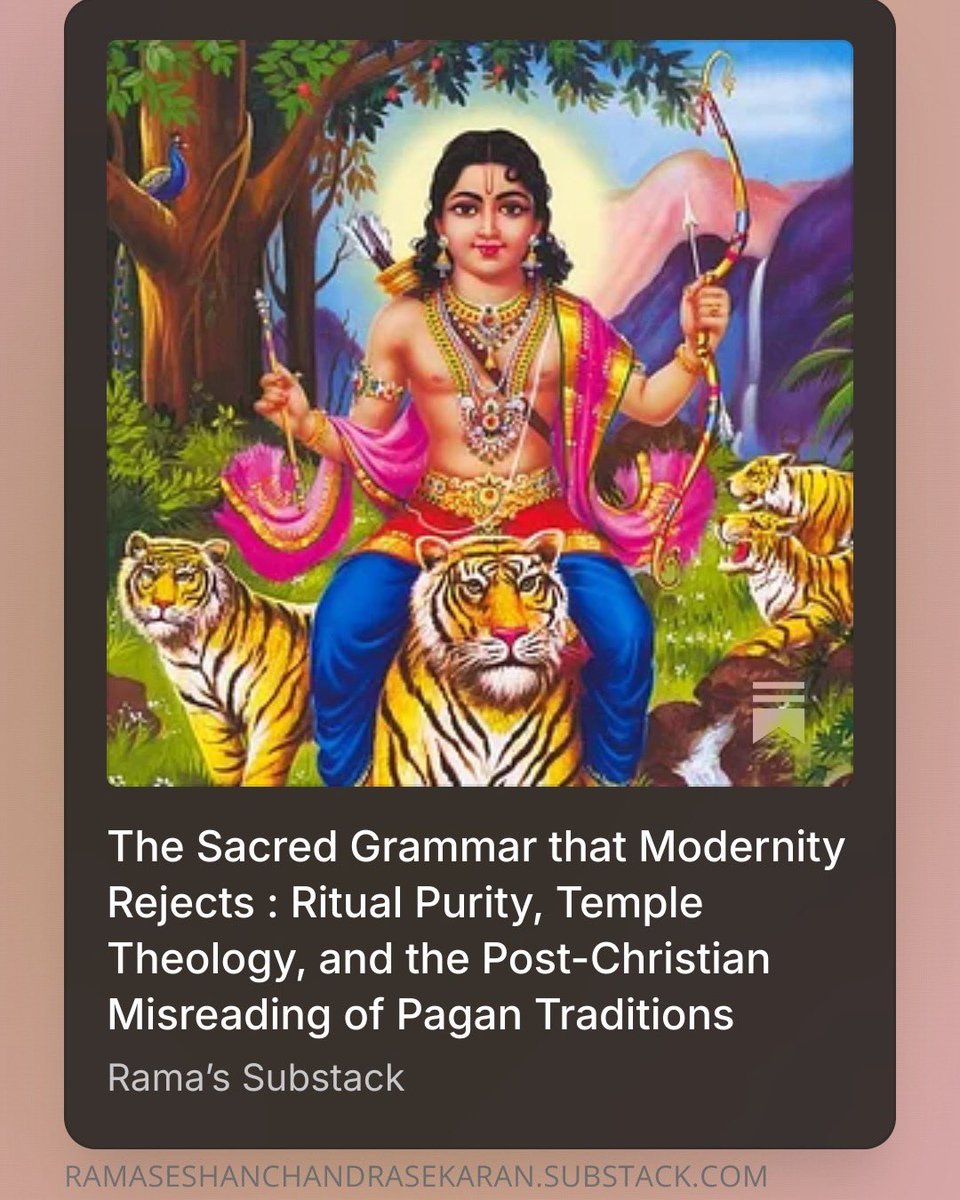
My comprehensive rebuttal to this article and controversy in general
Link : https://t.co/Z7cyQSpiVk
The aim of this article is to elaborate on the following themes :
1. The conflation of ritual purity/eligibility in non-Christian traditions (āśauca, kegare, tumah, miasma, etc…) with moral impurity is a specifically post-Christian interpretive error
2. The temple-as-residence-of-deity is architecturally, theologically, and legally distinct from the congregation-hall model of Christian and Islamic worship spaces
3. The priest-as-servant-of-deity is structurally distinct from the pastor/imam/rabbi as servant-of-congregation
4. Hereditary priesthood as a covenant between lineage and deity, not a caste privilege separately extractable away from its ritual context
5. These distinctions have legal implications and deserve legal protection in pluralist democracies
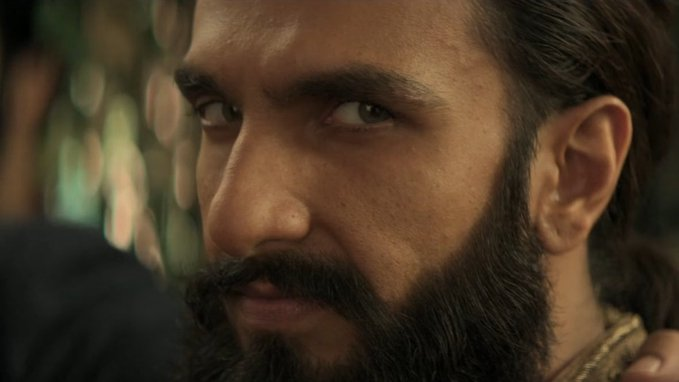
Read this thread to fundamentally understand why leftists are completely rattled by Dhurandhar and what the non-left should learn from this reaction and what Dharmics must do to sustain this momentum (1/12)
My 12 yr old has been asked to write an apology letter and make a kindness poster for his Religion teacher in his school.
And we couldn't be more proud of him.
Yesterday, in his Religion class in Ireland, my son's teacher was explaining sacred symbols in Hinduism and added that Hitler took the Swastika from Hinduism and used it as a base to perform the horrific crimes. (This was no where written in the book, but she added this detail by herself.)
To this, my son raised his hand and pointed out that the symbol used by Hitler was not Swastika (He forgot its actual name, Hakenkreuz). He mentioned that the symbol Hitler took was originally taken by Christian churches itself and not only from Hinduism. His obsession with the Aryan Race theory originating from India and Hindus made him use the Swastika.
Another boy in the class cut him and said that, "Come off it, it's the same thing, just 45 ° tilted."
To that my son replied (our hearts just swell in pride at this) - "Your cross ✝️ is a holy cross, but when its upside down, its called a Devil's cross not Holy cross. So, this symbol tilted at 45° cannot be called Swastika."
At this, my son was yelled at, and I quote his teacher- "Shut up Arjun, how dare you say that?!"
Things escalated from one thing to another, she complained to the teacher incharge and also cried.
He said that she heard her say that He was blasphemous in a school run by the church.
Well, the school administrators were kind, and they accepted his apology today. Ireland has the best teaching staff one could hope for. Extremely patient, accommodating, accepting and welcoming. I can understand the teacher just couldn't expect that at that moment.
But he still has to submit the apology letter on Monday. Which he will, and we will make sure the apology letter has some history lesson on how Sir Alan Bullock, a British Historian and the most Influential Biographer of Hitler made this misconception quite common in the world.
He is the only Hindu in his class, and we are proud he has an extremely strong opinion.
His next chapter has the explanation of Natraj!
We are looking forward to it.
My Ruminations on the Epstein Reports
The recent exposes surrounding the Epstein files have forced a grim reckoning with the infallibility of the modern psyche. The names on those lists represent the pinnacle of the "Enlightened" elite : scientifically brilliant, rational, globalist, and definitely post-religious (if not atheist). Yet, this high-gloss veneer of progress served as a shroud for unparalleled horrors.
Since the Enlightenment, our progressive architects have sold us a specific utopia: the idea that scientific rationalism and the erosion of "superstitious" tradition would inevitably cure social evil. This mindset views evil not as a fundamental human condition, but as a mere byproduct of ignorance and irrationality : a bug in the human software that can be patched by enough data and "liberal progress."
We are now seeing the fatal flaw in that logic. Evil is not a design flaw to be engineered away; it is a permanent feature of human existence and struggle of humanity with its own evil is an eternal battle, as religions keep saying.
In our rush to remove God from the world, we dismantled the most effective constraints on the darkest corners of the human psyche. We traded the "Fear of God" for the "Cult of the Expert," only to find that removing the sacred does not eliminate the demonic ; it simply grants it a laboratory.
The reports of organized pedophilia and the whispered cannibalistic horrors of the globalist elite sound like the fever dreams of the uneducated conspiracy theorist peddler. I still find myself wanting to dismiss them as conspiracy theories because the alternative is too terrifying to accept: that a progressive person can possess a genius-level IQ and a black heart simultaneously.
As Bertrand Russell succinctly put it: "A mathematical formula can be understood by a saint and a sinner equally well." Science is a tool, not a tether. It is morally neutral, and when divorced from a higher moral law, it doesn't lead us to a "rational paradise". It simply allows the sinner to calculate and produce his atrocities with greater precision.
Friends, let me give you examples of two chefs and ask yourself :which is the greater one?
One chef who masterfully prepares an endless array of cuisines : each tailored to different palates, regions, and sensibilities ; thus delighting billions across millennia without compulsion.
Or another single obsessive chef who prepares only one Middle Eastern dish, insists it is the only legitimate food ever created for everyone everywhere for all time, and claims that all humanity originally craved only it, until a villainous "anti-chef" (Satan) seduced the world into "false" variety in false foods, and threatens to roast alive forever, anyone who dares to taste anything else?
Similarly: which reveals a greater, wiser Divinity?
A Brahman—the infinite Being that graciously manifests in countless forms, names, and avatāras (as celebrated in Ṛgveda 1.164.46: ekam sat viprā bahudhā vadanti — "Truth is one, the wise call it by many names"), meeting each seeker where they stand, through their own language, culture, and heart's longing?
Or a jealous, singular deity who incarnates only once in all cosmic history, at one obscure location, declaring that every soul everywhere —past, present, and future—must channel divinity exclusively through that narrow gate, or face everlasting torture in fire?
The first invites, accommodates, and liberates. The second demands monopoly through fear.
Which, truly, reflects limitless compassion and love? Which reveals something far more limited and insecure?
In this increasingly authoritarian and majoritarian India, Christians enjoy unrestricted freedom to publicly dismiss Hindu deities as lifeless idols, mere cultural props, or "noble lies" that even their worshippers supposedly know are unreal; while any reciprocal critique of Christianity triggers cries of "persecution" and becomes international news.
Consider the irony: your own Bible declares in Deuteronomy 21:23 that “anyone who dies while being hung on wood is under God's curse”. Paul himself reaffirms this in Galatians 3:13, applying it directly to Jesus' crucifixion: "Christ redeemed us from the curse of the law by becoming a curse for us—for it is written, 'Cursed is everyone who is hanged on wood.'" The very symbol at the heart of Christianity - a man rejected by his own people, executed in the most shameful manner his own Jewish law itself branded as accursed ; this man is elevated as the sole path to salvation. Yet Hindus are lectured that bowing to forms of the Divine is childish or deceptive.
Many who have left Christianity for Sanatana Dharma describe the opposite experience: profound relief at encountering a truly compassionate Divine reality. They speak of liberation (mokṣa) through knowledge, devotion, and self-realization—without the terror of eternal hellfire for non-adherents, without the demand for exclusive allegiance to one historical event in one distant land. Instead, they find a path that honors personal temperament, cultural context, and infinite expressions of the One Truth.
She Turned Barren Desert Into A Thriving Forest in Rajasthan
What happens when one woman returns from the USA with a mission to rebuild the soil of Rajasthan?
This is the story of Deepti Agrawal, an inspiring woman who is overseeing an extraordinary environmental transformation: turning desert-like soil into a lush green organic forest. Her work is heavily inspired by Allan Savory, whose regenerative grazing and holistic land management principles emphasize restoring soil health, improving water cycles, and using animals as allies in healing degraded landscapes. Deepti adapted these ideas to the Indian context, proving they work even in extreme desert conditions.
A key part of her success is the indigenous Tharparkar cow—a resilient desert breed whose dung, urine, and presence are central to her regenerative approach. These cows provide natural fertility, enhance soil microbiology, and help build long-term ecological stability without chemicals.
Her work proves that with patience, community support, and ecological wisdom, even the harshest landscapes can heal.
Religious Literacy : A Comparative Study of 12 World Religions
In this article (link on the replies), I give a broad introduction to the 12 major world religions in a thematic format answering 4 questions from each religious tradition
1. Problem : What is wrong with human existence and/or the world?
2. Solution : What is the solution to that problem?
3. Technique : What are the ways or paths or techniques one should follow to reach the solution?
4. Exemplars : Who are the previous examplars who have charted down the path for us?
One long standing principle within the company is that no employee is allowed to praise the leadership, including me, in public. We remind people of this rule periodically and it has become a core part of our culture.
The spiritual principle I have tried to follow in life is to let neither praise nor abuse get to me. I don't read or watch videos about me. I am not that important to me and do not want to carry the burden of being important.
I think of being alive and conscious, drawing breath, as the ultimate gift bestowed by the creator and remind myself to be thankful for that gift. Satchitananda सच्चितानन्दः
I do read critical feedback of our products or the company. They are important.
I remind myself and our employees to be thankful for the fact that we even receive that feedback, because the natural or default state for any product or idea is to be completely ignored. The fact that people take the time to tell us is a gift we must be thankful for.
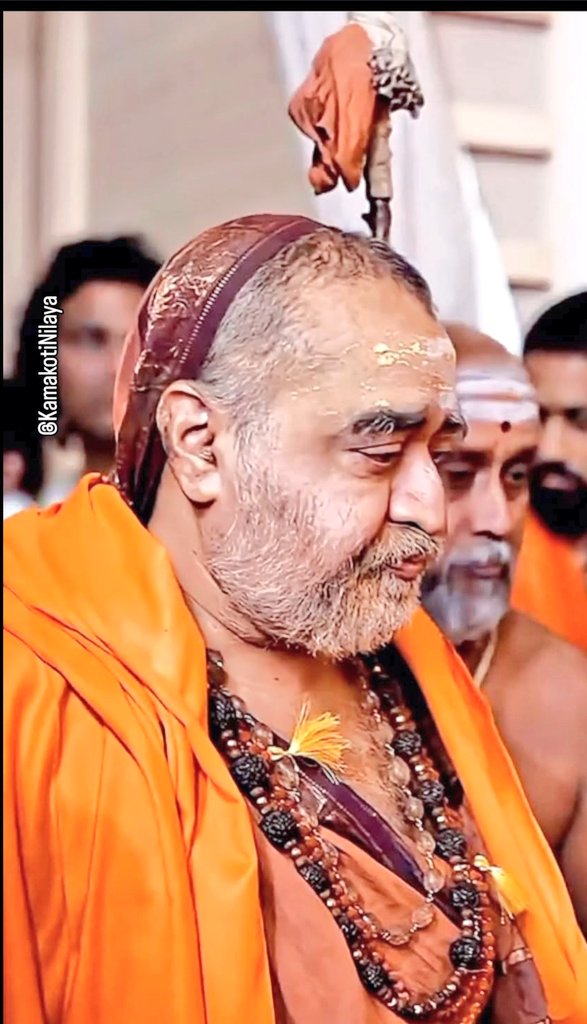
At the Chennai camp this Navaratri, HH Jagadguru Sri Sankara Vijayendra Saraswati Mahaswamigal would often finish the 3rd kala puja well past midnight, around 1:30 AM.
The trikala puja along with navavarana pooja alone would go on for 12–13 hours every single day.
One night, after the long puja, as Periyava was heading back for vishranti, an elderly couple approached Him with a basket of fruits.
They said they had come from a small village near Valangaiman.
Immediately, Periyava smiled and said, 'Haaan, vandhurkom anga 15–20 varushathukku munadi!'
(We’ve been there 15–20 years back!)
And then, He started describing the village like He had just visited yesterday.
He said there was a small hill to the left, a lake down the road, a Shiva temple on the right and an Amman kovil near the lake.
The couple’s eyes widened. It was exactly their village He was describing!
They kept saying “Yes, yes!” and fell at His feet in tears.
The handful of regular devotees smiled quietly. They knew this wasn't the first time nor the last.
Periyava remembers everything.
Every face, every place, every devotee who has ever come to Him.
No AI, no supercomputer, no neural network can match that divine memory and effortless clarity.
Even if we time-travel 500 years ahead, with all the advanced tech of that era, it would still be insignificant before His ability to recall, process and communicate with such precision and grace.
Vande Kamakoti Guru Paramparam. 🙏
I have been noticing attacks on @svembu, his company @Zoho, and their products by Indians themselves now just because GoI is endorsing them and they are gaining traction.
This is very bad crab mentality which is not good for the country. It's time people doing this get out of a silly political mindset. The US govt or China endorse and support their companies to a great extent and that's how they make them big and powerful.
We never saw this in India in the critical sector of online tech for the last 25 years of tech explosion and this is why we have to use all foreign tech for even basic needs like messaging and email.
Trying to bring down our own good, innovative, employment giving companies who have actually helped thousands of Indians skill, get a decent job, and rise in rural areas, because of political differences will keep us forever weak.
The repercussions will hurt every Indian in the long term. Get out of this political mentality and help the nation grow. Or it will come to affect you personally one day soon.