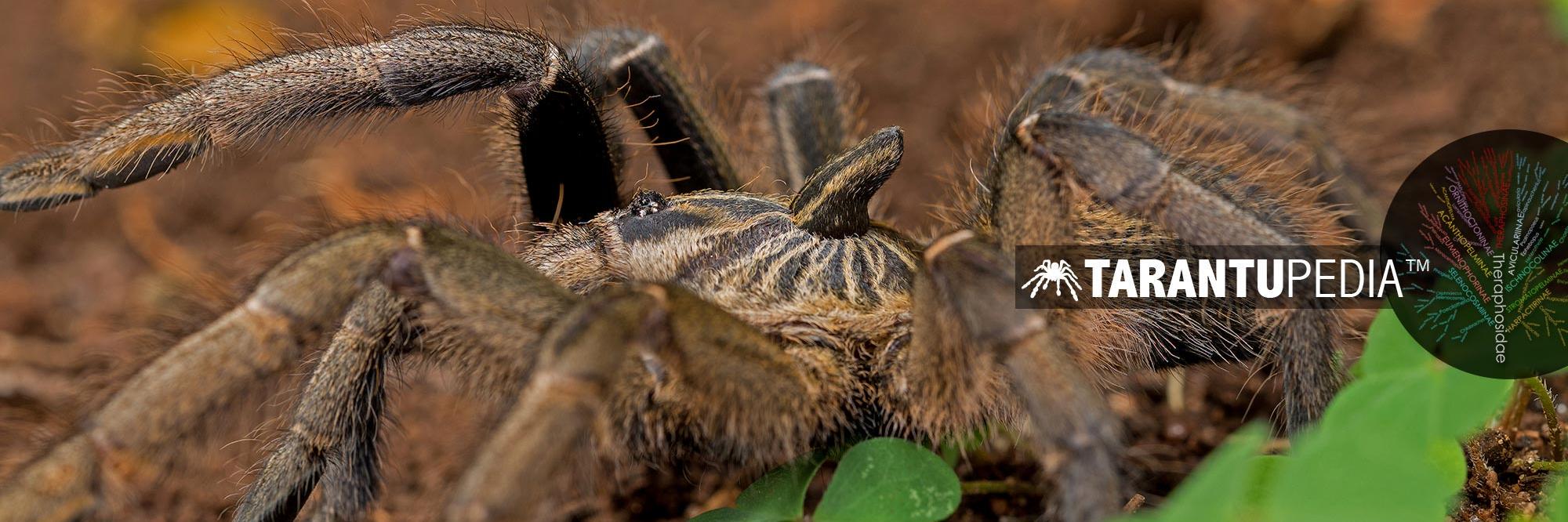
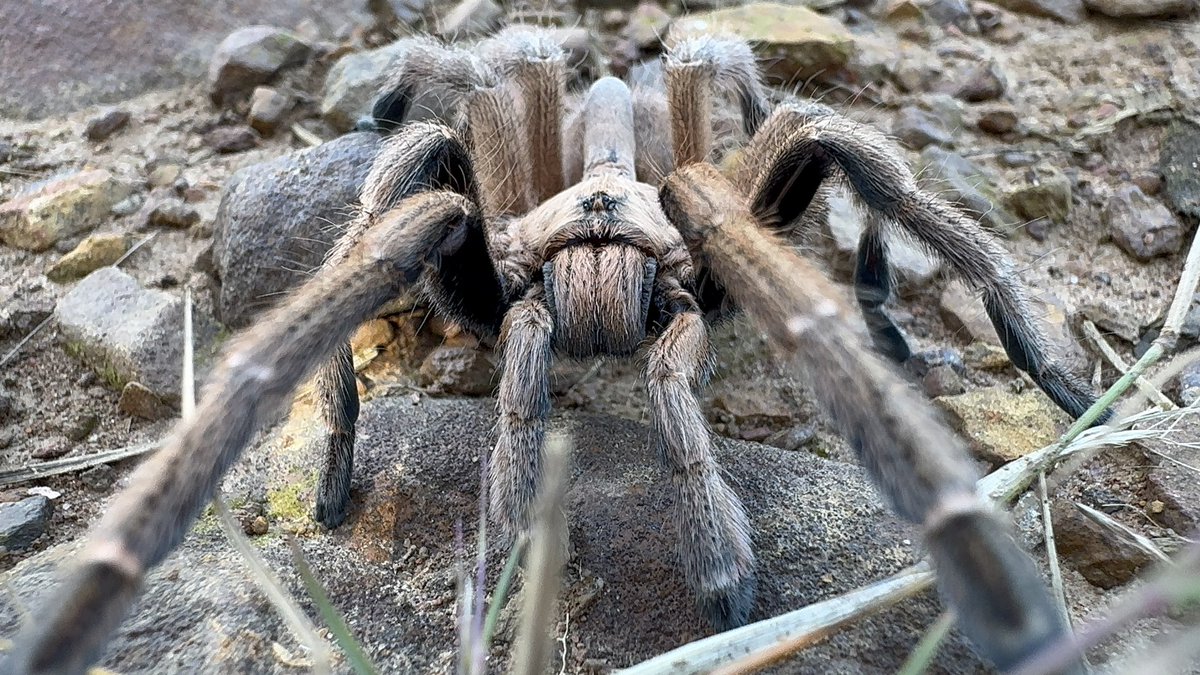
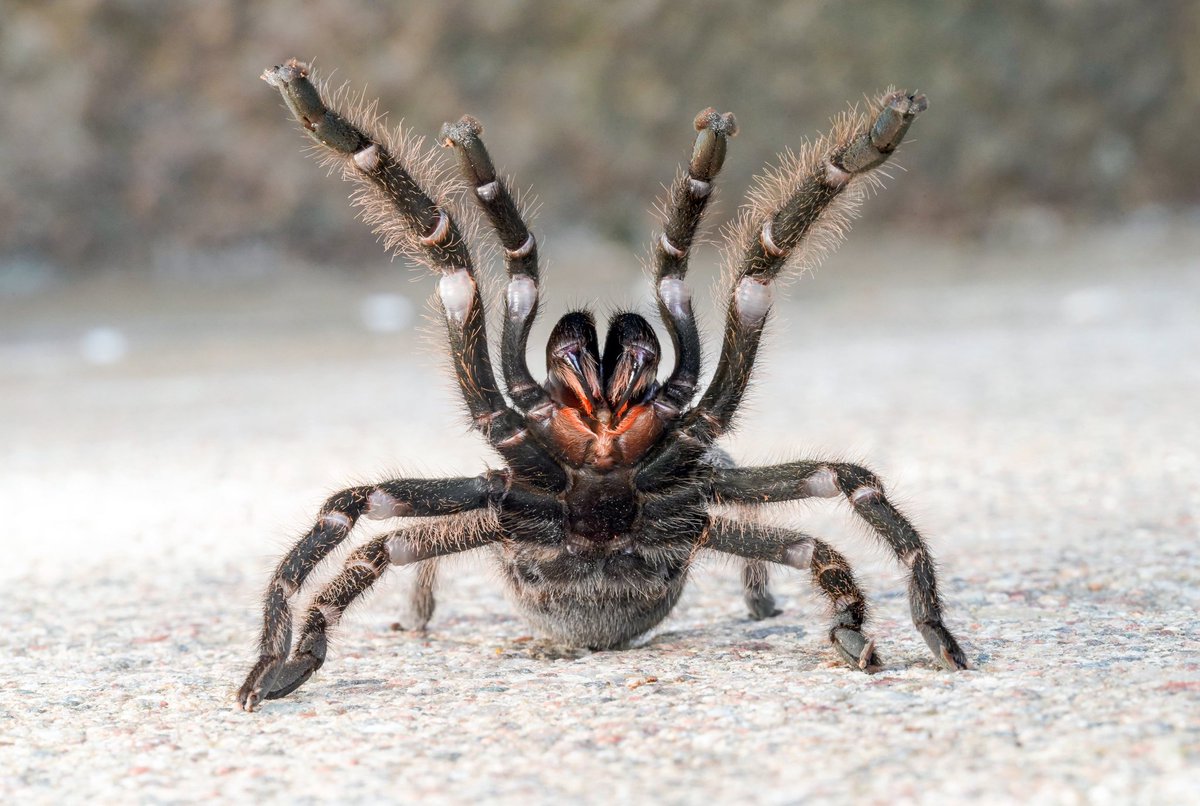
A pretty, straight horned baboon spider found in Zimbabwe. Ceratogyrus marshalli are common in the northern parts of Zimbabwe and crossing into Mozambique.
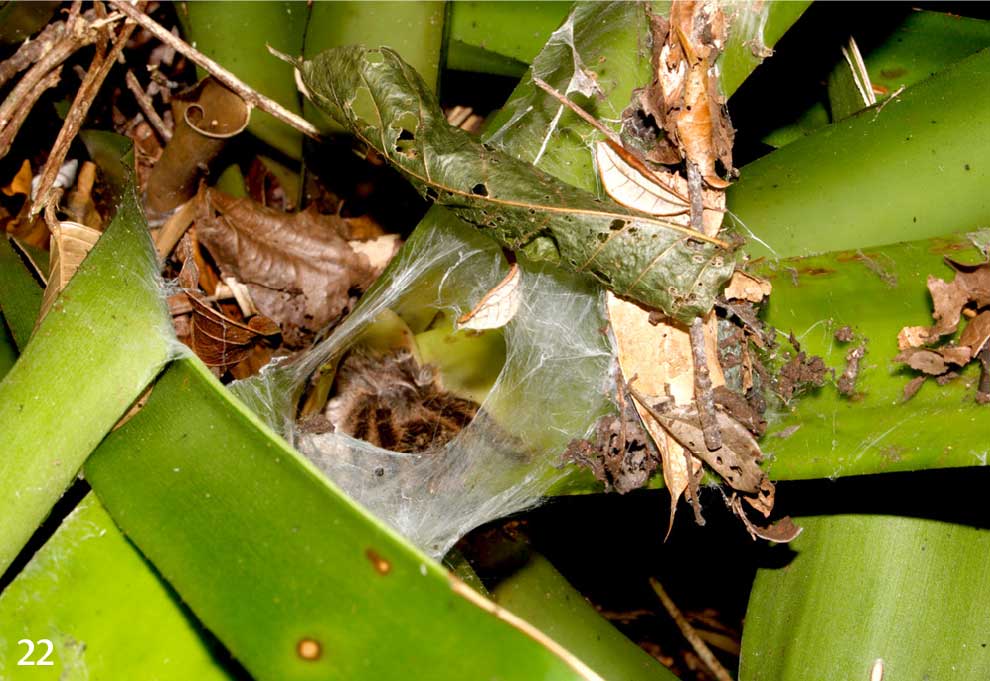
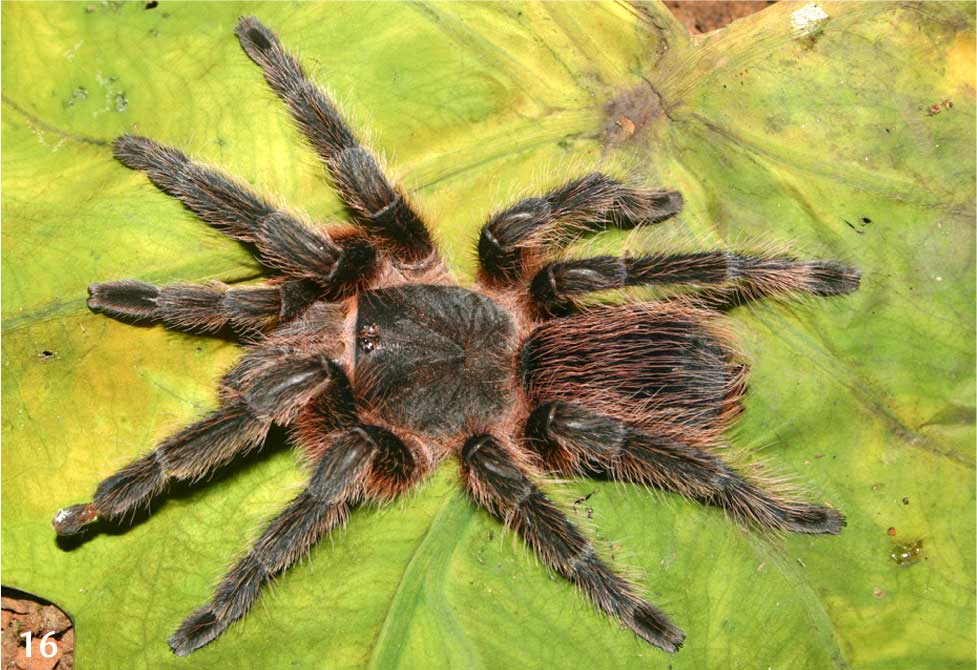
🕷️ Exciting discovery from Brazil! 🇧🇷 @rogeriobertani has identified two new tarantula species along the Atlantic coast. Distinguished by their unique physical features, these spiders also showcase an intriguing preference for bromeliads as habitats. They mark the first known tarantulas native to Brazil's coastal restingas. 🌊🕸️ #TarantulaResearch #BrazilBiodiversity
Abstract : Brazil is the country with the most diverse tarantula (Theraphosidae) fauna, having 215 described species. Vitalius Lucas, Silva Júnior & Bertani, 1993 is one of the most diverse and common genera in Southern, Southeastern and Central-West regions of Brazil with ten described species. Individuals of Vitalius species are large and widespread in areas of the Brazilian Atlantic Forest. A single species is known to occur in areas of Cerrado vegetation. Herein, two new species are described from areas of restinga, coastal areas typically with low vegetation and sandy soil, in the coast of the states of Rio de Janeiro (Vitalius restinga sp. nov.), Bahia and Sergipe (Vitalius sapiranga sp. nov.). Males and females of these two new species have a much longer than wide sternum. Males have a short apical keel in the male palpal bulb. The two species can be distinguished by embolus width, slender in V. restinga sp. nov. and thicker in V. sapiranga sp. nov. Females can be distinguished by the spermathecae shape, slender in V. restinga sp. nov. and broader in V. sapiranga sp. nov. These are the first known theraphosids endemic to Brazilian Atlantic Coast restingas. Biological data indicate V. sapiranga sp. nov. and maybe V. restinga sp. nov. commonly use bromeliads as retreats. It is herein hypothesized they are sister species occupying similar habitats in Brazilian coast, but separated by ca. 1,000 kilometers.
Paper : https://t.co/ycIOUIRLmd
Tarantupedia : https://t.co/QKF27Qko3I
Images of Vitalius sapiranga by @rogeriobertani
Abstract :
The enchanting phenomenon of blue coloration in animals arises from the fact that blue is one of the rarest colors found in nature, and it is a structural color that is produced by the arrangement of biological photonic nanostructures, rather than pigments. This unique coloration has evolved independently in many different species, adding to the fascination and diversity of coloration patterns in the animal kingdom. This study describes a new species of Chilobrachys Karsch, 1892 from southern Thailand that exhibits a blue-violet hue resembling the color of electrical sparks. Photographic illustrations, a morphological description, and the natural habitat of the new species are given. The diagnosis, palpal-bulb structures, spermathecae, and stridulatory organ morphology of related species are discussed.
💙✨ New species alert! Scientists have discovered a new species in Southern Thailand that literally SPARKS joy with its electric blue-violet hue. 🌈 It's not just a pigment; this blue comes from super special nanostructures. It's like Mother Nature wielding her paintbrush with the rarest color in her palette! 🎨🖌️ #NatureIsAmazing #BlueHueDiscovery
Paper: https://t.co/37ki5hTdZU
Tarantupedia : https://t.co/p0Hg1rS1qA
For this #Tarantula Appreciation Day, let's welcome the Persian Gold Tarantula (Chaetopelma persianum), our most recently described #newspecies in @ZooKeys_Journal!
Guest blog post: https://t.co/YSW4sRQuol
Article: https://t.co/X6soKRe16r
After two fieldtrips in Queensland, I have hundreds of photos of beautiful new wishbone spider species, so I thought I'd share another! This is a species from northern Queensland that we nicknamed 'coffee' for the gorgeous colour...
🌎🕷️ Tarantula diversity around the world is truly amazing! Check out the top 40 list of countries with the highest number of described species:
1 - Brazil 🇧🇷 (196)
2 - Mexico 🇲🇽 (99)
3 - India 🇮🇳 (60)
4 - Peru 🇵🇪 (56)
5 - Venezuela 🇻🇪 (46)