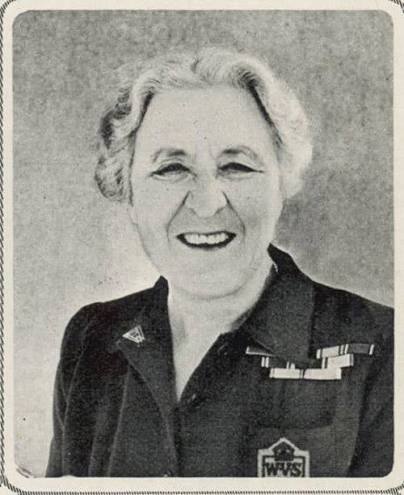
Woman of the Day Karen Harrison, born OTD in 1960 in Glasgow, the UK’s first female train driver and the first woman to preside over an ASLEF conference. She endured ten years of sustained verbal and physical harassment from management and staff but refused to give up.
In 1977, 17 year old Karen applied to British Rail to become a Secondman, the first step on the way to becoming a train driver. In those days, a Secondman assisted the driver of the train by operating the heating systems, shunting the train when required and generally assisting the driver. It was a sort of apprenticeship. They could learn by observation before sitting the drivers’ tests and exam.
She proceeded to the interview stage but only because she’d applied as K. Harrison and British Rail thought she was a lad. When it realised its mistake, it tried to shunt her into the typing pool but she stood her ground. No, she said: train driver.
The law was on her side. After all, this was 1977; the Sex Discrimination Act 1975 removed the barriers to women’s employment if they were otherwise suitable for the job.
Then again, the law is also on the side of women and men who hold gender critical beliefs. It doesn’t stop them from being harassed, investigated for spurious reasons (“malicious communications”, anybody?) and even hounded out of their jobs, does it? The process is the punishment. But I digress…
Karen started work at Old Oak Common, a traction maintenance depot west of Paddington, formerly used for storing and servicing locomotives. The unrelenting wave of misogyny started immediately.
"Ten years of hell, ten years of heaven. It's a bit tough when you're only a teenager and you're hit by this gigantic tidal wave of hate. To a lot of the men, I was the proverbial turd in the swimming pool. Every day I walked into the mess room I'd be s***ting myself, but strutting about pretending not to be. I couldn't let them create no-go areas for me; that would've established a precedent and we couldn't have that, could we? It would've been the beginning of the end."
There was next-to-no support from colleagues or management. Almost to a man, they didn’t want her there and they used every opportunity to ensure she knew it.
“It was open warfare. People wouldn’t work with me, people put notes up about me, my locker was defaced. Graphic pornography went up in the mess rooms.”
By people, Karen meant men of course. All of her harassers were big brave men, including some who probably prided themselves as respectable family men with wives and daughters. When I say “almost to a man”, there was an honourable exception however: the old-style Communists at the depot. “It was like being raised by wolves. They did a grand job, bless them."
Ultimately, don’t mess with a Glaswegian. Karen overcame every single manmade obstacle thrown in her path and qualified as a train driver in 1979. She credited her resilience to her Scottish genes, “rich in stubbornness”.
After her ten years of hell, Karen transferred to Marylebone and it must have been like emerging from the deep, dark forest into the light. A member of ASLEF, she earned a solid reputation with her fellow trade unionists, campaigned for improved conditions for women in the rail industry, and in 1995 was elected as lay member to preside over an ASLEF conference.
A bout of meningitis put paid to Karen’s career as a train driver but she secured employment as a full-time officer for UNISON and represented members at employment tribunals (that was in the good old days of course when unions actually knew was a woman was). She never lost a case and her experience prompted her to study law at Oxford as a mature student.
“It was hard, f****** hard, but it's easier than driving a trains for a living. It's hard to get too stressed about exams when you've experienced things like brake failure approaching a red signal, especially when you can see another train crossing the junction in front of you. I still miss the camaraderie of my mates in ASLEF. I miss them terribly. The folk at my college are the closest I've got to that old espirit de corps and they put up with an old bag like me with great stoicism."
Karen was due to graduate in May 2011 — her plan was to work as a barrister specialising in labour law and human rights — but she died a matter of weeks before her 50th birthday.
Today, just 6.5% of train drivers are women but there is a touching tribute to Karen at Euston Station: a giant mural encouraging more women to apply.
Meanwhile, her old union UNISON, whose membership is 70% female, continues to insist that blokes in dresses are women too, and its leadership has described gender critical views as misinformation, aligned with far-right tactics to restrict single-sex spaces to just women.
I think I can guess what Karen Harrison would have to say about that, but those women (and men) who are trying to restore sanity to their union from within might be heartened by her words.
“I never wanted to be pushed out. I knew if I’d left the railway, I’d have let these people win and what was happening was wrong and it wasn’t fair.”
There is no Woman of the Day today but if there was, artist and militant suffragette Patricia Woodlock, born in 1873 in Liverpool, would be a contender. In 1908, she served the longest prison sentence of any suffragette for her activities: three months in solitary confinement. That fills me with horror and I’ll tell you why.
In 1903, Patricia helped to found the Liverpool branch of the WSPU. She set out her reasons in an article written for Votes For Women and might well strike a chord with you today:
“A member of Parliament recently spoke of members of the WSPU as being possessed by fanaticism, and it occurred to me that politicians stood in need of a new dictionary; so many words having a different meaning as applied to women or to men. This word fanaticism simply meant enthusiasm." Does that sound familiar?
In 1905, she and other women from Lancashire tried to enter the House of Commons. She was imprisoned at HMP Holloway for a fortnight which meant spending Christmas in prison. It didn’t stop her.
Patricia’s next spell in prison was in March 1907 when she was arrested in Parliament Square along with 61 other women after taking part in the first ever Women’s Parliament rally and march from Caxton Hall to protest against the omission of women’s suffrage from the King’s Speech. Fifty-three women chose prison over a fine. At trial, Patricia said, “It is an honour for me to go to prison on behalf of my sisters.” Did that stop her? No.
In July 1908, she and Mancunian suffragette Mabel Capper tried to make a speech at the Royal Exchange in Manchester, a male preserve, but they were ejected. They had more success the next day with their demonstration in Heaton Park, Manchester, one that the pro-suffrage Manchester Evening News described as "decorous", "informative" and "logical". About 50,000 people attended, mainly because WSPU members had been busy leafleting the public in advance. Chalking the pavements with pro-suffrage messages helped too.
In September 1909, she took part in a protest during the visit of Prime Minister HH Asquith to Birmingham who was holding a male budget meeting at Bingley Hall. This time, her conduct crossed the line from civil disobedience to lawbreaking. She and others used axes to rip up slates and tiles, and hurled them at the hall roof, police, and the area around Asquith’s car, aiming to avoid injury while disrupting the event. She was sentenced to one month and was held at Winson Green Prison where she. went on hunger strike and was forcefed. Unlike the Governor of Holloway who had discontinued the brutal practice of forcefeeding, the Governor of Winson Green had no such scruples.
However, it was Patricia’s earlier arrest in March of that year that led to the three month sentence after a deputation of about 30 women marched from Caxton Hall to Parliament to present their case. Police immediately began “the usual pushing and hustling.” After roughly an hour of struggle, eleven women were arrested that day and nine more the next day.
Nineteen were sentenced to one month. Patricia was singled out as a persistent offender and sent to Holloway where she was placed in solitary confinement. For the whole THREE months.
Let me tell you what happens to women held in solitary for long periods. They lose all sense of time. They suffer sensory deprivation which the body tries to counteract with hallucinations. They are vulnerable to anxiety, depression and paranoia. It is a harsh punishment.
Emmeline Pethick-Lawrence visited her. Patricia’s father sent her a letter of support. MPs protested in the House of Commons. The Home Secretary brushed off their concerns, saying: “I see no reason for interference on my part."
I do not know whether she was placed on Restricted Diet (16 ounces of bread and one pint of water per day) but on her release, a “pale and thin” Patricia was greeted at the prison gates by Emmeline Pethick-Lawrence, a marching band and several hundred supporters.
“It is the object of the Government in sending women to prison in this so-called century of progress…to stop women agitating, but they do not know women…The more they send us to prison, the more determined we are when we come out.”
In all, Patricia was imprisoned seven times in three years. Her last sentence was imposed following Black Friday on 18 November 1910 when the other Emmeline, Mrs Pankhurst, led 300 women from Caxton Hall to the House of Commons to protest and the Metropolitan Police disgraced itself. The women were attacked repeatedly, beaten with fists and feet, even indecently assaulted. The Met Commissioner dismissed the many eyewitness accounts of the women and blamed members of the public for the assaults.
Patricia died in 1961, aged 87.
“When women are determined to have their rights, we will get them. We are not asking for favours because we are women. All we want is equality."
On Remembrance Day, a day when we honour the fallen who gave their lives for our freedom, the Woman of the Day can only be “The Poppy Lady from France”, teacher and humanitarian Anna Guérin (1878-1961) from Ardeche.
She campaigned for all WW1 Allied Countries to use poppies made by French widows and orphans as a symbol of remembrance and to raise money for the families of the fallen and those who had survived.
In 1911, Anna was living with her family in England and delivering lectures on behalf of the Alliance Française, an international organisation that promotes French culture and language. Soon after Britain declared war on Germany on 4 August 1914, she left Liverpool on the Lusitania bound for New York. While delivering lectures to American audiences on behalf of the Alliance Française, she quietly raised funds at the end of each lecture for those made destitute by war, sending all donations directly to the American Red Cross.
Once the USA entered the war, Anna was free to raise funds openly. She returned to France each summer throughout the war and was halfway across the Atlantic at the 11th hour on the 11th day of the 11th month of 1918: Armistice Day.
In 1915, Canadian surgeon Lt Colonel John McCrae had famously written “We shall not sleep, though poppies grow, in Flanders fields”, which inspired Moina Michael of Georgia to persuade the American Legion Auxiliary to adopt the poppy as their symbol in 1921 but Anna had already started promoting the poppy as the symbol of Remembrance two years before after the French government formed "La Ligule des enfants de France et d'Amerique" with the poppy as its emblem and asked her to travel to the USA to form the American branch.
From 1919, Anna raised funds for the war orphans of France by holding Poppy Days in every American state she visited, distributing paper poppies in exchange for donations. Women and girls wearing sashes bearing the words "In Flanders Fields the poppies grow” sold them. It was then that Anna devised a plan for holding an Inter-Allied Poppy Day, a day when all WW1 Allied countries could use poppies as a symbol of remembrance and to raise humanitarian funds.
The USA decided to go its own way and follow the American model so Anna turned her attention to the Commonwealth, starting with Canada and Newfoundland (not part of Canada then). Both signed up to her idea so she travelled to the UK, arriving in Liverpool in August 1921.
Anna brought samples of her French-made poppies to the British Legion and offered to fund the manufacture of a million poppies in France, an offer the British Legion accepted. She also persuaded the Legion of the value of recruiting women as volunteers to form a distribution and collection network.
Australia and New Zealand followed suit and the Inter-Allied Poppy Day became established.
When Earl Haig announced in October 1921 that 11 November would be known as Remembrance Day or Poppy Day, the British Legion contributed a further eight million poppies made in Britain to Anna’s one million French poppies.
All nine million poppies sold.
Today, over 45 million poppies are distributed by the British Legion in the UK and many more are created at home by volunteers for civic remembrance displays. #LestWeForget
On the eve of Remembrance Day, the Woman of the Day is Kate ter Horst (1906-1992), the Angel of Arnhem, who provided refuge to over 250 wounded British paratroopers in her home for eight days non-stop during the Battle of Arnhem in 1944, finding them water while her home was under fire and comforting them as they lay dying.
Kate, her husband and five children lived in the rectory house next to the Old Church in Oosterbeek just outside Arnhem. She was overjoyed when she saw British paratroopers landing near her home on 17 September 1944.
“Crazy with joy, we walk through the garden and climb on the roof so we can see more and understand what is happening. We can hardly believe it. Will it really be true? Is this the long awaited end of our grief that now falls from the sky? Does this now mean freedom?”
German resistance was far greater than expected and the paratroopers were driven back to the Old Church. The casualty rate was high. A captain asked Kate if they could use the rectory house as a first aid post for the wounded soldiers. Her husband was out with the British in the forests, acting as a guide, and Kate had her children to care for, but she agreed. More than 250 soldiers were brought to her home.
“Everywhere, the injured - the dining room, the study and garden room, the transverse corridor, even under the stairs and in the toilet they are. There is no corner left. Oh, if only I could be a hostess. If only I could give them a hospitable bed and at least fresh water…At the same time, a hurricane of explosions burst out over us. Shake the walls. I hear crackling, the house across the street is ablaze. Phosphorus, flashes through my head. The injured lie back, without a complaint, helpless. Now leave them alone? But I have to go downstairs: five children are longing for me right now, trusting that I will be unharmed to protect them.”
When the water supply was disrupted, Kate used the boiler and the toilet cistern to give the men precious drops of water. Needs must. She kept an English Bible in the house and read Psalm 91 to the soldiers who were dying. Together, they said the Lord's Prayer. A temporary cemetery was set up in the garden, and 57 soldiers were buried during the fighting.
General Frank King later wrote: “I noticed that an entire room was reviving when she came in. A seriously wounded soldier summarised it before he died. After Kate ter Horst talked to him for a moment, he said, ‘She is fantastic. She’s just like my mum.’”
After the Battle of Arnhem, the Ter Horsts were evacuated along with the other residents of Oosterbeek, but they returned after the liberation. Their eldest son, Pieter, was the last victim of the Battle of Arnhem. He was killed in November 1947 when he stepped on an anti-tank mine on the floodplains behind their house.
In 1980, Kate and her husband were appointed Honorary Members of the Most Excellent Order of the British Empire for their valour and heroism.
Brave, brave woman.
Woman of the Day Alice Coachman, born OTD in 1923 in Georgia, the first black woman from any country ever to win a gold medal at the Olympics. She jumped 5ft 6 and 1/8 inches at the 1948 London Olympics, setting a new Olympic record, and King George VI placed the medal around her neck.
There were no training facilities for Alice when she was a girl, no organised sports open to her. She faced the twin barriers of exclusion of the basis of her sex and ethnicity. If girls then were really intent on taking part in sports, they were only meant to take part in “ladylike” activities like swimming and tennis, not athletics. Her own father whipped her for jumping and running. She was supposed to sit on the front porch and look “dainty.”
Natural talent cannot be denied though. Alice enjoyed playing baseball and softball with the boys and she could run and jump better than anyone else. It was her aunt Carrie and her fifth-grade teacher who encouraged her to carry on running and she resorted to running barefoot on dusty roads near her home to build up her stamina. She used sticks and rope to practice the high jump.
“To be a champion, you got to have determination, you've got to have guts; you have to train and let nothing come between you and what you want, that goal you want to reach.”
By the time that Alice was competing for her high school track team in Albany, she was already attracting attention with the result that a coach at the Tuskegee Institute in Alabama was able to persuade her parents to let her transfer there to complete high school.
“Track and field was my key to getting a degree and meeting great people and opening a lot of doors in high school and college.”
She won four national championships for sprinting and high jumping at college level and was one of the best in the country, winning titles in relay and high jump. Trying out for the 1948 Olympics was a gamble — Alice had a back injury — but she still managed to demolish the existing US high jump record.
In August 1948, Alice cleared the 5 feet 6 1/8-inch bar first time at Wembley Stadium and took her place in history as the first black woman to win gold AND the only American woman to take gold at the 1948 Olympics. The crowd cheered when she stood on the podium and King George VI awarded that medal.
When she returned to the US after the Games, Alice was met by former First Lady Eleanor Roosevelt and President Harry Truman and she was honoured with a 175-mile motorcade and parade from Atlanta to Albany…where she was promptly brought down to earth with a bump.
Georgia was segregated. Atlanta held civic ceremony in her honour but it was segregated. The white mayor of Albany sat on the stage with Alice but refused to shake her hand and she was made to leave by a side door.
It beggars belief that people were ever treated in this way but it is a matter of record. It beggars belief that women like Alice ever had to face twin barriers just to be accorded the same human rights as others but it is a matter of record. This is why Kimberlé Crenshaw coined the term "intersectionality" in 1989; for women like Alice. She did NOT mean blokes in dresses.
Alice died in 2014 aged 90 but in the years since her historic win, American African women have made up a majority of the US women's Olympic track and field team and brought honour and glory to their country.
“I think I opened the gate for all of them.”
Woman of the Day and one of the most celebrated war correspondents of her day Martha Gellhorn, born in OTD in 1908 in St Louis, was nearly a Not-The-WOTD. She persuaded public sector workers to break windows to make a point — well, I am a taxpayer after all — but it was a just cause AND she was the only woman to land at Normandy on D-Day.
Martha’s suffragist mother took her eight year old daughter to a rally in St Louis in 1916 where 7,000 women in yellow sashes lined the delegates’ route to the Democratic Party’s National Convention. The number of states in favour of votes for women were represented by those wearing white and the rest by those in grey and black. Martha represented the future woman voter. Guess how many were dressed in white? Seven.
She went to France in 1930 to work at the United Press Bureau in Paris as a foreign correspondent but was fired after reporting sexual harassment. I’d say that thankfully after nearly a century later, this kind of thing doesn’t happen any more but you’d know I was being sarky.
I could tell you how in 1936 in Key West, Martha met a heavy-drinking womanising author and journalist with a couple of divorces behind him and they travelled to Barcelona to report on the Spanish Civil War, but even though she married him in 1940, his only value is that during this period, she found her niche: war correspondent.
“I followed the war wherever I could reach it.”
I could also tell you how Martha reported on the rise of the Nazis and how, lacking the official press credentials needed to witness the Normandy landings, she impersonated a stretcher bearer, hid in a hospital ship bathroom till it reached Omaha Beach on 6 June 1944, and waded ashore to collect casualties and assist medical teams.
“Everyone was violently busy on that crowded, dangerous shore…We walked with the utmost care between the narrowly placed white tape lines that marked the mine-cleared path, and headed for a tent marked with a red cross…Everyone agreed that the beach was a stinker, and that it would be a great pleasure to get the hell out of here sometime.”
But this is about Martha becoming a Federal Emergency Relief Administration investigator in 1934, travelling around the USA to file eyewitness reports about the grim conditions in which people were living.
She found a corrupt contractor exploiting relief workers (jobless small farmers and ranchers) on a FERA project in Coeur d’Alene, Idaho. He had them shovelling dirt pointlessly from one place to another, then collected the shovels, threw them in the lake, and pocketed a commission on an order for replacements. The workers were left idle and unpaid and had to submit to a humiliating means test for direct relief.
It wasn’t the first such instance. Martha was ready to resign in protest but what she didn’t know was that her boss at FERA had been sending her eyewitness reports painstakingly documenting abuses to Eleanor Roosevelt. He urged her to go and speak to the First Lady. This deeply impressive woman invited her to dinner at the White House, told her husband to listen up, and persuaded Martha to keep going.
I confess that every time I learn something new about Eleanor Roosevelt and the many, many ways she found to support other women, it just reinforces my deep respect for her.
Martha went back to Idaho, bought the men a beer and persuaded a few to break the windows of the local FERA office at night so that Washington would investigate their grievances. The FBI saw the damage as a possible communist uprising and questioned the men, who admitted that she had suggested it. The contractor was arrested for fraud, the men got their tools and work back, but Martha was branded a “dangerous Communist”, recalled to Washington and fired from FERA. She shrugged it off as “an honourable discharge”.
When Eleanor Roosevelt learned that Martha had been fired and the FBI were so hostile towards her, she invited her to come and live at the White House till she found her feet. Martha helped Eleanor with her correspondence and the “My Day” column.
Martha was one of the first journalists to report from Dachau when it was liberated by American troops in April 1945 and she covered the liberation of Paris, but that was the year her husband tried to block her career. He wanted a stay-at-home wife. She didn’t want to stay at home. After he refused to help her secure a press pass to return to the USA from Germany by plane in 1945, she was left with no choice but to board a ship laden with explosives. It was the last straw.
Ask not for whom the bell tolls. It tolled for him. She divorced him that year.
After WW2, she covered every major theatre of war for over fifty years: Vietnam, the Arab/Israeli conflict, the American invasion of Panama. The only reason she didn’t report on the Balkan conflict in the 1980s is because she was nearly blind by then. She died in London at the age of 89.
To the end, Martha refused to be remembered merely as some bloke’s wife.
“I was a writer before I met him, and I have been a writer for 45 years since. Why should I be a footnote to someone else’s life?”
Some of the best Remembrance postbox toppers from around the country.
They appear quietly every November, knitted and crocheted over weeks and set out on the postbox at the end of the road.
A Tommy in his tin helmet, standing over a ring of poppies. A pair of boots laid down between two flags. A nurse wheeling a stretcher under an arch of poppies. A soldier's horse, head bowed, above a postbox buried in red. Army, Navy, Air Force and the nurses who went with them, all remembered side by side.
The colours mean different things. Red for the lives lost, purple for the animals that served and died, white for peace.
Royal Mail has said it appreciates the creativity, with one request: leave room for the post.😀
Woman of the Day Anne Vaux (1562-1637) of Leicester, cousin of Robert Catesby and the only woman arrested in connection with the Gunpowder Plot foiled OTD in 1605. She played no direct part but she provided safehouses for priests, saving five of them on one occasion, and was arrested on the basis of her barely legible handwriting.
Here comes the history bit. On this day in 1605, Guy Fawkes of York was discovered guarding 36 barrels of gunpowder, camouflaged with coal, in the cellar under Parliament. They would have reduced the House of Lords to rubble and signalled the start of a revolt in the Midlands.
English Catholics had hoped for greater religious tolerance under the reign of James I. Memories of the beheadings and burnings at the stake of Catholics during Elizabeth’s reign, following Mary’s persecution of Protestants during her monarchy, had split the nation. They were doomed to disappointment. James I was relentless in his persecution of Catholics, equating them with witches.
Authorities learned of the plot through an anonymous letter sent to the Catholic Lord Monteagle warning him to avoid Parliament on 5 November 1605. Monteagle handed it to Robert Cecil, Lord Privy Seal and Elizabeth’s spymaster.
Two searches were carried out of the vaults below the Parliament chamber. The first one noted large piles of wood and coal belonging to Thomas Percy and the second revealed Guy Fawkes with matches and fuses. He was arrested.
His co-conspirators including Robert Catesby fled from London on hearing of his arrest but he was put on the rack and tortured until he gave them up. Catesby was shot dead. Eight others, including Guy Fawkes, were hung, drawn and quartered. The principal Jesuit of England, Father Garnet, was convicted of treason and sentenced to death although it was doubtful how much he knew, if anything. In any case, he was bound by the absolute confidentiality of the confessional. These days, a priest may speak indirectly when it is vital to warn someone - for example, "I've heard the confession of a murderer” - but that is all.
Anne was suspected of writing that anonymous letter but in fact, she tried to stop the Plot. After a visit to a holy well in North Wales where she had an uneasy conversation with the wife of one of the conspirators, she told Father Garnet she feared that, “Wild heads have something in hand”and “For God’s sake, talk to Robin Catesby and to hinder anything that possibly he might.” However, she told him in the confessional box.
Father Garnet was hanged, drawn and quartered (a particularly brutal and long-drawn-out death) in January 1607 solely for having advanced knowledge of the Plot but refusing to to violate the Seal of the Confessional. First, though, he was held in the Tower of London from 27 January 1606 until he was executed in May 1606 and that’s how the connection to Anne Vaux became apparent. His letters were being monitored.
Anne had written hidden messages in orange juice to him. They were difficult to read — Father Garnet found them illegible — but there were "perceived similarities" between her handwriting and that anonymous letter and it was enough to alert the authorities. She’d already come to their attention for other reasons.
Anne was unmarried by choice — an outrage to social convention — and a wealthy Catholic recusant to boot. She and her sister provided safe houses for Catholic priests by renting properties elsewhere. She also gave sanctuary to Father Garnet in her own home.
She was arrested at home in March 1606. Feigning the indignation of an affronted lady — how dare you be so rude as to raid my home before any of my household are out of bed! — she made such a scene that it gave the five Catholic priests already hiding in the house time to hide.
Taken to the Tower of London, Anne laughed out loud at an accusation of impropriety with Father Garnet and retorted, “You come to me with this child's play and impertinence, a sign that you have nothing of importance with which to charge me."
She languished in the Tower until August 1606 and maintained that she was innocent of treason but admitted to receiving the conspirators at her home. Well, she was related to some of them. What else might a hospitable lady have done?
Anne died in or after 1637, aged 75. Oh, and she carried on aiding Catholic priests until her death. Well, she was a recusant after all, someone who refuses to submit to an authority or to comply with an oppressive and disproportionate regime on grounds of belief. That’d be a few of us these days.
To this day the Yeoman of the Guard, dressed in their Elizabethan uniforms, still carry out a ceremonial search under the Houses of Parliament before the State Opening.
There is no Woman of the Day but if there was, militant suffragette Jessie Kenney (1887-1985) of Oldham, the first woman to qualify as a ship's Radio Officer, would be a contender. She was the architect of several eye-catching publicity stunts designed to bring the campaign for women’s suffrage right to the Prime Minister’s doorstep.
The younger sister of Annie Kenney and born organiser, she was regarded by Christabel Pankhurst of the Women’s Social and Political Union as indispensable.
Jessie began work in a cotton mill when she was 13 but managed to study at evening classes at the same time learning new skills such as typing. They stood her in good stead.
Soon after their mother died in 1905, Jessie and Annie attended a meeting organised by the Independent Labour Party at which Christabel and Teresa Billington-Greig spoke and were inspired to join the WSPU. Annie made a name for herself in October of that year when she and Christabel confronted Foreign Secretary Sir Edward Grey at the Free Trade Hall and were imprisoned for their actions but Jessie was more cautious and took her time.
In 1906, Jessie was asked by her sister to become secretary to the WSPU’s new and very effective treasurer, Emmeline Pethick-Lawrence. She got stuck in and quickly established herself, arranging meetings and stunts such as the famous Human Letter incident. She paid sixpence postage for Daisy Solomon and Elspeth McClelland to be delivered as Human Letters to No. 10 Downing Street, where delivery was refused — “You must be returned. You are dead letters” — but she had arranged for the Daily Mirror along to capture the story. It was the lead story on the front page, with photo.
Jessie’s skills were so valuable — she organised interruptions of cabinet ministers' meetings as deftly as she did the pageants and processions that raised the WSPU’s profile — that Annie wrote, "Christabel insisted on Jessie's room being next to hers, as she looked upon her as absolutely indispensable for the carrying out of her London plans.”
Too valuable to be in prison, but on 30 June 1908, she was arrested during a demonstration in Parliament Square and sent to HMP Holloway for a month.
"At first, they were very strict; the prisoners were in their cells from 11.30 am to 8.30 next morning, with the exception of fetching water, etc. The second week, however, things were different. The wardresses were kinder, and there were many visits from doctors, magistrates, chief matrons, and others. Then two exercise times were instituted, and associated work."
The following year, Jessie and a team of suffragettes targeted the Prime Minister HH Asquith, with the first incident taking place in August 1909. They broke the windows of Cabinet meeting room and lobbed objects through.
In September, they disguised themselves and sailed a boat along the Military Canal mooring it next to the grounds of Lympne Castle in Kent where Asquith was staying with Home Secretary Herbert Gladstone. They accosted him outside church on Sunday morning, forcing open the church doors and knocking his hat off in the melee.
“It was a real "Deeds not words" affair. Not a word was spoken on either side.”
However, the more serious incident took place the next day. Jessie and the other women confronted the Prime Minister and Home Secretary on the golf course.
“He then said to Miss Howey, 'I shall have you locked up,' but she promptly returned, 'I don't care what you do, Mr. Asquith!' Vera Wentworth and I then followed, and his hat was thrown off again in the scrimmage. When we arrived on the scene, Mr Asquith was calling for help and trying to push Miss Howey out of the porch. At the call of Mr Asquith, Mr Gladstone came on the scene, and a real fight ensued. Mr Gladstone and Mr Asquith tried to push us down the steps, but we pushed back as hard as they pushed forward. Mr Gladstone fought like a prize fighter and struck out left and right.” He gave her a nasty blow in the chest.
“I must say he is a better fighter than he is a politician!”
Jessie was imprisoned again at Holloway. It didn’t quite stop her. On 10 December 1909, she tried to bluff her way in Mr Asquith's meeting disguised as a telegraph boy but by then, imprisonment had broken her health. She developed a "lung condition" and was sent to Christabel in Paris to recuperate.
When the tactics of the WSPU turned to arson and bombings, Jessie made regular journeys to England, using a pseudonym, to ensure the WSPU newspaper The Suffragette was printed and distributed. The police raided the office on 30 April 1913 and arrested several women, including her sister Annie, later imprisoned for 18 months. Part of the incriminating evidence was a letter addressed to Jessie by the WSPU’s bomb maker. She’d concealed it in a book but the police discovered it. She never forgave herself for her sister’s incarceration.
Support for the WSPU went into decline when WW1 broke out. Jessie worked for the American Red Cross in Paris and earned a First Class certificate in wireless operating, making her the first woman to qualify as a ship's Radio Officer but she was barred from applying for the post. No women allowed of course.
Jessie worked as a steward on cruise liners instead and later became a school administrator in London, keeping her WSPU past secret so that it wouldn’t be used as an obstacle to her career (rather like gender critical women in some professions today). She died in 1985, aged about 97.
"I had to be shielded as Christabel wanted me to be kept as a dark horse".
There is no Woman of the Day but if there was, militant suffragette Catherine Corbett (1869-1950) of Surrey would be a contender. Her speciality was “pestering politicians”, and better still, ensuring their dismissive replies were picked up by the press. It was an Edwardian precursor to Let Them Speak.
Catherine was born in in India; her father was in the Madras Civil Service. The campaign for women’s enfranchisement was very much a family affair. Her sister and nieces were suffragettes and she married a man whose barrister brother was a member of the Men's League For Women's Suffrage.
At first, she was drawn to the moderate National Union of Women’s Suffrage Societies but disillusioned with the lack of progressm she joined the more militant Women’s Social and Political Union. By 1908, she was all in, fully committed.
On 28 April 1909, Catherine and Surrey-born suffragette Olivia Fargus* were photographed by the Daily Mirror walking along Downing Street on either side of Prime Minister HH Asquith with Foreign Secretary Sir Edward Grey looking on, attempting to reason with him on the subject of votes for women. She told a reporter that Asquith was a "little surprised and reserved but he showed no resentment…but he did add: ‘I think you are very silly’.”
On 29 June 1909, Catherine was one of seven leading suffragettes — including the two Emmelines, Emmeline Pankhurst and Emmeline Pethick-Lawrence — chosen to lead a deputation to the House of Commons.
It started as a peaceful protest but became a fractious affair for which “nearly 3,000 police had been drafted from all parts of London with Rochester Row and Cannon Row stations as early as five o'clock in the afternoon...Inspector Scantlebury handed [Mrs Pankhurst] a message from the Premier's private secretary, stating that it was not possible for Mr Asquith to see them, as he had already expressed opinion upon the subject...A long conversation ensued, and then a scrimmage, during which Inspector Jarvis was rather roughly handled. Mrs Pankhurst it is alleged, striking him violently on the face with her hand. Immediately the police closed round the women, who were taken into custody, struggling violently."
On 19 October 1909, Catherine appeared at Dundee Police Court charged with disorderly behaviour and a breach of the peace after she and Scottish suffragette Helen Archdale, accompanied by others, grabbed the attention of passers-by by jumping off a tram, waving ribbons in suffragette colours and marched down Reform Street towards Kinnaird Hall shouting “Follow me. Force the barricades. Votes for women”.
Catherine encouraged the by-now sympathetic and enthusiastic Dundonians to rush the barricades set up to keep people out of a meeting at which Winston Churchill was speaking and from which women were expressly excluded. The Dundonians obliged and three hours of disorder followed. “They would not stop until they got the barricades down, they were glorious."
The protest was quelled after the police used batons and police horses to disperse the crowd and locked up some of the protestors in the basement. Compare and contrast with the kid glove treatment afforded for such a long time to anti-Jewish protesters in London these days.
The Dundee Courier quoted Churchill: they were "a band of silly, neurotic women". Catherine responded by publicly thanking the police for their “kind behaviour” to her and praised the people of Dundee “for the very splendid way in which they stood up for the women, showing that they were entirely in sympathy with them, and not with the Government of Mr Churchill.”
She and the other suffragettes made a lengthy speech in court, were sentenced to ten days’ imprisonment and went on hunger strike, maintaining that they were political prisoners.
“I was removed to a cell in which there was not furniture, but a log fixed on the floor and a shelf fixed into the wall. Afterwards I was taken into a ward and dressed by force in prison clothes. In contrast to Holloway Prison, the baths were spotlessly clean. On my return to my cell I started a hunger strike, and took no water until 10.30 on Friday, when I was suffering a great pain and becoming so ill that I was visited every two hours. I took a little water, which brought me great relief. The nights were terrible, and I could not sleep. Every persuasion was used to make me take food, but I refused always."
Catherine was not force fed — none of the women were on that occasion — but she was released after four days. The Governor of Dundee Gaol had consulted the prison medical officer and decided not to authorise force feeding, partly because “owing to local feeling”, and because he thought it unlikely ‘more than one or two nurses' would assist.
By 1910, Catherine’s support for the WSPU waned when Christabel Pankhurst changed tactics towards arson and other criminal acts. She drew the line at that. In any case, her health was starting to be a concern. She died in 1950 at the age of 80.
*Footnote. Sadly, Olivia Fargus was the last victim of John George Haigh, the Acid Bath Murderer, in 1949. She was 68.
🚨 ENGLISH FOOTBALL'S HISTORIC WETTEST FIXTURE CLASH! 🛁🌊
Sometimes the best stories are hiding in the football fixture list…
Today's matchday scan threw up a rather unusual pairing:
BATH CITY v POOLE TOWN!
A BATH. A POOLE.
You couldn't make it up! 😂
But there's much more to this than a watery coincidence.
This is a big top-of-the-table clash in the Southern League Premier South, with 2nd-placed Poole Town taking on 5th-placed Bath City.
And Bath are a club we're keeping a particularly close eye on.
Statty has already made a rather bold prediction:
BATH CITY WILL BE IN THE PREMIER LEAGUE BY 2050!
With new investment and a new board in place this year, we think there's a serious long-term story developing at Twerton Park.
They're already attracting average crowds of around 1,200, an incredible level of support for a club at this level.
A special mention to new board members @stalbs and @RRivlin, and to both clubs @BathCity_FC and @PooleTownFC.
This is exactly what we love doing at Statty Geezer.... scanning the matchday fixtures across the entire football pyramid, looking for unusual pairings, strange connections and stories that might otherwise go unnoticed.
SPOTTED AN INTERESTING FIXTURE OR A POINTLESS FOOTBALL CONNECTION?
Let us know. We might just find our next rabbit hole!
Use this information wisely. ��
The Woman of the Day is Agnes Mylles of Wiltshire, the first West Country woman to be executed as a witch. She was hanged after the Witchcraft Act became law in England in 1562. Scotland passed its own Act the following year.
Properly titled an ‘Act agaynst Conjuracons Inchantments and Witchecraftes’, it was England’s second witchcraft statute and formally criminalised a fact-defying nebulous belief that required no definition and no measurable evidence beyond subjective accusation or outrage.
The Act directed that anyone believed to "use, practise, or exercise any Witchcraft, Enchantment, Charm, or Sorcery, whereby any person shall happen to be killed or destroyed", was guilty of a felony without benefit of clergy, and was to be put to death. This was during the reign of Elizabeth I when her court was gripped by fear of Catholic plots to topple the Queen. The Act was a consequence. It was fundamental to all of the English witch-trials that followed during that period.
Agnes was accused of using witchcraft to murder the infant son of Wiltshire MP Sir Edward Bayntun and his wife, also named Agnes. How the child died is unknown but infant mortality in those days was high and about 30% died before their first birthday. It left Sir Edward without a direct heir, meaning his considerable estate would in time pass to his half brother and wife Dorothy.
Agnes was accused of being commissioned jointly by Bayntun’s aunt-by-marriage Dorothy and the Devil himself in order to clear the way for Dorothy’s husband to inherit the Bayntun family fortune.
Very little is known about Agnes including what she was supposed to have done or why she was allegedly chosen for the job, but I’d say that she was probably fell foul of a number of politically correct expectations. She was a Catholic, she was a widow, and she was poor and elderly. That would be sufficient in those days to portray her as that most dangerous of women, a witch-for-hire.
How did anyone be sure she was responsible? Simple. All that was required was accusation and outrage.
The heartbroken parents approached the Bishop of Salisbury and local magistrates with their suspicion that their infant son’s sudden death could only be explained by witchcraft. It was just a suspicion but by luck or chance, someone mentioned to the visiting Assizes judges that Jane Marsh, a widow in Somerset, was “of such skill and knowledge that she could detect persons who used witchcraft”. (That skill in itself sounds remarkably similar to “witchcraft” to me, but I digress…)
Mistress Marsh was invited to travel to Salisbury and promptly identified Dorothy Bayntun as the instigator and the hapless Agnes Mylles as the perpetrator.
Utterly compelling, don’t you think? It was certainly good enough for the Assizes judges. In April 1564, Agnes was tried, convicted and hanged at Fisherton near Salisbury. Jane Marsh’s reward was to be consigned to prison too while the wealthy Dorothy went free.
Had Dorothy been content to enjoy her wealth, nothing more might have been known about the case but in May 1565, she and the Bishop of Salisbury (yes, him again. He keeps popping up) pressured the bereaved parents into complaining to the Court of Chancery about Jane Marsh’s incarceration. After all, she was only helping out.
The only way Jane could regain her freedom was to retract her accusation, so she did, but it was thirteen months too late for poor Agnes. Just to bring you full circle, a key apologist for the Elizabethan religious settlement and arguably one of the main movers behind the Witchcraft Act was a bloke called John Jewel. Yes, the Bishop of Salisbury.
Witch trials were conducted in England from the 15th century until the 18th century. About five hundred people were executed, about 90% of them women.
All you had to do to avoid attention under this all-compassing Act that visited terrible punishment on innocent people on the subjective word of an accuser was to follow the rules.
Don’t be older or “crone-like” (for which read: showing signs of age or a hard life);
Don’t be poor;
Don’t upset anyone;
And above all, don’t be a woman.
By now, you might well think that I am in any way drawing a parallel with the latest iteration of Conversion Therapy Bill, with its own reliance on a nebulous belief that requires no measurable evidence beyond subjective outrage. That’s purely in your imagination of course. And possibly mine.
If it passes in what used to be regarded as the Mother of Parliaments but now seems to be occupied by a large cohort of one-term ideologues with a “progressive and inclusive” agenda, just remember that to avoid accusation, you need to follow the rules:
Do not hold or express the lawful view that there are only two sexes and that same-sex orientation is not only valid but really does mean same-sex, not “gender” (whatever that is);
Do not be a concerned therapist, social worker, teacher, medical professional or anyone else for whom safeguarding is a duty and a priority;
And above all, don’t be a responsible parent who just wants to reassure their confused and vulnerable child that it’s perfectly OK to accept and love the body they’re in.
Woman of the Day physicist and academic Laura Bassi born OTD 1711 in Bologna, the first woman to have a doctorate in science and the first woman to be a salaried professor in a university. There was a restriction though. Of course there was. She wasn’t allowed to teach male students. At no stage of her stellar career was she treated in the same way as her male peers.
Laura was a child prodigy. From the age of five, she was taught Latin, French and maths by her cousin. Latin was considered an unusual subject for her to learn. Of course it was. It was the key to knowledge as well a career in science so it was clearly wasted on a mere girl, but she subsequently put it to good use by lecturing and publishing in Latin. From the age of thirteen, the professor of medicine at the University of Bologna tutored her in philosophy, metaphysics, logic, and natural philosophy.
On 17 April 1732, 20 year old Laura took part in a public debate at the Palazzo Pubblico (the seat of the local government) with four professors in which she defended no fewer than 49 philosophical theses; providing written answers in Latin to questions posed by the panel and defending them verbally. It was a very unusual kind of exam, far more intensive than the kind experienced by male students. Of course it was.
She impressed them. Less than four weeks later, the University of Bologna awarded her a doctorate in philosophy, making the second woman in the world to earn one after Elena Cornaro Piscopia 54 years before.
On 27 June that year, Laura went through the same intense and very public grilling and was awarded an honorary post at the University of Bologna as a professor in physics. The same year, she became the first woman to be admitted to any scientific establishment when she was elected to the Academy of Sciences of the Institute of Bologna.
Laura’s rapid progress through the world of academia hit a snag when she married in 1738 aged 26. Her husband might have been a university lecturer in science with a degree in medicine in his own right but she was undoubtedly the better scientist and worse, as a married woman, she came in for a great deal of criticism. Of course she did. Women couldn’t possibly expect to marry AND continue to hold their fellowships. It went against every expectation and many in Bologna said so. Laura was only allowed to lecture on special occasions if the event was held in public so that women might conceivably attend. She could not lecture regular classes at the University because that meant her being alone with male students. Of course not, etc etc.
Ironically, marriage meant she could conduct lectures without such restrictions as long as she did it in her own home.
“It is six years since I began giving private physics classes in my house daily, for eight months of the year. I support these myself, paying for all the necessary equipment apart from that which my husband had made when he was lecturing in philosophy. The classes have gathered such momentum that they are now attended by people of considerable education, including foreigners, rather than by youths.”
The Academy of Sciences was reorganised by Pope Benedict XIV in 1745 to create a group of 25 Benedettini (leading scientists) who would be expected to present their research regularly. He was a great admirer of Laura’s ability and she was an obvious choice for the 25th post but to confer such an honour on a woman was highly controversial. His compromise? Laura became a Benedettini but without the same voting privileges as the 24 men. Of course…oh, you know the script.
Somehow, Laura found the time to combine academic studies and caring for her and her husband’s children: at least eight of them (there may have been more) of whom only five survived to adulthood.
She was appointed to the Chair of Experimental Physics at Bologna in 1776 but obviously, it demanded a lengthy debate quite unlike the process applied to male candidates (I feel another “of course” comment coming on…) but it was approved as long as Laura’s husband officially became her assistant. (Add as many “of courses” here as you like).
Laura didn’t have long in the prestigious post though. She died just over a year later in 1778 quite suddenly as the result of “an attack in the chest”. Silver laurels were placed on her head and the Benedettini paid tribute to her at her funeral.
The Woman of the Day is the Anglo-Saxon noblewoman Godgifu of West Mercia, the only woman to remain a landholder in Britain after those robbing Normans swept in and stole everything that wasn’t nailed down (and quite a few things that were).
Of course you’ve heard of her. You’ve heard of the Godiva Procession which was instituted in 1678 by Coventry Fair to commemorate the legendary ride by the Lady.
Taking pity on the people of Coventry suffering grievously under her husband's oppressive taxation, she called his bluff that he would repeal the taxes if she would strip naked and ride through the streets of the town, clothed only in her long hair. She only agreed on the condition that everyone stayed indoors and shut their windows, but a tailor known ever afterwards as Peeping Tom disobeyed and was struck blind. Allegedly.
It was all bunkum. Absolute bunkum.
Lady Godiva’s real name was Godgifu. She married Leofric, Earl of Mercia, but both she and her husband were major philanthropists and among the most munificent of the Anglo-Saxon nobility until the Norman Conquest in 1066 (and those robbing Normans came along, etc).
In Anglo-Saxon times, in laws dated around 1008 AD, women enjoyed full property rights, from peasant to nobility. They could own land, farms, houses. Upon marriage, a husband was legally required to give his wife a Morgengifu (Morning Gift): land, money, or goods, which remained her independent property that she could sell, give away, or manage as she chose. Women wrote their own wills and left property to whomever they chose including children, servants, or religious institutions, and they didn’t need their husband's permission.
All that stopped after 1066. The new feudal system tied land ownership to military service, something women were barred from providing. Women became the chattels (property) of their husbands if they were married, or their fathers if they were not, a legal state known as coverture. Still, I’m sure the Normans thought they were being progressive and inclusive, two words I’ve come to loathe. But I digress.
Godgifu survived the death of her husband and was mentioned in the Domesday Book, one of the few Anglo-Saxons and the only woman to remain a major landholder after the Conquest.
Godgifu certainly would have ridden a horse but not in protest and certainly not minus her clothes. Still, the idea of it proved quite a crowd pleaser at Coventry Fair in 1678, even though the first fake Lady Godiva was actually a lad. Yes, I know. Some things just don’t change.
In the intervening years, the myth was spiced up by the Puritans to prove a moral point but dampened down by other Protestants to make it fit for delicate ears. Never forget: the objectification of women is eternal, along with its fraternal twin, misogyny. The two generally go hand in hand.
Despite several attempts to shut down the procession — in 1845, the Mayor got fed up with the crowds jostling to get a better view of her, expostulating, “It’s a disgrace”, and in 1854, the Bishop of Worcester protested against “a Birmingham whore being paraded through the streets as Lady Godiva” — it continued as a annual event until the 1960s.
Godgifu’s date of birth is unknown but she died in her mid-fifties in 1067 after the Norman Conquest of 1066. The Domesday Book of 1086 notes that the lands formerly held by her had passed to others. Men of course. Chattels are property, and property cannot own property.
Married women finally achieved independent taxation in their own right in 1990. Prior to that, their husbands were responsible for paying tax on their income unless she obtained his signature and consent to claim her own single person's allowance and pay tax on her own earnings. Her unearned income — such as investment or savings interest — still legally belonged to him.
And of course, the "marital rape exemption" — the legal assumption that a wife could not withhold sexual consent from her husband under the marriage contract — was not formally abolished in English law until 1991.
935 years. It only took 935 years in this country to demolish the legal status and definition of Woman as Property, and despite the Supreme Court ruling, we still find ourselves having to dismantle the definition of Woman as a feeling — with political parties, Civil Service departments, with trade unions, charities, retailers, and with sporting bodies.
I know many of us are tired of fighting the same old battles but keep going, sisters.
“We woman suffragists have a great mission — the greatest mission the world has ever known. It is to free half the human race, and through that freedom to save the rest.”
Emmeline Pankhurst, 17 October 1912.
Today is Kvennafrídagurinn and the Women of The Day are the 25,000 women who gathered for a rally in the centre of Reykjavik OTD in 1975 in support of a national strike to protest at sex inequality.
Kvennafrídagurinn or Women's Day Off, led by women’s organisations, meant that they did not go to their paid jobs and did not do any housework or child-rearing for the whole day. Ninety percent of women took part, including women in rural communities. The fish processing industry was one of those that ground to a halt because it was heavily dependent on female labour.
The women listened to speeches, sang, and held discussions about what should be done about sex equality in Iceland. For context, Iceland than had a total population of 220,000 people so the rally had attracted about 25% of the country’s women. The last speech of the day was by Aðalheiður Bjarnfreðsdóttir, who "represented Sókn, the trade union for the lowest paid women in Iceland".
Fathers had to step up and take their children to work instead. Employers laid in stocks of sweets, colouring pencils and drawing paper to keep the children occupied while their fathers worked. Bearing in mind that this was 1975, isn’t it funny how accommodations can suddenly be made when men are suddenly made responsible for the care of their own children?
The Althing, the Icelandic parliament, took heed and passed a law guaranteeing equal pay the following year. Kvennafrídagurinn was also credited for paving the way for the election of Vigdis Finnbogadóttir in 1980, the first democratically elected woman president in the world.
Every ten years on the anniversary of Kvennafrídagurinn, women stop work early to go on partial strike, staying for one extra minute each time to mark the progress made, but in 2010, they increased the frequency of the partial strike to every year.
Three years ago - 24 October 2023 - the second all-day women’s strike in 49 years took place to highlight the pay gap between the sexes and male violence against women and girls. Around 100,000 people took part. The mass protest that followed in Reykjavik was attended by the prime minister at the time, Katrín Jakobsdottír, who was determined to achieve full equality in Iceland by 2030.
Over to you, Andy Burnham — once you’ve finally worked out that no woman is bepenised, of course. You can start by telling your Cabinet today to stop prevaricating and instruct the Civil Service to start implementing the Supreme Court ruling in its entirety. Today. Don’t you think enough time and money has been wasted tiptoeing around the hurty feelings of men in dresses?
On this day in 1797, André-Jacques Garnerin made the first recorded parachute jump from 1,000 metres (3,300 ft) above Paris but caused controversy when he announced that his next flight would include a woman as a passenger. Pass the smelling salts!
The public and the press were in favour but officials were not. Reduced air pressure, they maintained, would - get this! - compress the organs of the delicate female body and cause loss of consciousness. And that’s before anyone could even consider the sheer immorality of a man and a woman being in such close proximity.
The police issued an injunction against him, forbidding the ascent on the grounds that the young woman would be committing herself to the venture without any idea of the terrible risks. After further consultation with both the Minister of the Interior and the Minister of the Police, the injunction was overturned on the grounds that "there was no more scandal in seeing two people of different sex ascend in a balloon than it is to see them jump into a carriage." No mention of compressed female organs but this ridiculous notion took a long time to fade away.
The following year, 1798, a young woman known as Citoyenne Henri agreed to be Garnerin’s first female passenger and the ascent of the balloon took place to great public acclaim.
You will be relieved to learn that miraculously, Citoyenne Henri’s organs did not collapse, she did not lose consciousness, and her reputation remained unsullied.
If you think the reasons for the objections were of the time, I would point out that women were only allowed to compete in Olympic ski jumping from 2011 onwards because until 2005, the president of the International Ski Federation maintained our uteruses would fall out. Honestly, I wish I were making this up. Carina Vogt finally took the first gold in the women’s ski jump at the 2014 Sochi Winter Olympics.
I’d also like to point out that the 2012 London Olympics was the first time ever in history that every single participating country sent a women’s team.
In the 2020 Tokyo Olympics, a man who said he was a woman was allowed to compete in women’s weightlifting.
Two Olympiads — that’s all we had. Two Olympiads. And the 2024 Paris Olympics went further and made MVAWG an Olympic sport.
Women, nail your colours to the mast, secure those untethered uteruses, and keep doing whatever you can to save the rest of #SaveWomensSport.
On this day in 1958, the first women life peers were introduced into the House of Lords: Baroness Wootton of Abinger and Baroness Swanborough. First, though, a little history of the House of Lords’ leisurely stroll towards equality for women.
The Upper House is one of the oldest institutions in the world, with origins in the 11th century, but the system of bicameralism (a Parliament consisting of two distinct chambers) really only emerged during the reign of Edward III from 1327 until 1377, so I’m taking the midpoint of 1352 as a rough birthdate.
Abbesses and countesses were occasionally permitted to attend the House of Lords but only as observers, of course. They could be seen but not heard. That’s pretty much the history of womankind in a nutshell, but I digress.
All of that changed on 21 October 1958 as a result of the Life Peerages Act 1958. It was prompted by declining numbers of active members in the Lords and, unusually for the time, made specific provision for life peerages to be conferred on women.
The Earl of Home said, “I cannot see any argument in logic or in reason, why, if women are in another place, they should not be here”.
Viscount Alexander said, “I would not wish for better parliamentary colleagues, or more able parliamentary colleagues than Margaret Bondfield, Susan Lawrence, Ellen Wilkinson and Mrs Wintringham, one of the ablest persons I ever had the pleasure of associating with in parliamentary comradeship in the Other Place. Therefore, I feel convinced that the government, in their proposal for the appointment of life peers, are right in granting women the same privilege as men.”
Criminologist Barbara Wootton and Stella Isaacs, founder of the Women’s Royal Voluntary Service, were sworn in on 21 October 1958 as Baroness Wootton of Abinger and Baroness Swanborough, followed the next day by politician Katherine Elliot (an "unrepentant defender of votes for women") and philanthropist Irene Curzon.
Job done then, right? Well not quite.
Hereditary peeresses were still excluded until the Peerage Act 1623. The first to take her seat was Baroness Strange of Knokin, but only after she petitioned for her right as a descendant to inherit the title and then quite separately, had to petition again to be appointed to the Lords.
Finally, Rachel Treweek, Bishop of Gloucester, took her seat in the Lords in 2015 but only after the Church of England finally got around to permitting women to become priests in 1992, and then after mulling over the matter for another 22 years, said, “Oh all right, we suppose we’d better open up the College of Bishops to them as well”, thus paving the way for the Lords Spiritual (Women) Act 2015.
Notice how both women had to overcome TWO very special women-only barriers before they were achieved equality with their male counterparts?
That’s pretty much the history of womankind in a nutshell too — but I digress again.
It took 606 years for the House of Lords to make the first step and 57 years to reach the last logical step (held back, naturally, by the Church of England which prides itself on its commitment to inclusion) but it was slightly ahead of its counterpart, the House of Commons, which took 623 years before it permitted women to vote and to become MPs.
However, even if you don’t agree with the concept of an upper chamber, let me give you four very good reasons why the House of Lords has been a far better defender of women and children than the House of Commons.
The first is The Famous Five’s 1929 landmark ruling of the Judicial Committee of the Privy Council, a-k-a the Law Lords, that in Canada, a woman is indeed legally a “person”, thus allowing her to be appointed to the Senate. (And yes, if you worked out that it was a full 29 years before the Upper House of our own Parliament accepted the very same principle it had set for the Upper House of Canada, and asked yourself why it took so long, congratulations! You have mastered Snakes and Ladders: the special Women Only version. But I digress a third time…)
The second is the famous 1991 ruling R v R [1991] UKHL in which five Law Lords unanimously ruled that rape within marriage is unlawful, thereby putting the final nail in the coffin of coverture, the common law concept of woman as chattel (property).
The third is the historic 2024 Supreme Court clarification of the Equality Act 2010 that “woman” means a biological woman, and that transwomen are men and have no right to be in female-only spaces, services or sports. The message is slowly filtering through to all of those organisations that gleefully paraded their “progressive” credentials by throwing out all of our hard-won rights and actively putting women and girls at risk.
And the fourth is the way the House of Lords keeps shredding into a thousand tiny pieces every attempt by the Commons to pass the latest iteration of the conversion therapy bill.
We’d be in a far worse state without them.
On this day in 1957, women's colleges at Oxford were finally accorded equal rights with the men's colleges. Yes, you read that correctly. 1957. First, though, a little history of Oxbridge’s long march (or perhaps that should be “sleepy stroll”) towards equality for women; mainly Ox-, it has to be said, with a dash of -bridge.
In 1869, Emily Davies and Barbara Bodichon founded Girton College Cambridge, the first residential university college for women, with just five students. Newnham College followed two year later. Women’s colleges were not recognised by the University of Cambridge, nor were women awarded degrees even though their exams were just as rigorous. Instead, they received a Certificate of Proficiency which makes it sound as though they’d passed a basic cycling road safety test.
Oxford lagged behind but Lady Margaret Hall opened in 1878 with nine students followed by Somerville in 1879 with twelve. You know the drill. They were not recognised by the University of Oxford either and they were not awarded degrees despite sitting the same exams as their male peers.
Even so, a series of invisible tariffs were imposed that applied only to women.
Women students had to be chaperoned if male students were present. They were allowed to sit the notoriously difficult Mathematical Tripos exams at Cambridge but their embarrassingly good results were, erm, glossed over. Philippa Garrett Fawcett, daughter of Millicent, was the first woman to obtain the top score in the Cambridge Mathematical Tripos exams. She knocked spots off the male second place candidate with a score a full 13% higher than his but was not awarded the much prized title of Senior Wrangler. Heaven forfend that a woman should beat a man. He was awarded HER title instead. Philippa was simply described as “above Senior Wrangler”.
These days, Parkrun is doing its bit by letting men steal women’s records.
Between 1904 and 1907, the Steamboat Ladies (women denied degrees at Oxbridge even though they met all of the requirements) - including Philippa - had to sail to Trinity College Dublin to be awarded an ad eundem degree, an academic degree awarded on the grounds of mutual recognition or equivalence. Trinity expected a handful of women to take up the offer. Over 720 did.
On 7 October 1920, there was a step-change. Women could be awarded degrees at Oxford. Cambridge held out until 1928.
In 1925, Somerville was granted its charter and the requirement for women to be chaperoned in the presence of male students was abolished but a curfew was put in place instead. You might ask which sensitive souls were these restrictions meant to protect? Well, eleven years earlier, the Head of Somerville had had to write to her female students about “a very tiresome complaint that the men examinees are disturbed by the way our students sit in their tight skirts and show their legs.”
I’ve attached an illustration of those short tight skirts so you can see just how easily distracted those poor chaps were. It’s the 1st Rule of Misogyny: Women are responsible for what men do.
In 1927, a limitation statute was introduced to limit the admission of those pesky women (by now qualifying for higher education in ever greater numbers) to no more than 840 students - roughly 15% of the undergraduate body.
Do you know what that reminds me of? The decision to limit the vote in 1918 to women aged 30 or over who met an additional property qualification. WW1 had just concluded with a terrible loss of life and the government was frightened that female voters would far outnumber male voters if the vote was granted to them on equal terms with men.
21 years later - 1948 - the limitation statute was raised to 970. Probably because WW2 had just concluded with another terrible loss of life and universities were worried about their income. Convince me otherwise. Another nine years went by before the female quota was finally abolished, thirty years after it was first introduced.
On 27 April 1948, women were admitted to full membership of the University of Cambridge, and Girton College received the status of a college of the university.
1959 brought another step-change. The five women’s colleges at Oxford (now including St Hilda’s, St Hugh’s and St Anne’s) finally received the same ‘full status’ as the men’s colleges, and their Heads became eligible to become Vice-Chancellor.
At long last in 1961, Dame Lucy Sutherland (1903-1980) of Australia became the first woman Pro-Vice-Chancellor.
That’s 92 years or about five generations of women at Oxbridge openly disadvantaged on the basis of their sex, but the woman who set the ball rolling was Emily Davies - and that’s where we started.
In 1859, she made this vow to her friends, the Garrett sisters: “Women can get nowhere unless they are as well educated as men. I shall open the universities.” She kept her promise. So did they. Elizabeth Garrett Anderson vowed to open the doors for women doctors and Millicent Garrett Fawcett promised to achieve votes for women.
Today, 57% of students enrolled in higher education are women but only 17% of vice-chancellors are female and the proportion of male staff on senior higher education contracts is almost three times higher than it is for female staff.
Remember that the next time a university pats itself on the back for its commitment to inclusion.