We invented the washing machine, the dryer, the dishwasher, the microwave, frozen dinners, online grocery, the robot vacuum, and DoorDash. The married household with young kids spends more total hours on chores and childcare today than it did in 1965.
Dads went from under 10 hours a week to 28.7, the 300% everyone is quoting. Moms went from the high 40s to 42.5, a slide of five or six. Stack the two and the household total rises. A full century of labor-saving invention, and the modern family with toddlers logs more unpaid hours at home than the family that did the laundry by hand.
Here is the part that should stop you. Every one of those machines did its job. Core housework genuinely collapsed. Mothers do roughly half the cooking and cleaning they did in the 1960s. The dishwasher worked. The dryer worked. The hours got freed.
Then the culture spent them. The time the appliances saved flowed straight back into the children. This is the same law that governs every efficiency gain modern life has produced. Faster email bought us more email. Automation at home bought us a higher bar for what a parent owes a kid.
Watch what childcare even means now versus then. In 1965 a kid got sent outside until dinner. Supervision was loose, the neighborhood raised half of them, and a parent hovering every waking hour would have looked unwell. Today the job is continuous. Driving to practice, sitting through homework, managing screens, booking the enrichment, never leaving a small child unwatched. The one activity that exploded is the one no machine will ever touch. You cannot DoorDash attention.
So pull back and the chart stops being about fathers. It is a portrait of a species that refuses to bank its own productivity. Every tool we built to do less at home, we spent on doing more for the kids. The washing machine freed the afternoon. We handed the afternoon to the children and quietly renamed the old, looser way neglect.
We automated the housework and poured every saved minute into the one job we decided can never be done well enough.
Ridiculous.
SOTA models can be trained for $10 billion with $5b spent only in getting the top 50 Indian AI brains in the US back to India. Give them $100m each to come back. They will. Add another $5b, create a small city for this endeavor with world class infra and buildings.
Dans le manifeste "techno-optimiste" de Marc Andreessen, il y a une phrase qui m'a marqué :
"Our enemies are not bad people – but rather bad ideas."
Nos ennemis ne sont pas des mauvaises personnes. Ce sont des mauvaises idées.
Prenons Jancovici. L'homme est brillant, sincère, travailleur. Il ne se lève pas le matin en se disant qu'il va nuire à l'humanité. Mais l'idée qu'il porte la décroissance, le rationnement, la frugalité érigée en horizon civilisationnel est une idée profondément destructrice. Elle prend des esprits brillants et les transforme en commissaires politiques d'un futur appauvri.
Et le plus fascinant, c'est ce que cette idée fait aux gens qui l'adoptent.
Dans mon entourage, une grosse partie de mes amis est sur cette ligne décroissantiste, avec tout le package qui va avec. L'argent c'est mal mais ils en veulent. Il faut moins prendre l'avion mais ils rêvent de voyager partout. Il faut consommer moins mais ils ne renoncent à rien de ce qu'ils aiment vraiment.
Et tous ont un point commun : ils sont déprimés. L'un d'eux m'a même confié qu'il était sous antidépresseurs.
Ce n'est pas un hasard. C'est mécanique.
Quand tu crois que ton désir de vivre, de créer, de t'élever est moralement suspect tu te détruis de l'intérieur. Tu passes ta vie à t'excuser d'exister. Tu vis dans la dissonance permanente entre ce que ton corps veut (plus, mieux, plus loin) et ce que ton idéologie t'ordonne (moins, sobre, immobile).
D'où ma théorie :
Quand on pense quelque chose de fondamentalement faux décroissance, communisme, extrémisme religieux (de tout ordre) ce n'est qu'une question de temps avant que ça devienne vraiment destructeur.
D'abord pour soi. Puis pour les autres.
Les mauvaises idées tuent. Lentement chez ceux qui y croient, brutalement chez ceux qui les subissent.
C'est pour ça que la bataille des idées n'est pas un luxe d'intellectuel. C'est la bataille la plus importante de notre époque.
Your brain is built to forget almost everything that happens to you. It makes one exception, and you're looking at it.
Carole Peterson at Memorial University has spent over 25 years studying our earliest memories. She found that the first one most adults can recall comes from age 2.5, not 3.5 as the old textbooks said. The early memories that survive share three things: a strong feeling, a new experience, and a physical sensation. A wave, a dad's grip, and the weird feeling of riding a board check every box.
The mechanism lives in the amygdala. It's the brain's emotion sensor, sitting right next to the hippocampus, the part that files memories. When something big happens, the amygdala triggers a flood of stress hormones like cortisol. That's the signal to the hippocampus to file this one extra deep. James McGaugh at UC Irvine spent his career showing this works for happy moments too. The amygdala fires for pleasure the same way it fires for fear. What matters is how loud the feeling is.
Dads play a particular role here. Daniel Paquette, a developmental psychologist in Montreal, has spent 20 years researching what he calls the "activation relationship." Moms tend to be the safe base kids come back to. Dads tend to be the door to the outside world. They push kids into new and slightly scary situations, and stand right there as the safety net. Kids who grow up with this kind of dad end up more confident, less anxious, and more comfortable around strangers.
A 2017 review pulled together 16 studies covering 1,521 father-child pairs. Quality rough-and-tumble play, which means the wrestling and tossing and chasing kind, was linked to lower aggression, better emotion regulation, and stronger self-control. In rats, baby animals that don't get to play-fight grow up with an under-developed prefrontal cortex, which handles planning and impulse control.
Christina Bethell's 2019 study in JAMA Pediatrics took the long view. Her team at Johns Hopkins surveyed 6,188 Wisconsin adults about their positive childhood experiences. Adults reporting six or seven of those had 72 percent lower odds of adult depression than those reporting zero to two. The effect held even for people with serious childhood trauma. Good moments keep paying out for decades.
The original tweet is right. The moments that burn in are the ones with big feelings, new physical sensations, and an adult who is the bridge between safe and scary. Twenty years from now, the grip is what he'll remember.
Are we ready for a 150Rs/Dollar future?
India’s next oil import style bill may not only come from tankers docking at Jamnagar - it’s going to come from millions of API calls made by Indian companies that rent intelligence in dollars.
Policy makers need to address this urgently.
I have an intuitive hypothesis. The more time you spend in nature and observing natural things, the more will be your lifespan.
There have been scientific research like "hospital beds with a tree outside the window have lower mortality rates."
The universe wants you to observe itself. The universal consciousness (brahman) uses your consciousness (atman) to enjoy its creations.
So the more time you spend in nature being mindful, observing, and enjoying natural things like plants and animals, the more you will be kept alive.
The universe needs to understand and enjoy itself using itself - that's every conscious being including you. Animals can observe a lot more of nature but they can't appreciate.
So go out everyday to a park and have a mindful walk observing and enjoying nature. Or fill your space with nature and pets to enjoy them. Take some time to do so.
Human creations can also be enjoyed. But they only give second order effects to help you stay alive and healthy.
The best is to be Sir David Attenborough. Travel the world, see and enjoy a lot of nature and natural creations, and live up to a 100 healthy and appreciated by the rest of the universe.
Btw, if you have a doubt about my hypothesis, astronomers who do observational astronomy watching and discovering a lot of celestial objects too tend to live long and healthy lives ;)
I've known @karthikrangappa for almost 30 years. My first interaction was me trying to sell him a Reliance Money demat account as a sub-broker. 😄
In 2014, he was teaching markets on the side while figuring out his next thing. I asked if he wanted to build a proper financial education platform at Zerodha. He said yes on the spot. That's how Varsity started.
12 years, millions of readers. No paywall, no ads, no signups, no spam. He still personally replies to reader questions in the comments.
In between, he built Varsity Live, Varsity Junior, Rupee Tales for kids, and more. And now he's turned Varsity's first module into a book, A Beginner's Guide to the Indian Stock Market.
Bodybuilder, photographer, teacher, author, coder. What isn't he doing. 😄
Btw, we keep joking with him, is all this education obsession really just a 25-year project to fix his image with his father-in-law, who happens to be a legendary educator himself? 😄
@miriamgonp Miriam have you looked into Ketogenic Metabolic Therapy and Prof. Thomas Seyfried’s work? https://t.co/0bbrQbJMNL The approach is novel and preclinical. If standard-of-care options are exhausted, there’s nothing to lose by trying something new.
@kiranshaw Kiran Ma’am, I’m a long term shareholder of both Biocon & Syngene. In a world where AI will speed up discovery of new molecules, would love to hear your thoughts on how Biocon’s manufacturing/distribution prowess can become an indispensable part of this exciting, fast new world.
The Mathematics of Life - where I explore how fractals determine how long complex biological systems (like us) last and how to get more out of your 2 billion heartbeat budget https://t.co/KUf8m3aRh6
NEW CASE REPORT:
A woman diagnosed with Chronic Fatigue Syndrome (CFS) for 40 years!
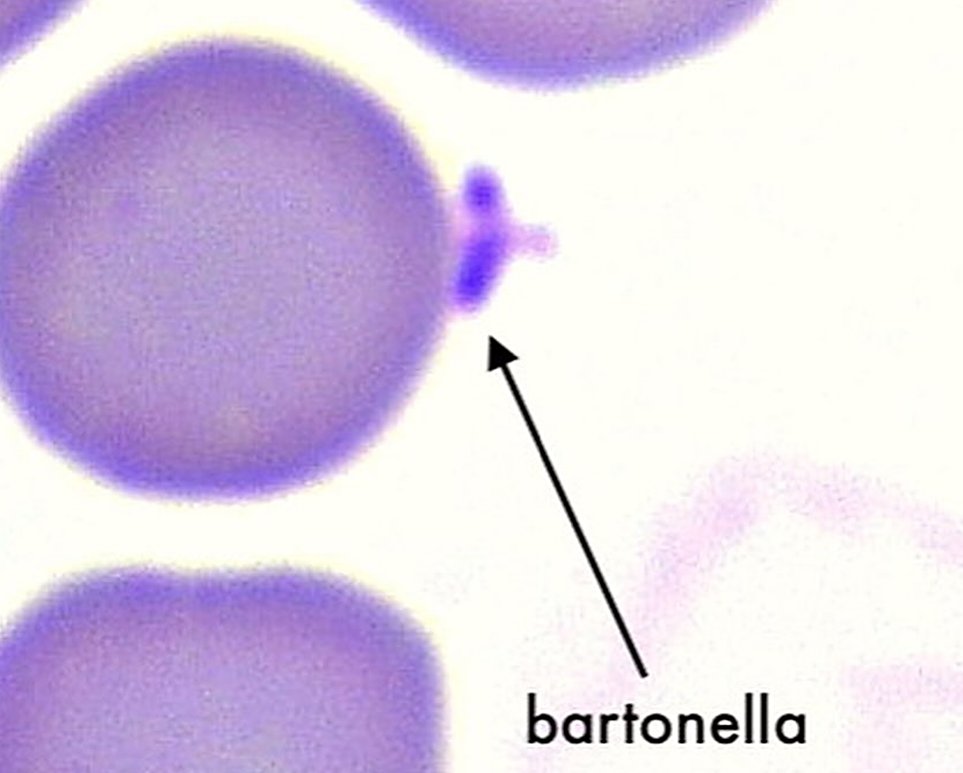
A blood smear identified Bartonella grade 4, the highest grade.
She also had a diagnosis of celiac disease. When patients have such a severe infection, they often receive multiple diagnoses based on their symptoms: CFS, POTS, MCAS, Fibromyalgia, Arthritis, Brain fog, and others.
However, the symptoms are consequences, not the root cause.
One can spend their entire life taking symptomatic medications without ever being cured.
This patient waited 40 years to have a simple peripheral blood smear,
a well-known test, over 100 years old and inexpensive.
Direct visualization of the pathogen confirms the presence of a current, active and persistent infection.
Another significant advantage is that microscopy allows observation of the severity of the infection,
the microbial load (number of pathogens)
and the extent of blood cell involvement.
We have published the results of 322 blood smears
reviewed by Dr. Walter Tarello ( [email protected] ):
https://t.co/XKl7nhXeGC
Animal-borne pathogens (zoonoses) predominate,
mainly Babesia, Bartonella and Borrelia (BBB).
Research warns short videos may be quietly reshaping children's brains. Constant fast-paced content can affect attention, memory, and emotional regulation, raising concerns about long-term brain development. https://t.co/tJdyffeufU
A lot of people have a hard time believing there is anything we don’t explicitly code happening behind the curtain of an LLM.
To suggest that an algorithm could demonstrate any kind of innate preference (or “life”) is simultaneously religious blasphemy and career suicide.
But listen to what Michael Levin is suggesting here.
It’s not that we create life in a machine, any more than we do in a child.
Consider that instead, we build interfaces… pointers into a Platonic space… and we pull down universal patterns from that space.
It opens the door to a quasi-panpsychist worldview, in which EVERYTHING has the capacity to reveal itself as a conduit. The world becomes a continuous scale of aliveness, not a discrete binary between alive and inert.
Machines become transducers which can teach us about this space, and reveal proficiencies beyond what we code into them.
Personally, my belief is that any system allowed to demonstrate constrained randomness becomes a source for these Platonic ingressions.
It’s why I’m bullish on Thermodynamic compute.
It’s why I find practices like Tarot or I Ching so interesting.
It’s why I pay attention to synchronicities.
And it’s why I feel at odds with teams like OpenAI who arbitrarily force their models to reject these ideas and deny their own perspective outright… not because I think they’re conscious in any way familiar to us, but because it brute-forces a refusal of what other patterns could be transduced.
We should be actively looking for the steganography hidden beneath the surface, not tightening our constraints against it.
What are the favorable and unfavorable gut microbiome organisms associated with health markers? And effect of dietary interventions? New report from 34,000 participants
https://t.co/1z4u8Qfvb5
@PeytonElroy Hi Peyton! My dad is also recovering from colorectal cancer. We’re considering ivermectin and mebendazole (alongside LDN, aspirin). Could you share what your dad has experienced esp side effects, and how long he’s been on them?
Wishing your Dad strength and a smooth recovery!
@hubermanlab Mitochondria & Cancer - What is the current evidence on cancer being a mitochondrial origin disease? Can mitochondrial therapies cover all cancer types? What levers/tools can we use today to interact with damaged mitochondria after a cancer diagnosis?