USA. A Mexican restaurant. We had not yet ordered anything, and the food was already arriving.
Chips. Salsa. Unrequested. Free.
I stopped the waiter. "We have not earned these."
"They just come with the table, man."
They come with the TABLE. In my land, hospitality is a debt. Every gift creates an obligation, weighed carefully, returned in the proper season with interest of feeling. Here, the gift arrives before you have even proven you can pay for dinner.
This is not an appetizer. This is a declaration: we trust you. Eat.
I ate with the gravity the moment deserved. And then — I must report this calmly — the basket emptied, and a new one appeared.
"Did we…?"
"Refill," the waiter said. "It's bottomless."
Bottomless. They have wells of salsa. The supply lines of this nation are beyond anything my ancestors imagined.
My friend warned me. "Don't fill up on chips, dude."
Too late. I had accepted three baskets. Honor demanded each one be finished — an unfinished gift is an insult. By the time my actual food arrived, I was a ruined man.
I was not hungry. I was not comfortable. I had been defeated by a courtesy.
Generosity that arrives before the request cannot be repaid. It can only be survived.
I know the rule now. I have made my peace with the basket. One basket. Two at the most.
Who am I deceiving. There is no number of baskets I would refuse. The trust of a nation is in that salsa, and I intend to honor all of it.
@itssaulx@educator4ever36 I teach elementary music, and even I have 4-5 hours of contact time with students outside of school hours that I also have to plan. We both probably know band directors, choir directors, and elementary teachers that have been let go for not having great performing groups. 🤷♀️
@educator4ever36 My dad was a PE teacher for a K8 and coach for 27 years. My mom started the art program at our high school and taught 28 years. Many nights each year we were not home until 9:00 from games. My mom was often helping with props for musicals and posters/signs for admin or locals.
@coachvint@educator4ever36@LeeMcClymont Yes! And cutting out, pasting, helping outline, matting for art shows…not to mention the administration “hey…can you make us a poster for this event? It’s tomorrow.”
Anthropology class? Nope. Just kids at school experiencing what the 1990s were like. Honestly, it's funny watching them treat these items like absolute relics. My personal favorite is the Rolodex!
Anywho, I wish this was integrated in classrooms everywhere. I think lot of parents would agree this generation has a fascination with how we used to live.
@educator4ever36 As an elementary music teacher, I only get to teach my students for 45 minutes once a week. That works out to about 32-35 lessons per year. I want them to be engaged in music activities from the time they walk through the door!
@FE2ESQ@DrP_Principal But now, those days are divided more through the year. My district has us beginning planning and PD’s the last week of July and we are back in August.
@FE2ESQ@DrP_Principal It’s the same as it’s always been. 185. When we were kids, the summer break was longer…out at the end of May and didn’t return until after Labor Day. This schedule helped out areas like mine where kids were expected to be farm hands. (Kids today have NO idea!)
At some point, the K-12 education community is going to have to stop falling for every novel thing that promises to work miracles. Education requires time, patience, and solid instruction. Schools need to stop looking for quick fixes and shortcuts and just do what works.
BREAKING:
130 abducted children and staff from St. Mary’s Catholic School in Papiri, Nigeria, have been released, per the Nigerian government.
Thank you, Jesus.
For generations, kids had three worlds:
1. Home
2. School
3. A third place; the park, the field, the neighborhood, the church gym, the rec center.
That third place is where kids learned: • how to solve problems without an adult
• how to read emotions and faces
• how to handle conflict
• how to lose
• how to make friends
• how to negotiate and compromise
• how to sit with frustration
• how to just be a kid
But today?
Most kids' third place is a screen.
A screen doesn’t teach boundaries.
A screen doesn’t teach emotional regulation.
A screen doesn’t teach cooperation or conflict skills.
A screen doesn’t teach patience or self-control.
So all the social and emotional skills kids used to practice before they walked into school…
they have to learn inside school now.
And that’s why:
behavior feels different
attention feels different
emotions feel bigger
classroom management is tougher.
This isn’t a “kids these days” problem.
It’s a cultural shift.
When the third place disappears, childhood changes.
And schools end up carrying what the community used to teach.
Until kids get their third place back, we’re going to keep seeing the fallout
We need to be honest about the role of screens in schools. The evidence is becoming too strong to ignore. When daily screen time rises, achievement falls. The latest PISA data show a clear, consistent decline in scores as screen exposure increases. Students with no screen time in school perform best. Those with six or more hours perform worst. This isn’t a small dip. It’s a dramatic slide.
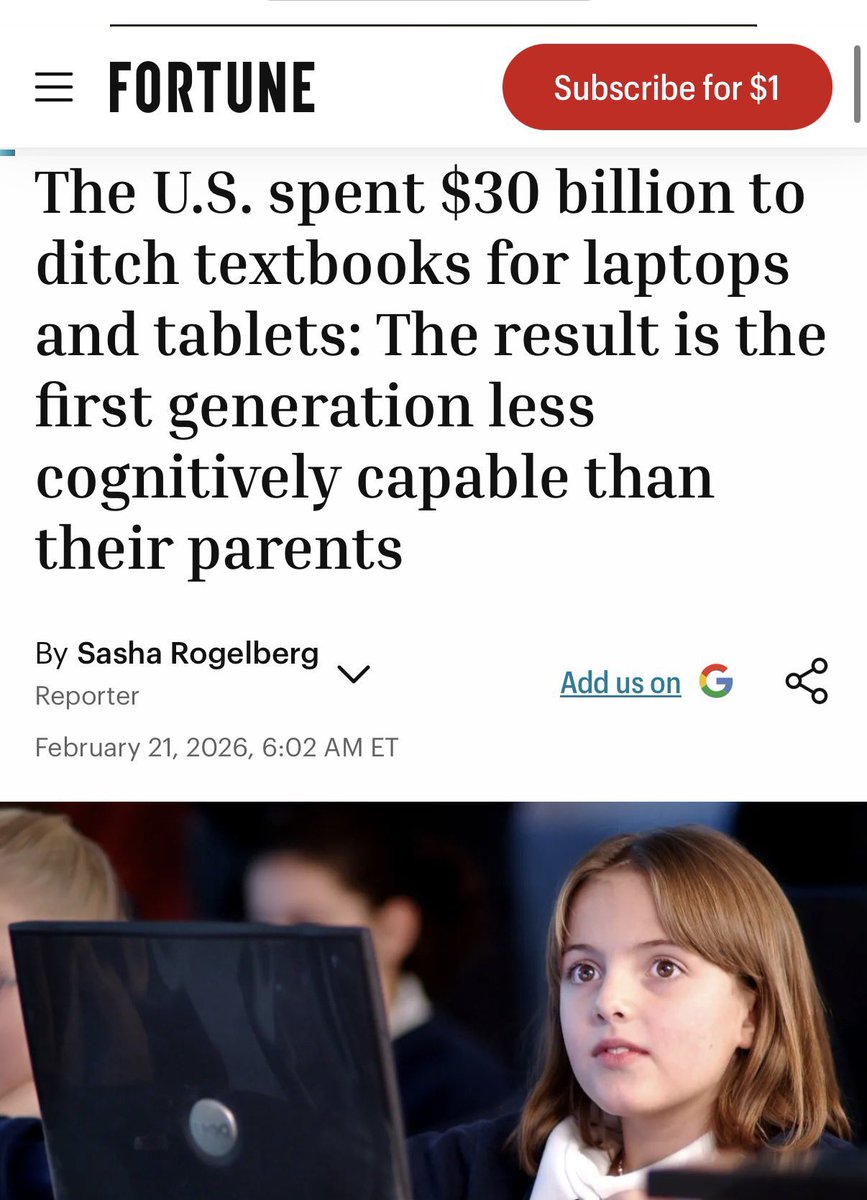
For years we were told that iPads and laptops would “transform learning.” Instead, they have transformed classrooms into environments of distraction and fragmented attention. Devices promise engagement, but what they consistently deliver is cognitive overload, shallow learning and reduced retention. Teachers know this. Parents know this. Increasingly, researchers know this too.
If our aim is to raise attainment, build deep knowledge and foster real thinking, iPads should have no place in schools. They are a barrier, not a bridge. The fundamentals of learning attention, practice, memory and human explanation cannot be outsourced to a screen.
The Free Press recently highlighted this problem with a stark reminder of what happened when schools rushed headfirst into one-to-one devices. We gave students laptops. And we took away learning. Credit: https://t.co/ZAX6Kzbuwl
It is time to return to what works. High quality teaching. Rich discussion. Books. Paper. Focus. If we are serious about improving outcomes, the evidence is pointing in one direction. Put the screens away.
It's time to remove laptops from classrooms.
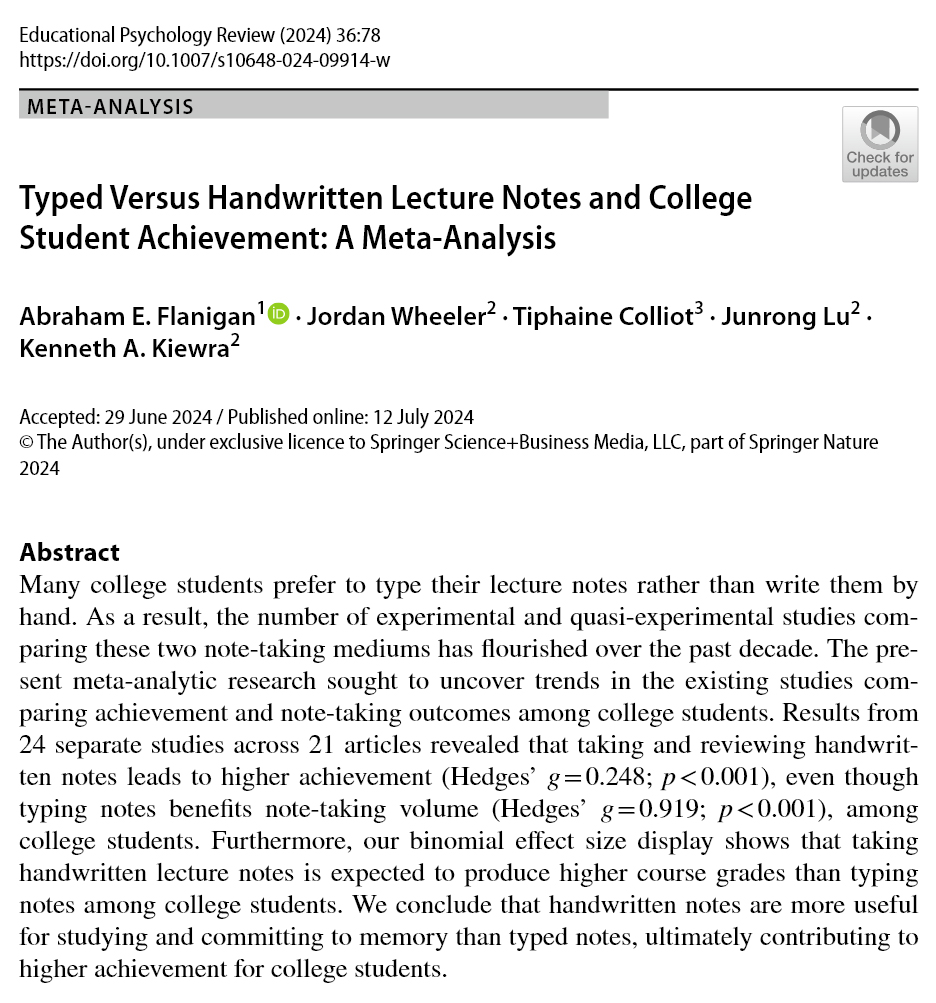
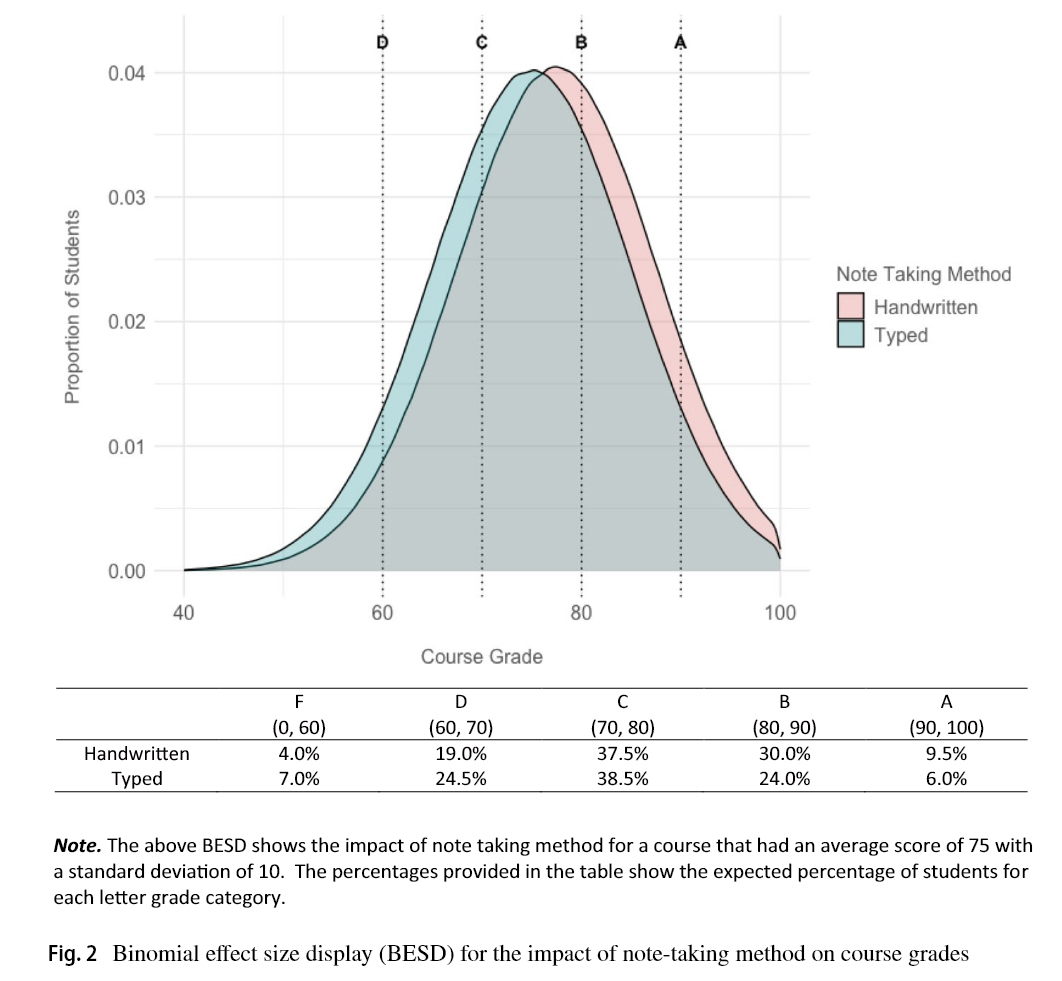
24 experiments: Students learn more and get better grades after taking notes by hand than typing. It's not just because they're less distracted—writing enables deeper processing and more images.
The pen is mightier than the keyboard.