Fox: Why are you here this morning?
Trump rally attendee: Well, in the late 70s, I was a little too young to go to South America for the Jonestown Massacre. But this is as close as I'll ever get, so that's why I'm here. There's nothing like seeing a cult right up front.
🚨🇬🇧 El Gobierno británico acaba de decirle a la gente que guarde efectivo, agua y latas en casa.
El Secretario de Defensa Wes Streeting apareció en BBC Newsnight y recomendó a todos los hogares que tengan provisiones para tres días. No es un simulacro ni un consejo de siempre: es la nueva campaña oficial “Be Ready”.
El mensaje es directo. Si se cae la luz, si un ciberataque tumba los sistemas de pago o si un evento climático corta el agua y la electricidad, cada familia debe poder aguantar sola al menos 72 horas.
Lo que pide el Gobierno
• 3 litros de agua embotellada por persona al día.
• Comida enlatada o que no necesite nevera ni cocinarse.
• Efectivo en efectivo (por si las tarjetas y los cajeros dejan de funcionar).
• Radio de pilas o a cuerda, linterna, mantas y botiquín.
Streeting lo dijo sin rodeos: las amenazas “no son hipotéticas” y “están aquí”. Habló de “terrorismo patrocinado por Estados”, ciberataques cada vez más sofisticados y la posibilidad real de que los supermercados o los bancos no funcionen durante días. El Gobierno insiste en que “no hay un ataque específico en marcha”, pero también reconoce que el mundo es más peligroso e inestable que antes.
En un país donde casi todo se paga con el móvil, el Estado acaba de admitir que el efectivo vuelve a ser un recurso de emergencia. Y que la dependencia total de internet, electricidad y cadenas de suministro globales tiene un punto de ruptura.
La campaña ya circula fuerte. No es una orden militar, pero sí una señal clara: las autoridades ya no dan por hecho que los servicios esenciales van a estar siempre disponibles. Y le están pidiendo a la población que se prepare como si no lo fueran.
No, you cannot walk 10,000 steps daily, get 8 hours of sleep, cook every night, clean every day, take care of a family, make time for your own hobbies, and still be productive at work every day. This is not just propaganda, it is nonsense. Free yourself from it.
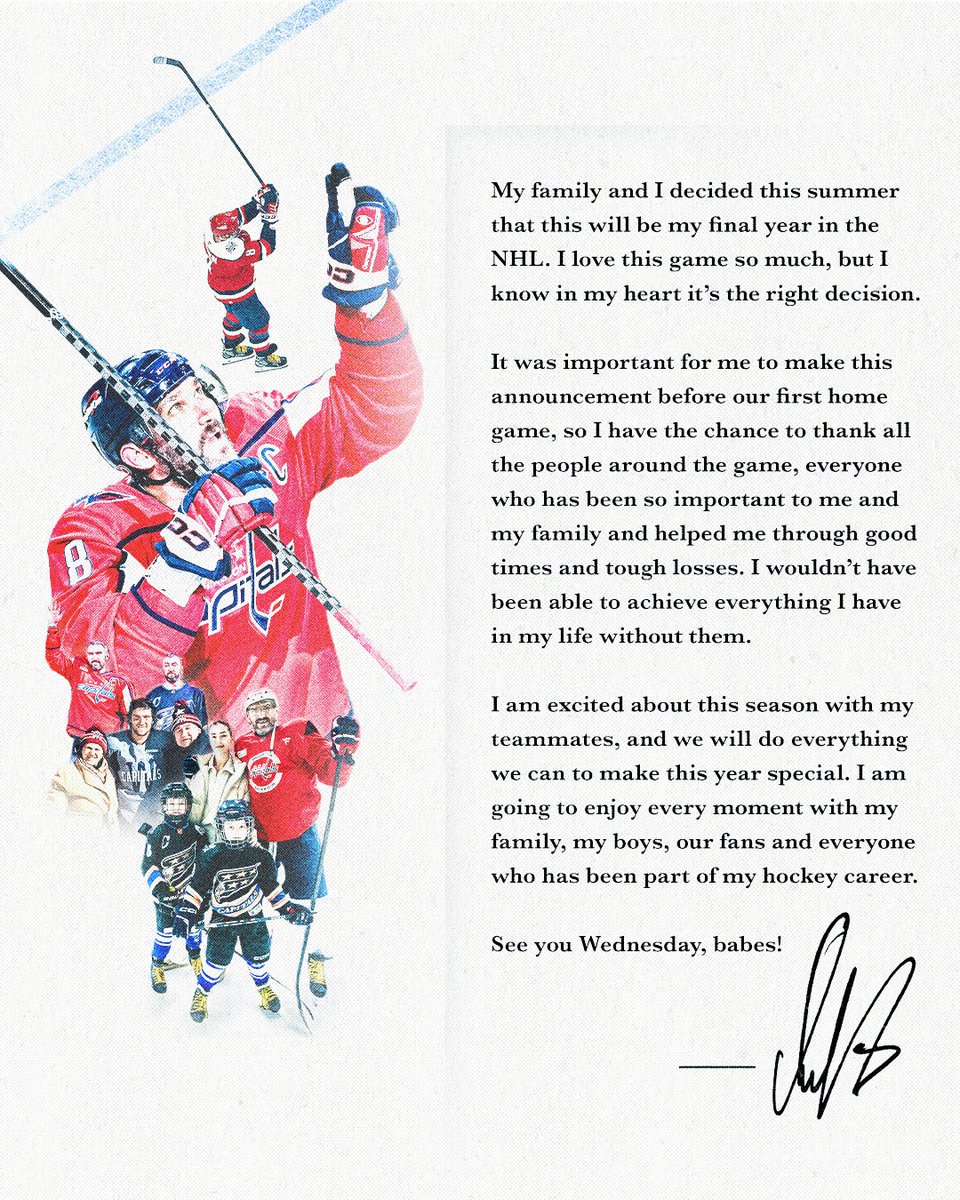
It’s crazy to think about when Ovi debuted in 2005 and how much has changed in the world since:
- No iPhones
- The MCU didn’t exist
- The Nintendo DS had just came out
- YouTube launched
- Revenge of the Sith was still in theaters
- The US was at war in the Mi… nvm
Check the new docu-movie, “The Social Dilemma”
It’s a must watch, especially for those with young kids / grandkids. There has to be some kind of change in how we use Social Media.
Social Media began as a fun, keep-in-touch, re-kindle old friendships, be silly kind of thing. But when it came to monetizing the platforms, it changed. To monetize the platforms, they had to keep the customers happy.
Who are the customers?
It’s not us.
It’s the advertisers.
So the platforms had to try to get more eyeballs and keep them on the screen longer.
It’s a basic manipulation of human psychology,
…and it has changed how people interact.
It is an underlying reason for many mental issues with our youth- increased suicide rates, constant peer pressure, and living private lives socially with all.
Algorithms were created to push news that will catch people’s attention and these algorithms grow and evolve,
…not based on integrity or doing the right thing, but only on what news creates more attention. It’s out of control!
- Don’t op-in to news, pages, views, etc.
- Choose your own videos to watch on YouTube
- Turn-off auto-notifications
- Don’t wake-up and look at your phone (and don’t look at it every time you have spare time)
- Fact Check…Lies spread 6-times faster than the truth on social media
- Develop interests outside of your phone / screen
It’s ironic that I’m posting this on @x, but this is a big way we communicate these days.
So does it make sense to totally disregard Social Media?
Probably not.
You just have to change the way you use it!
HT to my HS Teammate, David English
PS- all forms of media attempt to manipulate us these days:
Rabies kills ~59,000 people a year globally. At that rate, the United States should lose 2,500 people a year to rabies. But the real number is fewer than 10, partly because we've spent 30 years dropping fish-flavored ravioli out of helicopters over the Appalachians.
Each one contains a rabies vaccine inside a fishmeal-coated block. Raccoons, foxes, coyotes and skunks find them by smell, bite through, and enjoy the treat. Four to six weeks later, they carry rabies antibodies. Enough of them in one area and the virus runs out of animals to move through.
USDA Wildlife Services has been doing this this line since 1995. It runs roughly from Maine down through Alabama, and its job is to stop raccoon-variant rabies from crossing into the central US, where it has never established.
A single course of post-exposure shots runs into the thousands of dollars, and every rabid raccoon in a suburb produces a cluster of them: the kid who got scratched, the dog that tangled with it, etc. US rabies prevention costs between $245 and $510 million a year and avoids over a billion in medical spending.
Long Island is probably our best case study for this program. A $2.6 million baiting program eliminated raccoon rabies from the zone, and paid for itself in eight years on avoided shots and testing alone.
The biggest question I hear about this is: what happens if my dog finds one? And the answer: nothing bad. This vaccine has been safety-tested in over 60 species at varying doses with no adverse reactions observed, regardless of how much was given.
About 250 million doses have been distributed worldwide since 1987 with no documented deaths in wildlife or domestic animals. The most severe adverse reaction observed was upset stomach.
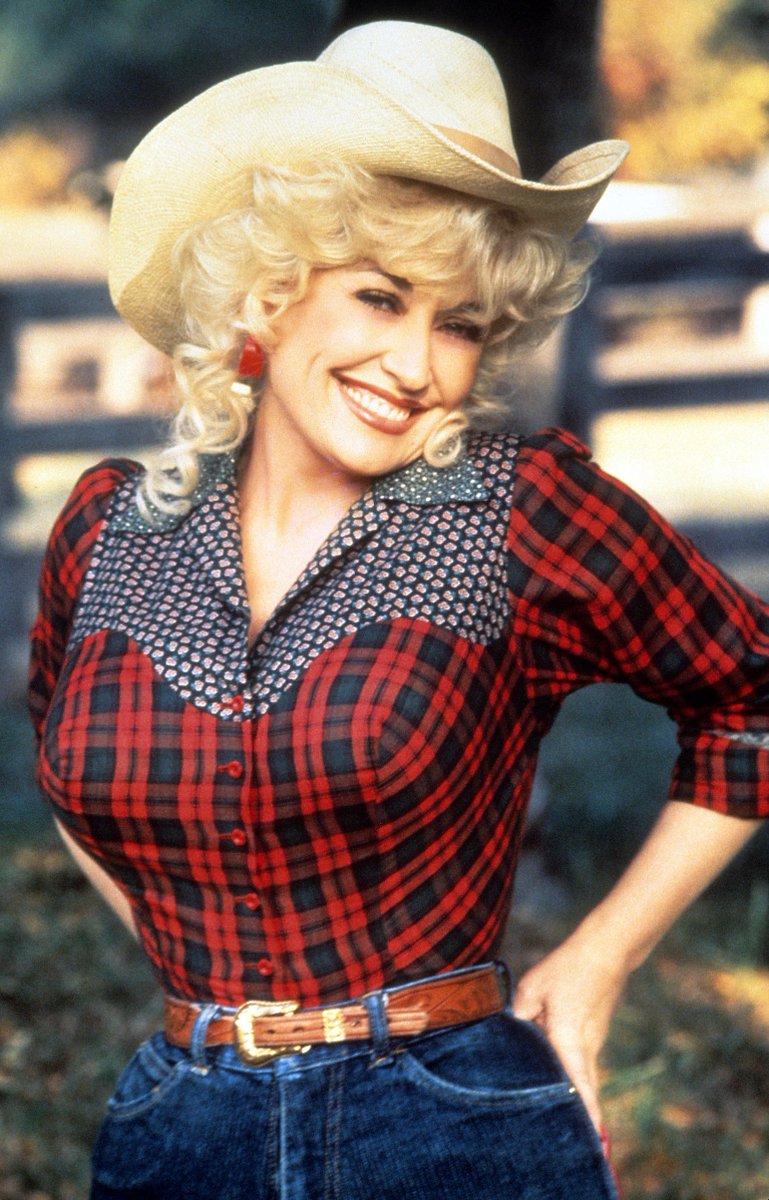
LCOL Danielle Parton’s father is Bobby Parton, who is Dolly's younger brother (the fifth of the 12 Parton children, while Dolly is the fourth)
She is a decorated combat veteran and retired Lieutenant Colonel in the Air National Guard who flew C-130 and C-5 aircraft, and she now works as a commercial airline pilot.
She owns and operates the Shine Girl moonshine distillery located in Sevierville, Tennessee.
I saw this video in May and had an inkling that she had cancer... 😔 So grateful that the boys have her Imagination Library books (A opens his books as soon as they arrive) and W got a birthday video from her this year 💖 We love you Dolly!
This was Dolly Parton’s “farewell” video from May 2026 — and none of us realized it. Or believed it. Or wanted to believe it.
Her last words to us were: “I will always love you. Thank you.”
This is the scariest weather alert ever issued in the United States.
21 years ago today, at 10:11 a.m. on Sunday, August 28, 2005, the National Weather Service in New Orleans, Louisiana released the infamous "doomsday statement." It was a first-of-its-kind warning, and is downright chilling.
Moments earlier, Katrina had intensified into a Category 5 behemoth with 175 mph winds, and was on a crash course with southeast Louisiana. Forecasts called for a Category 4 or 5 strike on New Orleans within 24 hours.
Robert Ricks Jr., a forecaster at the New Orleans NWS office, issued the following dire warning:
National Weather Service New Orleans LA
10:11 AM CDT Sun Aug 28 2005
...Devastating damage expected...
Hurricane Katrina, a most powerful hurricane with unprecedented strength, rivaling the intensity of Hurricane Camille of 1969.
Most of the area will be uninhabitable for weeks, perhaps longer. At least one half of well-constructed homes will have roof and wall failure. All gabled roofs will fail, leaving those homes severely damaged or destroyed.
The majority of industrial buildings will become non-functional. Partial to complete wall and roof failure is expected. All wood-framed low-rising apartment buildings will be destroyed. Concrete block low-rise apartments will sustain major damage, including some wall and roof failure.
High-rise office and apartment buildings will sway dangerously, a few to the point of total collapse. All windows will blow out.
Airborne debris will be widespread and may include heavy items such as household appliances and even light vehicles. Sport utility vehicles and light trucks will be moved. The blown debris will create additional destruction. Persons, pets, and livestock exposed to the winds will face certain death if struck.
Power outages will last for weeks, as most power poles will be down and transformers destroyed. Water shortages will make human suffering incredible by modern standards.
The vast majority of native trees will be snapped or uprooted. Only the heartiest will remain standing but be totally defoliated. Few crops will remain. Livestock left exposed to the winds will be killed.
An inland hurricane wind warning is issued when sustained winds near hurricane force, or frequent gusts at or above hurricane force, are certain within the next 12 to 24 hours.
Once tropical storm and hurricane force winds onset, do not venture outside!"
Within an hour, the mayor of New Orleans issued the first-ever mandatory evacuation of the city.
Katrina came ashore on August 29 as a slightly-weakened 125 mph Category 3 hurricane. The worst damage didn't come from wind, but rather levee failures.
Rob Perillo, a longtime meteorologist in Lafayette, Louisiana, described the statement as "one of the first hurricane bulletins that ‘humanized’ the forecast."
Josh Morgerman, the world's most prolific hurricane chaser, concurred.
"It turned out that Katrina’s winds were nowhere near as strong as what’s described in that bulletin, the water impacts were actually *worse* than feared—both the levy failures in the city and the gargantuan storm surge in Mississippi," he wrote. "So, in the end, despite how crazy it sounded, the bulletin was right. It correctly predicted a massive, catastrophic, generational impact."
Bryan Norcross, the "Hero of Hurricane Andrew", which hit South Florida in 1992, discussed the challenge of communicating an "extreme, unsurvivable event" like Katrina.
"The only choice is to assume the odds are 100% that it will occur," he wrote. "If you're responsible for communicating the hazard, you don't want to leave any room for 'maybe it won't be so bad.'" He said the New Orleans NWS office had taken the same approach.
Forecaster Robert Ricks was the one who pulled the trigger on the bulletin, but the language actually came from Barry Goldsmith, a meteorologist at the National Weather Service in Tampa Bay back in the 1990s. (Nowadays he works as warning coordination meteorologist at NWS Brownsville, Texas.) He had originally drafted the language “based on wind-related impacts that could be expected with the landfall of a Category 5 hurricane.”
“[It was] based on real-world history of such impacts from prior events across the United States and its territories,” wrote Goldsmith in an email. “Rather than only stating Category 5 wind speeds – in this case, 160 mph - and a short description of generic impacts, the statement included wording that began with a harrowing description of the length of recovery.”
Roughly 10 months after Katrina's passage, National Weather Service completed a service assessment evaluating the forecast. They lauded the unconventional approach forecasters had taken.
“Due to the unprecedented detail and foreboding nature of the language used, the statement helped reinforce the actions of emergency management officials as they coordinated one of the largest evacuations in U.S. history,” wrote the National Weather Service in a service assessment published in June 0f 2006. “This statement was highly effective.”
The agency called it a “significant moment for [the National Weather Service].”
In 1988 Dolly Parton pulled every 7th and 8th grader in Sevier County into a room and told them to pick a buddy.
She made them sign a contract.. if BOTH graduate, she hands you both $500. One fails, nobody gets paid.
The county dropout rate went from 35% to 6%.
She handed out the checks herself.
In 1989 she offered $500 to every kid in the county who wanted to go to the local college.
When Gatlinburg burned in 2016, she sent 900 families $1,000 a month for six months.
You've probably heard that part.
Here's the part you haven't:
The fund raised more than expected, so she showed up in May and handed every one of those families another $5,000 on top.
Then she quietly put $3 million into the recovery group that handles the years after the news trucks leave.
She built her county an entire hospital.
She played a benefit concert in 2007, Dollywood and the Stampede matched it, and LeConte Medical Center opened in 2010 with a birthing unit and a women's center in it.
In 2022 she started covering 100% of tuition, books, and fees for Dollywood employees.
Full-time, part-time, AND seasonal.
In 1991 she paid for a bald eagle sanctuary because the birds couldn't be released back into the wild, no press release.
And when Hurricane Helene came through here in Western North Carolina, she wrote a personal check for $1 million and her companies matched it.
She didn't owe North Carolina anything, but she helped us anyway.
She started the Imagination Library because her daddy couldn't read or write. Before he passed, he told her it was the most important thing she ever did.
Rest in Peace, Dolly 🇺🇸
I'm sorry we never got a chance to meet, but getting this note from Dolly really had a an impact on me. She definitely didn't have to take the time to do it. Even for a kid who mostly listened to rap music, she was an icon. A superstar in every sense. Rest easy Dolly. And thank you for the kind words.
@BillFromDaShore@RoguePOTUSStaff And TidalHealth is a trauma center, but not for neurotrauma. The best bet for that would be Christiana, UM Shock Trauma, Medstar in DC, or Johns Hopkins. From the shore it would be medevac via MSP, if they called 911.
@zakwilliams Happy Heavenly 75th! To one of the most amazing & inspiring human beings.
How blessed we are to have his light shine so brightly upon the world.
RIP 🙏🏼🕊️