Emotional intelligence is not about avoiding strong reactions. It’s about being less reactive.
Reactions are hard to control—they’re rapid and visceral. Responses are easier to delay and modify.
A key to emotion regulation is expanding the distance between feelings and actions.
An easy way to get unstuck is to get up and take a walk.
We generate more creative ideas during and after walking outdoors—and even on a treadmill facing a blank wall.
Divergent thinking rarely happens when we're tethered to a desk. Moving our bodies frees our minds.
Having an active "champion" is an important part of delivering a change or improvement initiative: part 2.
A summary of comments in response to my last post about research on change champions by Hannah Stark & Jane Page. I pulled out 5 themes:
1) The "champion" role is about creating capability, not dependency: Arokia Antonysamy argued champions should become "architects of capability" not permanent crutches: especially critical in healthcare where burnout makes hero-based systems risky. Guy Pilens distinguished momentum from maturity: the most effective champions reduce dependency over time. Paula Beattie said champions have a role in both “ignition” & “transfer”, so change both takes off & lasts.
2) Governance & role design should be built in from the start: Rebecca Blackwood argued governance must be designed upfront with clear milestones for knowledge transfer. Champions staying too long risk turning advocacy into gatekeeping. Anthony Lawton said the sustainability test belongs at day one - champions measured against redundancy, not activity.
3) Champion motivation & capacity are under-examined: David Howell stressed that motivation shapes everything downstream. "Genuine belief" looks identical to "visibility-seeking" at appointment, yet produces different results. He also identified an unmeasured gap between role complexity & individual capacity. Dr Kara Danks argued that champions need relational & structural support to actively cascade knowledge & skills outwards. Fragility arises when champion roles become extensions of existing strained systems, absorbing negative patterns such as silos & hierarchies, rather than disrupting them.
4) Spread requires deliberate strategy beyond the champion: John-Paul Crofton-Biwer applied diffusion theory: change falls into the chasm between early adopters & the majority when champions leave. Apoorv Tiwary recommended building cohorts rather than betting on one person. Marilyn Crabtree argued sustainable change requires a culture where everyone sees themselves as a change agent. Mohammed Naseer Khan noted peer-to-peer promotion has far greater impact than expert-led change, particularly in change-fatigued organisations.
5) Systemic conditions enable or undermine champions: Wendy Garcarz advocated for the NHS to return to learning organisation frameworks. Samantha Robinson extended the analysis to lived experience champions in mental health: values that disappear when individuals leave were never truly embedded. Victoria Hewitt highlighted personal cost: valued champions take on more, become more vulnerable to burnout, & gaps only surface when they leave. Sara Soleymani noted the hidden workload champions carry while still in post.
Matt Wyatt described a balance: "enthusiasts are essential, but should be used like a condiment, not an ingredient".
The comments reinforce the research. Change champions ARE important. In addition, sustainable change needs deliberate role design, governance (with teeth) & system capacity built from day one.
Having an active “champion” is an important part of delivering a change or improvement initiative. Or is it? Do local change champions create a vulnerability when it comes to sustaining the project longer term?
Newly published research by Hannah Stark & Jane Page defines champions as people in a change situation who “actively promote, protect & troubleshoot [the change] through their influence, advocacy, & practical problem-solving." The researchers found the factors that make champions effective at initial implementation stage may also create systemic vulnerabilities that threaten sustainability of the change.
Champions build momentum through their specialised knowledge, personal commitment & ability to translate evidence into practice. But the research found three mechanisms through which these same strengths generate fragility:
- Knowledge concentration: Expertise accumulates in individuals rather than being embedded in organisational systems.
- Dependency creation: Organisations become reliant on champions for quality assurance, problem-solving & continuity. These dependencies only surface when champions leave; at which point, multiple capability gaps emerge at once.2
- System capacity prevention: When champions hold things together through personal effort, organisations don't feel urgency to build systematic infrastructure. Their effectiveness conceals structural gaps underneath.
These form a self-reinforcing cycle. The more effective the champion, the less pressure to develop collective capacity that would survive their departure (see the graphic).
What does this mean for us as leaders of change?
1) What are we actually building? When we appoint a champion, we need to ask whether we’re strengthening organisational capacity or creating a workaround for absence of capability. The two may look identical in the short term.
2) Role design matters. The researchers propose reframing champions; not as permanent drivers of improvement, but as transitional resources whose purpose is to build collective capability & become unnecessary. Selection criteria should extend beyond individual competence to include capacity for knowledge transfer & succession planning.
3) We must get smarter about how we measure sustainability. Just because a programme is still running doesn't mean it's on solid ground. An organisation can look perfectly healthy while everything depends on one or two key people. The real test is whether the programme would hold up if those people left tomorrow; whether knowledge is spread across the team, whether documented processes exist so a new person could pick things up & whether standards can be maintained through people changes.
Our instinct to find brilliant champions for change & improvement isn’t wrong. But it’s incomplete. This research shows that building the system around the work - not just the person in the work - is what makes change last.
Link to the article (open access): https://t.co/u0UAwu9aqp.
Neuroscientists find that chewing gum can elevate focus and alleviate stress.
Randomly assigning people to chew gum increases blood flow to the brain, boosting attention and productivity—especially under stress.
Even small movements are enough to keep our minds active.
The WHO has raised the Ebola risk in eastern DR Congo to very high. The Bundibugyo strain, with a 30–50% fatality rate and no approved vaccine, has spread from Ituri into other provinces and into neighbouring Uganda.
Al Jazeera’s Laura Khan explains.
The teams that deliver the strongest performance in periods of rapid change are those that experiment & learn the fastest.
That’s a central finding from @RonFriedman's latest @HarvardBiz article "How to Build a Superteam That Keeps Getting Better."
He surveyed more than 6,000 knowledge workers across many sectors, including healthcare. He identified "superteams": those getting top scores on performance & effectiveness. Three things set them apart: (1) they get more done by managing time, energy & attention; (2) their members actively make each other better & (3) they keep building skills & improving over time.
The research identified seven practices, all relevant to change leadership (here with my comments). Superteam leaders:
1) Run more experiments. Superteams experiment nearly 50% more often than average teams. Small, focused tests beat big rollout programmes. The key leadership role is making it safe to try (& fail).
2) Make curiosity contagious. Leaders of superteams are 56% more likely to ask thoughtful questions & 53% more likely to genuinely learn from team members. In change work, the formal leader rarely holds the most important knowledge. Curiosity is how we access it.
3) Ask "What are you stuck on?" Superteam leaders orient discussions toward problems, not updates that signal control. Issues surfaced early get addressed. The ones buried in progress reports become crises.
4) Roll up their sleeves, even when they don't have to. The difference between involvement & micromanagement comes down to intent. Leaders who work alongside their teams signal no task is beneath them & gain real-time understanding about where change is stalling.
5) Make feedback feel like support. More than 90% of superteam members say their leader delivers feedback that motivates without feeling critical. How we respond to setbacks shapes whether people keep trying — or go quiet.
6) Support team member’s growth, even when it takes them elsewhere. It is not a loss - it’s an investment. Superteam members are twice as likely to feel supported on leaving and three times more likely to remain connected. For change work, that extended network is an asset.
7) Lead with meaning, not just metrics. Leaders of superteams are 59% more effective at helping people understand why their work matters. Purpose is not a “soft extra”. It’s the difference between sustained commitment & change that fizzles out.
The article's case study is the Oklahoma City Thunder: a basketball franchise that rebuilt itself twice from the bottom of the league to championship level by trading away stars, abandoning conventional tactics, & treating every setback as data. Their motto is “Labor omnia vincit”: work conquers all things.
Those of us leading change in health & care can see the relevance. We build great teams through routine leadership habits: curiosity, experimentation, honest feedback & staying close enough to the work to know what is actually happening.
That’s not a change programme: it’s a daily practice.
Link to the HBR article: https://t.co/KBe6xet0In
The teams that deliver the most in periods of rapid change are those that experiment the most & learn the fastest: Part 2.
A summary of comments in response to my last post from across multiple social platforms. I pulled out five themes:
1) Purpose and the why: Penny Triantafillou argued that building “superteams” is an investment, not an intervention. People can cope with uncertainty if they understand the why: purpose creates connection, energy and resilience. Jonathan Sunkersing extended this beyond formal leadership: if anyone were willing to be curious, learn from failure and think carefully about giving feedback, society as a whole benefits.
2) Structural barriers to experimentation: Anthony Lawton noted that most of the habits I described require “discretionary capacity”: time, space, curiosity. NHS structures frequently consume that capacity before teams can use it. Assurance frameworks reward programme logic and penalise the iterative mess real improvement demands. Ish Ahmed, a surgeon, added that frontline experimentation often gets lost under governance layers, and meaningful innovation starts with small practical tests close to the work, not large centrally designed programmes. Richard Perry asked whether we need experimentation and learning rather than another competency framework.
3) Psychological safety as a prerequisite: Jamie Lackie observed that "what are you stuck on?" only works if the culture has made it safe to answer truthfully, and that teams have learned surfacing problems gets managed, not solved. Vik Chand stressed that teams learn faster when experiments feel safe, not career limiting. Binod Shankar added that many organisations do not have an innovation problem — they have a fear problem. They say they want experimentation while “punishing” mistakes, so people stop trying.
4) Curiosity is how knowledge is accessed: Cheryl Hoare highlighted the line: "In change work, the formal leader rarely holds the crucial knowledge. Curiosity is how we access it." Josh Sarkar noted that performance problems are frequently coordination problems, and the biggest gains come from redesigning how people work together. Bill Powell added that teams which adapt through change treat setbacks as data to interpret; those that simply endure it treat them as failure to hide
5) Collective learning means sharing failure AND success: Arokia Antonysamy argued that the highest-performing teams create environments where learning, experimentation, feedback and shared ownership are part of the culture. The NHS could leverage this at scale if teams shared what failed as well as what worked. Odiri Oteri noted how small and simple these changes are — catalysts that can transform an average team into a superteam with minimal effort. Maria Mentzer observed that innovation culture lives and dies with leader mindset and behaviour.
If I were to sum up the comments in a sentence, I’d say this: most teams have the potential to become "superteams" when we create the right conditions; e.g., a sense of purpose, curiosity, safety and time and space for shared learning.
Thanks to everyone who commented, These discussions are so rich and helpful.
A city that is friendly to children is a city that is friendly to everyone!
Today, we officially launched the first International Early Childhood Development Conference in our beautiful city, Addis Ababa, in the presence of our esteemed H.E @TemesgenTiru .
Addis Ababa’s outstanding and exemplary experience in the field of early childhood development has made the city a preferred host for this international conference.
During the conference, #AddisAbaba shared its best practices and achievements in this sector with international partners and participants.
May God bless #Ethiopia and its people!
Ethiopia is placing early childhood development at the heart of its national agenda because the future begins with our children.
From expanding free and compulsory pre-primary education to strengthening maternal and child health, nutrition, and childcare services, the country is taking a holistic, multi-sectoral approach to ensure every child has the opportunity to thrive. With over 35,000 pre-primary schools now operational and workplace childcare expanding, the focus is not only on access, but on readiness ensuring children enter school equipped with the skills they need to succeed.
Through flagship initiatives like the Seqota Declaration, Ethiopia is also making measurable progress in improving child well-being, including significant reductions in stunting. Regional leadership, strong partnerships, and continued investment are driving these gains forward.
As Addis Ababa leads with innovative models and hosts this important conference, Ethiopia reaffirms its commitment to sharing knowledge, scaling what works, and building a healthier, more resilient generation across the country and the continent.
HISTORY REPEATS ITSELF 🤩
🇪🇹’s Tigst Assefa defends her TCS London Marathon crown, breaking her own women’s-only marathon world record once again with 2:15:41 👑
She lowers the very mark she set here last year by 9 seconds 😤
Tigst Assefa 🇪🇹 runs a women-only World Record of 2:15:41 to win the London women's marathon!!
She defended her title and broke the record she set in 2025, beating Hellen Obiri 🇰🇪 who smashed her PB, running 2:15:53.
Joyciline Jepkosgei 🇰🇪 finished 3rd in 2:15:55.
Mathematician Katherine Johnson was awarded the Presidential Medal of Freedom, the nation's highest civilian honor, #OTD in 2015.
Johnson's calculations of orbital mechanics were critical to the success of @NASA's first crewed spaceflights. ✏️ https://t.co/zkyoyVGGYe
Ensuring food and nutrition security is not merely a policy priority, it is a national imperative. It forms the foundation upon which a strong, productive society is built, and it remains essential to the realization of our country’s broader economic and social aspirations.
Today, we convened a virtual session to assess and advance key national priorities. Our discussions focused on Food System Transformation; the implementation of our Nutrition and Food Security commitments; the expansion of health insurance; the “Clean Ethiopia” national advocacy; reforms to the Health Extension Program; and the performance of the first six months of the 2018 Ethiopian Fiscal Year plan.
In the course of our deliberations, we endorsed the National Food System Transformation Roadmap at the federal level. We further issued clear direction to ensure that the roadmap’s priority actions are fully integrated into the plans and execution frameworks of sector ministries and regional bureaus, translating ambition into measurable progress.
We also reviewed the progress of the Seqota Declaration an enduring commitment to end child undernutrition. In doing so, we approved the five-year implementation plan for the final phase (2019–2023 E.C.) of its 15-year roadmap. We underscored the urgency of accelerating the reduction of stunting and other forms of malnutrition by scaling proven interventions and deepening community ownership and participation.
On health insurance, we reached a shared understanding of the need to strengthen implementation structures at the regional level and to move, where feasible within this fiscal year, toward the establishment of a federal risk pool. We further agreed that community-based health insurance funds should be deposited in the Commercial Bank of Ethiopia, alongside one additional bank designated by each region, while reinforcing contribution systems that reflect households’ ability to pay.
With respect to the “Clean Ethiopia” initiative and the reform of the Health Extension Program, we affirmed that the five-year implementation roadmap must be pursued with renewed momentum, discipline, and leadership. In particular, we directed that adequate budgetary allocations be secured at both federal and regional levels, and that resource mobilization efforts be broadened and sustained.
The work ahead is significant, but so too is our resolve. With unity of purpose, disciplined execution, and the full engagement of our people, we will continue to move forward steadily and decisively toward a healthier, more resilient, and more prosperous Ethiopia.
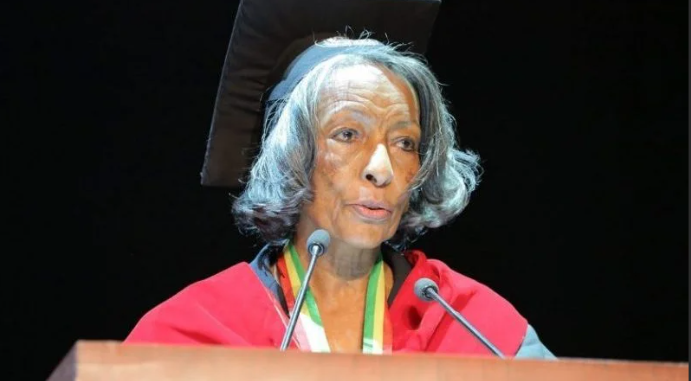
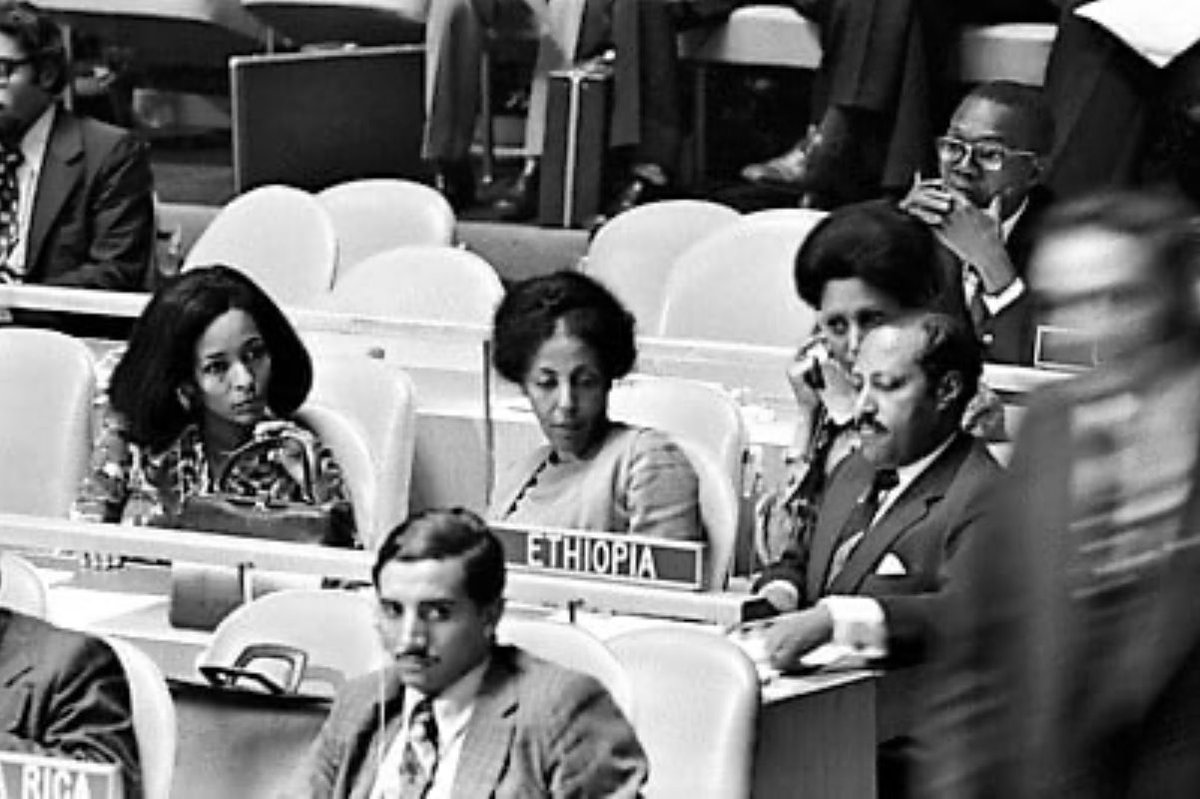
We are deeply saddened to learn of the passing of Ambassador Konjit Sene Georgis, a distinguished and veteran diplomat. On behalf of the U.S. Embassy in Addis Ababa, we extend our condolences to her family, friends, and all Ethiopians. Ambassador Konjit was a prominent woman in the diplomatic world, representing Ethiopia with exceptional dedication. Her legacy will continue to inspire. Ambassador Konjit's career included significant time in the United States. She served at the Ethiopian Permanent Mission to the United Nations in New York and was a recipient of the prestigious Carnegie Fellowship at Columbia University in New York in 1963, where she deepened her expertise and built lasting connections between our two nations. #US_Ethiopia
I am profoundly saddened by the passing of Ambassador Konjit Sene Giorgis, a doyenne of Ethiopia's modern diplomacy. We remain forever grateful for her role in the founding of the OAU and the subsequent transition to the AU. More than her vast achievements, it was her unyielding love for Ethiopia and the African cause that defined her. Konjit was the companion we leaned on for wisdom, and she will be remembered for her impeccable service and held in the highest reverence.
Statement by the Chairperson of the African Union Commission on the Passing of Ambassador Konjit Sinegiorgis of #Ethiopia.
The Chairperson of the African Union Commission, H.E. Mahmoud Ali Youssouf, has received with profound sorrow the news of the passing of Ambassador Konjit Sinegiorgis, a distinguished diplomat, a pioneering figure in Ethiopia’s foreign service, and a steadfast Pan-Africanist who dedicated her life to the service of her country and the continent.
Ambassador Konjit Sinegiorgis built an exemplary career that spanned several decades. As one of Ethiopia’s earliest female ambassadors, she helped pave the way for generations of African women in diplomacy. Her service reflected her unwavering commitment to advancing Africa's interests and strengthening international cooperation, where she played a vital role in promoting the continent’s collective priorities. The Chairperson noted, “Ambassador Konjit Sinegiorgis embodied the highest ideals of African diplomacy, marked by integrity, excellence, and an unyielding commitment to our shared future.” He further emphasised that “her legacy will continue to inspire generations of African diplomats, particularly women, to serve with courage, distinction, and purpose.”
On behalf of the African Union Commission, the Chairperson @ymahmoudali extends his deepest condolences to the family of Ambassador Konjit Sinegiorgis, to the Government and people of the Federal Democratic Republic of Ethiopia, and to all Africans who mourn this great loss.
May her soul rest in eternal peace.
Read @ https://t.co/1Ja4jBGuO9
@MFAEthiopia@PMEthiopia@AbiyAhmedAli
Veteran diplomat Ambassador Konjit Sinegiorgis, who had been receiving medical treatment, has passed away.
Ambassador Konjit joined the Ethiopian Ministry of Foreign Affairs at a young age in the 1950s and went on to build a long and distinguished career spanning several decades. Throughout her service, she assumed major responsibilities across a wide range of diplomatic roles, making significant contributions to Ethiopia’s foreign service.
Widely recognized as Ethiopia’s second female Ambassador, following Yodit Imru, Ambassador Konjit served as Ambassador Extraordinary and Plenipotentiary in Ethiopia’s diplomatic missions in Ottawa, Cairo, Tel Aviv, and Vienna during her career.
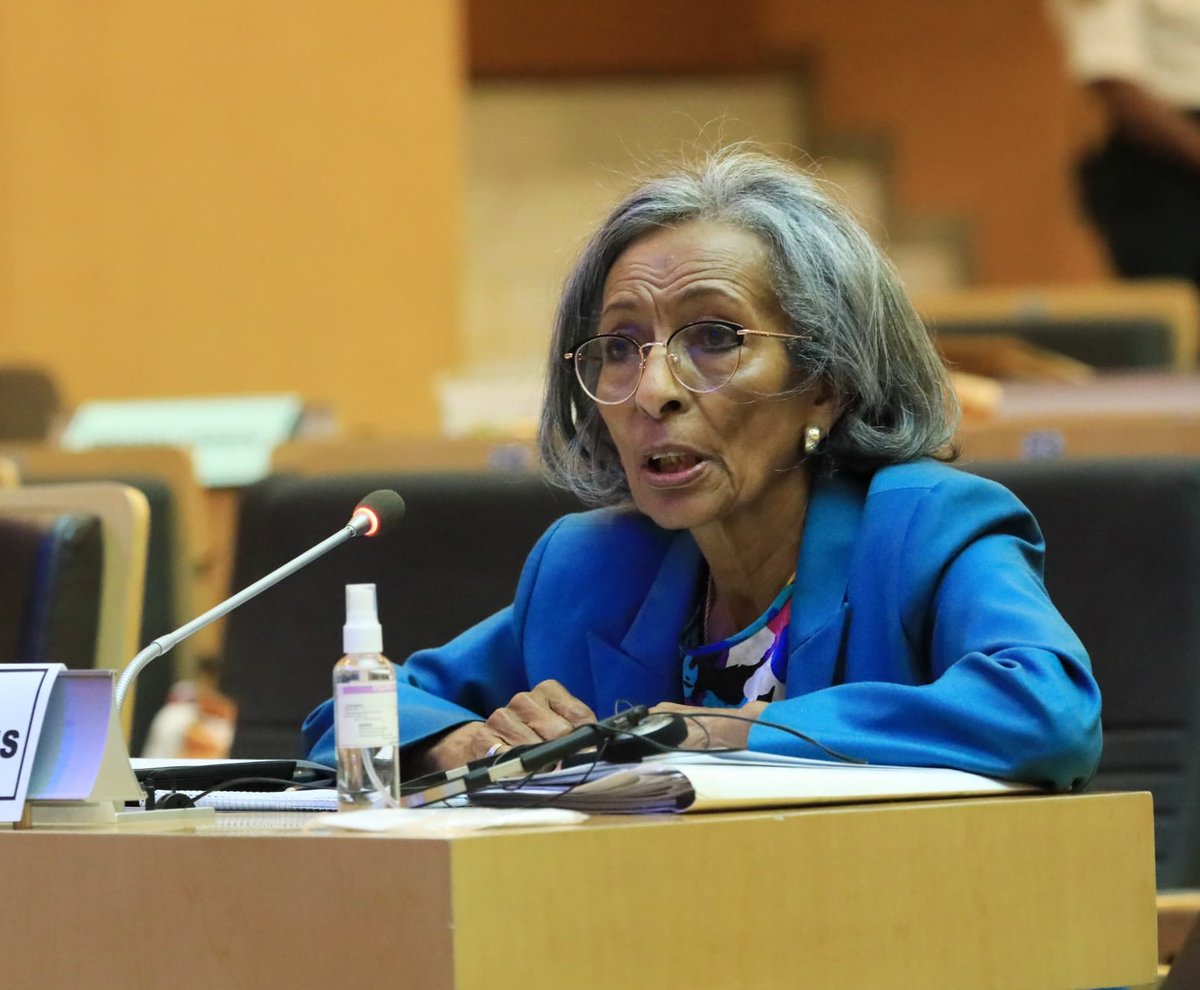
In addition to her bilateral assignments, she represented Ethiopia in key multilateral institutions. Notably, she served as Permanent Representative to the African Union and to the United Nations Economic Commission for Africa (ECA).
From June 2017 to September 2018, Ambassador Konjit also served as a Special Advisor in the Intergovernmental Authority on Development (IGAD)-led South Sudan peace process, where she contributed her extensive diplomatic experience to advancing regional peace efforts.
The Ministry of Foreign Affairs expresses its deep sorrow at the passing of Ambassador Konjit and extends its heartfelt condolences to her family, friends, and colleagues.











![HelenBevan's tweet photo. Having an active “champion” is an important part of delivering a change or improvement initiative. Or is it? Do local change champions create a vulnerability when it comes to sustaining the project longer term?
Newly published research by Hannah Stark & Jane Page defines champions as people in a change situation who “actively promote, protect & troubleshoot [the change] through their influence, advocacy, & practical problem-solving." The researchers found the factors that make champions effective at initial implementation stage may also create systemic vulnerabilities that threaten sustainability of the change.
Champions build momentum through their specialised knowledge, personal commitment & ability to translate evidence into practice. But the research found three mechanisms through which these same strengths generate fragility:
- Knowledge concentration: Expertise accumulates in individuals rather than being embedded in organisational systems.
- Dependency creation: Organisations become reliant on champions for quality assurance, problem-solving & continuity. These dependencies only surface when champions leave; at which point, multiple capability gaps emerge at once.2
- System capacity prevention: When champions hold things together through personal effort, organisations don't feel urgency to build systematic infrastructure. Their effectiveness conceals structural gaps underneath.
These form a self-reinforcing cycle. The more effective the champion, the less pressure to develop collective capacity that would survive their departure (see the graphic).
What does this mean for us as leaders of change?
1) What are we actually building? When we appoint a champion, we need to ask whether we’re strengthening organisational capacity or creating a workaround for absence of capability. The two may look identical in the short term.
2) Role design matters. The researchers propose reframing champions; not as permanent drivers of improvement, but as transitional resources whose purpose is to build collective capability & become unnecessary. Selection criteria should extend beyond individual competence to include capacity for knowledge transfer & succession planning.
3) We must get smarter about how we measure sustainability. Just because a programme is still running doesn't mean it's on solid ground. An organisation can look perfectly healthy while everything depends on one or two key people. The real test is whether the programme would hold up if those people left tomorrow; whether knowledge is spread across the team, whether documented processes exist so a new person could pick things up & whether standards can be maintained through people changes.
Our instinct to find brilliant champions for change & improvement isn’t wrong. But it’s incomplete. This research shows that building the system around the work - not just the person in the work - is what makes change last.
Link to the article (open access): https://t.co/u0UAwu9aqp.](https://pbs.twimg.com/media/HJgEeDiWsAE2Kj7.png)