#ChemPlusChem Aluminum Fluorides as Noncovalent Lewis Acids in Proteins: The Case of Phosphoryl Transfer Enzymes (Antonio Bauza and co-workers) @tbauza9#openaccess https://t.co/qJfFn0n5FQ
Diphenylene Iodonium as a Prominent Halogen Bond Donor: The Case of Human Monoamine Oxidase B (Maria de las Nieves Pina and @tbauza9) #OpenAccess https://t.co/NtfPBe868U
#RecercaUIB | ⚛️S'obre la porta a l’ús de nanopartícules de plata i or com a captadores de #contaminants orgànics volàtils.
Investigadors de la #UIB fan un pas endavant en el coneixement de les forces invisibles que connecten el món sòlid amb el gasós.
🔗https://t.co/pZqVupeweW
Take a look at another piece of research developed in our group regarding O/N···Vanadium contacts in biological systems!! 👇👇🤟🤟@tonifrontera3
https://t.co/AmYjqLJpbw
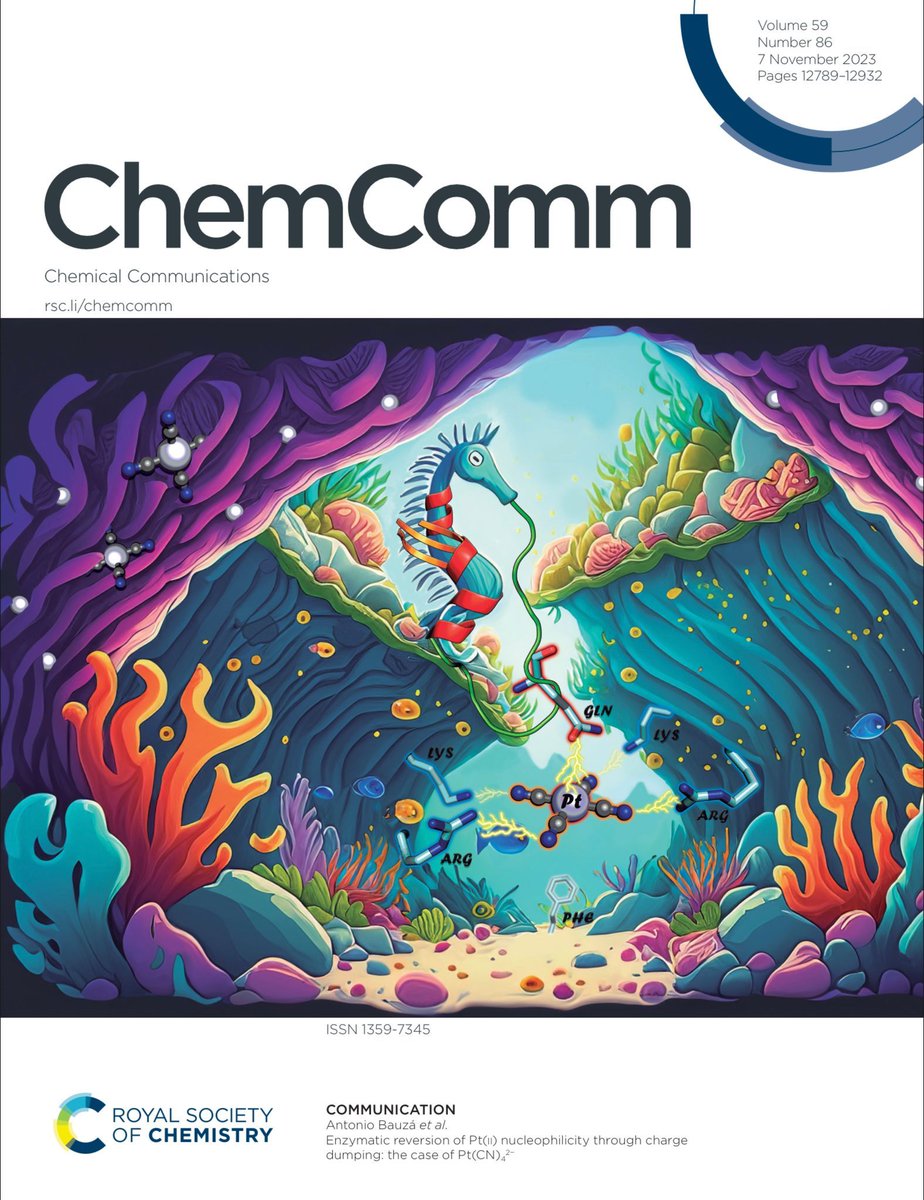
On the cover:
‘Enzymatic reversion of Pt(ii) nucleophilicity through charge dumping: the case of Pt(CN)42−’ by @tonifrontera3, @tbauza9 and first author Sergi Burguera 🔓
https://t.co/uHxbWLYQ2U
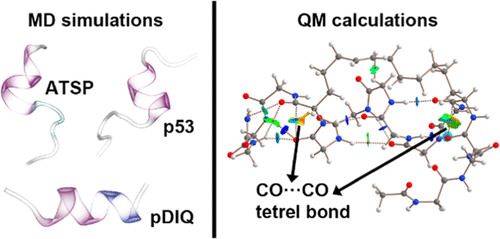
Computational Study of Driving Forces in ATSP, PDIQ, and P53 Peptide Binding: C═O···C═O Tetrel Bonding Interactions at Work #MolecularDynamics@lang_lijun
https://t.co/gCXWFZbYYU
Vol63 Issue10 #JCIM#compchem
Thank you to the organization of the BIOChem symposium at the @BQZ2023 for the opportuniy to share my science. Very inspiring talks regarding metallosystems in biology.😄😄
Thrilled to share our latest results on Tetrel bonding interactions in protein-ligand chemistry👇👇👇https://t.co/TwvqQ2HhpF
Thank you @DrHimansuBiswal and @tonifrontera3 for your contribution!!🤘🤘🤘
Check out our latest article on the impact of Cu and Ag regium-pi bonds in supramolecular chemistry and biology!!🤘🤘🤘@tonifrontera3
https://t.co/KM1nEJFtuv
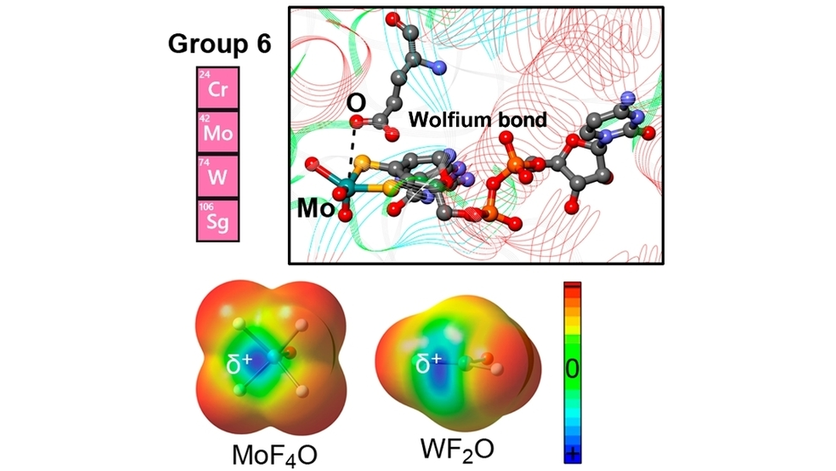
Noncovalent Interactions Involving Group 6 in Biological Systems: The Case of Molybdopterin and Tungstopterin Cofactors (Bauza, Frontera et al.) @tonifrontera3 @tbauza9#OpenAccess https://t.co/afE8dx91uG
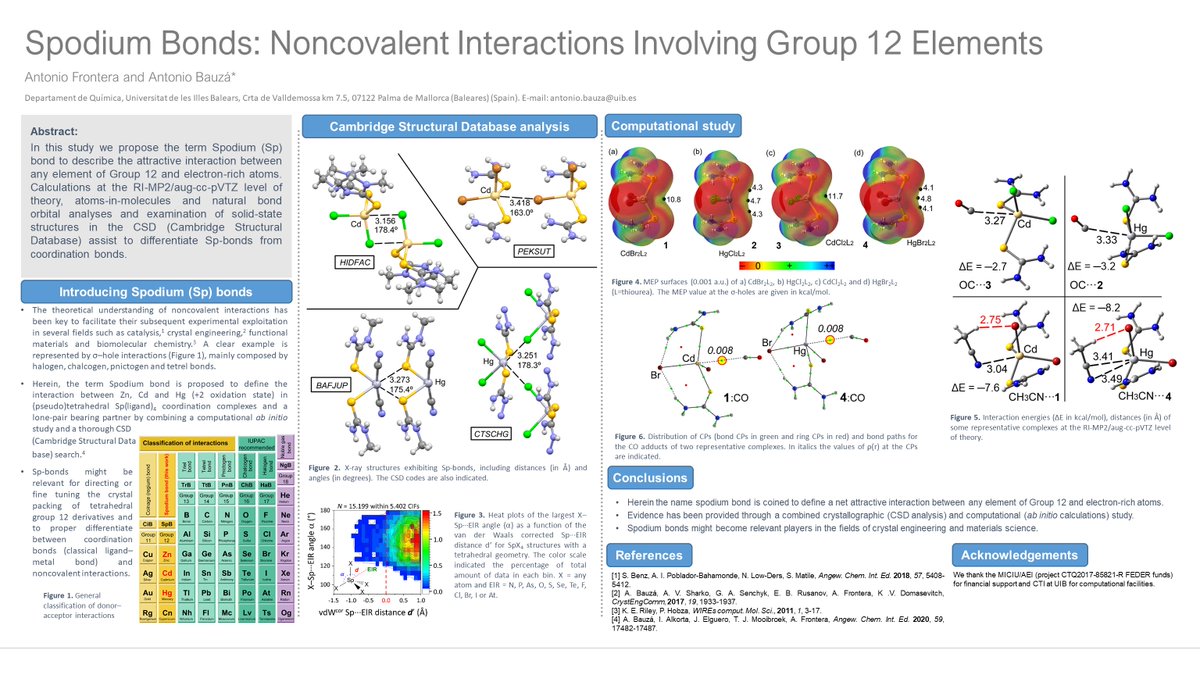
@lrraurell@mat_supra We chose this name basically because during the 13th century "Spodium" was used to refer to zinc oxide mixed with other metals. We though it was a very appropiate name for this interaction :)
@lrraurell@mat_supra Hi Laura, We've been also working with the group 11. Please, take a look at:
https://t.co/vYv44Bv4VI
and also https://t.co/UT1xdapbqw. In case of Zn the ESP values are less positive than for Cd and Hg, however it can still deliver attractive interaction energies.