#FollowFriday - @larissa_speaks, a proud Métis and Jamaican descendant, is a published Indigenous, anti-racism, and climate justice researcher. As the founder of Future Ancestors Services, she leads with a vision of systemic barrier removal and ancestral accountability.
Learn more about TDSB Elementary Alternative schools at our upcoming information sessions and open houses in December '23 and January '24! Visit our website for the latest updates: https://t.co/g6aIpjaqft
Parents cite chronic underfunding of children’s mental health services as a key reason their child is unable or to return to the classroom & say keeping their child at home isn’t about educational indifference but rather keeping their child safe. https://t.co/EP4HTqlHVe
To anyone struggling with body image,
The truth is you are SO much more than how you look. You are unique in every possible way. No one else has your experiences, your passion, your way of living, your smile, your heart and soul. You are YOU. And that is worth celebrating.
From, a YM Activist
In Canada, Ardavan Eizadirad explains how Black and other minoritized youth and educators are being pushed out of schools due to wilful neglect of institutions in not supporting their needs...
@DrEizadirad
Take Action: https://t.co/Tw01IhNWyu
https://t.co/VZ9FJUV4ih
Moozhedimoowin Naano-Giizhigad
Be the reason someone feels welcomed, seen, heard, valued, loved and supported.
We hope everyone has a great weekend! #FridayFeeling
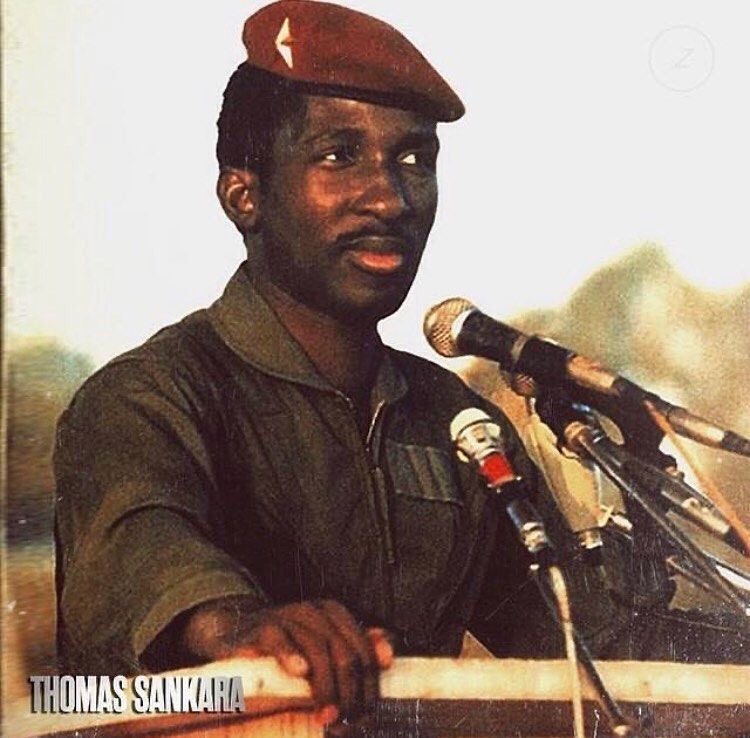
Thomas Sankara was a revolutionary African leader.
He drove out French imperialism from Burkina Faso and withdrew from IMF and made the country non-reliant on foreign aid.
He was assassinated in a coup led by his close ally, Blaise Compaoré supported by French imperialists
As far as African leadership goes, Thomas Sankara was cut from a different piece of cloth.
Here are some of his accomplishments, ONLY 4 YEARS in power (1983-87):
– He vaccinated 2.5 million children against meningitis, yellow fever and measles in a matter of weeks. – He initiated a nation-wide literacy campaign, increasing the literacy rate from 13% in 1983 to 73% in 1987. – He planted over 10 million trees to prevent desertification – He built roads and a railway to tie the nation together, without foreign aid – He appointed females to high governmental positions, encouraged them to work, recruited them into the military, and granted pregnancy leave during education. – He outlawed female genital mutilation, forced marriages and polygamy in support of Women’s rights – He sold off the government fleet of Mercedes cars and made the Renault 5 (the cheapest car sold in Burkina Faso at that time) the official service car of the ministers. – He reduced the salaries of all public servants, including his own, and forbade the use of government chauffeurs and 1st class airline tickets. – He redistributed land from the feudal landlords and gave it directly to the peasants. Wheat production rose in three years from 1700 kg per hectare to 3800 kg per hectare, making the country food self-sufficient. – He opposed foreign aid, saying that “he who feeds you, controls you.” – He spoke in forums like the Organization of African Unity against continued neo-colonialist penetration of Africa through Western trade and finance. • He called for a united front of African nations to repudiate their foreign debt. He argued that the poor and exploited did not have an obligation to repay money to the rich and exploiting – In Ouagadougou, Sankara converted the army’s provisioning store into a state-owned supermarket open to everyone (the first supermarket in the country). – He forced civil servants to pay one month’s salary to public projects. – He refused to use the air conditioning in his office on the grounds that such luxury was not available to anyone but a handful of Burkinabes. – As President, he lowered his salary to $450 a month and limited his possessions to a car, four bikes, three guitars, a fridge and a broken freezer. – A motorcyclist himself, he formed an all-women motorcycle personal guard. – He required public servants to wear a traditional tunic, woven from Burkinabe cotton and sewn by Burkinabe craftsmen. (The reason being to rely upon local industry and identity rather than foreign industry and identity) – When asked why he didn’t want his portrait hung in public places, as was the norm for other African leaders, Sankara replied “There are seven million Thomas Sankaras.” – An accomplished guitarist, he wrote the new national anthem himself
Study reveals AI may transform the way we understand emotion
An emotion identification technology created by scholars at the University of the West of Scotland (UWS) might benefit people with neurodiverse diseases such as autism.
https://t.co/MK4PA8kESC