Head of Maths | ResearchED & MathsConf speaker | CPD lead on High Expectations | Passionate about explicit instruction and its power to transform learning
Things I believe in:
Every student answering questions, every lesson
Mini-whiteboards
Knowledge knowledge knowledge
Blank canvas modelling
High standards of professionalism
Students doing what you ask at first point of asking
Retrieval practice
Brilliant CPD
Flexible working
other stuff too
There's a reason we don't teach "discovery-based swimming." We understand the risks outweigh the reward. That we abide it in schools suggests that we really don't think the stakes are very high.
(h/t: @rastokke )
https://t.co/xlYD3P8bVs
Many students are sold a lie that learning should feel pleasurable, and when that's not their experience, the cognitive dissonance eats them alive.
It's like someone signs up for strength & conditioning at a gym and the trainer tells them that they should feel pleasure doing pushups, sprints, deadlifts, etc. Or like a nutritionist saying "you should enjoy the taste of broccoli." Completely alienating.
What a good trainer will say is "Yes, it feels taxing, and that's okay, that's normal. Our goal here is not pleasure, it's satisfaction -- making progress, doing things you weren't able to do before, feeling good about what you've accomplished, transforming yourself in ways that are beneficial for your future. You're here to work, so let's do work."
People respect that, and there's a kind of comfort in knowing that we're all here to do serious work. Whether it's the gym or the classroom, that's what people need to hear.
It really is astonishing that explicit instruction still has its critics. When you actually look at the progress students make with well-structured, evidence-based teaching, the results speak for themselves. Your data is exactly what we should expect when instruction is clear, intentional and expertly delivered.
Today marks the release of Book 8 in my 16-part Tips for Teachers guide to... series. This one is on one of my favourite topics: Diagnostic Questions. I hope you find it useful.
Learning doesn’t always feel like learning. 🤯
Discover 4 surprising truths that flip common teaching instincts on their head.
👉 https://t.co/I1A2afG2Qo
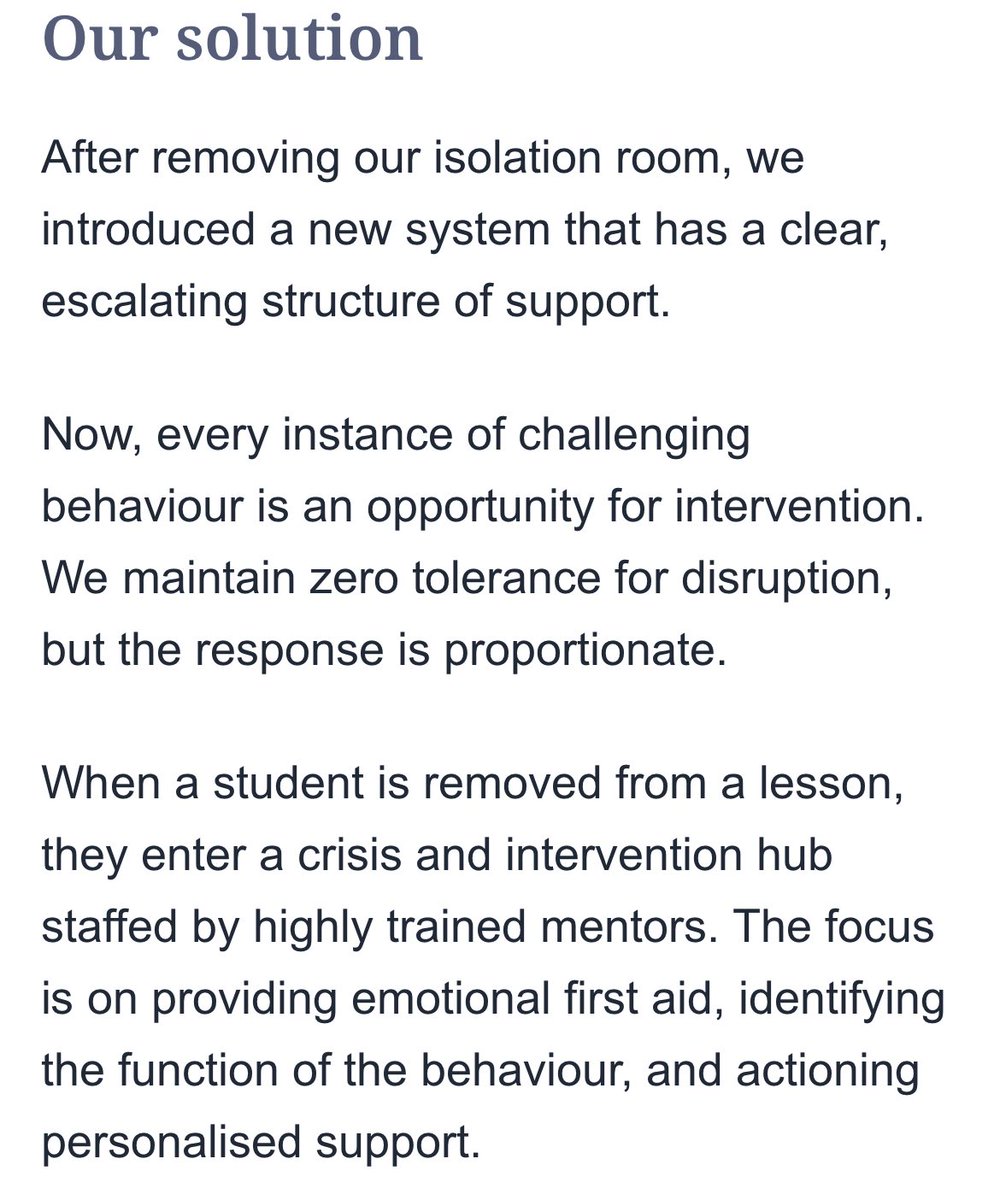
This article neatly demonstrates, ironically, why removal rooms are necessary. Because no matter how you slice it, sometimes students behaving chaotically need to be taken somewhere. That’s the removal room. You can call it an isolation room if you have a taste for Kafkaesque literalism. You can call it the Triage Zone. The Crisis Intervention Hub. But it’s still ‘the place they go when their behaviour exceeds the classroom’s capacity to absorb it’.
It is the Room of Requirement.
Schools need one, and if you look for it, it’s there.
This has been annoying me a lot but I couldn't really express why.
Then a friend said "it's because it takes enjoyment as an input, not an output".
And that's it: enjoying a subject is a long-term entitlement, not a method. Sometimes important things are not enjoyable.
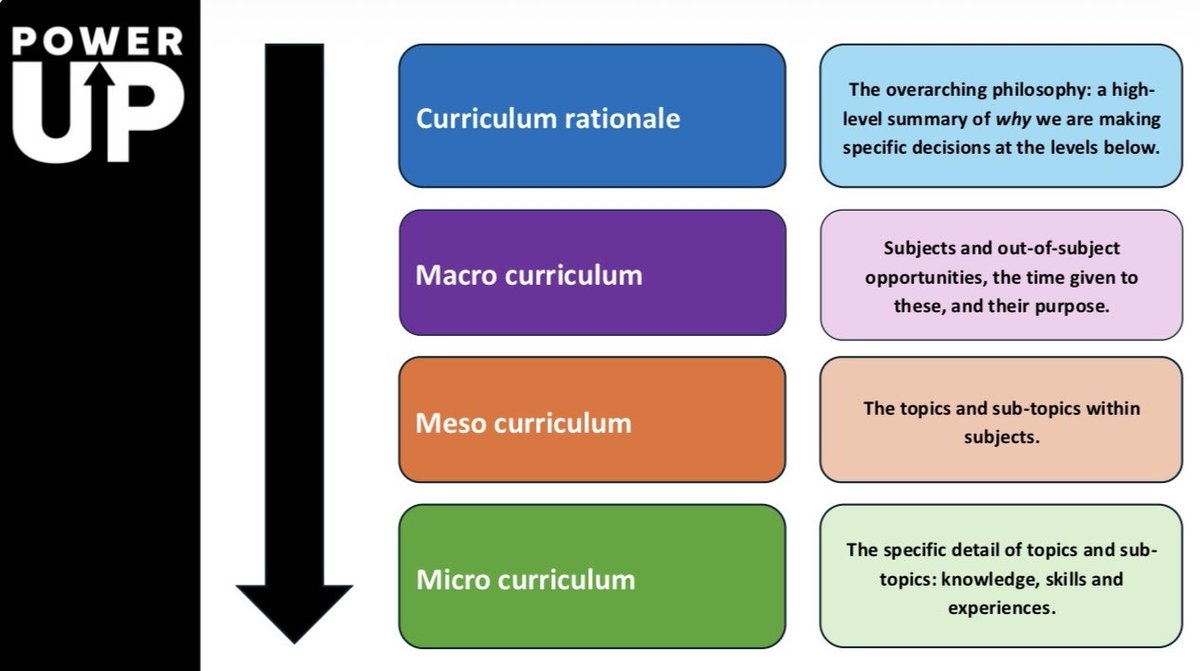
I’m delighted so many people who attended my researchED session, Power Up Your Curriculum, in Edinburgh and Cambridge found it so useful.
If you’re interested in similar input for your school, local authority or trust, please get in touch: https://t.co/hKrK7WzVi2
The idea that novice learners learn best- or at all- from inquiry is one of the most ubiquitous and damaging ideas in education.
It’s astonishing how a sector that literally specialises in teaching and learning can get it so dramatically wrong when it comes to the instruction of… itself.
🧵 The curriculum and assessment review has been published – here, @cerysturner7 rounds up the key recommendations, including scrapping the EBacc and making triple science accessible to all at GCSE (1/3)
https://t.co/o6o0d7hA8d
Thoroughly depressing article. All the eduvoices that have led to this carnage are present in England too, and we need to be constantly vigilant to prevent them getting anywhere near the levers of power.
https://t.co/L1ekkNvPc5
Inclusion is everyone’s responsibility.
The EEF’s ‘5-a-day’ principles for supporting students with SEND aren’t just good for some — they’re good for all students.