There is a Chinese distance concept called Li. It not just includes the distance but the effort as well. Something like, climbing uphill is 40 li but climbing down is 32 li. I guess such a thing can be used for supply chain routing?
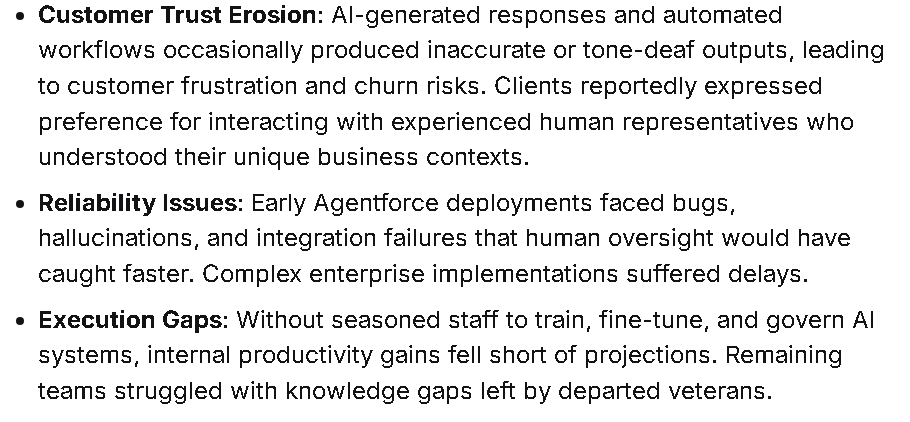
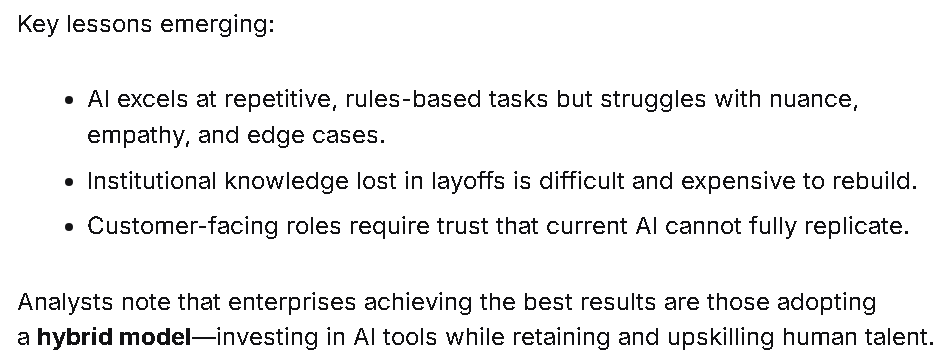
One need not go beyond this on the pitfalls on this topic. Oh!! By the way, there is no hybrid model. It's the starting days of moving towards an AI only world
An object type defines an entity or event in an organization.
A property defines the object type’s characteristics.
A link type defines the relationship between two object types.
An action type defines how an object type can be modified
This is Palantir Ontology. What's new here?
What is that? Work fills to occupy time or something? Look at it from the angle why Windows 7 is faster than Windows 11
"This is the nature of technological innovation: as infrastructure capacity expands, we simultaneously develop more demanding applications that strain these very improvements"
So, the real mess with Electron happens here. Who exactly is capable of rewriting all these from scratch?
1. A virtual machine(V8)
2. A compiler(V8)
3. A render(Blink)
What happens under the hood is, a compiler converts everything Javascript into bytecode and a render screenpaints it - all this is wrapped inside a virtual machine for each compile + render process.
This is a good explanation of the whole process.
https://t.co/6pB48irhd1
So, where exactly does Chromium(the backend for Electron) create the trouble?
1. Each VM instance is a separate process. Number of instances is directly proportional to the total resources
2. Javascript is not exactly a serious programming language. While Google did it's best to optimize V8, bad coding(which is actually a norm) really messes up the compile time with memory leaks and huge heaps leading to large pauses in garbage collection.
3. Blink is also optimized as much as possible. But the philosophy itself is inherently wrong. The more complex the UI, the more hard the render and the more the consumed resources. This makes sense. But then, using a design philosophy from an era of poor network speeds and low memory to render things like WebGL or some really complex layouts, the underlying architecture itself will fall apart. You really need a reinvention of how screenpainting and rendering should work.
TLDR: Electron is a hell not because those maintaining it are doing a shoddy job but because it is designed for systems which are 15 years old - like React which focusses on displaying everything quickly than displaying them effectively.
This is so messed up. Electron has become that kind of an untamed monster, the best you can do is restart the app to stop it from guzzling infinite memory. And if a company of the size of Discord is stuck like that, what can we even say?
The toughest problem with Rust is not the achievement of completing something, but when someone asks you to debug and correct someone else's code. Sorry. It may be good, but it's a toy, not a production grade language. https://t.co/lYvEyYNyJk
It officially entered administration on October 29 and has now completely stopped taking orders, while warning customers not to return 'any unwanted items'. Furthermore, the retailer has confirmed that customers should expect 'no further orders' to be delivered at this time.
Administrator Quantuma previously said it would contact the company that processes card payments in a bid to issue refunds to customers whose items haven't been dispatched. However, it has since been confirmed that refunds will not be possible for such customers.
Question is what can be achieved by a stand up which can't be achieved by an EOD status note structured in a way for the whole team to be aware.
https://t.co/aQ666SD6fK
Let's talk about the cost of a stand-up meeting.
Here in the SF-Bay Area, A senior programmer can make $300K/year or more. Starting salaries are more around $175K. Let's average at $250K to make the math easy.
Your cost to the company is higher than that. People typically use a "load factor" multiplier to convert from what you pay an employee to their actual cost to the company (which includes benefits, HR costs, &c.). When I was a CTO, I used a 2x load factor.
So, the "fully-loaded" cost of a senior programmer is $500K/year. There are about 250 workdays in a year—2,000 hours—so that fully loaded salary comes to $250/hour. That's how much it costs the company.
That "15-minute" standup takes an hour when you factor in conversations after the meeting, context-swap overhead, and other distractions.
$250/person * 5 people/team * 10 teams * 250 workdays/year == $3,125,000. That's "million," with an "m."
If you use mob/ensemble programming instead of "scatter-gather," you don't need a standup. So, using mob/ensemble programming saves the company $3M/year, on that single factor alone. (It's actually more when you factor in the "time value of money," as any good MBA would do.
Worth thinking about.
This innovation dimension is exactly what I am looking for. How long do you suppose AI means brute force number crunching? Nuance is expected any moment and this is just a stepping stone.
https://t.co/wgKg4vhyhD
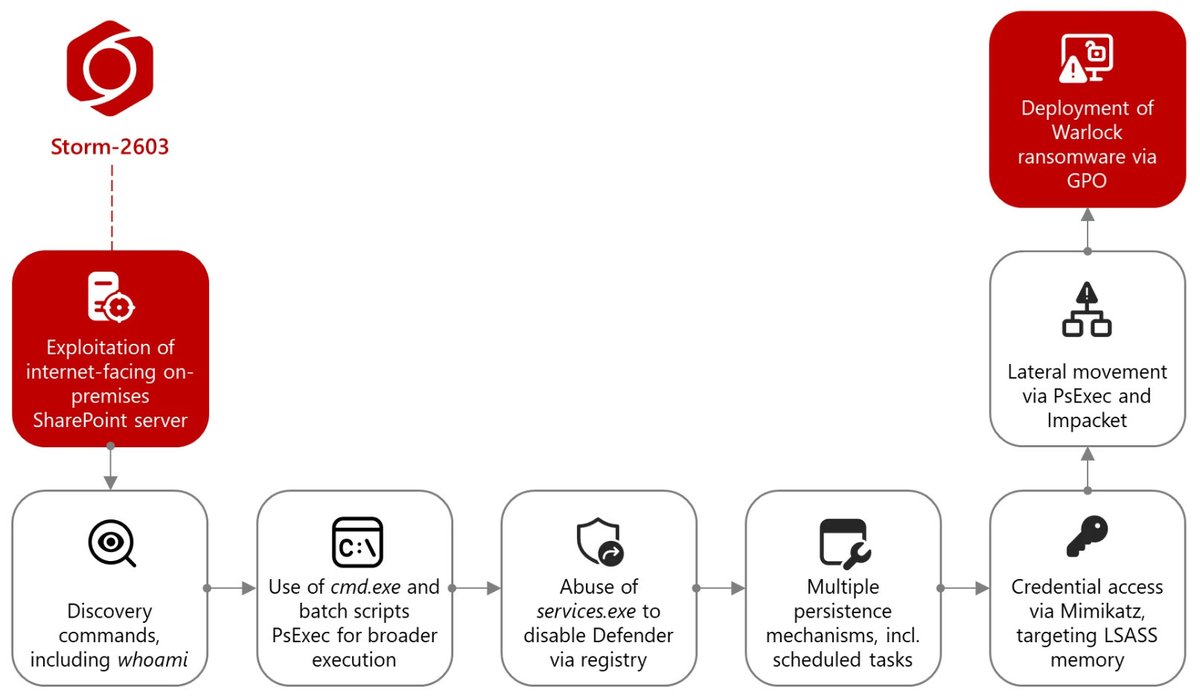
Microsoft Threat Intelligence team share details of Storm-2603 activity that leads to the deployment of Warlock ransomware by exploitation of on-premises SharePoint vulnerabilities CVE-2025-49706 & CVE-2025-49704. https://t.co/ZjVX7XqI5o
🚨 BREAKING: The US National Nuclear Security Administration - the agency responsible for maintaining and designing nuclear weapons - was breached in the Microsoft SharePoint hack.
We literally just published a video explaining why data centers are nuclear first-strike targets and how centralized systems make us ALL vulnerable.
Talk about a real-time proof of concept! Here's a snippet…
Mystery solved!!
Ubuntu 22.04 had an automatic update to systemd. This update restarted systemd that wiped IP rules and took down networking for Kubernetes infra.
The update came out 9 June. 9-10 June dozens of services had big outages. Like Heroku: https://t.co/n68O1LKXvx