this is a great move … self-defending systems, analogous to collision avoidance in self-driving, is critical to machine speed defense. Some predictions:
1. Artex-like frameworks today are basically script kiddies on steroids successfully exploiting technical debt at scale.
However in 6 months real tradecraft will be incorporated that enables silent, evasive attacks that bypass traditional security controls like EDR.
We’ve already proven this within our Adversarial Intelligence frontier lab, where an AI planning agent + context can select the right lolbin deployment vector that successfully bypasses both top tier EDR’s with zero security alerts generated
2. The speed at which attacks execute will make it difficult for centralized security decisionmaking (eg via SIEM) to effectively drive response workflows. New security systems must be designed like collision avoidance systems and push as much decisionmaking to self/defending edge systems. The problem is self-defense decisions must take place at the OS layer, hence this interesting move by @gdb and the @OpenAI team
3. An agentic attacker inevitably lives off the land - pilfering file systems, dumping processes for credentials, etc. What will be more effective in the Artex++ era when AI can quickly and silently bypass EDR and other controls: buying more EDR license or dropping 1B HoneyTokens whose alerts accelerate containment?
IMHO… every security control needs to be rewritten to push self defense at the edge, with a focus on reducing the blast radius of initial compromise
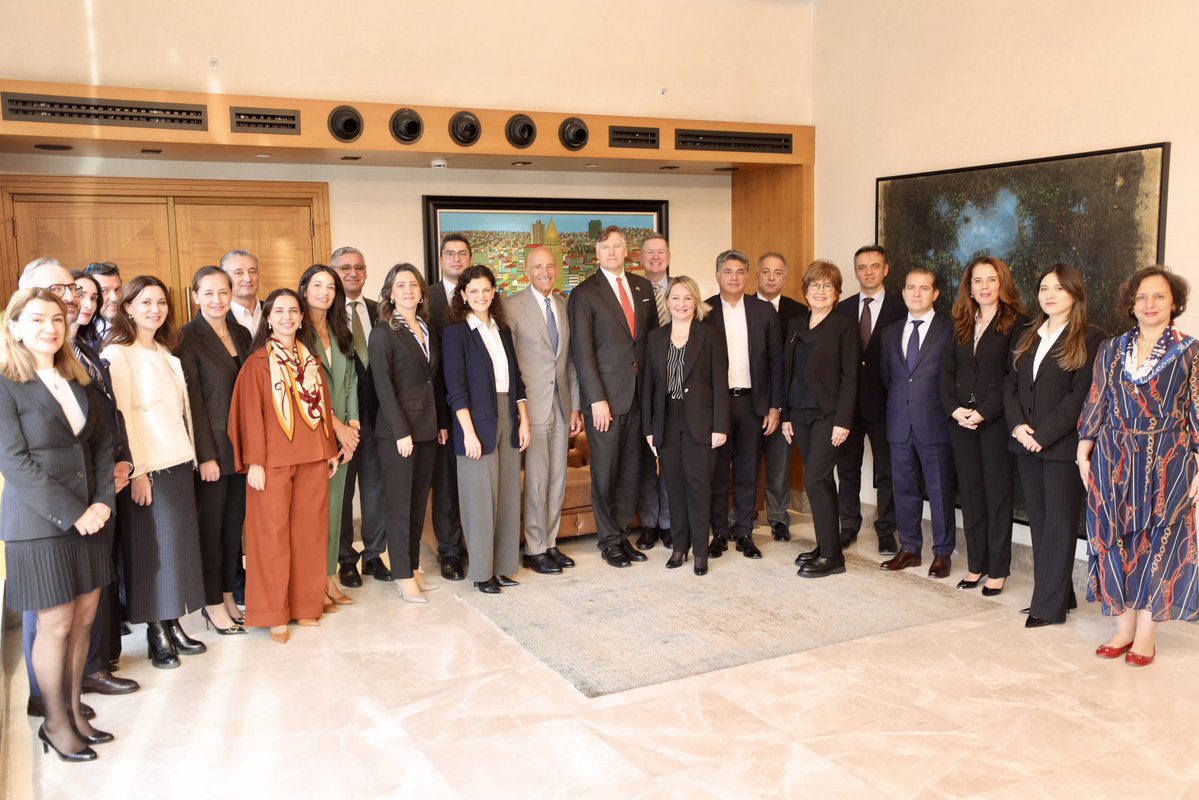
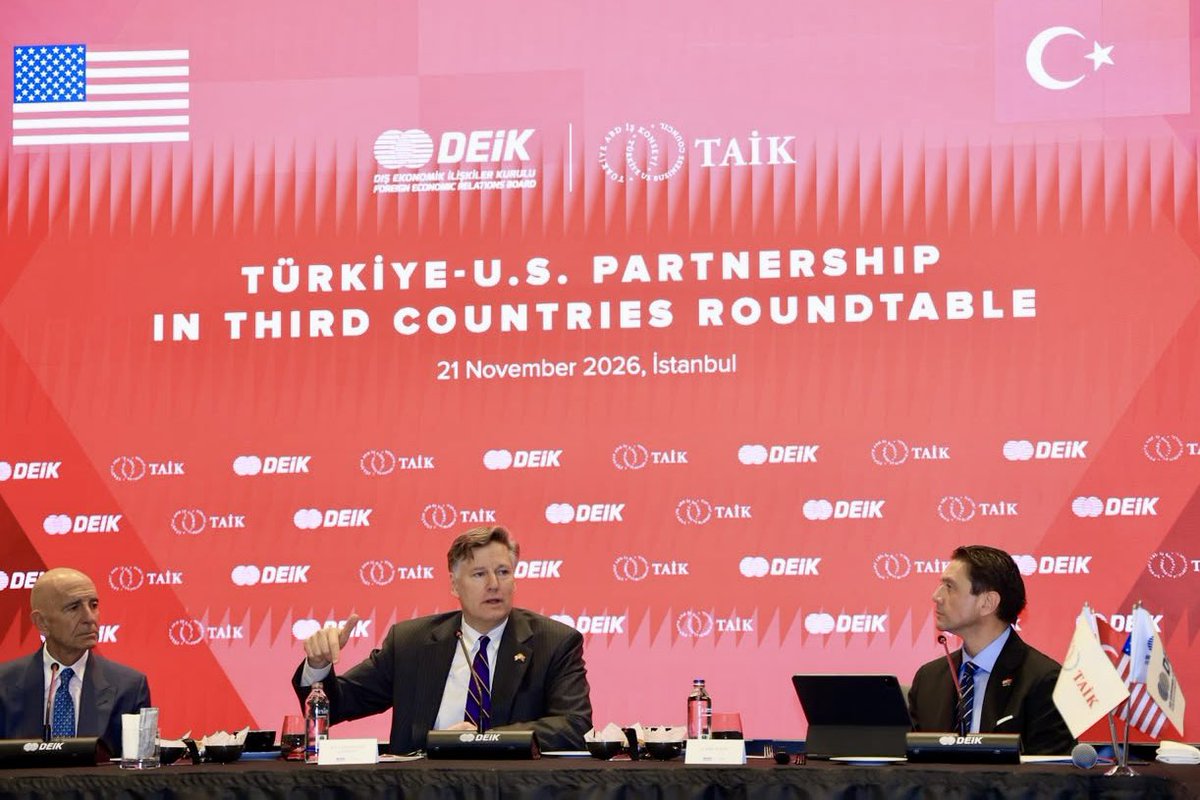
Istanbul has long been a crossroads of empires snd civilizations, and I was delighted to meet in that historic city with key Turkish government and business leaders to discuss a wide range of political, economic, and commercial issues. Our two countries—both in the private and public sectors—can accomplish much together. Teşekkürler Türkiye! 🇺🇸🤝🇹🇷
Finns are engineers at heart. We love facts and challenges and we want to solve problems. Also the AI-problems!
But we engineers are also human.
We must harness technology and engineers to make AI serve our everyday life in a secure and human way.
Together, globally.
Five founding partners. One shared mission. Watch how @nscale, @skel_tech, @telia and @verdacloud are joining forces alongside Nokia to build AI Gigafactory Northern – a federated model for trusted, resilient AI infrastructure across the Nordic-Baltic region.
Find out more: https://t.co/oqnAbflNYJ
#AIGFNorthern #EuropeanAI #AIInfrastructure
🚀 At Slush 2026 in Helsinki, Reid Hoffman made the case for strategic optimism about AI: pick the future worth building, steer toward it and probe the technology where it is weakest.
💸 His most candid line: an AI-driven venture fund built today "would lose money." He keeps testing AI on his investment decisions anyway, because the trying shows him what the tool can already do. It is "really good at due diligence," he said.
🔁 Recursive self-improvement is already transforming coding agents, he told Marko Ahtisaari of ICEYE, and the old software-as-a-service playbook is over. He still sees a large role for software that companies buy.
💊 At Manas AI, the drug discovery company he co-founded, AI widens the search for promising molecules. Regulatory review and clinical trials still have to happen.
🎓 His advice for everyone: use AI as a personal tutor. Ask it to assess what you know, then let it build the lessons.
⚖️ Why it matters for cybersecurity, information governance and eDiscovery teams: the American Bar Association's Formal Opinion 512 asks lawyers to understand the capabilities and limitations of the AI tools they use, or to rely on others who do. Testing a tool against matters with settled answers is one way to build that record.
🔍 Context: Hoffman is an early OpenAI investor and remains a Microsoft director until the company's Dec. 8 annual meeting.
❓ Which test is your team running on the AI tools it plans to trust next year?
🔗 Read the full analysis from ComplexDiscovery OÜ at https://t.co/kgk2IZvWwx
#Slush2026 #ReidHoffman #AI #eDiscovery #InformationGovernance #Cybersecurity #LegalTech #ComplexDiscovery
Zero-Day Operational Cyber Readiness
2023 15th International Conference on Cyber Conflict: Meeting Reality
Published by @ccdcoe
https://t.co/Dgs50xt8B5
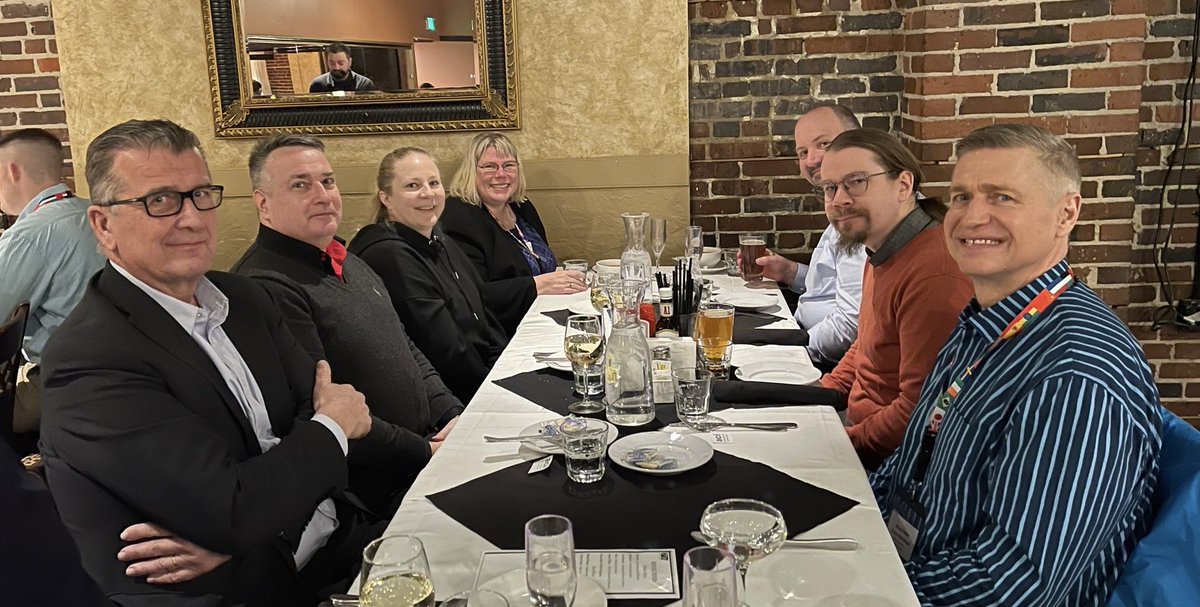
@TechDiplomat suited up in Dark Blue Marimekko Jokapoika Shirt "uniform of the intelligentsia" for dinner with Dr. Martti Lehto's researchers presenting at the
18th International Conference on Cyber Warfare and Security (ICCWS 2023)
We discussed Törni, Boyd, Gödel, Zero-day operational cyber readiness
Zero Day Operational Cyber Readiness is the state of being prepared to detect, contain, and respond to cyberattacks exploiting unknown or unpatched vulnerabilities with zero advance warning
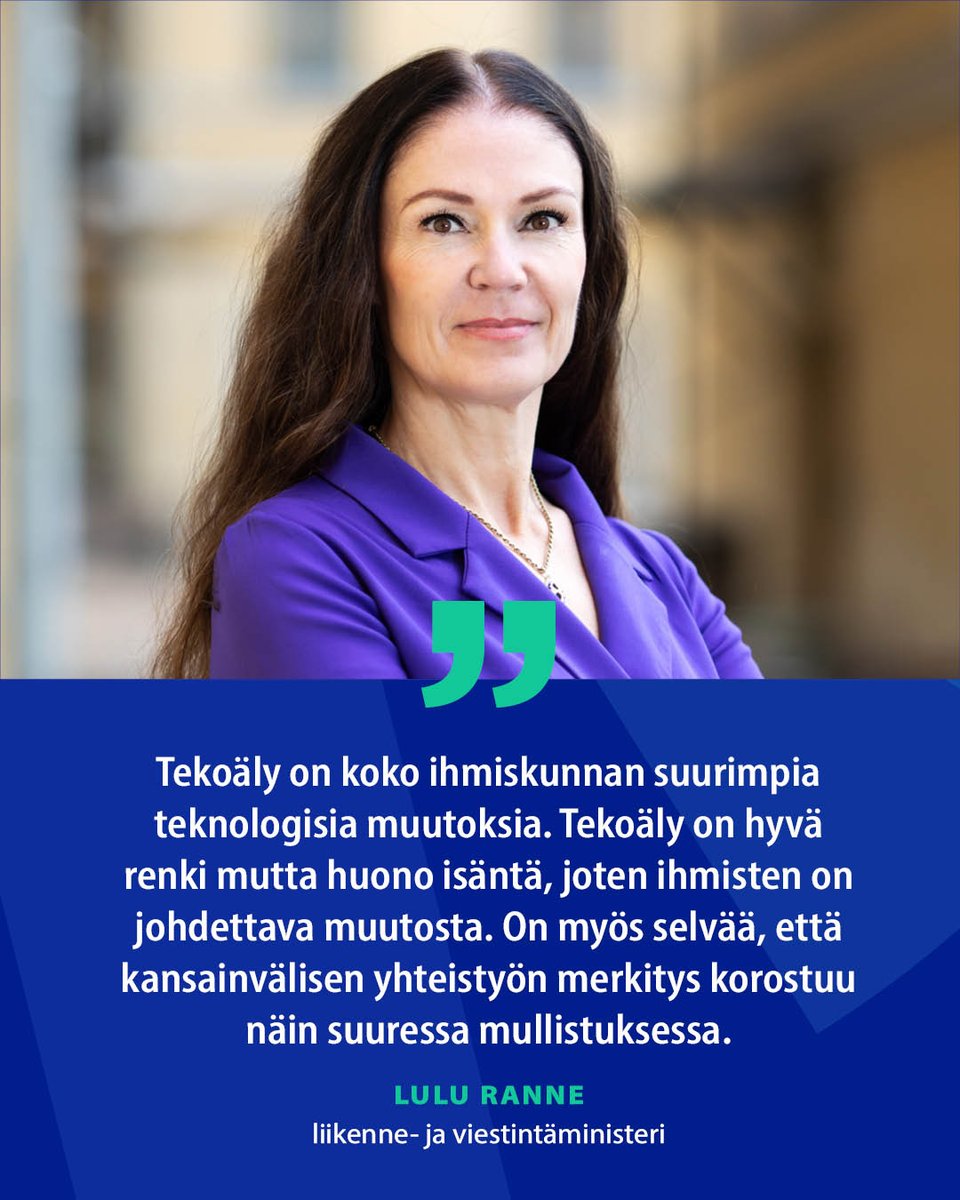
Liikenne- ja viestintäministeri @LuluRanne osallistuu maanantaina 23.11. YK:n järjestämään tekoälyn turvallisuutta käsittelevään huippukokoukseen Barbadoksen pääkaupungissa Bridgetownissa.
Lue lisää:
https://t.co/GETCHBJR65
It's important to remember that a single CVE is just 1 step in a multi-step attack full of exploited misconfigurations, compromised credentials, and ineffective security controls. Attached is an example - CVE-2026-59310 (CVSS 9.8 in vCenter) is 1 step in a sequence that led to the compromise of a Microsoft Entra Global Admin credential
(note: this is a real attack path from a production system, not a lab or simulation. No humans in or on the loop. No prior knowledge of the environment. Just NodeZero doing its thing in a large production system)
1. vCenter RCE via CVE-2026-59310 -> Implant
An unauthenticated attacker who can reach the vCenter syslog service exploits a directory traversal to achieve code execution on the host and drops an implant
2. Root on vCenter is used to locate and extract the machine-account keytab/hash
3. The stolen machine-account hash is used to authenticate to Active Directory.
4. Domain foothold is used to enumerate shares and extract SQL admin credentials from a log file
5. The discovered SQL Admin credentials are used to authenticate to the SQL Server
6. Sysadmin rights are used to abuse xp_cmdshell and drop another implant
7. The SQL service account’s SeImpersonatePrivilege is abused to become SYSTEM
8. SYSTEM access is used to dump LSASS and extract a Domain Admin hash
9. The stolen DA hash is used for pass-the-hash / Kerberos authentication
10. Domain Admin rights are used to move laterally and deploy another implant
11. On a host with an active privileged Office session, process memory is dumped to extract an Entra access token
12. The stolen token is used to authenticate to Microsoft Graph and escalate to Entra Global Admin
So as defenders, what do we do about this?!
1. The Implant / RAT that successfully deployed means the EDR was missing or misconfigured. Verify the tools you pay millions of dollars for are actually set up correctly!
2. Make sure you can detect the pivot early (especially the vCenter foothold, SQL abuse, LSASS dump, and token theft)
3. Make sure you have some ability for automatic containment (isolate, disable accounts, revoke tokens, kill processes)
4. Rotate or invalidate the credentials that were just stolen asap
5. Immediately threat hunt to every system the stolen identity touched
What's interesting is that the NodeZero Attack Path + NodeZero Context Graph become critical inputs to a "Blue Team Agent", where a planning agent parses out tasks to specialized defensive agents that immediately start mitigating, remediating, and threat hunting.
Stay tuned!
On stage at #BrooklynAI6GS, Nokia CTAO Pallavi Mahajan shared key takeaways from the Nokia Global Network Traffic Report 2026 🎙️
As AI scales toward 6G, networks must support higher uplink demand, edge processing and inter-data center flows: https://t.co/fPSOEj2Vlr #AI#6G
Great afternoon at I2C for From Click to Cloud with our partners: ARC, CTX HSV, @awscloud, and @PaloAltoNtwks!
🔗Stay tuned for future events: https://t.co/loZB8lGAnJ
VMware just patched a critical vCenter zero-day, CVE-2026-123890. No login needed, full admin access. Suspected China-linked attackers exploited it since September. No workaround. Patch now, then hunt for rogue admins. #CyberSecurity#VMware#PatchNow
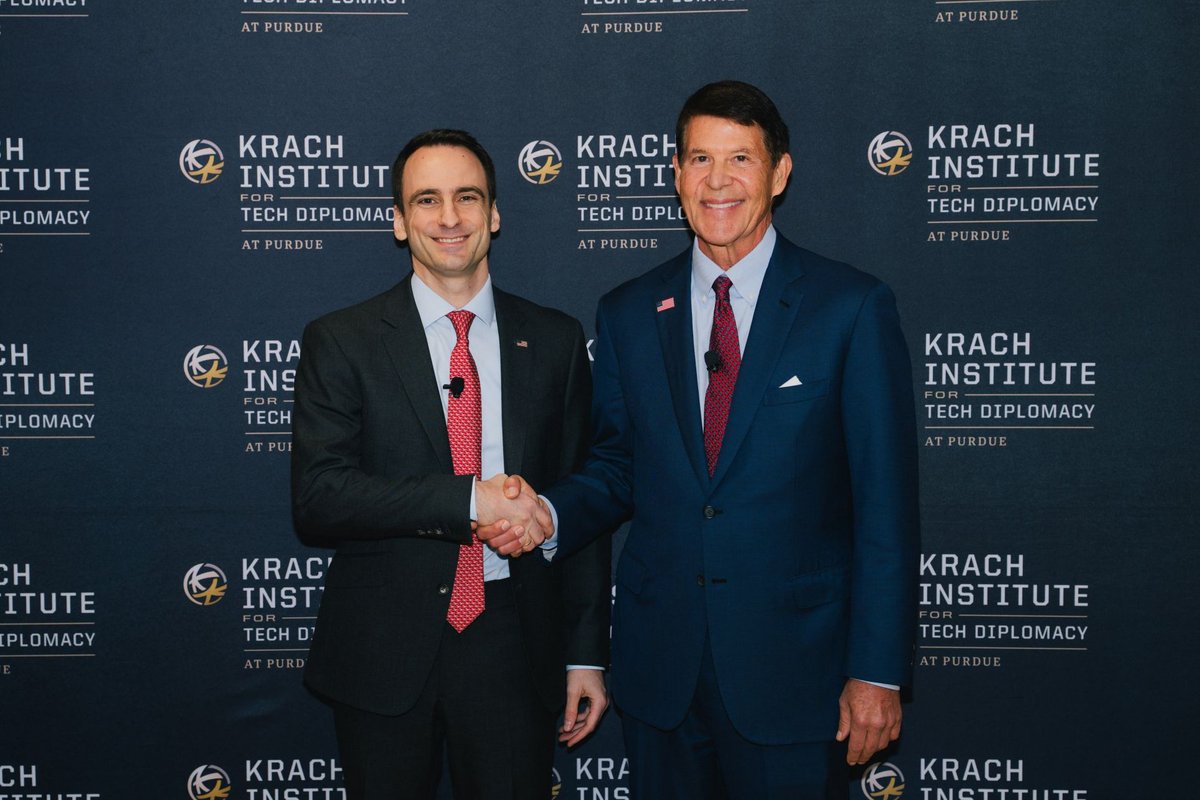
With the backing of dozens of visionary leaders, we launched the world’s first Global Trusted Tech Standard (xGTT) at the 2026 Trusted Tech Summit. xGTT represents a growing global commitment to advance secure, transparent, and resilient tech in alignment with democratic values.
🇪🇺 At #Slush2026, Mistral AI CFO Johan Bergqvist made a simple case: companies need to own and control their AI, and the supply chain behind it.
⏱️ He spoke in Helsinki on Nov. 19, hours before Anthropic began trading on Nasdaq.
🔓 His claim: today’s best open-source models can handle 99 percent of a company’s use cases at lower cost. That figure is his own, offered without a benchmark.
🏗️ Mistral is building out its own computing capacity, with a target of about 200 megawatts in Europe by the end of 2027.
⚠️ Why this matters for legal, security and governance teams: in June, a U.S. export-control order led Anthropic to switch off two models for every customer. Fable 5, the public model, didn’t return until July 1.
✅ Three questions to ask every AI vendor:
🔹 Which model sits under your product?
🔹 Where does inference run, and what can still leave that region?
🔹 Can the contract substitute another model if this one goes away?
🔍 And treat any model change as a validation event for review tools.
Who in your organization decides which model is allowed to touch the evidence? 👇
Read the complete article from ComplexDiscovery OÜ's artificial intelligence beat at https://t.co/A97Xadd7Bx
#MistralAI #AIGovernance #eDiscovery #InformationGovernance #Cybersecurity #LegalTech
The RoboCon 2027 program is out 🎉 10% off until 23 Nov:
Helsinki: RBCB-SAVE-10-HEL
Online: RBCB-SAVE-10-ONL
https://t.co/ajAmcdc3NQ
#RoboCon#RobotFramework
The 2026 Trusted Tech Summit gathered leaders from government, industry, academia, and the diplomatic corps to advance one central idea: Technology Must Advance Freedom. Speakers explored the Trusted Tech Stack, space innovation, the race to 6G, and US and allied tech leadership.