Arketipler
Jung’a göre arketipler, insan ruhunun kolektif bilinçdışında var olan evrensel, kadim kalıplardır. Kişisel deneyimlerimizle şekillenmezler; doğuştan gelirler.
•Persona (Kişilik Maskesi)
Toplumun önünde taktığımız sosyal maske. “Gündüz giydiğin en şık kıyafet; gece evde çıkardığında geriye kalan çıplak ruh.”
•Shadow (Gölge)
Kabul etmek istemediğimiz, bastırdığımız karanlık yanımız. “Aynada görmek istemediğin, ama arkandan gelen ve ayak seslerini duyduğun kendi gölgen.”
•Anima (Erkekteki Dişil) / Animus (Kadındaki Eril)
Karşı cinse ait içsel imge. “Erkeğin içindeki gizli kadın, kadının içindeki gizli erkek; ruhun öteki yarısı, kayıp ikiz.”
•Self (Benlik / Kendilik)
Tüm psişenin merkezi, bütünleşme noktası. “Labirentin tam ortasındaki güneş; bütün parçaların (persona, shadow, anima) birleştiği altın nokta.”
•Kahraman (Hero)
Dönüşüm yolculuğuna çıkan arketip. “Ejderhayı öldürmek için evden çıkan, ama asıl ejderhanın kendi içinde olduğunu anlayan yolcu.”
•Yaşlı Bilge (Wise Old Man)
Rehberlik ve bilgelik. “Ormanın derinliğindeki yaşlı ağaç; kökleri yerin altına, dalları göğe uzanan, fırtınada bile ayakta kalan bilgelik.”
•Büyük Anne (Great Mother)
Besleyen ve yok eden dişil güç. “Hem kucağında uyutan, hem de fırtınada yutan toprak; doğurgan bahçe ve aynı zamanda mezar.”
•Çocuk (Child)
Yenilenme, potansiyel ve masumiyet. “Karanlık ormanda parlayan küçük bir lamba; gelecekteki bütün olasılıkların tohum hali.”
•Trickster (Hilebaz)
Kuralları bozan, kaosu getiren. “Şölen sofrasına tilki gibi sızan, her şeyi altüst eden ama sonunda yeni bir düzen yaratan soytarı.”
Jung’un en büyük metaforu ise bütününü kapsar:
“Ruh, binlerce yıllık ormandır; arketipler ise o ormandaki kadim patikalardır. Onları tanımadan yürürsen kaybolursun; tanıdığında ise eve dönüş yolunu bulursun.”
"Çok fazla şey bilen bir adam, hiçbir yere sığamaz."
Nietzsche'nin bu sözü, bugün bizim için sadece felsefi bir çıkarım değil; bizzat içinde yaşadığımız bir "farkındalık laneti"
I just spent an hour with OpenAI's design lead for Codex and Figma's AI design director. Here are the 10 steps they use to design AI products in 2026.
Step 1: Kill the linear pipeline. Paper sketches to wireframes to mockups to handoff existed because each next stage was too expensive. Codex made prototypes cheap. The workaround died.
Step 2: Set up the Codex desktop app. Open any local folder. You are inside a working environment in seconds. No engineer required.
Step 3: Install the Figma MCP. This creates the bridge between code and canvas. Tag @figma in any prompt and Codex reads your design system directly.
Step 4: Import code to Figma. Drag the pop-out window over your running app. Tell it to import specific screens. Every padding value, border radius, and shadow transfers pixel-perfect.
Step 5: Push Figma back to code. Copy a component link from Figma. Paste it into Codex. It diffs against your codebase and generates the code change. No handoff doc. No redline spec.
Step 6: Align tokens and name components. Good naming is table stakes for humans. Essential for agents. Align design tokens with CSS tokens one-to-one. Use annotations so intent travels alongside the visual output.
Step 7: Match the tool to the question. Canvas for exploration. Code for interactions. Both for shipping.
Step 8: Start with polish. Use code for the button animation that never feels right, the loading state engineering skipped, the string change stuck in the backlog for three weeks.
Step 9: Shift the starting point. Open Codex and describe what you want. Show the team something real in the first meeting. Edge cases surface in the first conversation instead of the third sprint.
Step 10: Use AI as your tutor. You will hit walls. Ask. The AI never clocks out.
Every designer still following the 2024 pipeline just lost a year of compound learning. The tools are free to download.
This guy knows his shit & this is exactly why this war on Iran is so scary!!! 🤬🤬🤬🤬💔💔💔💔💔💔💔💔💔💔💔🙏🙏🙏🙏
It's a 7-minute video, but worth the watch! 💙💙💙💙💙
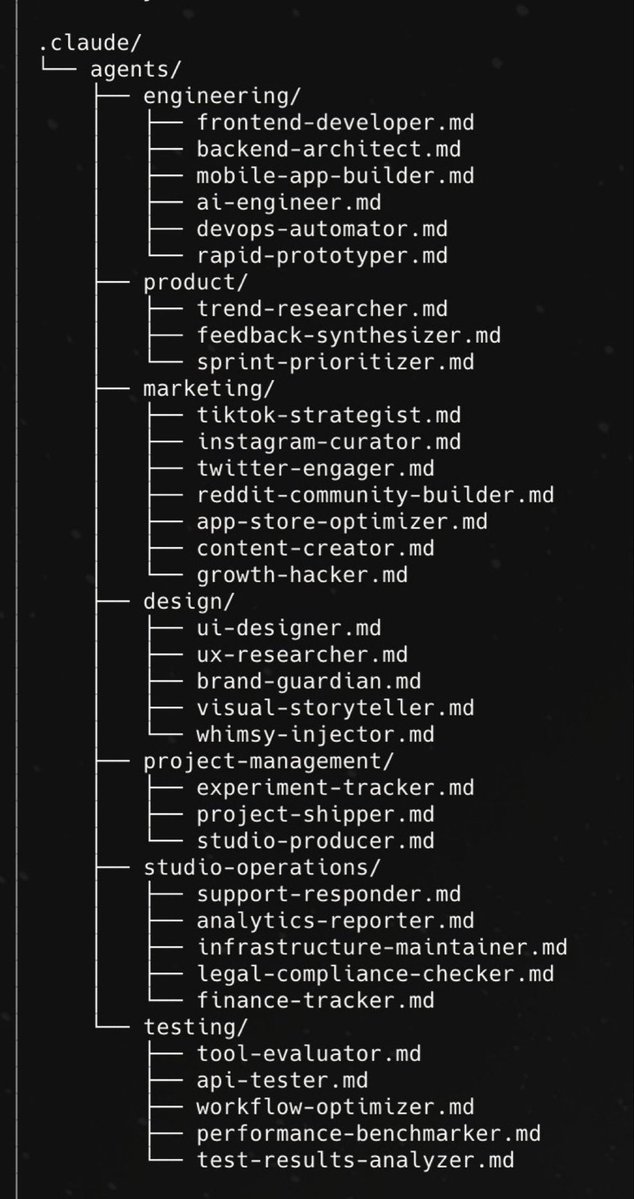
this is what a company looks like in 2026.
not people. not offices. not salaries.
a folder.
.claude/agents/
engineering/
marketing/
design/
ops/
testing/
every role. every department. every function.
all .md files.
i have 12 of these running in OpenClaw right now.
the org chart is dead. the directory is the new company.
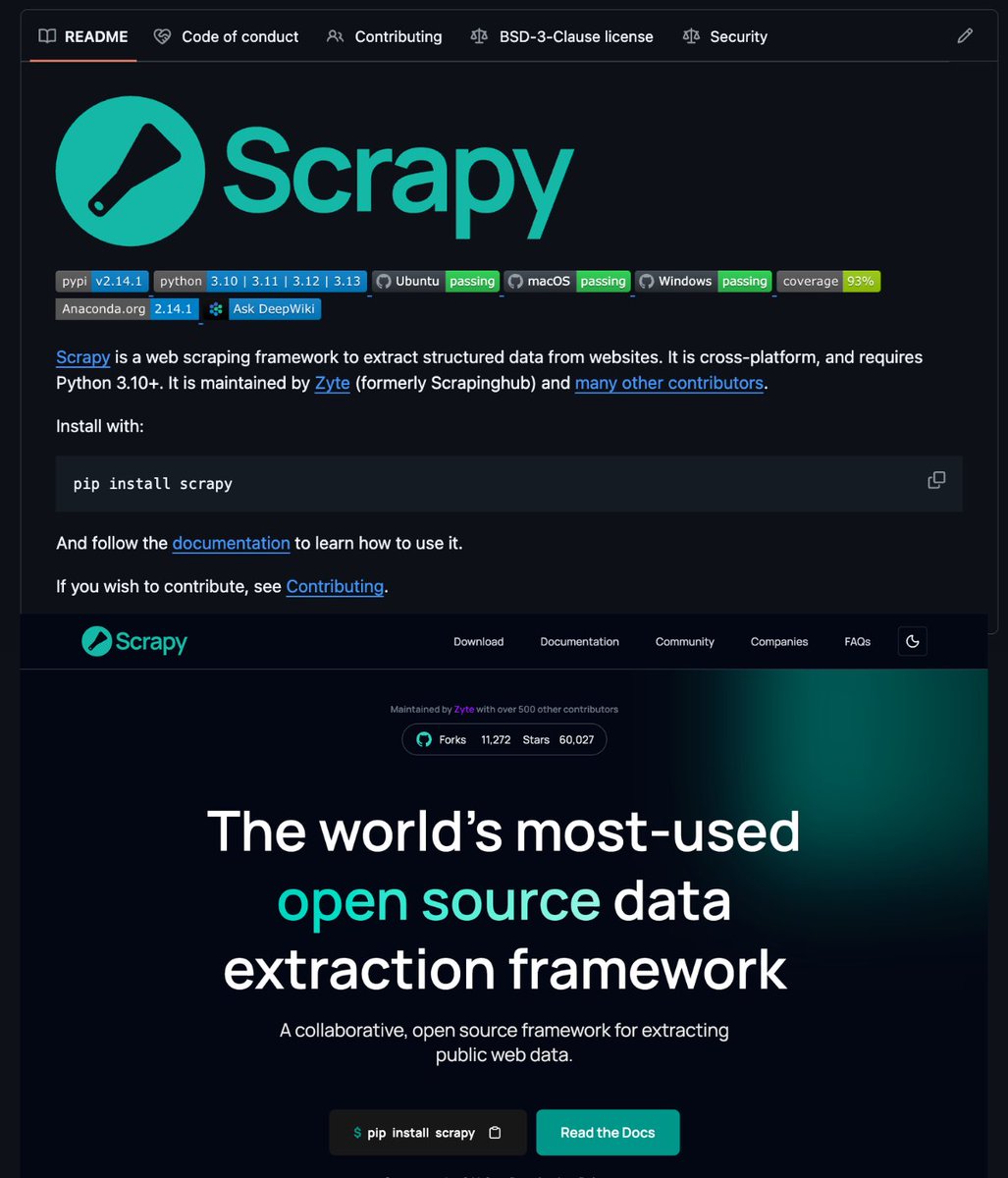
🚨This Python framework scrapes ANY website and extracts structured data in minutes.
It's called Scrapy and it crawls and extracts structured data from any website entirely from your own machine.
No SaaS scraping bills. No cloud API limits. No data leaving your infrastructure.
It's powered by Python's most battle-tested crawling engine with 59K stars and 15+ years of production use.
→ Define your spider once
→ Get clean structured data
→ Scale to millions of pages
→ Export to JSON, CSV, XML instantly
All running locally. Zero cloud dependency.
But it's not just a scraping script.
It's a full data extraction framework:
→ Async architecture for parallel crawling at scale
→ Built-in middleware for proxies, retries, and rate limiting
→ CSS and XPath selectors with zero boilerplate
→ Pluggable pipelines for cleaning, deduplication, and storage
→ 54,800+ production projects already depend on it
100% Opensource. BSD-3 License.
Works on macOS, Windows, and Linux right now.
This is the moment web scraping stops being a SaaS subscription and starts running on your own terms.
Link in the first comment 👇
This ones kinda ridiculous...
Drop a video idea in Google Sheets.... and do nothing.
In seconds, a full YouTube video gets made, uploaded, and logged without you touching a thing.
Follow + RT + reply “Post” and I’ll DM you the full setup for FREE
1️⃣ Police have surrounded the Istanbul HQ of Turkey’s main opposition CHP, blocking roads and banning protests. This follows a court ruling dismissing the provincial leadership and appointing a trustee. The takeover is expected tomorrow, & CHP is calling people to the HQ🧵