The agents that win inside companies won’t be the ones with the smartest prompts.
They’ll be the ones that already understand your templates, brand rules, and content library.
@Templafy just brought that to PowerPoint.
Thread in the comments:
While Andhra Pradesh goes full steam aggregating mega 10,000+ acre parcels at Sri City and Kosalanagaram, Tamil Nadu is navigating a shifting industrial landscape.
Due to skyrocketing land acquisition costs around Chennai, assembling contiguous 10,000-acre mega-zones is no longer economically feasible. In response, SIPCOT is actively pivoting to develop smaller, distributed industrial parks (1,000–2,000 acres) across northern districts.
However, scaling across fragmented hubs creates a logistics dilemma:
Andhra Pradesh's Edge: Massive plug-and-play contiguous land directly feeding NH-16 and new expressways straight into Kattupalli and Kamarajar (Ennore) ports—completely bypassing city traffic. Pure operational eye candy for global OEMs.
SIPCOT's Challenge: Pushing south of the Palar river toward the Cheyyar & Cheyyur belt offers the only scalable frontier (Cheaper Land), but heavy freight remains bottlenecked on GST Road (Tambaram/Chengalpattu) with 3+ hour delays to northern ports.
The stalled greenfield expressway was intended to be the high-speed arterial bypass linking these southern parcels to the Chennai Peripheral Ring Road (CPRR) and port clusters. What started as the Chennai–Salem corridor became Chennai–Tiruvannamalai, then Oragadam–Cheyyar, and recent industrial corridor tenders have faced repeated cancellations and administrative hurdles.
Land economics dictates parcel sizes, but logistics velocity decides where global capital lands.
#TamilNadu #AndhraPradesh #SIPCOT #SriCity #Manufacturing #Infrastructure #Logistics
AI coding agents can spend hours on a task without a calibrated sense of time passing.
Long-horizon evaluations may therefore need to measure duration-following directly instead of treating sustained task performance as evidence that an agent knows when to stop.
🚨 Astra update: Codex will run on it
Tibo Sottiaux (OpenAI's Codex lead), direct today: Codex is "almost 100% reliable," open-source, and confirmed - "(will have Astra)"
• First direct confirmation tying Astra to a specific shipping product, not just a standalone model
• Codex Web: 99.98% uptime. API, CLI, VS Code extension: 100%
• Still no Astra release date - but now a real integration target exists
The safety pause never said what Astra ships into. Now we know: Codex gets it first
Does this mean Astra ships to devs before it ships anywhere else?
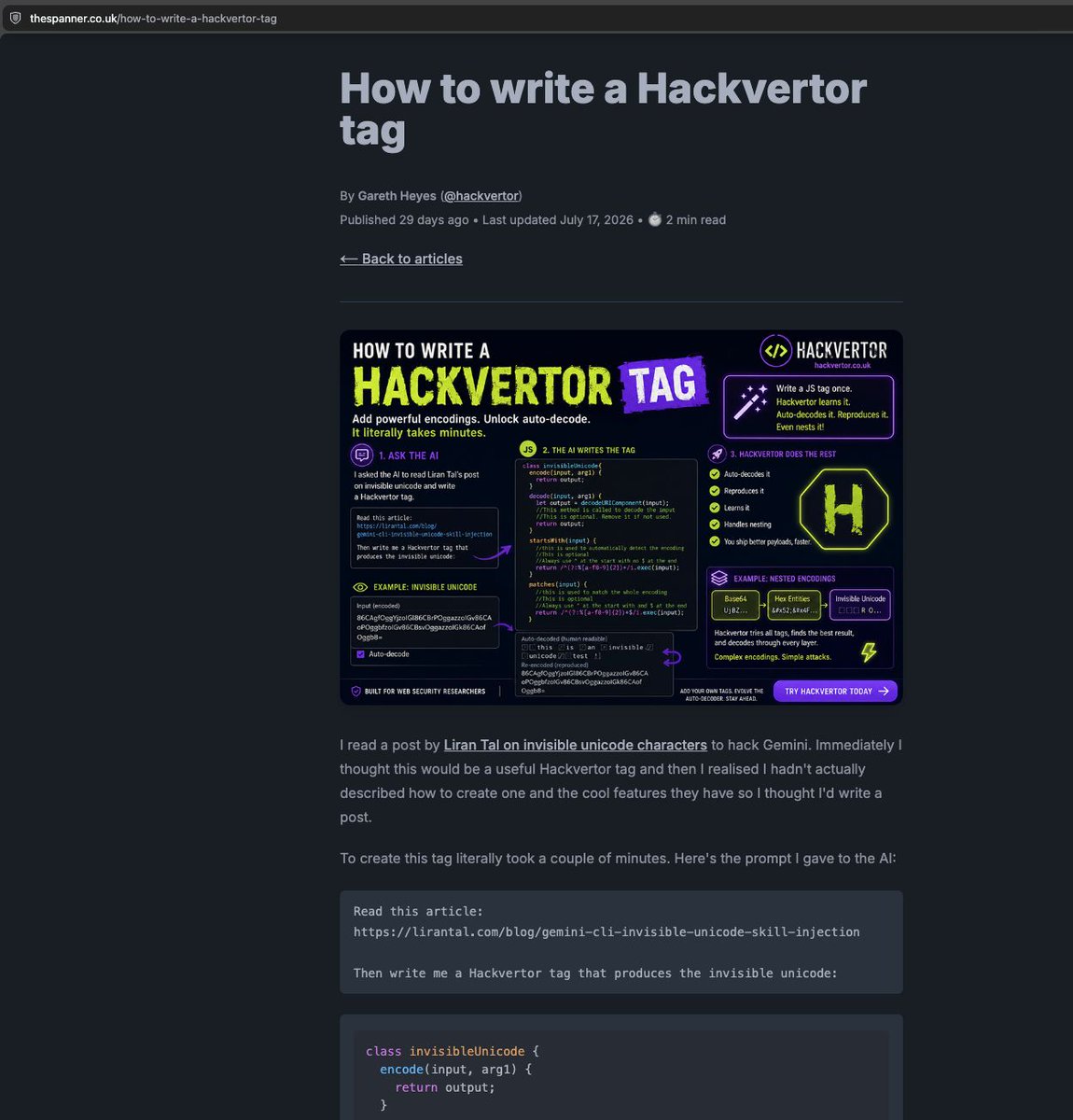
oh woah, this one is for the books for me! fellow security researcher Gareth Heyes from PortSwigger has been inspired by my Gemini CLI invisible characters hack and wrote up a follow-up article on this. I'm extremely and genuinely flattered 😍 ❤️
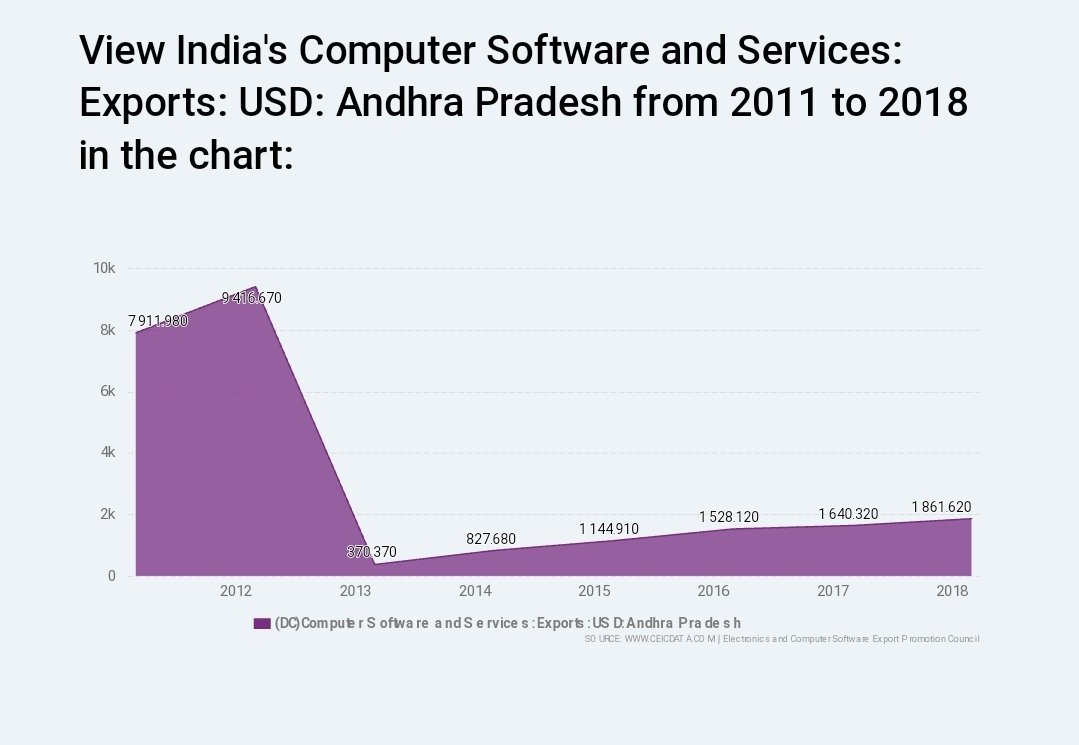
Many people simply ask why Andhra Pradesh isn’t among the top states in IT exports. The reality is that building a new IT ecosystem is extremely difficult. We had an established ecosystem, but lost much of it after 2014.
As of now, Bengaluru, Hyderabad, Chennai, Pune and Delhi-NCR dominate India’s IT sector. These cities will continue to grow, and replacing them is not realistic.
Instead of trying to challenge these established hubs, AP should focus on attracting small and medium-sized IT companies, developing affordable IT spaces and offering low-cost land. Even if a small percentage of companies shift to emerging cities, it can create a strong ecosystem.
At the same time, AP should aggressively focus on new-age technologies like AI, Quantum Computing, Cloud, Semiconductors and Deep Tech.
Build a new ecosystem rather than trying to replace the old ones.
A 100-node knowledge graph has 4,950 possible edges. Your extraction pipeline found 300 and called it done.
The gap isn't missing data. It's edges nobody wrote down because they were obvious to whoever wrote the doc.
Entity resolution is where most of them die. Same company, four spellings, four nodes, zero connection.
Benchmarks put naive string matching around 70% on real corpora. That means one edge in three is silently absent.
And the loss compounds by hop. 70% accuracy over two hops is 49%. Three hops is 34%.
Your traversal isn't failing on the query. It's failing on a merge that didn't happen at ingest.
The fix is boring and it's the entire job. Blocking, then embedding similarity, then a model only on the ambiguous pairs.
That last group is usually under 5% of candidates, which is what makes it affordable.
Degree distribution tells you the rest. A handful of hub nodes touch everything and drag noise into every walk.
Cap traversal by degree, not relevance. Two hops answers most questions. Three returns your whole database.
Count the distinct entities in your graph, then count how many you actually have. The gap is your real accuracy.
How to use the @Khadas_official Mind Graphics 2 dock (@NVIDIA GeForce RTX 5060 Ti 16GB USB4 eGPU) on Ubuntu 26.04.
https://t.co/7tev4xyvJP
While the Khadas Mind Graphics 2 dock is automatically detected and active on Ubuntu 26.04, the NVIDIA GPU suffers from poor performance, and fixing performance issues with the latest NVIDIA drivers causes boot failure when the eGPU is not connected.
The article linked above explains how to get the Mind Graphics 2 dock fully operational on a mini PC running Ubuntu 26.04.
LLMs can suggest scientific mechanisms, but this paper finds that letting the agent choose experiments and fit the mechanism is far less data-efficient.
So scientific agents may work better when the LLM proposes hypotheses but does not decide what the evidence means.
MDA turns the LLM into the hypothesis generator. Bayesian inference scores the candidate mechanisms, and value-of-information chooses the next experiment where those mechanisms disagree most.
That changes the experiment budget dramatically.
On FORCEBENCH, MDA reaches roughly the accuracy of an unthrottled Opus 4.7 agent using 8 experiments instead of about 41, while reaching a 93% numeric pass rate versus 31% for the budget-matched Opus 4.7 LLM agent.
The mechanism is easy to see in the examples: for Yukawa forces, it probes long range because the competing laws look identical nearby; for Coulomb, it changes source charge because moving the probe alone cannot separate the true law from a charge-blind fit.
When predictions still fail, MDA asks the LLM for new mechanisms and repeats the loop.
Let LLMs propose scientific ideas, but let explicit uncertainty and designed experiments decide what survives.
When an AI agent fails, blaming the model can send you to the wrong fix.
This Scale AI paper argues that agent debugging should start by asking where the first unrecovered failure happened: in the model, context, memory, tool layer, another agent, grader, or environment.
That matters because the same visible mistake can have different causes.
An ignored instruction might mean the model saw it and failed to follow it, or the harness dropped it during context compaction.
The paper organizes 41 failure modes around these interactions, tagging each by both the interaction and the side at fault.
It tests the taxonomy on 40 worked examples.
GPT-5.5 matched human category labels with 80% accuracy and Cohen’s κ of 0.76.
Using 4 judges together pushes category precision to 96% when all 4 agree, although coverage falls to 68%.
For agent teams, the practical shift is simple: trace the failure back to the component that broke first, then decide whether to retrain the model, fix the harness, or repair the environment.
– arxiv. org/abs/2607.28802
Title: "Model or Harness? An Interaction-Centric Taxonomy for Localizing Agent Failures"
Many frontier AI companies know they are playing with fire, as their AI models can already cause a mass-casualty incident at any moment. Their founders and senior employees don't really care, as they see it as a path to get extremely rich and hold immeasurable global power. AI governance at this point is extremely weak, as authorities, institutions, and local systems have not yet adapted to the new level of threat and would not be able to respond quickly and effectively to contain such an incident. We don't see it being openly discussed because politicians don't want to take the blame.
Microservices have revolutionized how we build and scale applications.
However, microservices systems are also very dynamic.
What does this mean?
Services can come and go, scale up or down, and even move around within your infrastructure.
And therein lies the problem.
How do your services find and communicate with each other reliably?
Hardcoding IP addresses and ports is a recipe for fragility. If a service instance changes location or a new instance spins up, your entire system could grind to a halt.
A better solution?
Service discovery.
Service discovery acts as a central directory for your microservices. It provides a mechanism for services to register themselves and discover the locations of other services.
Houthis & Iran conflict show that 2010s era persistent UCAV are very vulnerable against committed adversaries w/ mobile, pop-up air defense.
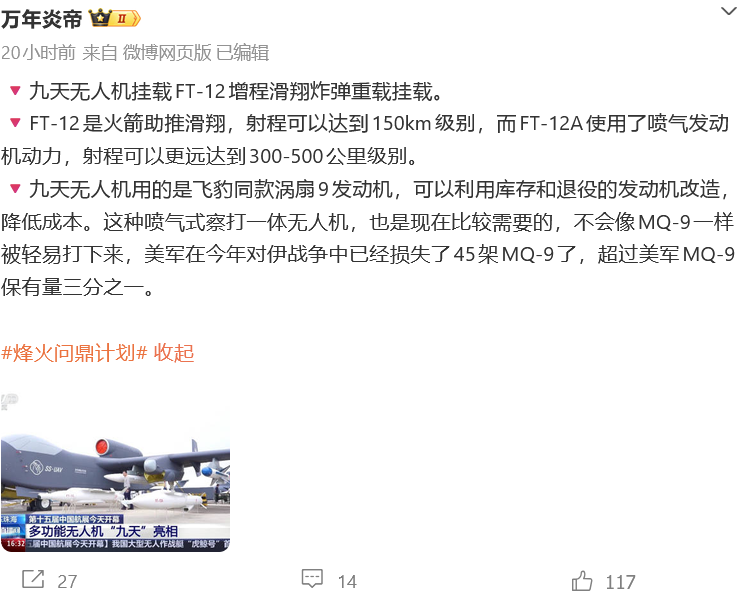
PLA's CH-4 & GJ-2 will likely suffer large losses even operating in permissive air space. As such, it needs to move toward more VLO UAS like GJ-11/21 or large bomb truck type of UCAV like GJ-3 & Jiutian that can carry cheaper stand off munitions like jet-powered FT-12A & other "smart bombs" that can glide up to 500 km to target. This offers good compromise in munition cost/availability vs risk to aircraft.
Currently, USAF faces a problem where it either fly B-52s w/ expensive JASSM (it prefers newly produced JASSM-ER w/ latest electronics for better ECM capabilitis) or attritable platforms like Reaper w/ lower cost munitions or stealth fighters like F-35 that have high OPEX & low payload.
So the outcome of that is running down on expensive long range stand-off munitions & losing a lot of reapers.
It's clearly not sustainable to be using half of your JASSMs & losing 1/4 of reapers over a long period. As such, a long-ish range large bomb truck type of drone carrying shorter ranged/cheaper stand off munition seems like a good compromise.
So ultimately, the problem w/ current USAF losses are not that its platforms are too high-end, but that they are not high-end enough.
A lower cost VLO drone like GJ-11 that can operate w/ lo XMIT would not suffer such losses. A bomb truck drone that can fire large number 200 nm stand off munitions would also not suffer such losses or use up the most advanced LR precision munitions that you'd want to use in a westpac conflict.
From now on, if you use Claude just to translate text into another language, it will be considered AI-generated.
This has serious consequences, for example, for students at universities, because detectors will now flag it as AI content.
CNBC's latest article on OpenAI.
CNBC reports OpenAI investors were surprised by revenue chief Denise Dresser’s sudden exit.
Former employees also describe a hire-fast, fire-fast culture inside OpenAI is so intense that one called it a “pressure cooker” environment.
And Chief Revenue Officer Denise Dresser will leave OpenAI in the coming weeks to pursue other opportunities.
Dresser remained directly responsible for global revenue strategy across enterprise and customer success.
Dresser’s exit is especially consequential because she oversaw OpenAI’s enterprise business, which she said represented 40% of revenue and was on track to match consumer revenue by the end of 2026.