Fashion - I love it. I've been preparing for it all my life and didn't know it. Despite what you see here - I love clothes, have a knack for putting things together, and shopping has always been one of my favorite pastimes. Now I can do it with someone else's money.
I'm going to say something that might upset some people, but I believe it deeply and the evidence backs it up.
The single most powerful thing Black people anywhere in the world can do to fight racism is to become collectively wealthy.
Not just individually successful, but wealthy as a community.
I watched this happen with other groups. When Japan was poor, Japanese people in America were put in internment camps. When Japan got rich, suddenly everyone wanted a Toyota and Japanese culture became aspirational.
Korean Americans were targets of violence in the early 1990s. Today, after South Korea's economic rise, Korean culture is one of the most admired in the world.
The pattern is so consistent it's almost boring: poverty invites contempt, prosperity commands respect.
So when I hear debates about fighting racism in America, I always think the same thing. Yes, call out injustice when you see it, absolutely. But also build businesses, create wealth, and invest in your children's education like your life depends on it.
Make your community so economically powerful that discrimination becomes expensive for anyone who practices it.
That is how you win the game everyone else already figured out.
I want to introduce you to Steve. He’s 83. His wife died a few months ago and he comes to this lodge in Spring Mill, Indiana and draws. He taught art in Terre Haute, IN his whole life. He also did courtroom sketches in court cases. In the comments I’ll share some pics from his sketchbook. He was excited when I said I was going to share his sketches with the world.
This is one of the deepest stories in the Bible. While the story uses relatively crude elements that were meaningful to the culture at the time, the underlying principles transcend those cultural symbolisms. It illustrates some profound social principles that govern the establishment of mutual obligations between relational parties. Every meaningful relationship is held together by a commitment to sacrifice - the cost each party is willing to bear to sustain the whole. The story demonstrates that "capacity for sacrifice" (how far one is willing to go for a collective "whole") supercedes the "material" of sacrifice in forming the basis for true reciprocity (eg. Willingness to share one's last slice of bread supercedes the giving of 20 loaves out of a truck load of bread). Also a partner who truly cares never permits the consumation of your sacrifice budget. The evidence of the capacity for it is sufficient assurance to trigger commensurate obligation towards you (eg. Recognizing the gesture of the offer of the last slice of bread, but refusing to accept it).
While Jabari Stephen Brown (the pilot who won the MrBeast challenge) was initially detained by authorities in Paraguay, he was quickly released by order of prosecutors after they found no evidence of his involvement in the drug smuggling... now show pictures of the captain who flew the plane.. I wanna see something 🤔
SpaceX is actively hiring world-class engineers/physicists for SpaceXAI, even if you have zero prior experience in AI. Smart humans figure it out fast.
Please send an email with ~3 bullet points demonstrating evidence of exceptional ability to [email protected].
Yesterday, Chinese Ambassador to Nigeria posted on Twitter that Nigerians can now export cow bones duty-free to China.
Under the comment sections, some Nigerians were asking the ambassador to tell them what they are using the cow bones for😁
Some were telling the ambassador to tell his people to come and setup the processing facility here in Nigeria, so they can create jobs.
Funny people. I laughed at our inability to do simple Google search.
As a livestock farmer and Agro commodities trader, I already know the uses of cow bones.
And about building a factory here in Nigeria? Nigerians are the ones to do it, but sadly everyone is building hotels😁
Let me tell you a few uses of cow bones.
Here are 4 major uses of cow bones you can mention in your content;
✍🏻Bone meal fertilizer: Cow bones are processed into bone meal, rich in phosphorus and calcium, used to improve soil fertility.
They prefer this to fertilize their soil not the chemical sold to our rural farmers.
✍🏻Animal feed supplement: Processed bone meal can be used as a mineral supplement in livestock feed, especially for calcium and phosphorus.
We use this for chicken feed, pig, and fish feed production.
Verify the price per kg and you’ll be shocked.
✍🏻Gelatin production: Cow bones can be processed to extract gelatin, used in food, pharmaceuticals, capsules, and cosmetics.
Just imagine the volume of cow bones wasting in your village?
Pharmaceuticals companies are paying billions of dollars to buy it from those processing it.
And I believe those Chinese companies will focus more on this.
It is big money wasting away in Africa because we don’t know anything about value addition.
✍🏻Activated carbon / bone char: Burnt bones can produce bone char, used in filtration, sugar refining, and water purification.
Pause here and think deeply with me. They use bone char for water purification in their country.
But they produce capsules and sell to us for water purification😳
Let’s not blame them. We take responsibility.
Now, let’s be honest. This is a golden opportunity for us. Let’s export the cow bones and cash out.
Also, let’s learn how to process the cow bones locally and export the finish product too.
If I tell you now that chicken feed producers in Nigeria import bone meal, you won’t believe. Research it yourself.
A ton of bone meal is around $200 - $750 currently.
Bro, just imagine earning over $200 from wastage thrown around our local markets in Africa.
Business opportunity for you. Do your research and see how you can position to serve this market
"A ten-year-old started screaming about a wave no one could see—and 100 people lived because her parents believed her.
December 26, 2004. Mai Khao Beach, Phuket, Thailand. Christmas holiday. Perfect weather. The Smith family walked along the sand on their first overseas vacation together.
Then Tilly noticed something wrong.
The water wasn't behaving normally. ""It wasn't calm and it wasn't going in and then out,"" she later recalled. ""It was just coming in and in and in.""
The sea had turned frothy—""like you get on a beer,"" she said. ""It was sort of sizzling.""
Any other ten-year-old might have thought it strange. Tilly knew exactly what it meant.
Two weeks earlier, her geography teacher Andrew Kearney had shown the class footage of the 1946 tsunami that devastated Hawaii. He taught them the warning signs: sea receding unusually far, frothy bubbling water, ocean behaving strangely.
Tilly was watching those exact warning signs unfold in front of her.
She started screaming at her parents. ""There's going to be a tsunami!""
They didn't believe her. They couldn't see any wave. The sky was clear. The beach was calm.
But Tilly wouldn't stop. She became more insistent, more frantic.
""I'm going,"" she finally said. ""I'm definitely going. There is definitely going to be a tsunami.""
Her father Colin heard the urgency in her voice. He decided to trust his daughter.
By coincidence, a Japanese man nearby overheard Tilly use the word ""tsunami."" He'd just heard news of an earthquake in Sumatra. ""I think your daughter's right,"" he said.
Colin alerted hotel staff. They began evacuating immediately.
Tilly's mother Penny was one of the last to leave. She had to sprint as the water began rushing in behind her. ""I ran,"" she recalled, ""and then I thought I was going to die.""
They made it to the second floor with seconds to spare.
Then the wave hit. Thirty feet tall.
Everything on the beach—beds, palm trees, debris—was swept into the pool and beyond. ""Even if you hadn't drowned,"" Penny later said, ""you would have been hit by something.""
The 2004 Indian Ocean tsunami killed over 230,000 people across 14 countries. Entire beaches in Phuket were wiped out.
But at Mai Khao Beach, not a single person died.
Because a ten-year-old girl paid attention in geography class.
Tilly was hailed as the ""Angel of the Beach."" She received awards, spoke at the United Nations, met Bill Clinton. Her story is now taught in schools worldwide.
Her father Colin still thinks about what could have happened. ""If she hadn't told us, we would have just kept on walking,"" he said. ""I'm convinced we would have died.""
Tilly still credits her teacher. ""If it wasn't for Mr. Kearney,"" she told the UN, ""I'd probably be dead and so would my family.""
Two weeks. One lesson. One hundred lives.
That's the power of education.
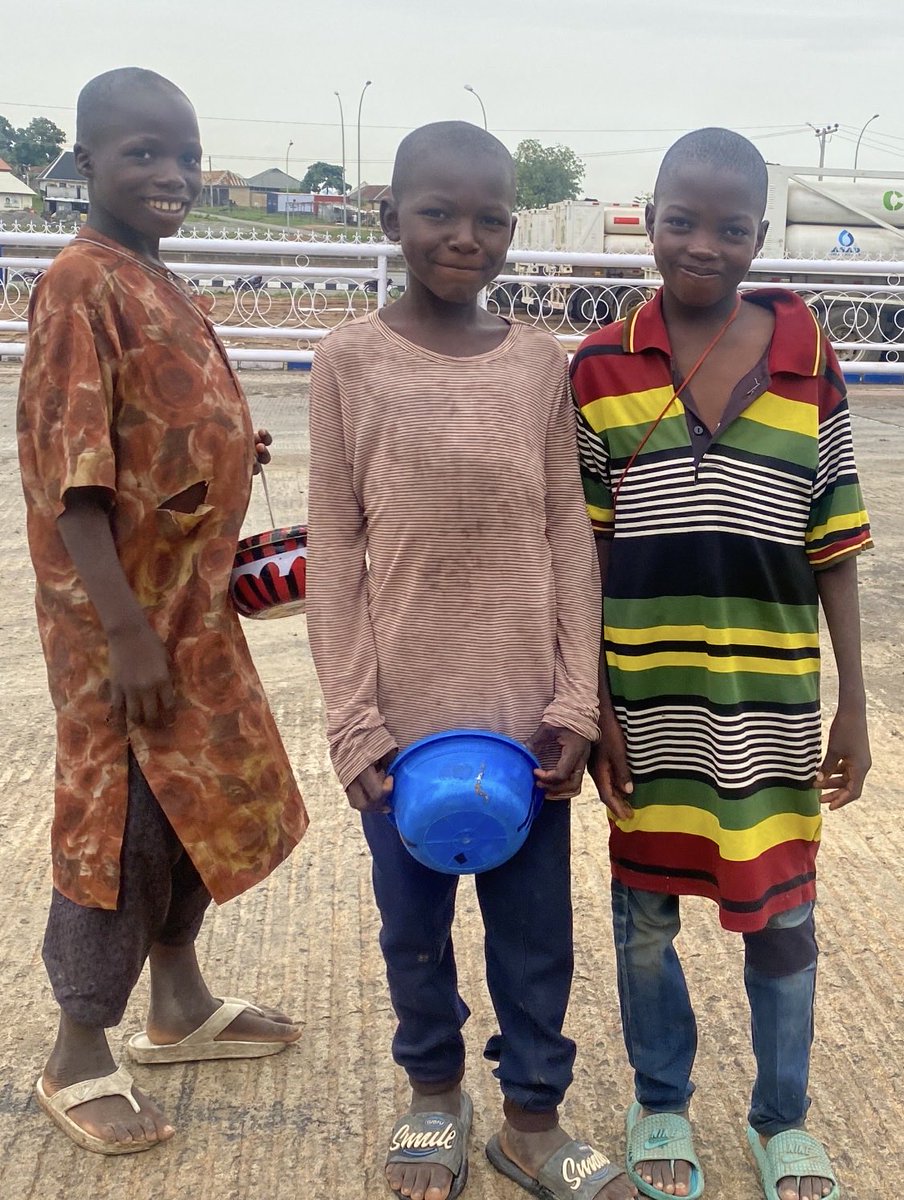
Meet Yusufa, Hafizu and Audu — and their innocent, cheeky smiles.
These pre-teen boys are street beggars I encountered a few days ago in Abuja.
Away from home.
Away from school.
Away from safety, dignity and childhood itself.
They are from Mashi, Katsina State.
Their Local Government Chairman is Salisu Kallah Mashi.
Their representative in the Katsina State House of Assembly is Hon. Sani Bello Mustapha.
Their representative in the House of Representatives is Hon. Majigiri Salisu Yusuf.
Their Senator is Distinguished Senator Nasiru Sani Zangon Daura.
Their Governor is His Excellency Dikko Umaru Radda.
The President of their country is His Excellency Bola Ahmed Tinubu.
Every one of these elected officials swore an oath to protect children like Yusufa, Hafizu and Audu.
To protect their dignity.
To secure their future.
To ensure they have access to education, safety and opportunity.
But because #AlmajiranchiIsChildAbuse, these children have been failed.
Failed by leaders who refuse to enforce Nigeria’s Child Rights Act (2003), which clearly states:
“No child shall be used for the purpose of begging for alms…”
And we, as a society, have also failed them — by normalising this exploitation, looking away, and refusing to hold our leaders accountable.
Child begging is not culture.
It is not tradition.
IT IS CHILD ABUSE.
We must advocate to #BanAlmajiranchiNow.
@officialABAT@dikko_radda@UNICEFNigeria@UNICEFAfrica@UNICEF@NigeriaGov @MinOfInfoNG @FMYDNG @FedMinOfJustice @nassnigeria@PoliceNG @ICPC_PE @officialEFCC
Let me tell you how it happened. Nigeria’s ginger export hit zero from N26 billion within 3 years.
The official story blames fungal blight.
But here is what actually happened. When Nigerian farmers lost their indigenous seed supply, grant-aided interventions arrived with replacement seeds.
An associate professor at Lagos Business School flagged publicly that some of those interventions involved GMO organisms that weakened indigenous crops and compromised soil health.
That is not a conspiracy theory because it is a documented academic concern.
Now that Nigeria spoke got destroyed by the GMO seedlings….what is not the result?
Nigeria was forced to import ginger from China to fill domestic demand. Chinese ginger has none of the pungency, oleoresin content, or quality that made Nigerian ginger a global premium product. And the ginger now sitting in Nigerian markets tastes like wood because it essentially is wood.
The two indigenous varieties that built Nigeria’s global ginger reputation, the Tafin Giwa and Yatsun Biri, had decades of soil relationship and quality built into them.
Once the soil was degraded and those seed varieties were displaced, the product that returned was a pale imitation. Nigeria did not just lose a market. It lost a seed. And without a National Ginger Seed Bank, which nobody has built, it may never fully get it back.
To report any form of Domestic Violence, Sexual Violence, Child Abuse, Rape, Sexual Harassment and other related issues in Lagos State, call 0-8000-333-333. It's free and it works 24/7.
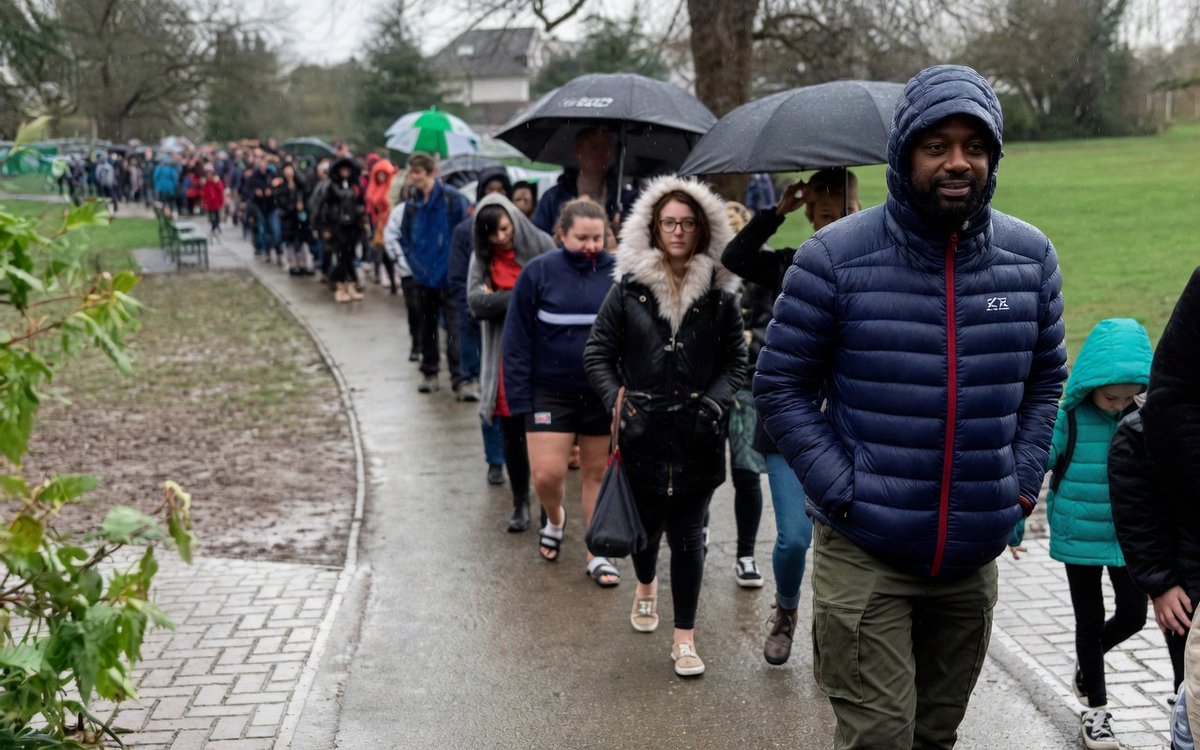
Almost 5,000 people waited for hours in the rain at a swabbing event in Worcester, to get tested to see if they were a match to help save the life of a five-year-old boy fighting a rare cancer, after his parents asked for help
Dr. Stella Ameyo Adadevoh is her name. In 2014, a man flew into Lagos carrying the Ebola virus. He wanted to leave the hospital to attend a conference, which would have sparked a massive outbreak in a city of 20 million people. Dr. Adadevoh said No. Despite intense pressure, she refused to discharge him, physically keeping him quarantined to protect the public. Because of her bravery, Nigeria contained the virus quickly. Sadly, she contracted Ebola herself and passed away. She is quite literally the reason a generation stayed safe.
I know her husband and children are out there somewhere. Your wife and mom is a hero. I'll never forget about her.
When I started working in the bank, my parents lived in Alakuko, so I used to commute from home every day.
I would wake up as early as 3am, leave the house before 5am, and sometimes get home by 12am if there was traffic…
This particular day, one of my colleagues cooked beans… if you’re a banker, you’ll understand that kind of “beans” 😂 the type that everybody in the branch must eat from.
It was a shortage of 500k, so we had to rally around because our BOM insisted the money must be cleared. That kept me very late at work, and I couldn’t travel back to Alakuko that night.
I took a bus to Obalende, my plan was to look for a church to sleep in… one thing my mum always told us is that if we are stranded, we should look for a church for shelter.
I walked around Obalende and luckily, I saw a white garment church (C&S). I entered and greeted them, but the pastor said they had received a message earlier in the week not to accept any stranger into the church.
I left…
Then I saw a small bus outside the church, so I entered and sat there because at that point, I didn’t know what else to do. I was even thinking of getting a hotel when a boy came out… he looked about 23–25. He was the son of the woman from the church. He came outside and told me to sneak in.
He and his mum took me to a room called ile abo and offered me a net and a mat.
That was how I slept there… although I couldn’t sleep till daybreak because I was scared 😔
In the morning, he had already gotten me a new toothbrush. I also got a new dress and changed into it.
We exchanged numbers and became very close. He was like a brother to me…
That same month, when I got my salary, I bought 5 white garment materials for them.
One day, I went to work as usual, and one of my customers mentioned he was looking for a receptionist. I asked for the pay and told him I had a brother who just graduated. He gave me his email address and asked him to send him an email and mention my name.
I couldn’t even wait till after work…
I called him during my break. He prepared his CV and sent it immediately.
He went for the interview a week later and got the job… the pay was 180k for a start
That same customer later relocated to the USA in 2024, but before he left, he referred him for an accountant role in one of the big companies on the island. He said my brother was a great guy and he could vouch for him.
Today, he’s doing so well for himself, taking care of his family… they no longer live in church anymore 🥹
When I was travelling, he sent me 300k as his own support. There’s no week we don’t FaceTime…
We spoke last night when he asked if he should relocate to Germany or the UK for his master’s… he got admission in both countries. I know he’s going to do great things.
Anyways, that call was the reason I remembered this story… and I thought to share ❤️
You really never know how far a small act of kindness can go ❤️
Before it took off, the bird ate parts of its own liver, kidneys, and gut. That was the only way to be light enough to fly. Then it flew 8,425 miles from Alaska to Australia, in 11 days, without eating, drinking, or landing once.
The bird is called B6. It's a bar-tailed godwit, four months old, weighing about as much as a can of beans. In October 2022, scientists at the US Geological Survey tracked its flight from Alaska all the way to Tasmania. The trip took 11 days and 1 hour. It is still the longest non-stop flight of any animal on Earth.
For two weeks before takeoff, godwits eat until they almost double in weight. Fat ends up being 55% of their body, more than any bird ever measured. Then they shrink their own insides. About a quarter of their liver, kidneys, stomach, and intestines gets broken down and reused for fuel, making room for the extra fat and cutting weight. Their heart and wing muscles grow bigger at the same time.
They never drink along the way. The water they need comes out of burning fat, the same reaction their muscles use for energy. They also never really sleep. B6 flapped its wings for 264 straight hours, cruising around 35 miles per hour with help from storm tailwinds. By the time it landed, it had lost almost half its body weight. The shrunken organs grew back over the following weeks.
Scientists still cannot explain the navigation. B6 had never made this flight before. Adult godwits leave Alaska weeks earlier, so young birds fly alone with nobody to follow. How a four-month-old bird finds its way across 8,425 miles of open ocean to a place it has never seen is still an open question.
About 100,000 bar-tailed godwits leave Alaska every fall. Most of them land in New Zealand or Australia 10 or 11 days later, having eaten parts of themselves to get there.
"Tinubu's govt takes 52 kobo from every N1 on cement”—-That is N6240 from every bag of cement and they are still borrowing, what are they doing with the money?
—Aliko Dangote.
Don’t you think that if someone can lie about a shoe being one-of-one and end up producing 100 pieces, they can absolutely lie about selling out or the price too?