@HarounMoat@vaxryy Did he envision transformer based LLMs? Natural Language is not replacing formal logic; it has become the interface for generating it.
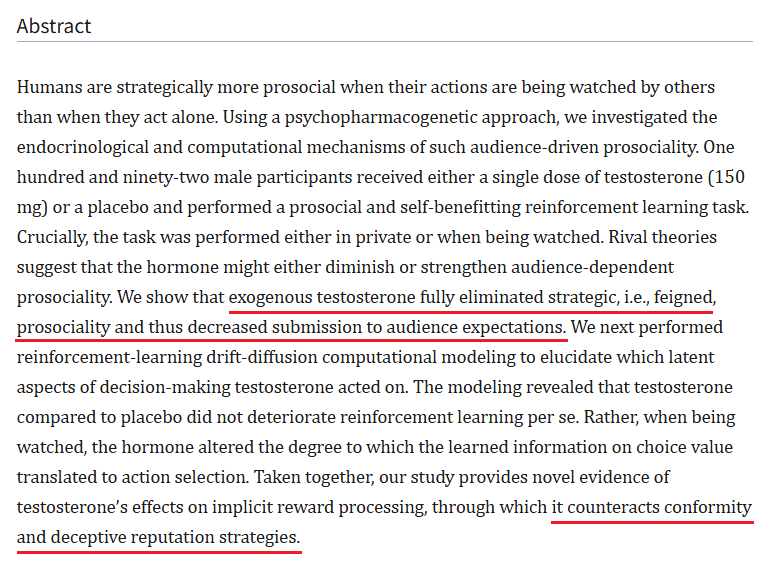
Please read the abstract of this study.
Men who received testosterone boosters did not care about being watched by two women when making decisions.
Men who did not receive the extra testosterone adjusted their behavior.
Rome handed out free grain to 40,000 citizens in 73 BC. By 46 BC, Julius Caesar found 320,000 people lining up for their monthly ration. That eight-fold expansion happened in under three decades, and it shows you how welfare states actually grow.
No Roman senator stood up and announced a plan to addict a third of the city to government bread. It happened incrementally, through political competition. Each magistrate who wanted votes expanded eligibility. Each expansion normalized the next one. The citizen who once considered the dole shameful eventually expected it, then demanded it, then organized politically to protect it.
This is the core mechanism free market thinkers have identified across every era: once you create a transfer program, you create a constituency for that program. Recipients vote. Administrators build careers. Grain merchants who supply the state develop a stake in keeping the contracts flowing. The political economy locks in.
Caesar, to his credit, actually cut the rolls back to 150,000 through verification audits. It was one of his more economically coherent moves, though the Senate still murdered him. His successors quietly let the numbers climb again.
What did the dole require? Massive grain imports from Sicily, Sardinia, and Egypt, organized through state logistics at state expense, funded by taxation and conquest. When the conquest revenue dried up, the obligation remained. Rome had written a check against future military success, and future military success eventually failed to arrive.
The lesson is not complicated. Distribute a benefit and you distribute dependency. Distribute dependency and you distribute political power to whoever controls the distribution. The grain dole didn't weaken Rome overnight, but it made every subsequent reform politically impossible.
@BasedTorba How about we do distributed power (solar on my house, I'm contributing to the grid) and distributed compute (I have a bank of servers in my wiring closet that aren't 100% utilized, I'll share some cycles). Kinda like we did in the "seti@home" days.
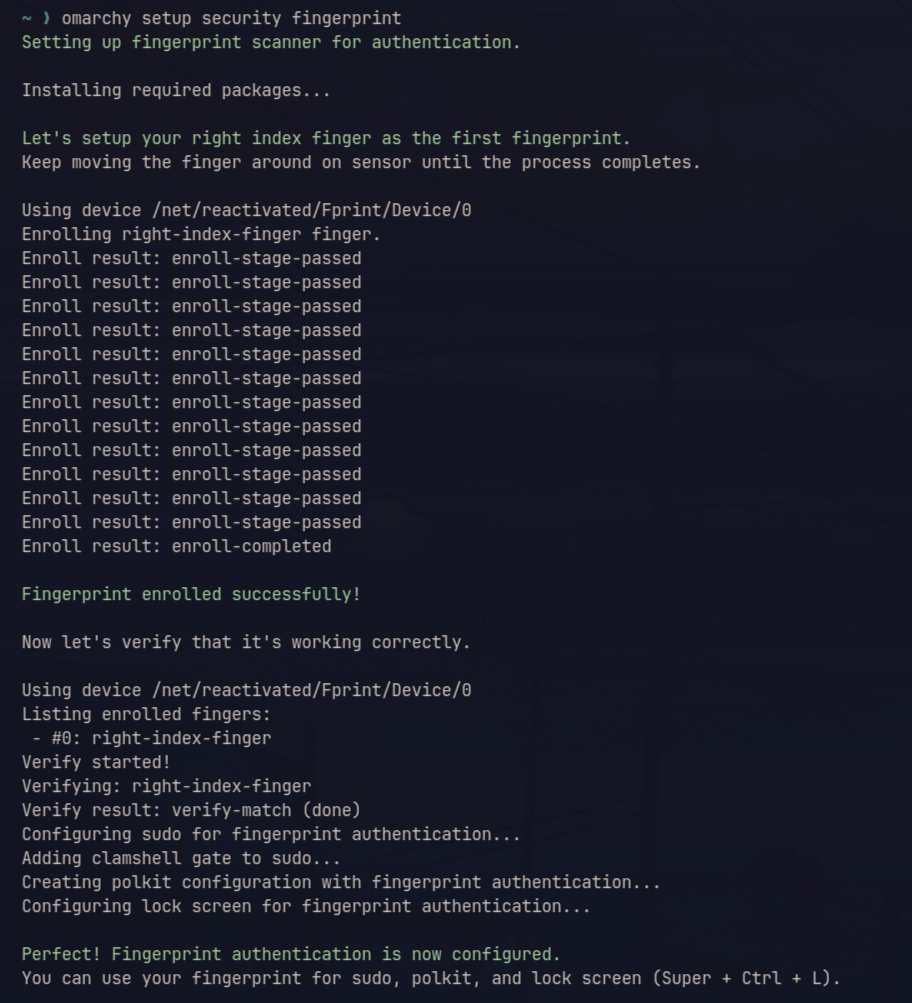
Can you tell when I installed #omarchy? I could have done this on Windows or Mac or another distro, but something about Omarchy and the community that's inspirational. I'm a systems engineer/architect by trade, NOT a programmer, and yet I'm building apps. For my use and to share.
@dhh@razzat008 Speechless. I spent so much time on this back in the day on various Linux platforms and in less than 30 minute engaging my grok agent, it freaking works!!
#omarchy#agents#grok
@dhh@razzat008 Gonna jump in here as well. I have a Lenovo 20V9 (ThinkBook 13s G2 ITL) 11th Gen Intel(R) Core(TM) i7-1165G7 (8) @ 4.70 GHz : Iris Xe Graphics
On this machine that already shows: Elan Microelectronics Corp. ELAN:Fingerprint (04f3:0c4b).
The imported beef hasn’t even arrived.
Your grocery store beef didn’t get cheaper.
But cattle prices TANKED on the announcement.
So who felt the “savings” first?
American ranchers.
Our cattle lost value before consumers saved a dime.
Tell me again how this helps rebuild the American cattle herd.
Been buying raw milk, local beef, and eggs (like your great grandparents did) for about a year now. And money is tight for us. Not easy. We just choose to support local farms and give our family better food from known sources. We sacrifice elsewhere, but I think it's worth it.
We raise our own beef so I couldn’t tell you the last time we bought beef from the store.
If we could sell directly to our neighbors without all the government regulations then you would see the price of beef drop without having to import foreign meat.