@leerob Staying on top of things is one of the many challenges that come with the speed and volume of a lot of the AI-generated code these days, and just like OP said having strong fundamentals always goes a long way as it really helps in making the right judgement calls.
You might believe you should spend less time thinking about code because of AI.
I strongly disagree! We’re watching this play out live where tons of AI generated code becomes a liability.
At the end of the day, an engineer needs to be responsible / on call for code that gets shipped to production. If you don’t understand the system you’re trying to debug, you’re probably going to have a bad time.
Yes, AI can help with all of this, if you set up the proper systems. You can have agents triage prod logs, look at errors, etc. You can speed up parts of the investigation, but an engineer needs to make the call. There might be serious customer or financial implications from that change.
I expect the trend continue for trimming dependencies, vendoring code so you can modify it directly, preferring simpler systems with fewer abstractions, and spending waaaay more time thinking about system design and code maintenance.
I’ve said this before, but it’s a great time to get familiar with CS fundamentals and some of the history behind what great software looks like. Many parts will be different in the coming years as AI progresses, but also a lot more than people realize will stay the same.
Tap. Verify. Done.
Introducing deepidv NFC Passport Verification. The cryptographic chip your government uses to validate you at international borders, now readable on any iPhone in under 10 seconds.
The only identity document AI cannot fake.
Part of Verify 2.0. Live now.
https://t.co/MriK6V3mAM
Today we reduced headcount by 22%. The business is the strongest it's ever been. So I think it's important to be direct about what I'm seeing and why.
First, I made this decision and I own it. I did it because the way to operate at the highest level of productivity is changing, and to win the future, ClickUp needs to change with it.
Second, this wasn't about cutting costs. Most savings from this change will flow directly back into the people who stay. We'll be introducing million-dollar salary bands. If you create outsized impact using AI, you'll be paid outside of traditional bands.
Most importantly, I have the deepest gratitude for those affected. We're doing this from a position of strength specifically so we can take care of people properly. Everyone affected receives a package aimed at honoring their contributions and easing the transition.
I only see two options: wait for this to play out gradually in the market or be honest about what I'm seeing and act proactively.
THE 100X ORGANIZATION
The primary change is that we're restructuring around what I call 100x org. The goal is 100x output. The roles required to build at the highest level are fundamentally different than they were a year ago.
Incremental improvements to existing systems won't get us there. We need new ones. That means creating enough disruption to rebuild rather than iterate on what's already broken.
The common narrative is that AI makes everyone more productive. It doesn't. Many of the workflows of today, if left unchanged, create bottlenecks in AI systems.
These roles will evolve. But waiting for that to happen naturally means falling behind now.
The 100x org is actually heavily dependent on people - infinitely more than today. This is only possible with 10x people that have embraced and adopted new ways of working.
THE BUILDERS, AGENT MANAGERS, AND FRONT-LINERS
— THE BUILDERS: 10X ENGINEERS
I don't think most companies have internalized what's actually happening with AI in engineering. The common narrative is that AI makes all engineers more productive. That may be true in isolation, but at an organization level - that is the farthest thing from reality.
Here's what we've validated recently at ClickUp: the great engineers, the ones who can orchestrate, architect, and review, are becoming 100x engineers. They're not writing code. They're directing agents that write code. The skill is judgment.
AI makes the best engineers wildly more productive, and everyone else using AI slows these engineers down.
Think about it - the bottlenecks are (1) orchestration - telling AI what to do, and (2) reviewing - what AI did. Everything is leapfrogged and no longer needed.
So who do you want orchestrating and reviewing code?
And how do you want your best engineers to spend their time?
If your best engineers are spending time reviewing other people's code, then this is inherently an inefficient bottleneck. These engineers can review their agent's code much faster than reviewing human code.
The new world is about enabling your 10x engineers to become 100x.
The wrong strategy is to push every engineer to use infinite tokens. Companies doing this are celebrating 500% more pull requests. But customer outcomes don't match the volume of code being generated.
I call this the great reckoning of AI coding, and every company will face this soon if not already.
More code is just another bottleneck to the best engineers, and ultimately to your company's impact as well.
— THE BUILDERS: 10X PRODUCT MANAGERS
Product management and design roles are merging.
Designers that have customer focus, become more like product managers.
And product managers that have intuition for UX become more like designers.
The bottleneck of user research is gone. It takes us just one mention of an agent to kickoff research and analyze results.
The bottleneck of product <> design iteration is also gone. The product builder iterates on their own, along with agents and skills that ensure alignment with quality and strategy.
Also controversial today - I believe that the wrong strategy is to have your PMs shipping code - that just introduces another bottleneck that the best engineers will waste their time on.
To be clear, PMs should be coding but they should do this in a playground to iterate, validate, and scope. That code should not go to production.
Everything outside of managing systems, orchestrating AI, and reviewing output becomes a bottleneck.
That's why the other roles that are critical along with these are the systems managers (to reduce bottlenecks) along with a bottleneck you can't replace - customer meeting time.
— THE SYSTEM MANAGERS
Ironically, the people that automate their jobs with AI will always have a job. They become owners of the AI systems - agent managers. We have many examples of these people at ClickUp.
The underlying systems in which we operate are absolutely critical to get right. I think most companies are delusional to think they can iterate on existing systems and compete in this new world.
You must create enough disruption so that old systems are deprecated entirely. If there's any definition for 'AI native' that's what it is.
— THE FRONT-LINERS
In a world that will become saturated with AI communication, the human touch will matter more than anything to customers.
This is a bottleneck that you shouldn't replace - even when agents are high enough quality to do video meetings.
One-on-one meeting time with customers is something that shouldn't be automated. The systems around the meetings should be - so that front-liners spend nearly 100% of their time with customers.
REWARDING 100X IMPACT
In a world where companies are able to do so much more with less, where does that excess money go?
In our case, much of the savings in this new operating model will flow directly back to those that enabled it.
We must reward people that create productivity accordingly. This aligns incentives on both sides. Plus, in a world where your best people create 100x impact, you can't afford to lose them.
You should aim to retain these employees for decades. The context they have and their ability to efficiently orchestrate and review will be nearly impossible to replace.
Compensation bands of today should be thrown out the door. We're introducing $1 million cash/year salary bands with a path available to nearly everyone in the company if they produce 100x impact by creating or managing AI systems.
THE FUTURE
Nearly every company will make changes like these. The ones that do it proactively will define what comes next.
The future is not fewer people. It's different work, new roles, and better rewards for those who embrace it. We're already seeing entirely new roles emerge, like Agent Managers, that didn't exist a year ago.
ClickUp is positioning to lead this shift, not just internally, but for our customers too. I've never been more certain about where we're headed.
SpaceX is actively hiring world-class engineers/physicists for SpaceXAI, even if you have zero prior experience in AI. Smart humans figure it out fast.
Please send an email with ~3 bullet points demonstrating evidence of exceptional ability to [email protected].
Cloudflare's security team spent the last few weeks testing Anthropic's Mythos against fifty of our own repositories. What we learned about offensive AI, why faster patching is the wrong reaction, and what the architecture around vulnerabilities has to look like next. https://t.co/RSrRtIhgaV
Finally a semi-useful read on Mythos that is free of myth and talks about what this means more practically (not this is the end of the world as we know it, but how do we deal with faster patches and attacks from AI as other models scale to chained exploits)?
This is the kind of conversation we need, not idiotic ones about the end of all software.
We need "what is the right answer?" because these models are coming and will get better so how to we put our heads together and make better/more secure software across the world?
And it can't just be patching the 100 or so projects that got access to Project Glasswing.
That is not gonna help the world.
We need to figure out how does everyone else who is not part of the special chosen people to get blessed with access to test and patch their stuff, aka the open source projects and closed software that is not Office or Cloudflare but the 99.99% of software that runs everything else in the world?
What is the right loop cycle to help people patch and fix things at the source?
In the long run, AI will make software more secure, not less.
But it will change how teams have to work to get there.
Figuring that out means putting it in more team's hands sooner rather than later.
The CEO of Take-Two, the company behind GTA, just said something the entire AI industry doesn't want to hear.
And he said it without being anti-AI.
Strauss Zelnick's argument is precise. AI is built on datasets. Datasets are backward-looking. Creativity is forward-looking. A model trained on everything that already exists cannot, by definition, produce something genuinely unexpected. And all hits, by their very nature, are unexpected.
Asset creation and hit creation are not the same thing. AI is getting very good at the first one. The second one is what actually makes money, builds franchises, and changes culture. Nobody has shown AI can do that yet.
The derivative property problem is real. You can clone GTA with existing technology. You could do it before AI. It would take 3 years and look identical. It still wouldn't sell. Because it isn't GTA. It's a clone of GTA.
And consumers, despite what the industry occasionally pretends, can feel the difference between something genuinely new and something assembled from the residue of things that already worked.
Thousands of mobile games ship every year. 0 to 5 hits get made. The same studios make them every time. The technology to make more games has been commoditized for years. It didn't democratize hit creation. It just flooded the market with more forgettable product.
The Silicon Valley thesis that AI unlocks game creation for everyone is true in the same way that cheap cameras unlocked filmmaking for everyone. They did. And the same 5 studios still make the movies everyone watches.
What Zelnick is saying, without quite saying it, is that the thing AI cannot replicate is taste. The instinct for what hasn't been done yet. The cultural antenna that detects the gap in the market before the data can see it.
Data tells you what people wanted. Hits tell people what they want next.
Those are different jobs.
Build any verification, from a selfie. The cryptographic verification engine for the next decade of online trust.
People. Property. Payments. Proof.
deepidv ships identity verification, sanctions screening, synthetic media detection, AI background confirmation calls, and zero-knowledge age attestation across a single API and Back Office. Built for fintechs, marketplaces, real estate platforms, gaming companies, and any business that needs to know who's on the other side of the screen.
Every verification produces a cryptographic receipt. Signed, timestamped, anchored on Base L2. The audit trail is real, not promised.
One API. One Back Office. 211 countries.
Every workflow.
→ Website: https://t.co/lwQDRxxmRv
→ Book a demo: https://t.co/WJrDTKSCZB
→ Pricing: https://t.co/8X9vEvhxzv
→ Compare: https://t.co/I8xCXhFGof
The future of language takes a village. 🌍
We’ve officially launched the YECS Corpus: 120 hours of Yoruba-English code-switching speech data with @mozillaorg . It's Open Source on MDC! 😀
Access it here: https://t.co/5xPvicKBjm
#LyngualLabs#YECSCorpus
PTSD man, fvcking PTSD!
I battled with this sh!t for years, till I had a surgery done. Terrible experience!
Idk who needs to hear this, but you have no business taking your phone to the toilet. Go in there, do your thing and leave ASAP.
Do not leave your ass open-sitting in the toilet for too long!!!
Resist this with EVERYTHING.
I had to stop mentally converting everything to Naira before I broke free from this. Once you are not mentally tethered to Nigeria even while living there, you can think bigger. Also, don't compare yourself with other Nigerians; aim much higher.
I don’t know why Nigerians do this. You know very well someone has violated your rights, and instead of backing you up, they start advising you not to take action because “you’re an immigrant” or “you’re a student on a visa.”
This just reminded me of an experience I had here in the US.
Some years ago, a tax preparer diverted my tax refund into her own bank account and had the audacity to pull the “you can’t do anything” card on me. I later learned she had successfully pulled that on some ignorant international students and went scot-free because they had no balls to hold her accountable.
A few Nigerians I told advised me not to do anything: “You know you’re a student on a visa.” One even said, “You’re not even supposed to file a tax return.” Imagine that - - an international student working as a graduate assistant and paying taxes is “not supposed” to file taxes? This is a PhD student oh🤦🏽♂️. I hate to say this but Nigeria produces some very ignorant graduates.
That moment reminded me yet again why Nigeria is the way it is today. We have too many “baby” adults who refuse to hold anyone accountable.
Long story short, I showed the tax preparer why I’m doing a fully funded PhD in the US. It’s not by chance; I had six fully funded offers and chose one. So, I think of myself as a confirmed “Kpọkrikpọ.”
So, I did some “research” and sent a mail to the IRS. By 11 p.m. the same day USPS confirmed delivery, the same tax preparer who had been ignoring my calls and messages suddenly started blowing up my phone. I made sure not to answer until the next day. By morning, I had multiple missed calls, voicemails, and texts from her, begging me to reconsider and settle.
With what I wrote and the evidence I attached, I knew there would be consequences. I knew she was cooked.
In less than 24hrs, I got my money. Not a cent missing.
It took me calling the IRS to confirm that my full refund had been returned to de-escalate the situation.
Knowing how to fight for your rights is a life skill.
If you want to be a distributed systems engineer who wants to become Staff at FAANG, I would say this a bit differently.
Do not try to learn 17 things as separate checklist items and then keep changing languages every 3 months.
That is how people keep “preparing” for 5 years.
You do not become Staff because you know REST, GraphQL, gRPC, Redis, Kafka, Docker, Kubernetes, AWS, Prometheus, Grafana and 40 other buzzwords.
You become Staff when you can look at a messy production system and answer things like:
Why is p99 latency suddenly bad? Why is replication lag increasing? Why are retries causing a thundering herd? Why did this cache make things faster yesterday but inconsistent today? Why did one region fail and now the whole system is timing out? Why does this service need to exist at all?
That is the real game.
For wannabe Staff engineers, the path is more like this:
1. Pick one backend language seriously. Go, Java, or even Python if your stack allows it. Not because language is everything, but because syntax should become invisible to you.
2. Go deep on fundamentals. Networking, OS basics, concurrency, storage engines, indexes, transactions, consensus tradeoffs, queues, failure handling. This is where actual engineers are separated from tutorial collectors.
3. Build systems, not toy CRUD apps. Rate limiter. Job queue. Distributed cache. Event driven pipeline. Notification system. Search autocomplete. Write something that breaks under load, then fix it.
4. Learn tradeoffs, not definitions. Strong consistency vs availability. Sync vs async. Horizontal vs vertical scaling. Partitioning vs replication. Monolith vs microservices. Every Staff conversation is mostly tradeoffs.
5. Get very good at observability. Logs tell you what happened. Metrics tell you how bad it is. Traces tell you where it broke. Most engineers write code. Few can debug production calmly.
6. Write design docs. A lot of people want Staff title. Very few can clearly explain: problem, constraints, proposed design, bottlenecks, rollback plan, and why this is the right tradeoff for the business.
That is why some engineers with less tech stack knowledge still grow faster.
Cause Staff is not “best coder in the room”.
It is usually: the person who sees around corners, reduces future incidents, simplifies systems, and helps 5 other engineers move faster.
So yes, learn system design. Learn APIs. Learn databases. Learn distributed systems. Learn caching. Learn security. Learn cloud. Learn monitoring.
But do it through one serious language and repeated real system building.
Otherwise you are just collecting nouns.
And FAANG does not promote noun collectors.
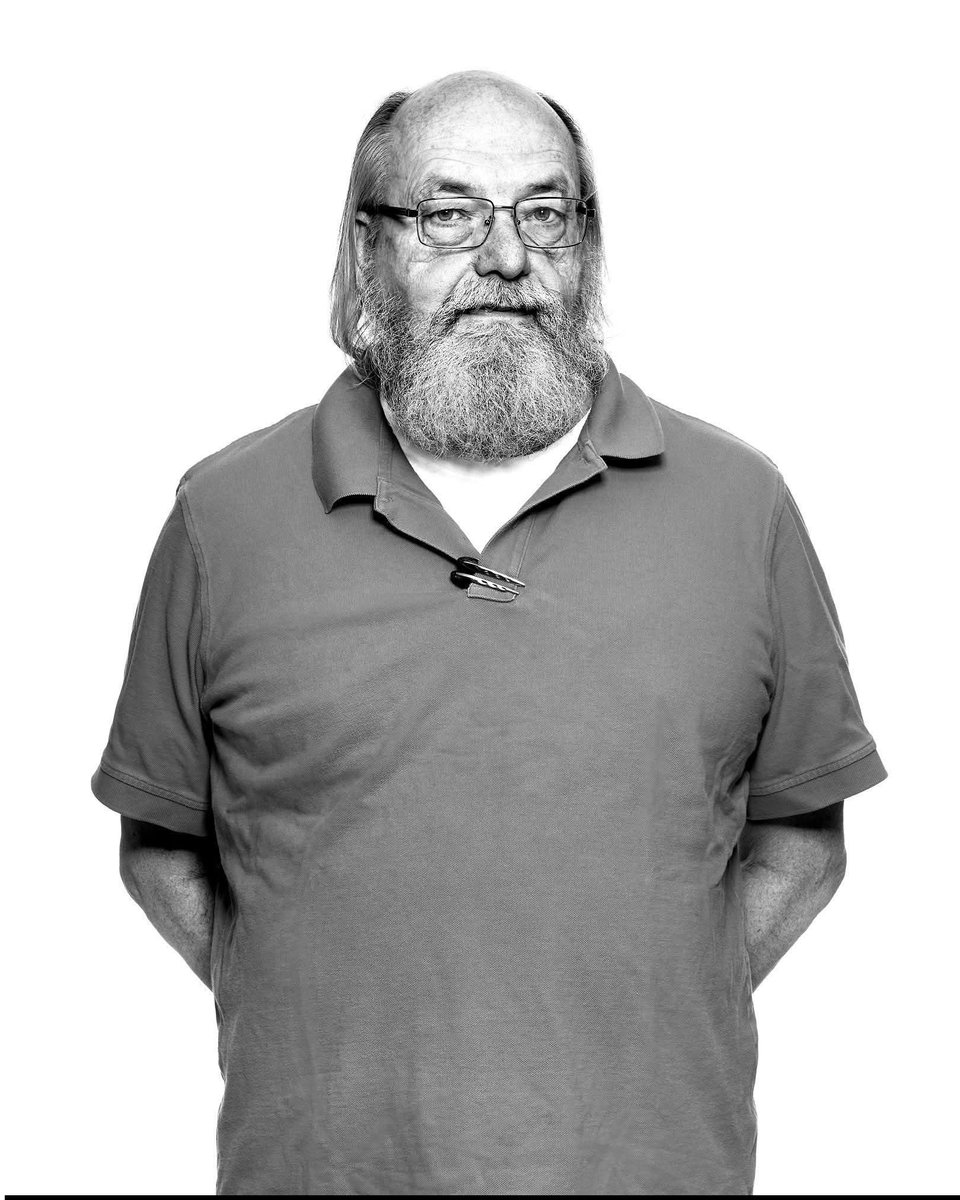
No disrespect to Linus Torvalds, but this guy is the greatest geek alive 🫡
Created UNIX in 1971 when he was 28 years old.
Created Go in 2009 when he was 66 years old😲
He also developed the B programming language (which led to C), created UTF-8 encoding (making international text possible online), and designed essential tools like grep that developers still rely on daily.
He also helped with the development of Multics (that led to UNIX), Plan 9 from Bell Labs and Inferno operating systems.
That's 4 operating systems in total... Most people don't even use these many OS.
Pretty impressive resume, right? 🔥
And it's a shame that many people, even the ones in the IT and tech industry, don't know him.
Ken Thompson.... Remember the name 🙏