That's a small reminder! 👇
As of June 2026, HTTP has a new method - a GET with a `body` 😎
Meet QUERY (RFC 10008).
It lets you send complex queries in the body (like POST) while staying safe, idempotent, and cacheable (like GET). Already works on servers (Node.js, Go, Laravel…).
Browsers are still adding full support, usable now with care, with widespread adoption coming later in 2026+.
I'm suddenly curious to see where the debate about the usefulness of debuggers will lead us when AI can efficiently take control of them while simultaneously modifying the code.
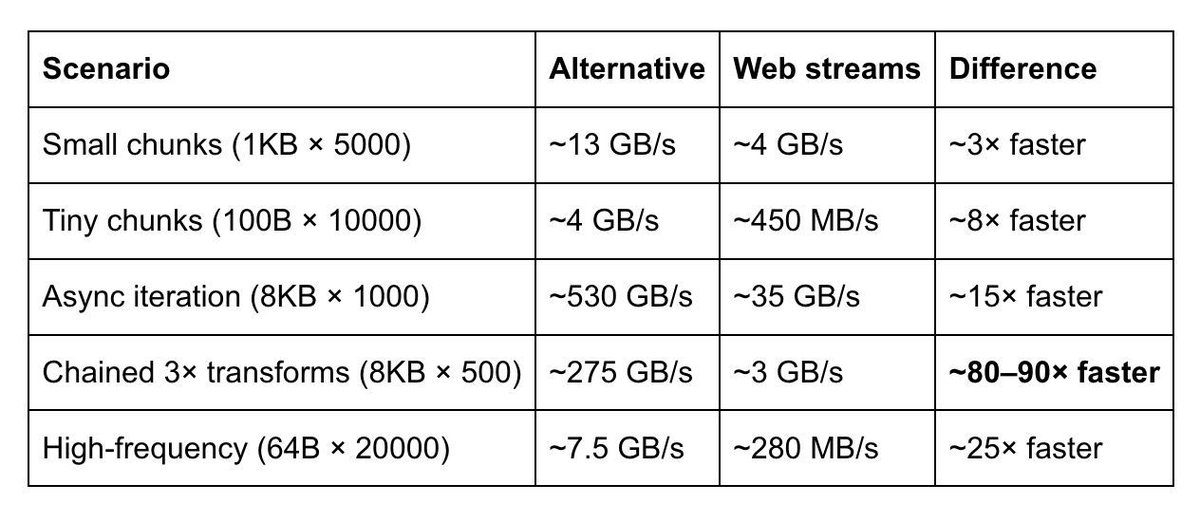
Most developers I know complains about the performance of Web Streams.
I'm glad that my friend James Snell is trying to fix it. Here is a new proposal for streams in JS.
In some cases, this is a 90x throughput increase. You've read it right!
https://t.co/f9jBLoMUp6
TypeScript 6.0 beta is now published!
This release brings
- inference improvements for functions
- updates to package.json 'imports'
- the Temporal APIs
- alignments for the upcoming TypeScript 7.0
- & more!
Try it today!
https://t.co/vAnfKvrei1
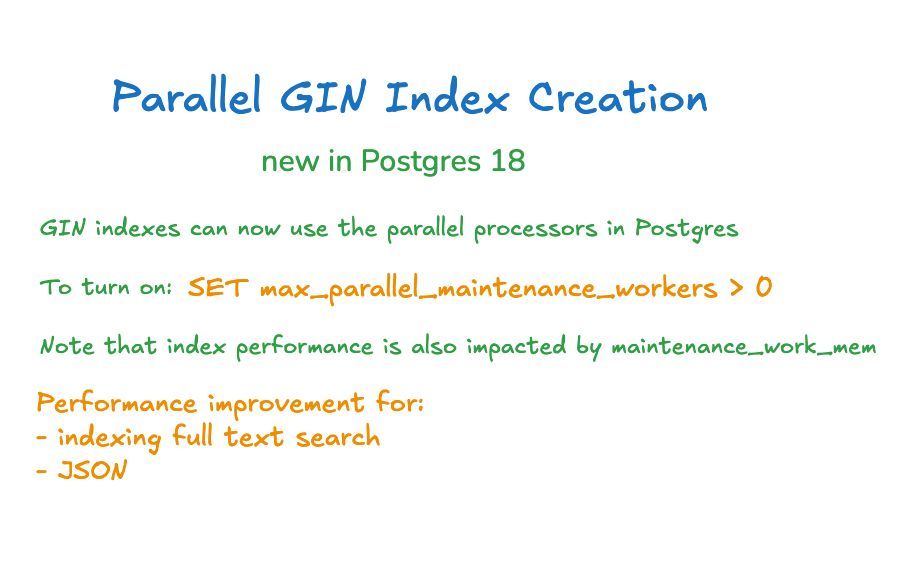
Postgres 18 added parallel index creation for GIN indexes. This takes advantage of the settings for parallel maintenance workers. This is great for dbs that frequently create new indexes for full text search and or json.
Before Postgres 18, the planner would not consider multi-column b-tree indexes unless they used the left most column. With the new skip scan feature, a multi-column index can be used to answer queries with any of the columns.
Cloudflare shared some data on Internet connections at scale, and the numbers are really interesting...
Half of all TCP connections consist of just 12 packets or fewer. The median response from Cloudflare servers is only 4.8 KB for HTTP/1.X and 6 KB for HTTP/2. Most web interactions are incredibly tiny.
But here's where it gets interesting. While the median connection lasts just 4.7 seconds, some connections stay alive for days. The median connection sends 3.78 times more data than it receives, showing just how download-heavy the modern web is.
The distribution follows the classic 'elephants and mice' pattern. A small fraction of connections carry millions of packets (video streams, large downloads), while the vast majority remain lightweight (API calls, small web objects).
Most connections carry just one HTTP request, even with HTTP/2's multiplexing capabilities. This holds true for both user-driven traffic and automated datacenter traffic.
The Internet is far more 'bursty' and transient than we might think.
Hope you found this interesting.
A senior Google engineer just dropped a 424-page doc called Agentic Design Patterns.
Every chapter is code-backed and covers the frontier of AI systems:
→ Prompt chaining, routing, memory
→ MCP & multi-agent coordination
→ Guardrails, reasoning, planning
This isn’t a blog post. It’s a curriculum. And it’s free.
I saw someone on here talking about recovering from structured output errors.
In other words, automatically fixing cases where LLM's don't return valid JSON, or don't follow provided schemas.
Obvs LLM's are pretty good at this now, but the delta between 99% and 99.999% is huge
OpenAI is now required by court order to preserve all ChatGPT logs including "temporary chats" and API requests that would have been deleted
if I understand this correctly, it means data retention policies for apps that use OpenAI API simply cannot be honored
Turn any sentence transformer into a really small static model, reducing model size by a factor up to 50 and making the models up to 500 times faster.
Model2Vec relies on running a chosen vocabulary through a sentence transformer to get token embeddings. The dimensionality of these embeddings is then reduced with Principal Component Analysis (PCA), and Smooth Inverse Frequency (SIF) weighting is applied. This final static model captures useful information with far fewer parameters than the original sentence transformer.
⚙️ The Core Concepts
- Distillation
Model2Vec distills from a sentence transformer without needing a labeled dataset. A vocabulary is passed through the sentence transformer to collect token embeddings. These static token representations are learned to mimic the original model’s mean sentence embeddings.
Token Embeddings
It generates vector representations for each token in the vocabulary. At inference, sentences are represented by taking the mean (or a weighted mean) of their token embeddings. This approach avoids repeated forward passes through heavier transformer layers.
- PCA
Dimensionality is reduced to curb model size without sacrificing much performance. PCA extracts directions of greatest variance in the embeddings, compressing them to a smaller vector space.
- SIF Weighting
Each token embedding is scaled by w = 1e-3 / (1e-3 + proba), where proba is the token’s frequency in the corpus. This smooths out high-frequency tokens and gives more weight to rarer ones. The weighted embeddings capture meaningful semantics while sidestepping over-representation of common words.
- Potion Models
These are pre-trained variations of Model2Vec produced with Tokenlearn. They achieve better results across tasks by carefully optimizing the token embeddings and applying re-regularization steps.
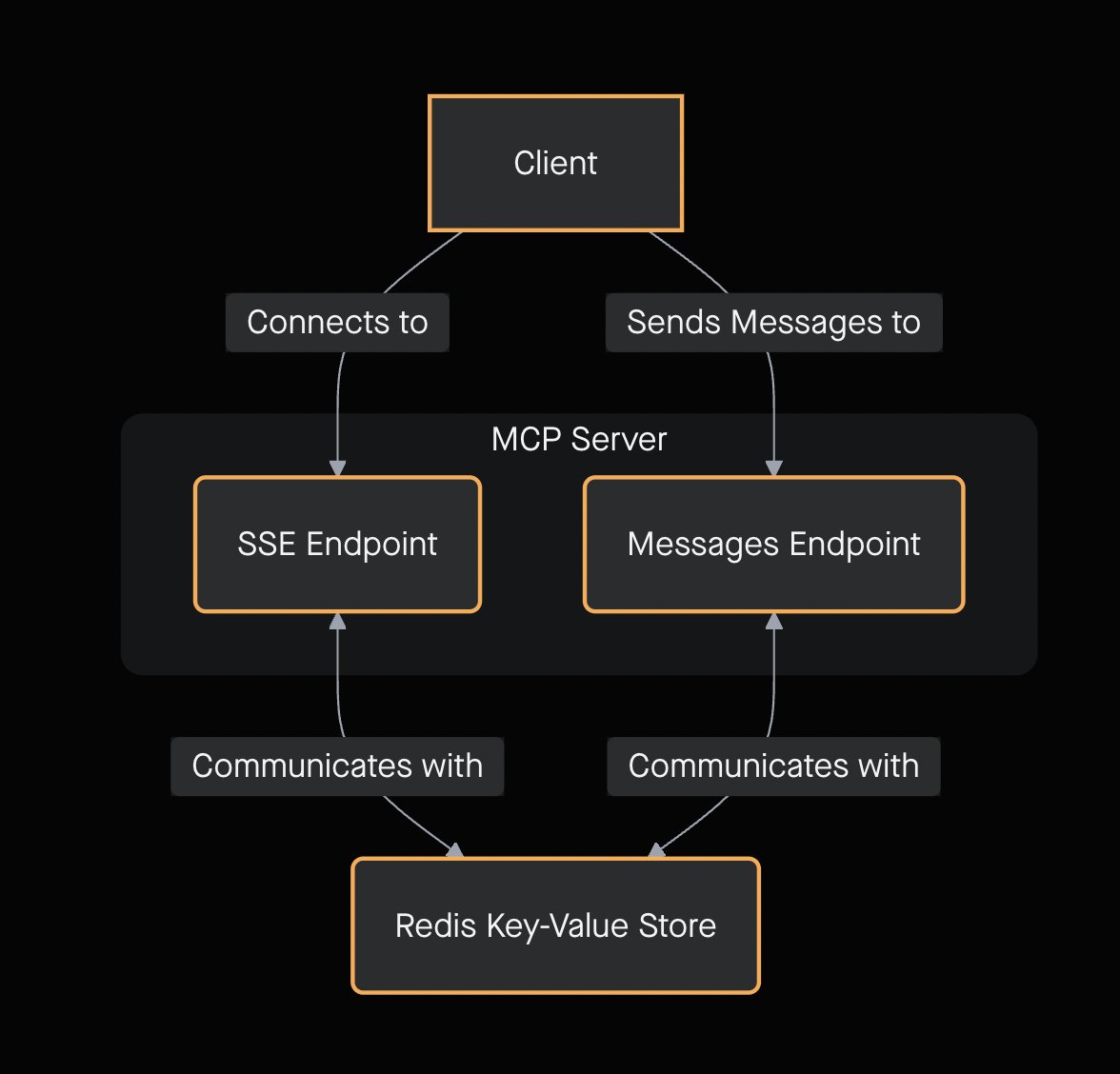
Good news for folks deploying MCP servers:
Anthropic is potentially removing the need for MCP to have stateful servers.
No more need for this silly architecture just to serve some tools over a server.