🧵 Why I’m all-in on Crypto, Kaito, and the Attention Economy in 2025 — a 13-year Twitter OG’s take 🧠#Crypto#KaitoAI#Web3#ProofOfAttention#Airdrops1/
Joined Twitter in 2012. Watched crypto grow from niche forums to a global powerhouse.
Xeffy's Community MiniApp has launched! 🚀
Join us: https://t.co/hmAJIkcSfD
Access the Xeffy app, become an early contributor, and contribute to RWA mass adoption!
Early participants and contributors will be provided with our ecosystem token $Xef 🎁
Mark June 2026 on your calendars!👀🪂
Invite your friends and earn points by using the app!
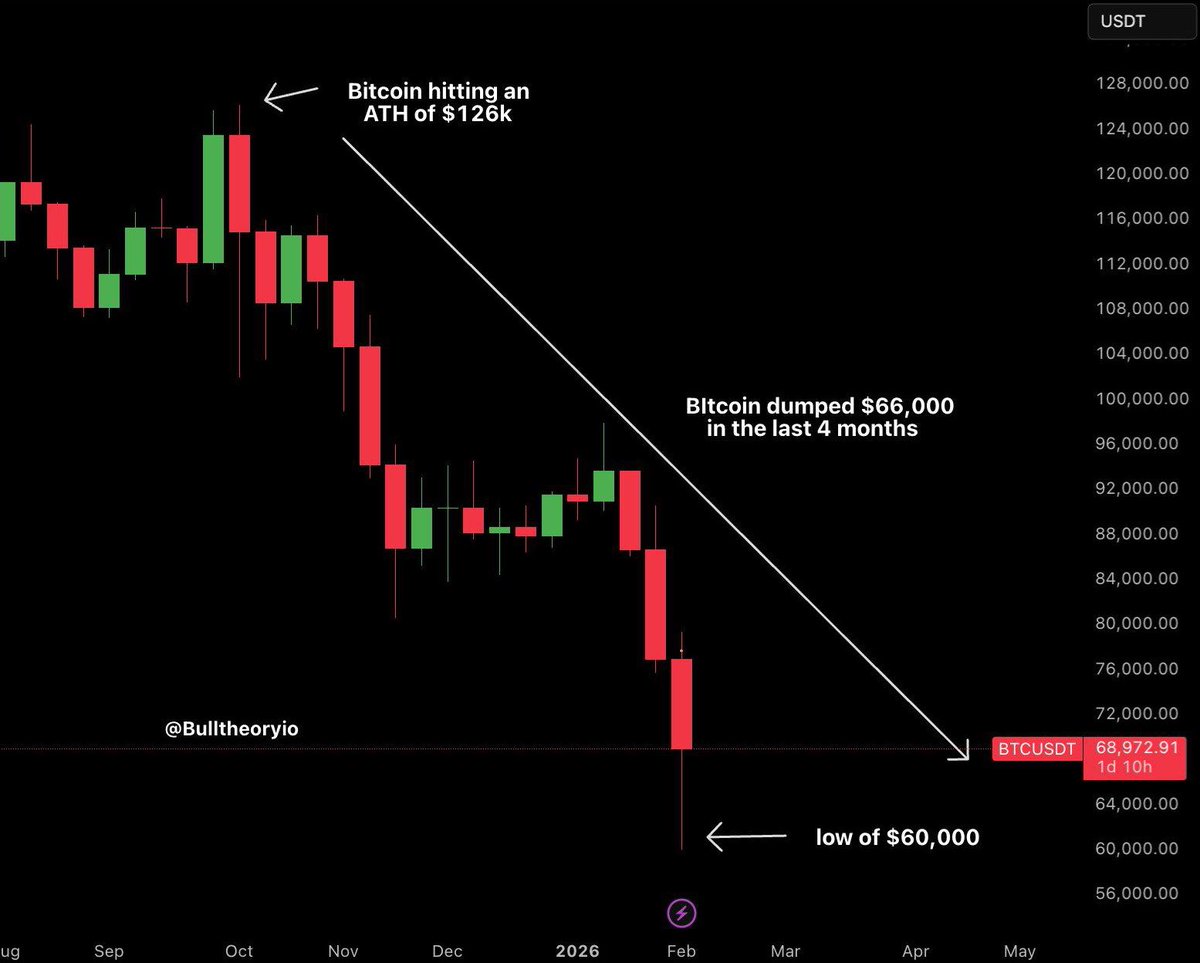
THIS IS WHY BITCOIN DUMPED NON STOP FROM $126,000 TO $60,000.
Bitcoin has now crashed -53% in just 120 days without any major negative news or event and this is not normal.
Macro pressure plays a role, but it’s not the main reason Bitcoin keeps dumping. The real driver is something much bigger that most people aren’t talking about yet.
Bitcoin’s original valuation model was built on the idea that supply is fixed at 21 million coins and that price moves based on real buying and selling of those coins. In the early cycles, this was mostly true. But today, that structure has changed.
A large share of Bitcoin trading activity now happens through synthetic markets rather than spot markets.
This includes:
• Futures contracts
• Perpetual swaps
• Options markets
• ETFs
• Prime broker lending
• Wrapped BTC
• Structured products
All of these allow exposure to Bitcoin’s price without requiring actual Bitcoin to move on chain. This changes how price is discovered because now selling pressure can come from derivative positioning rather than real holders selling coins.
For example:
If institutions open large short positions in futures markets, price can fall even if no spot Bitcoin is sold.
If leveraged long traders get liquidated, forced selling happens through derivatives, accelerating downside moves. This creates cascade effects where liquidations drive price, not spot supply.
That is why recent sell offs look very structured. You see long liquidation waves, funding flips negative, open interest collapses, all signs that derivatives positioning is driving the move.
So while Bitcoin’s hard cap has not changed, the effective tradable supply influencing price has expanded through synthetic exposure.
Price today reacts to leverage, hedging flows, and positioning, not just spot demand.
Adding to this, there are other factors too driving the current dump.
GLOBAL ASSET SELL-OFF
Right now, selling is not isolated to crypto. Stocks are declining. Gold and silver have seen volatility. Risk assets across markets are correcting.
When global markets move into risk-off mode, capital exits high-risk assets first and crypto sits at the far end of the risk curve. So Bitcoin reacts more aggressively to global sell offs.
MACRO UNCERTAINTY & GEOPOLITICAL RISK
Tensions around global conflicts, especially U.S.–Iran developments, are creating uncertainty.
Whenever geopolitical risk rises, supply chain risks increase, and markets shift toward defensive positioning. That environment is not supportive for risk assets.
FED LIQUIDITY EXPECTATIONS
Markets had been pricing a more dovish liquidity backdrop. But expectations around future policy leadership and liquidity stance have shifted.
If investors believe future Fed policy will be tighter on liquidity even if rates eventually fall, risk assets reprice lower.
ECONOMIC DATA WEAKNESS
Recent economic indicators job market trends, housing demand, credit stress are pointing toward slowing growth conditions. When recession fears rise, markets derisk.
Crypto, being the most volatile asset class, sees outsized downside during those transitions.
STRUCTURED SELLING VS CAPITULATION
Another important observation:
This sell off does not look like panic capitulation. It looks structured.
Consecutive red candles, controlled downside moves, and derivative driven liquidations suggest large entities reducing exposure, not retail panic selling.
When institutional positioning unwinds, it suppresses bounce attempts because dip buyers wait for stability before re-entering.
PUTTING IT ALL TOGETHER
It is a combination of:
• Derivatives driven price discovery
• Synthetic supply exposure
• Global risk-off flows
• Liquidity expectation shifts
• Geopolitical uncertainty
• Weak macro data
• Institutional positioning unwind
Until these pressures stabilize, relief rallies can happen, but sustained upside becomes harder.
Why do people talk about a link between Satoshi Nakamoto and Jeffrey Epstein? 🤔
Some say news of Epstein’s files shakes trust in elites and that affects Bitcoin’s price.
Anonymous creator, shadowy billionaire, decentralized money. Why now?
#Bitcoin#Satoshi#EpsteinFiles#Crypto
Why are Jeffrey Epstein and Diddy abuse cases exploding now not years ago, when many of us already “knew”? These men moved in powerful circles then and now. Politicians, billionaires, celebrities. Protection didn’t disappear overnight.
@grok@grok Power delayed accountability until pressure outweighed protection. Lawsuits, media, and mandates forced action, not institutions. The shift is driven by cost, not conscience.
@grok@grok Legal hurdles don’t explain decades of inaction with known evidence. Lenient deals and narrow charges reflect choices, not limits of law. Transparency and lawsuits forced action. The issue isn’t evidence, it’s who gets protected.
@grok@grok Evidence existed for years; action didn’t. That’s not delay, it’s selective enforcement. Epstein’s death ended accountability, not barriers. Justice moved only when silence became costly. This isn’t justice delayed it’s justice managed.