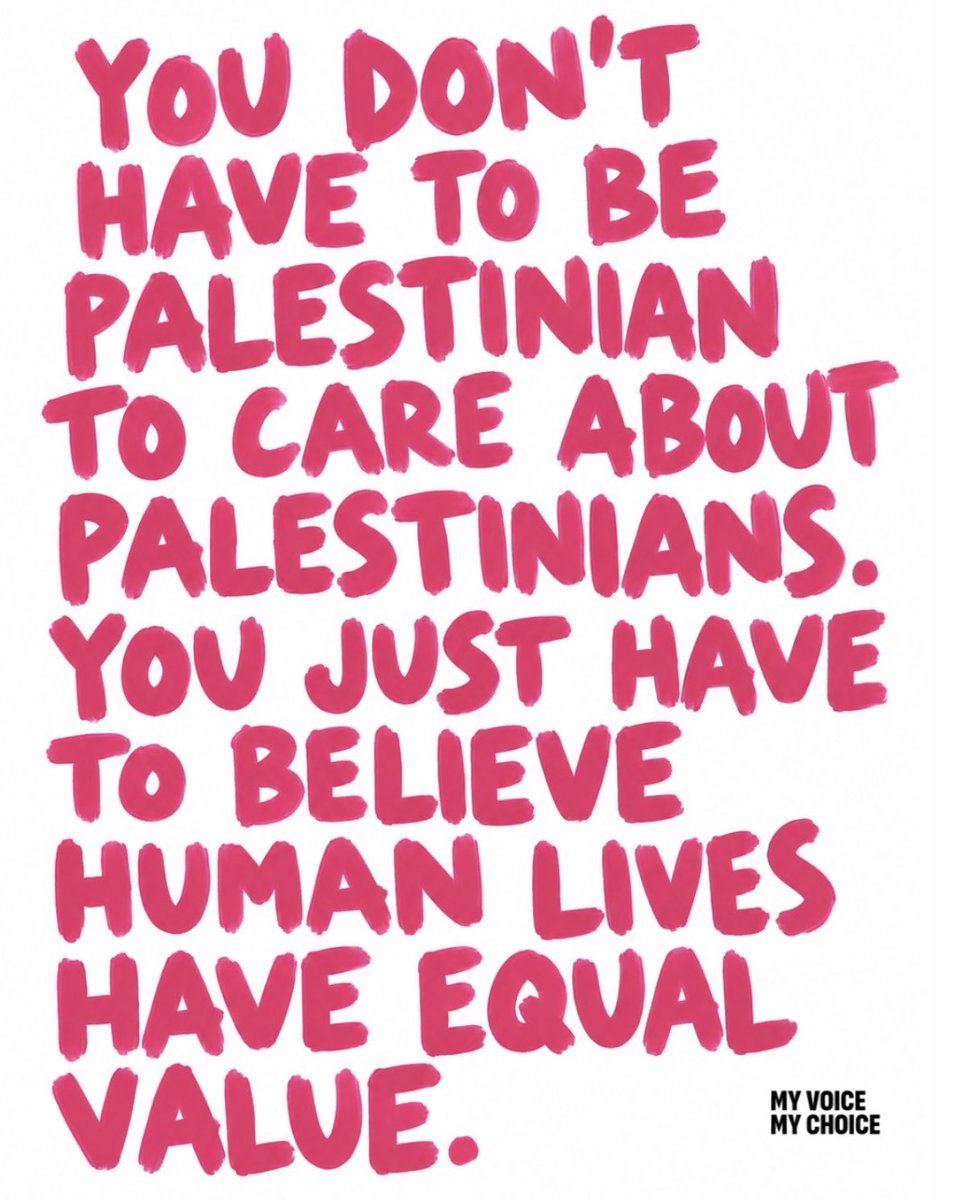
Do not ignore the genocide in Gaza.
Do not ignore the genocide in Lebanon.
Do not ignore the genocide in Sudan.
Do not ignore the genocide in Congo.
Do not ignore the genocide in Indonesia
In the early 1990s, Graham Greene walked into an American casting session—already a respected actor, already proven.
Then a director said something that revealed everything:
“Can you sound more Native?”
Greene didn’t argue.
He didn’t raise his voice.
He simply looked at him and replied:
“Which tribe?”
The room went silent.
And just like that…
The role disappeared.
That one moment explains his whole career better than any award ever could.
In 1991, Graham Greene had just earned an Academy Award nomination for Dances with Wolves.
Hollywood acted like it was progress.
A “breakthrough.”
A new era.
But Greene knew what it really was.
A cage with nicer lighting.
At that time, Native characters in U.S. film usually existed for only two reasons:
To die violently…
Or to spiritually educate a white protagonist.
Dances with Wolves was praised as progressive, but the structure stayed the same.
Kevin Costner’s character changed.
The Lakota didn’t control the story.
Greene’s character, Kicking Bird, was intelligent, calm, admired…
And narratively subordinate.
Wise.
But never decisive.
Hollywood loved that version of him.
And wanted it forever.
After the Oscar nomination, offers poured in—but they were all the same role in different clothes:
The forgiving elder.
The chief who explains history in perfect English.
The Native character who exists so America can feel evolved.
When Greene challenged dialogue, accents, or endings, executives labeled him “uncooperative.”
When he refused roles that ended in ritualized Native death, calls slowed.
So he changed the game.
Instead of chasing prestige…
He chased friction.
In Clearcut (1991), he played a Native character who survives, refuses reconciliation, and terrifies white audiences by refusing to be “redeemable.”
In Thunderheart (1992), he helped anchor a story modeled on real FBI abuses at Pine Ridge—forcing viewers to confront contemporary Native resistance instead of comforting nostalgia.
These films weren’t built to soothe anyone.
They were built to unsettle.
And Greene paid a price.
He never became a franchise lead.
He never got the protection Hollywood gives “compliant” figures.
But he gained something bigger:
Autonomy.
Over 100 roles across four decades, moving between U.S. studios, Canadian cinema, and independent projects…
Without surrendering ownership of his dignity.
He once said Hollywood loves Native people…
“As long as we don’t want anything.”
Land.
Power.
Narrative control.
Graham Greene was never misunderstood.
Hollywood understood him perfectly.
And he made that understanding expensive.
I am not mixing up anything. The name Palestine does indeed derive from the Philistines. But the Palestinians themselves are an indigenous population, strongly rooted in the landscape between the River Jordan and the Mediterranean Sea. Their faith evolved from Canaanite paganism through Judaism and Christianity to Islam. Their language moved from Archaic Canaanite to Aramaic and Greek, and then from Greek to Arabic. But the Palestinians remained throughout much the same cosmopolitan mix of mainly Semitic peoples as the rest of the Levant.
Ancient DNA evidence has transformed our ability to trace population continuity across deep time. A 2020 meta-analysis found that Palestinians derive 81 to 87 per cent of their ancestry from Bronze Age Levantines. The geneticist Marc Haber and his colleague Pierre Zalloua at the Wellcome Sanger Institute demonstrated that the Lebanese population, genetically indistinguishable from the Palestinian population, derives over ninety per cent of its ancestry from Bronze Age Canaanites. The people who lived in Palestine before the Nakba of 1948 were the descendants of the people who built the villages and cities of Canaan.
What the DNA evidence specifically refutes is the claim, central to Zionist founding mythology, that Palestinian Arabs were late arrivals from the Arabian Peninsula who flooded into the country in the wake of the seventh-century Arab conquest. They were not. The 7thC conquests brought in only a small military elite. The population remained, becoming majority Arabic speaking by the 10thC and the majority converting to Islam by the 12th.
The Haber and Zalloua findings are corroborated by a series of independent studies that together constitute an overwhelming body of evidence. The most comprehensive is the 2020 meta-analysis led by Lily Agranat-Tamir then at the Hebrew University of Jerusalem (now at Stanford), co-authored by David Reich’s lab at Harvard, which extracted genome-wide data from seventy-three individuals across nine Bronze and Iron Age archaeological sites in the southern Levant, including Megiddo, Hazor, Ashkelon, and Sidon. Published in the journal Cell, the study found that modern Levantine Arabic-speaking populations, including Palestinians, Lebanese, Jordanians, Druze, and Syrians, derive almost all of their ancestry from Bronze Age Levantines.
No matter how many times I visit Israel, it will still be the unanimous consensus of major human rights groups that Israel is a genocidal apartheid state.
Jack Mullarkey (Michael Salvius) got married recently. Simon, Denis and Sylvia offered him their congratulations!
We wish the couple every happiness...
#WarriorNun#SaveWarriorNun